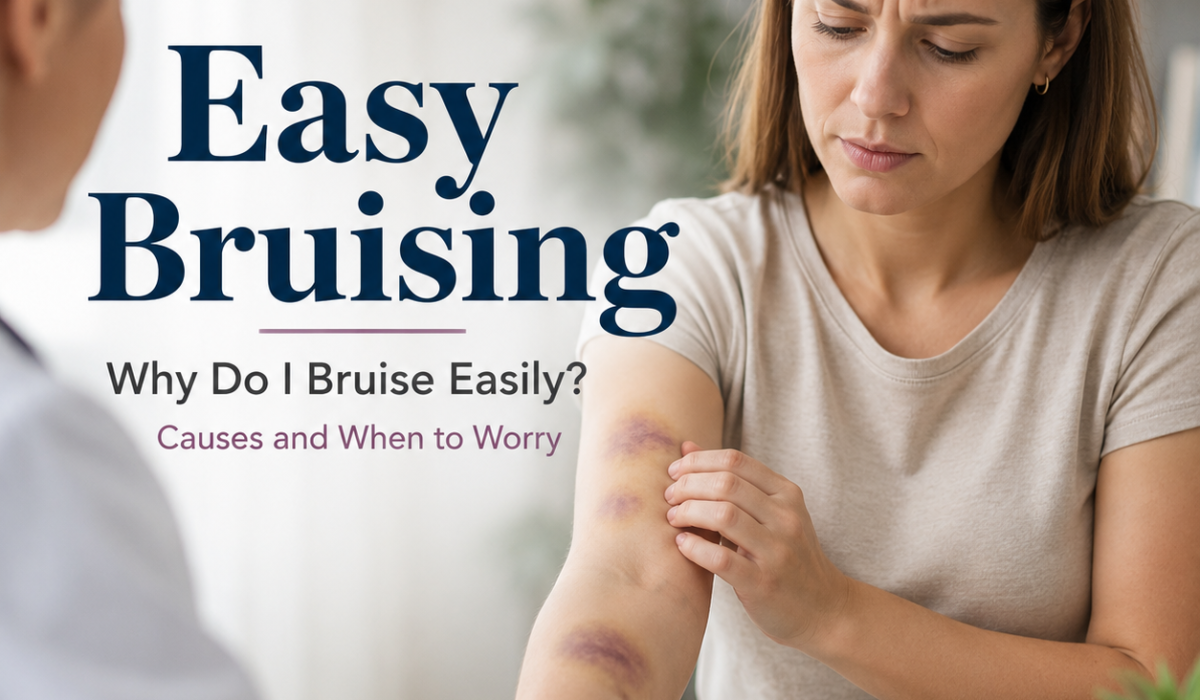
Noticing bruises and not remembering how they happened can be unsettling. In many cases, easy bruising is harmless and is related to minor bumps you did not notice, aging skin, or medications. But sometimes bruising more easily than usual can be a sign of an underlying health issue.
If you are asking, “Why do I bruise easily?” the answer usually comes down to one of three things: fragile blood vessels, thinner skin, or a problem with blood clotting. Understanding the most common causes can help you figure out whether it is likely normal or worth getting checked.
What is a bruise?
A bruise, also called a contusion, happens when small blood vessels under the skin break and leak blood into nearby tissue. This causes the familiar blue, purple, red, or yellow discoloration.
Bruises often appear after a bump or injury, but sometimes the injury is so minor that you do not even notice it. Most bruises heal on their own within one to two weeks.
Common reasons you may bruise easily
1. Aging
As people get older, the skin becomes thinner and the protective layer of fat under the skin decreases. Blood vessels also become more fragile. That means even a small knock can lead to a visible bruise.
This type of bruising is especially common on the arms, hands, legs, and face.
2. Minor injuries you did not notice
Sometimes easy bruising is not really “easy bruising” at all. You may simply be getting small bumps throughout the day without realizing it, such as:
- Bumping into furniture
- Carrying bags or heavy objects
- Exercise or sports
- Sleeping position pressure
- Tight clothing or straps
If bruises appear in places that get frequent impact, the cause may be simple mechanical injury.
3. Medications that affect clotting
Some medications make bruising more likely because they affect how blood clots. Common examples include:
- Aspirin
- Blood thinners such as warfarin, apixaban, rivaroxaban, or dabigatran
- Clopidogrel
- NSAIDs like ibuprofen or naproxen
- Some steroids when used long term
If you started a new medication and noticed more bruising afterward, that may be the reason. The Blood Thinners: How They Work and What You Need to Know article explains why these medicines can increase bruising in some people.
4. Vitamin deficiencies
Certain vitamins are important for healthy blood vessels and clotting.
- Vitamin C deficiency can weaken blood vessels and cause easy bruising.
- Vitamin K deficiency can interfere with clotting.
- Low levels of vitamin B12, folate, or iron may also contribute in some cases, especially if there are other symptoms.
Poor diet, digestive problems, or conditions that affect nutrient absorption can increase the risk.
5. Excessive alcohol use
Long-term heavy alcohol use can affect liver function and reduce the body’s ability to make clotting factors. It can also contribute to poor nutrition and vitamin deficiencies, both of which may worsen bruising.
6. Sun-damaged or fragile skin
Chronic sun exposure can weaken the skin and blood vessels over time, especially on the forearms and hands. This is sometimes called senile purpura or actinic purpura and is more common in older adults.
7. Inherited or acquired bleeding disorders
Sometimes easy bruising is caused by a condition that affects platelets or clotting proteins. Examples include:
- Von Willebrand disease
- Hemophilia
- Platelet disorders
- Other clotting factor deficiencies
These conditions often cause more than bruising alone and may also lead to nosebleeds, heavy menstrual bleeding, or prolonged bleeding from cuts.
For a closer look at related symptoms and causes, see our guide to Bleeding Disorders: Causes, Symptoms & Treatments.
8. Liver disease
The liver produces many of the clotting factors needed to stop bleeding. If the liver is not working well, bruising can become more common. Liver disease may also cause other signs such as yellowing of the skin or eyes, swelling, fatigue, or dark urine.
9. Blood disorders
In some cases, frequent bruising can be related to low platelet counts or blood cancers such as leukemia. These conditions are less common, but they are important to rule out if bruising is severe, unexplained, or accompanied by other symptoms.
10. Hormonal changes and connective tissue conditions
Certain hormonal changes and connective tissue disorders can make skin and blood vessels more delicate. For example, some people with Ehlers-Danlos syndrome bruise easily because their connective tissue is more fragile than usual.
How common bruises heal
Most bruises change color as the body breaks down the leaked blood. They may start red or purple, then turn blue, green, yellow, or brown before fading completely. Mild tenderness is also common at first.
To help a new bruise feel better, you can usually:
- Apply a cold pack wrapped in cloth for 10 to 15 minutes at a time during the first day
- Rest the area if it is sore
- Elevate the bruised limb when possible
- Use gentle compression if a clinician has advised it
Most bruises do not need treatment beyond time and basic home care.
When should you worry about easy bruising?
Occasional bruising is usually not a problem. However, you should pay attention if bruising is:
- Happening frequently without a clear cause
- Appearing larger than expected
- Occurring in new places or all over the body
- Associated with other bleeding symptoms
- Not healing as expected
- Getting worse over time
Red flags that need medical attention
Contact a healthcare professional if you have easy bruising along with:
- Nosebleeds that happen often
- Bleeding gums
- Blood in urine or stool
- Very heavy menstrual bleeding
- Tiny red or purple spots on the skin called petechiae
- Large painful bruises
- Dizziness, weakness, or fatigue
- Unexplained weight loss
- Fever or night sweats
- A family history of bleeding disorders
Seek urgent care if you have:
- Bruising after a head injury
- Severe swelling or pain with a bruise
- Trouble breathing
- Signs of internal bleeding
- Sudden bruising plus confusion, fainting, or severe weakness
How doctors evaluate easy bruising
If bruising seems unusual, your doctor will usually start with a medical history and physical exam. They may ask about:
- How often bruises happen
- Where the bruises appear
- Any recent injuries
- Medications and supplements
- Diet and alcohol use
- Family history of bleeding problems
- Other symptoms like bleeding or fatigue
Common tests may include:
- Complete blood count (CBC) to check platelet levels and other blood cells
- Clotting tests such as PT/INR and aPTT
- Liver function tests
- Tests for vitamin deficiencies
- In some cases, tests for von Willebrand disease or other bleeding disorders
For a detailed overview of bruising related to blood vessel changes, you may also find Skin Bruising: Bleeding Into the Skin: Causes, Symptoms, and Care helpful.
What you can do about easy bruising
If your bruising is mild and you are otherwise healthy, a few simple steps may help:
Protect your skin
- Wear long sleeves or protective clothing if you bruise easily
- Use padding on furniture edges if needed
- Be careful when lifting heavy items or exercising
Review medications
- Do not stop prescribed medication on your own
- Ask your doctor or pharmacist whether any medicines or supplements may increase bruising
Improve nutrition
- Eat a balanced diet with enough:
- Vitamin C
- Vitamin K
- Protein
- Iron and other key nutrients
Reduce alcohol use
- Cutting back on alcohol may help if drinking is contributing to bruising
Treat underlying causes
- If an illness, vitamin deficiency, or bleeding disorder is responsible, treatment depends on the cause
Related bruising problems
Some people notice bruising in specific parts of the body after a clear bump or injury. If that sounds familiar, these guides may help:
- Bruise That Won’t Go Away: Causes and When to Worry
- Bruised Elbow: Fast Relief, Healing Tips & When to Worry
- Bruised Knuckles: Causes, Treatment, and When to Worry
- Bruised Hip Relief: Causes, Healing Time & Tips
These articles can help you compare a simple bruise with signs that need more attention.
Frequently asked questions about easy bruising
Why do I bruise easily all of a sudden?
Sudden easy bruising can happen because of a new medication, a vitamin deficiency, an illness affecting clotting, or an unnoticed change in health. If it started recently and is happening often, it is worth discussing with a doctor.
Is easy bruising a sign of anemia?
Not usually by itself. However, some conditions that cause anemia can also cause bruising, and bruising plus fatigue, weakness, or pale skin may need evaluation.
Can stress cause easy bruising?
Stress alone does not usually cause bruising, but it can contribute indirectly through poor nutrition, sleep problems, or worsening of other health conditions.
Does bruising more easily mean I have leukemia?
Not necessarily. Leukemia is only one of many possible causes and is much less common than age, medications, or minor injuries. Still, bruising with fatigue, infections, fever, or unexplained weight loss should be checked promptly.
What vitamin helps with bruising?
Vitamin C and vitamin K are the most commonly discussed vitamins related to bruising. A deficiency in either may increase bruising, but supplements should be used based on medical advice, especially if you take blood thinners.
The bottom line
If you bruise easily, the cause is often something simple such as aging, minor unnoticed injuries, or medication use. Still, easy bruising can sometimes point to a vitamin deficiency, liver problem, platelet disorder, or other medical condition.
You should worry more if bruising is new, severe, frequent, unexplained, or accompanied by other bleeding symptoms. When in doubt, a healthcare professional can help determine whether your bruising is harmless or a sign of something that needs treatment.
For general medical information on bruises and skin changes, the MedlinePlus bruises overview is a useful educational resource.