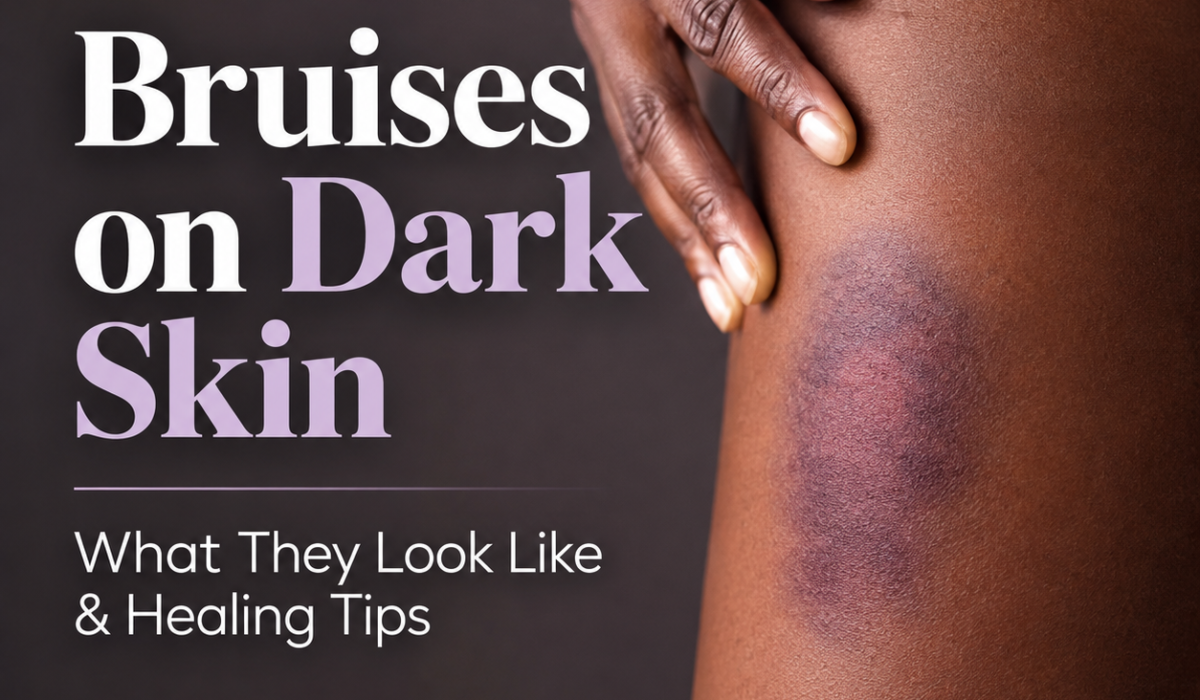
Bruises can look different on dark skin than they do on lighter skin, which can make them harder to notice at first. Instead of appearing blue or purple right away, bruises on dark skin may show up as a brown, deep purple, reddish, or even almost black patch. Over time, they may fade to shades of green, yellow, or brown before disappearing.
If you’ve ever wondered what bruises look like on dark skin, how to tell if one is healing, or when to worry about it, this guide explains it clearly. It also covers what makes a bruise more visible, how healing usually progresses, and simple steps that may help you feel more comfortable while it recovers.
What Is a Bruise?
A bruise, also called a contusion, happens when small blood vessels under the skin break after an injury. Blood leaks into the surrounding tissue, causing discoloration, tenderness, and sometimes swelling. In many cases, bruises on dark skin may not stand out right away, especially if the area is already richly pigmented or the injury is mild.
Bruises are common and usually not serious. They may happen after:
- Bumping into something
- Falling
- Sports injuries
- Pressure from tight clothing or medical devices
- Minor hits you may not even remember
For a broader look at recovery, see our Bruise Healing Guide: Fast Relief & Recovery Tips.
What Do Bruises Look Like on Dark Skin?
On dark skin, bruises on dark skin may not have the classic blue or purple color often shown in medical images. Instead, they can look like:
- Dark brown
- Purple-brown
- Deep plum
- Grayish or blackish patches
- Reddish areas in some cases
- Slightly raised or swollen skin around the area
The bruise may also feel:
- Tender or painful
- Warm to the touch
- Firm or swollen
Because skin tone affects how color shows through the skin, a bruise may be more noticeable by touch than by sight, especially in the early stage. This is one reason bruises on dark skin can be easy to miss until swelling or soreness makes them more obvious.
How Bruises Change as They Heal
Bruises usually go through color changes as the body breaks down and reabsorbs the blood under the skin. On dark skin, the color changes may be subtler, but healing can still follow a pattern.
Early stage
Right after the injury, the area may look:
- Dark red
- Purple
- Deep brown
- Slightly swollen
Middle stage
After a few days, the bruise may become:
- Darker brown
- Bluish-purple
- Greenish
- Gray-brown
Healing stage
As it fades, it may turn:
- Yellow-brown
- Light brown
- Pale or close to your natural skin tone
Not every bruise follows the same exact pattern, and some may skip certain colors. In most cases, bruises on dark skin become less painful before they fully disappear.
That gradual change is a helpful clue: if the color is spreading less, tenderness is easing, and swelling is going down, the bruise is usually healing as expected.
How Long Do Bruises Last?
Most bruises heal within 1 to 2 weeks, though deeper bruises may take longer. Small bruises often fade faster, while larger or more severe bruises may take several weeks to fully disappear.
Healing time can depend on:
- The size of the bruise
- Where it is on the body
- Your age
- Your overall health
- Whether you take certain medications, such as blood thinners
According to the NHS bruise guidance, most bruises improve on their own without treatment.
If the bruise is deep, located in a place that gets a lot of movement, or caused by a stronger impact, it may linger longer. Even so, bruises on dark skin should slowly become less painful and less noticeable over time.
How to Tell If It’s a Bruise on Dark Skin
Since bruises can be less visible on darker skin, look for these signs:
- Tenderness or soreness in one spot
- Swelling
- Discoloration that is different from your usual skin tone
- Pain when touched
- A firm lump under the skin in some cases
If you’re unsure whether a mark is a bruise, pay attention to whether it changes over a few days. Bruises on dark skin usually become less painful and gradually fade. You may also notice the area feels warmer than the skin around it at first, then calms down as it heals.
It can help to compare the spot with nearby skin in natural light. That often makes subtle changes easier to spot than indoor lighting, especially when the bruise is still new.
When to Be Concerned About a Bruise
Most bruises heal on their own, but some signs mean you should get medical advice.
Contact a healthcare professional if:
- The bruise appears without any known injury
- You bruise very easily or often
- The bruise is very large or keeps growing
- There is severe pain or swelling
- You cannot move the area normally
- The bruise is on the head, eye, or abdomen after an injury
- It does not improve after 2 to 3 weeks
- You have frequent nosebleeds or bleeding gums along with bruising
- You take blood thinners or have a bleeding disorder
Seek urgent care if a bruise is accompanied by:
- Trouble breathing
- Dizziness or fainting
- Severe headache after hitting your head
- Vomiting after a head injury
- Signs of infection, such as redness, warmth, pus, or fever
If bruising happens often, this may be worth discussing with a clinician alongside Easy Bruising: Why Do I Bruise Easily? Causes and When to Worry. In some cases, frequent bruising can point to a medication side effect, a vitamin deficiency, or an underlying bleeding problem.
If you are monitoring bruises on dark skin after repeated injuries, keep track of how often they happen, where they appear, and whether they are tied to exercise, pressure, or an accident. That information can help a clinician assess the cause.
How to Heal Bruises Faster
You cannot make a bruise disappear instantly, but you can help it heal more comfortably and possibly reduce swelling. These tips can also make bruises on dark skin easier to monitor while they recover.
1. Use a cold compress
Apply a cold pack or wrapped ice pack to the bruise for 10 to 20 minutes at a time during the first 24 to 48 hours. This can help reduce swelling and slow bleeding under the skin.
Never place ice directly on the skin.
2. Rest the area
Try to avoid using or pressing on the bruised area, especially if it is on a joint or muscle. Less friction and pressure can give the tissue a better chance to calm down.
3. Elevate the bruise if possible
If the bruise is on an arm or leg, raising it above heart level can help reduce swelling.
4. Switch to warm compresses after 48 hours
After the first couple of days, a warm compress may help increase blood flow and support healing. Use it for 10 to 20 minutes at a time.
5. Take pain relief if needed
Acetaminophen may help with pain. Some people use ibuprofen, but it can sometimes increase bruising in the first day or two by affecting blood clotting. Follow the directions on the label or ask a healthcare professional if you’re unsure.
6. Avoid rubbing or massaging the bruise
Rubbing can make the tissue more irritated and may worsen the bruise.
7. Eat a balanced diet
Your body needs nutrients to heal. Vitamins C and K, protein, and iron all support tissue repair and overall skin health.
Good hydration and enough rest also support recovery. While they won’t erase a bruise overnight, they can help your body do the work of repair more efficiently.
Frequently Asked Questions
What color are bruises on dark skin?
They may look dark brown, purple-brown, deep red, blackish, or grayish. As they heal, they can fade to green, yellow, or light brown.
Why is my bruise dark brown instead of blue?
Skin tone affects how bruises appear. Dark brown or deep purple is common on dark skin and does not necessarily mean anything is wrong.
Can a bruise be hard to see on dark skin?
Yes. Some bruises are easier to feel than see, especially early on. Tenderness and swelling may be the first signs.
How do I know if a bruise is healing?
It should become less painful, less swollen, and gradually lighter in color over time.
Can a bruise last longer on dark skin?
Not because of skin tone alone. Bruises usually heal based on depth, size, and location, not skin color.
When should I get a bruise checked?
Get it checked if it appears without injury, becomes very painful, keeps growing, or does not improve after a couple of weeks. Those signs can matter no matter what your skin tone is.
Final Thoughts
Bruises on Dark Skin may look different from the classic blue-purple marks many people expect. They often appear as dark brown, purple, blackish, or reddish patches and may be easier to feel than see. Most bruises heal on their own within a couple of weeks with simple care like rest, ice, and elevation.
If a bruise is unusually large, painful, frequent, or doesn’t improve, it’s important to get it checked. Understanding how bruises on dark skin look can help you recognize them early and know when to seek help.