
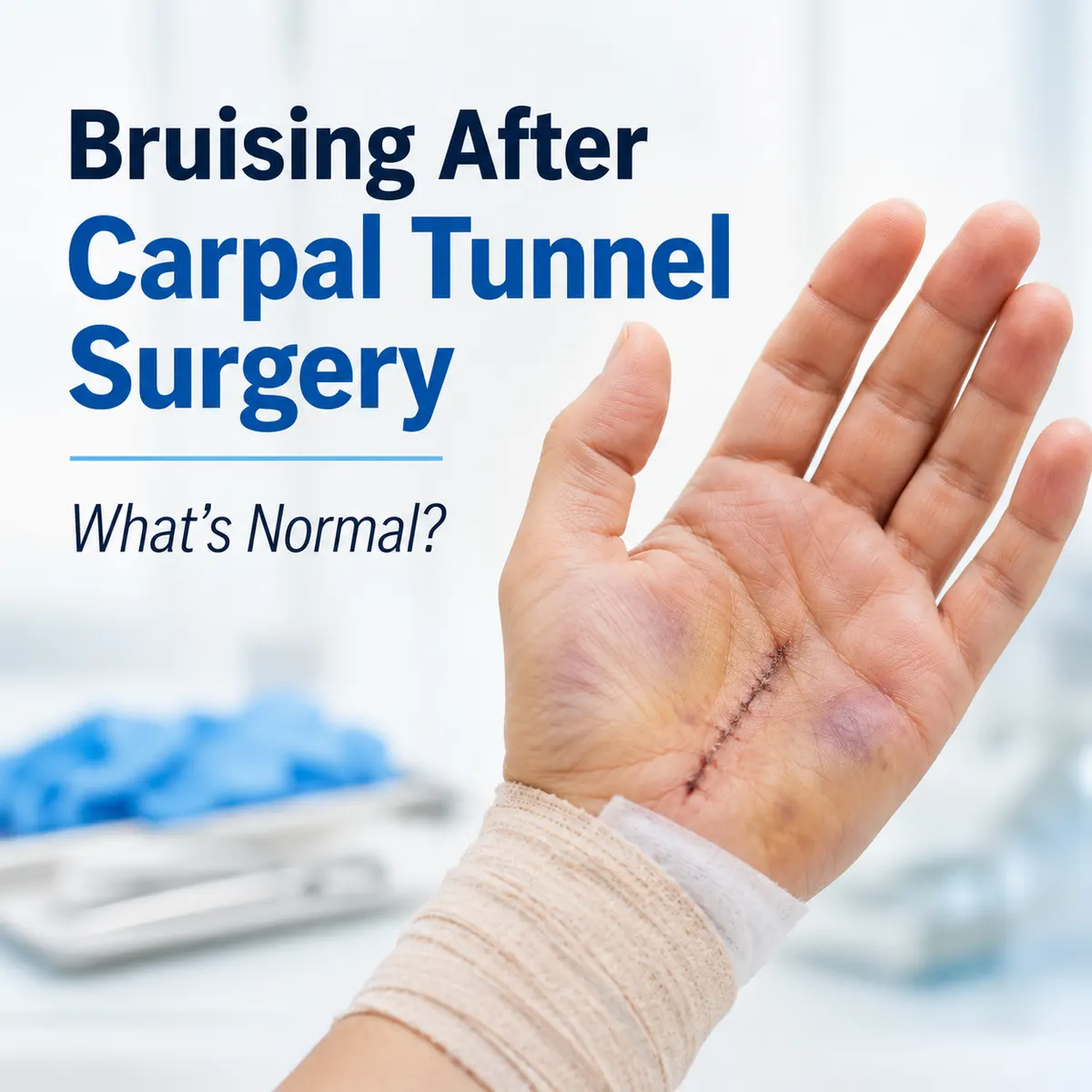
Bruising After Carpal Tunnel Surgery is common and usually nothing to worry about. In many cases, it is part of the normal healing process as the body repairs small blood vessels and tissue around the incision. The bruise may look alarming at first, but mild to moderate discoloration often improves on its own over the first one to two weeks.
If you’re wondering whether your bruising is normal, the short answer is: some bruising is expected, but severe, spreading, or worsening bruising may need medical attention. Understanding what healing typically looks like can help you know what to expect and when to call your surgeon.
Table of Contents
- Why bruising happens after carpal tunnel surgery
- What normal bruising looks like
- How long bruising lasts after carpal tunnel surgery
- What is normal pain versus concerning symptoms?
- How to reduce bruising and swelling after surgery
- When bruising is not normal
- Does bruising mean the surgery failed?
- Recovery expectations after carpal tunnel surgery
- Frequently asked questions
- The bottom line
Why bruising happens after carpal tunnel surgery
Carpal tunnel surgery involves releasing pressure on the median nerve by cutting the tissue that forms the roof of the carpal tunnel. During the procedure, small blood vessels in the wrist and palm can be disturbed. Even with a careful surgery, some bleeding under the skin can occur afterward, which leads to bruising after carpal tunnel surgery.
Bruising is more likely if you:
- Take blood thinners or aspirin
- Have fragile blood vessels
- Experienced more tissue manipulation during surgery
- Use your hand too much too soon after the procedure
- Develop swelling that causes blood to pool under the skin
Bruising can appear in the palm, wrist, or even farther down the hand and fingers due to gravity pulling blood into lower areas. For background on how bruising and tissue healing can also affect other parts of the body, see this guide to bottom of foot pain, which explains how inflammation and recovery can show up in different ways.
What normal bruising looks like
Normal bruising after carpal tunnel surgery can vary from person to person, but it often has these features:
- Blue, purple, red, or greenish-yellow skin discoloration
- Mild to moderate swelling around the incision
- Tenderness or soreness near the surgical site
- Bruising that fades gradually over days to a couple of weeks
- Color changes that move through the usual bruise stages as it heals
You may notice the bruise looks worse a day or two after surgery. That can be normal because blood may continue to spread under the skin before your body absorbs it. In many cases, bruising after carpal tunnel surgery is simply part of the expected recovery pattern.
How long bruising lasts after carpal tunnel surgery
Most bruising improves within 1 to 2 weeks, though some people may see lingering discoloration for up to 3 weeks or more, especially if the bruise was large or if they bruise easily.
Healing time depends on:
- The type of surgery performed
- Your age and overall health
- Whether you take medications that affect bleeding
- How active you are after surgery
- How your body heals in general
If bruising is getting lighter and less tender over time, that is usually a good sign. For a general overview of wound care and postoperative instructions, the MedlinePlus patient education library is a useful reference.
What is normal pain versus concerning symptoms?
Some discomfort after surgery is expected, especially around the incision and bruised area. Mild soreness, tightness, or throbbing can happen as swelling and bruising resolve.
Contact your doctor if you have:
- Increasing pain instead of gradual improvement
- Severe swelling that feels tight or worsening
- Numbness that is new or getting worse
- Fingers that turn pale, blue, or cold
- Bleeding that soaks through your dressing
- Redness that spreads or skin that feels hot
- Fever or drainage from the incision
- Bruising that keeps expanding significantly
These symptoms may suggest infection, excessive bleeding, circulation problems, or another issue that should be checked promptly.
How to reduce bruising and swelling after surgery
Following your surgeon’s instructions is the best way to support healing. Common recommendations include:
Rest and elevate your hand
Keeping your hand elevated above heart level can help reduce swelling and limit additional bruising. This is especially helpful during the first few days after surgery.
Use ice if approved by your surgeon
An ice pack wrapped in a cloth may help reduce swelling and discomfort. Do not place ice directly on the skin, and only use it if your surgeon says it is safe for your specific procedure.
Keep the dressing in place
Your bandage protects the incision and helps minimize irritation. Avoid removing or changing it unless instructed.
Limit heavy use of the hand
Too much activity too soon can worsen swelling and bruising. Avoid lifting, gripping, or repetitive hand movements until your surgeon clears you.
Take medications as directed
If your doctor prescribed pain medicine or recommended over-the-counter options, take them exactly as directed. Be careful with aspirin or other blood-thinning medications unless your surgeon has said they are safe.
These small steps can make bruising after carpal tunnel surgery less intense and may help your hand feel more comfortable as it heals.
When bruising is not normal
While bruising is usually expected, it should not be ignored if it becomes unusual. You should seek medical advice if:
- The bruising spreads quickly
- The hand becomes very swollen or hard
- You notice active bleeding under the dressing
- The bruise is accompanied by intense pain
- Your hand feels numb, weak, or increasingly stiff
- The incision opens or drains pus
- You have signs of infection such as fever, warmth, or redness
If you are unsure whether the bruising is normal, it is always safer to contact your surgical team. Prompt follow-up is especially important if bruising after carpal tunnel surgery is getting worse instead of better.
Does bruising mean the surgery failed?
No. Bruising after carpal tunnel surgery does not mean the surgery failed or that the nerve release did not work. Bruising is usually a skin and soft tissue healing issue, not a sign of poor surgical outcome.
In fact, many people experience bruising and still recover very well. What matters most is whether the bruise is gradually improving and whether your hand function is returning over time.
Recovery expectations after carpal tunnel surgery
Bruising is only one part of recovery. You may also experience:
- Swelling
- Stiffness
- Mild pain or soreness
- Temporary weakness in the hand
- Sensitivity around the incision
These symptoms usually improve with time, rest, and proper post-op care. Nerve-related symptoms such as numbness or tingling may take longer to resolve, especially if the nerve was compressed for a long period before surgery.
Staying consistent with your instructions can make the recovery process smoother, and it can help you tell the difference between ordinary healing and a problem that needs attention.
Frequently asked questions
Is bruising after carpal tunnel surgery normal?
Yes. Mild to moderate bruising is common after surgery and usually improves as healing progresses.
Why is my bruise getting darker after surgery?
Bruises often look worse before they look better. Blood under the skin can spread or settle downward before it is reabsorbed.
How long should bruising last?
Most bruising fades within 1 to 2 weeks, though some people may bruise longer depending on their healing process and medications.
Should I worry if my whole hand is bruised?
A larger bruise can still be normal after hand surgery, especially early on. However, if swelling, pain, or discoloration is severe or worsening, contact your doctor.
Can I ice a bruise after surgery?
Often yes, but only if your surgeon has approved it. Always follow your post-op instructions.
The bottom line
Bruising After Carpal Tunnel Surgery is usually normal and expected. It happens because small blood vessels and tissues are disturbed during the procedure, and the discoloration typically fades over time. Mild bruising, swelling, and soreness are common parts of recovery.
What matters most is that the bruising gradually improves. If bruising is severe, rapidly worsening, or accompanied by increased pain, numbness, redness, drainage, or fever, contact your surgeon right away. When in doubt, it is safer to ask than to wait.
With proper care, most people recover steadily and see the bruise fade as the hand heals.