Bronchoscopy With Transbronchial Biopsy is a medical procedure used to look inside the lungs and collect small tissue samples for testing. It is often recommended when a doctor needs more information about a lung condition that cannot be diagnosed from imaging alone. If you have been scheduled for bronchoscopy with transbronchial biopsy, you may be wondering what it involves, why it is done, whether it hurts, and how long recovery takes.
This article explains what bronchoscopy with transbronchial biopsy is, why it is performed, how to prepare, what happens during the procedure, possible risks, and what to expect afterward.
Table of Contents
What Is Bronchoscopy With Transbronchial Biopsy?
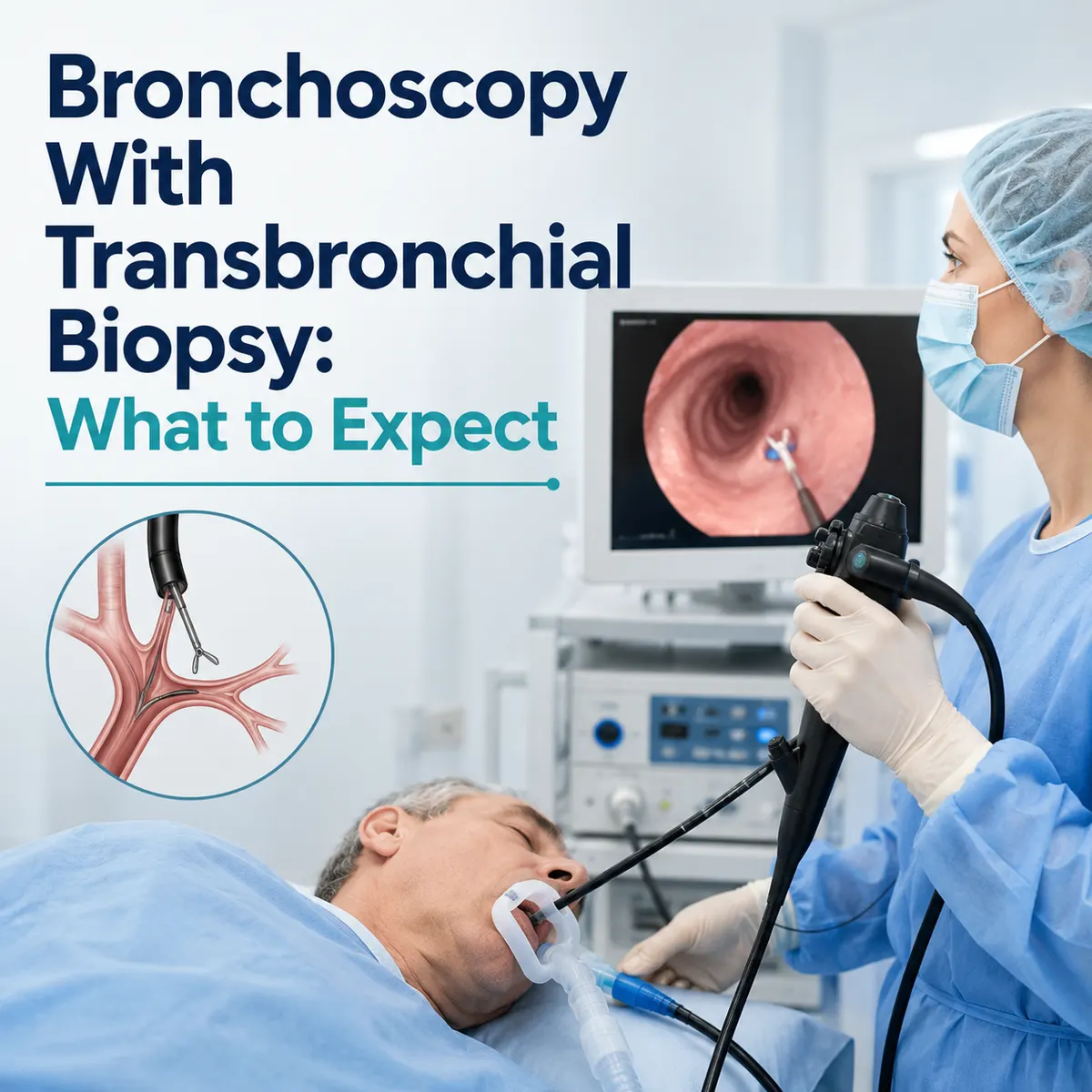
A bronchoscopy is a procedure in which a doctor uses a thin, flexible tube called a bronchoscope to examine the airways and lungs. The bronchoscope is usually inserted through the nose or mouth and passed down into the lungs.
A transbronchial biopsy is a type of biopsy done during bronchoscopy. The doctor uses small instruments through the bronchoscope to remove tiny pieces of lung tissue. These samples are then sent to a lab for analysis.
Together, bronchoscopy with transbronchial biopsy allows doctors to both inspect the lungs and obtain tissue samples in one procedure.
In some cases, the team may also perform additional sampling, such as a wash or lavage, to look for infection or inflammation. For a related overview of the airway exam itself, you can read about the Bronchoscopy Procedure: What to Expect Before, During & After.
Why Is It Done?
Doctors may recommend bronchoscopy with transbronchial biopsy for several reasons, including:
- To investigate abnormal areas seen on a chest X-ray or CT scan
- To diagnose lung infections
- To evaluate inflammation or scarring in the lungs
- To check for lung cancer or other growths
- To look into unexplained coughing, shortness of breath, or coughing up blood
- To diagnose diseases such as sarcoidosis, interstitial lung disease, or certain autoimmune conditions
The main purpose is to help identify the cause of lung symptoms or abnormal imaging findings. In other words, bronchoscopy with transbronchial biopsy gives doctors a way to see the airways directly and collect tissue that imaging cannot show.
When imaging raises concern for a mass or suspicious lesion, the biopsy can help guide the next step in care. In some situations, the information may also help doctors decide whether more testing is needed, including follow-up scans or other biopsy methods.
Who May Need This Procedure?
This procedure may be considered if you have:
- Persistent cough
- Unexplained breathing problems
- Abnormal chest imaging
- Suspicious lung nodules or masses
- Signs of infection that need tissue testing
- A lung condition that cannot be confirmed with blood tests or imaging alone
Your doctor will decide whether this procedure is appropriate based on your symptoms, medical history, and test results.
It may also be considered if your care team needs to distinguish between infection, inflammation, scarring, and cancer. Because the causes of lung symptoms can overlap, bronchoscopy with transbronchial biopsy is often part of a broader diagnostic workup rather than a standalone test.
How to Prepare for Bronchoscopy With Transbronchial Biopsy
Preparation is important to help reduce risks and make the procedure go smoothly. Your doctor will give specific instructions, but common guidelines include the following.
Before the procedure
You may be asked to:
- Not eat or drink for several hours before the bronchoscopy
- Tell your doctor about all medications, especially blood thinners, aspirin, diabetes medications, and supplements
- Share any history of bleeding problems, heart conditions, allergies, or anesthesia issues
- Arrange for someone to drive you home afterward
- Remove jewelry, glasses, dentures, or contact lenses before the procedure
If you take medications that affect blood clotting, your doctor may ask you to stop them for a certain period before the biopsy.
It is also a good idea to ask whether you should continue regular prescriptions on the morning of the test. Clear instructions can reduce confusion and help the procedure start on time.
What to tell your doctor
Be sure to mention if you:
- Have a pacemaker or implanted device
- Are pregnant or think you may be pregnant
- Have had recent infections
- Use oxygen at home
- Have a history of asthma, COPD, or severe lung disease
Clear communication helps the medical team plan the safest approach.
If you are trying to understand why your doctor is ordering a lung biopsy, the reason is often related to a specific finding on imaging or a need to identify the cause of symptoms more precisely. In many cases, bronchoscopy with transbronchial biopsy offers a minimally invasive way to get that answer.
What Happens During the Procedure?
Bronchoscopy With Transbronchial Biopsy is usually done in a hospital or outpatient procedure center. It often takes 30 minutes to an hour, though it may take longer depending on the complexity of the case.
Step by step
- You are given sedation or anesthesia
Most patients receive medication to help them relax. You may also get a numbing medicine sprayed into your nose, throat, or airways. - The bronchoscope is inserted
The doctor gently inserts the bronchoscope through your nose or mouth and advances it into the airways. - The airways are examined
The doctor looks for inflammation, mucus, bleeding, blockages, or abnormal tissue. - The biopsy is taken
Small forceps are passed through the bronchoscope to collect tissue samples from the lung. You may not feel the tissue being removed because of the sedation and numbing medicine. - Additional tests may be done
Sometimes fluid is washed through the airways and collected for testing. This is called bronchoalveolar lavage and may be done along with the biopsy. - The bronchoscope is removed
After the samples are collected, the bronchoscope is taken out and you are monitored as you recover from sedation.
Some patients are surprised by how quickly the procedure moves once the sedation starts. The medical team focuses on comfort, breathing, oxygen levels, and safety throughout bronchoscopy with transbronchial biopsy.
To better understand the sampling process, it may help to compare it with other lung evaluation methods. For example, the tissue taken during bronchoscopy with transbronchial biopsy is much smaller than what is collected in surgical biopsy, but it can still provide valuable diagnostic information.
Is Bronchoscopy With Transbronchial Biopsy Painful?
Most people do not feel significant pain during the procedure because of sedation and numbing medicine. You may feel pressure, mild discomfort, or a need to cough while the bronchoscope is in place.
After the procedure, it is common to have:
- A sore throat
- Mild hoarseness
- A cough
- Slight chest discomfort
These symptoms usually improve within a day or two.
The experience can vary depending on the depth of sedation, the length of the test, and whether extra samples were needed. Still, bronchoscopy with transbronchial biopsy is generally well tolerated by most patients.
What Are the Risks?
Bronchoscopy With Transbronchial Biopsy is generally safe, but like any medical procedure, it has some risks.
Possible risks include:
- Bleeding from the biopsy site
- Infection
- Temporary low oxygen levels during the procedure
- Pneumothorax, or collapsed lung
- Reaction to sedative medications
- Fever or mild chest discomfort afterward
A collapsed lung is one of the more serious possible complications, though it is not common. Your medical team will monitor you closely and may order a chest X-ray afterward if needed.
The overall risk depends on your health, the location of the biopsy, and whether you have underlying lung disease. Your doctor will weigh the benefit of getting a diagnosis against the chance of complications.
What Should You Expect After the Procedure?
After bronchoscopy with transbronchial biopsy, you will usually stay in a recovery area until the sedative wears off and your breathing, oxygen level, and blood pressure are stable.
Right after the procedure
You may notice:
- Sleepiness from sedation
- A numb throat
- A mild cough
- Hoarseness
- Small amounts of blood in the mucus
Because your throat may still be numb, you will usually be told not to eat or drink until the swallowing reflex returns.
In some cases, the care team may observe you a little longer if you had more bleeding than expected or if your oxygen level needed extra support during the test. That extra monitoring is routine and does not always mean there is a problem.
Going home
Most people go home the same day. You will need someone to drive you because sedation can affect coordination and alertness for several hours.
Recovery at home
For the rest of the day, it is usually best to:
- Rest
- Avoid driving
- Avoid alcohol
- Avoid important decisions or work requiring full concentration
- Follow your doctor’s instructions about eating, drinking, and medication use
Many people feel back to normal within 24 hours, although a mild cough or throat irritation may last a bit longer.
After bronchoscopy with transbronchial biopsy, your doctor may give you very specific instructions about activity, fluids, and medicines. Follow those directions closely, especially if you take blood thinners or have chronic lung disease.
When to Call a Doctor
Contact your doctor right away if you have any of the following after the procedure:
- Heavy bleeding or coughing up more than a small amount of blood
- Trouble breathing
- Chest pain that does not go away
- Fever
- Worsening cough
- Signs of infection
- Severe dizziness or fainting
These symptoms could signal a complication and should be evaluated promptly.
Emergency care may be needed if breathing suddenly worsens or if you cough up a large amount of blood. It is better to call sooner rather than wait when symptoms seem more severe than expected after bronchoscopy with transbronchial biopsy.
How Long Does It Take to Get Results?
The biopsy samples are sent to a pathology lab for examination. Results may take several days to a week or more, depending on the type of test needed.
Your doctor will explain what the tissue shows and whether additional testing or treatment is needed.
Sometimes the lab also needs special stains, cultures, or molecular testing. That can add time, but it may provide a clearer answer. If you are waiting on a result that may affect treatment, ask your doctor when you should expect the report and whether you will hear first by phone, portal message, or follow-up visit.
What Conditions Can It Help Diagnose?
Bronchoscopy With Transbronchial Biopsy can help diagnose many lung conditions, including:
- Lung cancer
- Sarcoidosis
- Lung infections
- Interstitial lung disease
- Organizing pneumonia
- Inflammatory lung disorders
- Certain fungal or bacterial diseases
In some cases, the biopsy may not give a definite answer, and additional tests may be needed.
When cancer is one of the concerns, a tissue diagnosis can help guide staging and treatment planning. In some situations, doctors may need more than one test to understand the full picture, especially if the abnormal area is small or difficult to reach.
How Accurate Is It?
The accuracy of a transbronchial biopsy depends on several factors, including:
- The location of the lung abnormality
- The size of the area being sampled
- The type of lung disease suspected
- The experience of the medical team
While it is a valuable diagnostic tool, it does not always provide a complete diagnosis. Sometimes doctors need imaging, blood tests, cultures, or a different type of biopsy to confirm the cause.
For some patients, bronchoscopy with transbronchial biopsy is enough to confirm the diagnosis and move forward with treatment. For others, it may be one part of a larger evaluation that includes lab work and follow-up imaging.
Related Tests and Next Steps
Depending on what the biopsy shows, your doctor may recommend more testing. That could include repeat imaging, pulmonary function testing, sputum analysis, or a specialist referral. In select cases, a blood-based test may also help support the broader workup, such as a Blood Test for Lung Cancer: Early Detection Explained.
If your results suggest a more specific lung condition, treatment might focus on infection control, inflammation management, or cancer care. For example, if a suspicious lesion is found, your doctor may compare the tissue findings with the CT scan and decide whether another procedure is needed.
How to Talk With Your Doctor About the Procedure
If you are nervous about bronchoscopy with transbronchial biopsy, try asking your doctor these questions:
- Why do I need this test?
- What will you be looking for?
- Will I be fully asleep or sedated?
- What are the most likely risks in my case?
- Do I need to stop any medications beforehand?
- When will I get the results?
- What happens if the biopsy does not show a clear diagnosis?
Asking questions can help you feel more prepared and confident. It also gives your care team a chance to explain how bronchoscopy with transbronchial biopsy fits into your overall evaluation.
Frequently Asked Questions
How long does bronchoscopy with transbronchial biopsy take?
The procedure itself usually takes about 30 minutes to an hour, but you should plan for extra time for preparation and recovery.
Will I be awake during the procedure?
You will usually be sedated, but not fully asleep in all cases. Some people remain drowsy and relaxed, while others may receive deeper sedation depending on the setting.
Can I eat after the procedure?
You should wait until your throat numbness wears off and your doctor says it is safe to eat or drink. This helps prevent choking.
How soon can I return to normal activities?
Many people resume normal activities the next day. However, you should avoid driving, drinking alcohol, and strenuous activity for at least 24 hours or as directed by your doctor.
Is coughing blood normal afterward?
A small amount of blood in mucus can happen after a lung biopsy. Large amounts of blood or persistent bleeding are not normal and require medical attention.
Where can I read more about bronchoscopy risks and aftercare?
For a broader medical reference on bronchoscopy, the National Heart, Lung, and Blood Institute offers a helpful overview of what the test involves and how it is used: National Heart, Lung, and Blood Institute bronchoscopy guide.
The Bottom Line
Bronchoscopy With Transbronchial Biopsy is a common and useful procedure that allows doctors to examine the lungs and collect tissue samples for diagnosis. It is often used when imaging or symptoms suggest a lung condition that needs more detailed evaluation.
Most patients tolerate the procedure well, and recovery is usually quick. Knowing what to expect before, during, and after the biopsy can help reduce anxiety and prepare you for a smoother experience. If you have concerns about your specific case, your doctor can explain why the procedure is being recommended and what results may mean for your health.
When used appropriately, bronchoscopy with transbronchial biopsy can provide answers that help guide treatment, ease uncertainty, and support faster next steps in care.