A bruised tailbone can make sitting, standing, and even sleeping uncomfortable. The pain often starts after a fall, a hard landing, childbirth, or prolonged pressure on the lower spine. While most tailbone bruises heal on their own, the discomfort can be intense and slow to improve if you do not treat it properly.
The good news is that there are several ways to reduce pain, protect the area, and speed up recovery. This guide explains what a bruised tailbone feels like, how long it usually takes to heal, and the best fast-relief tips to help you feel better sooner.
Table of Contents
- What Is a Bruised Tailbone?
- Common Symptoms of a Bruised Tailbone
- What Causes a Bruised Tailbone?
- Fast Relief Tips for a Bruised Tailbone
- How Long Does a Bruised Tailbone Take to Heal?
- When to See a Doctor
- Bruised Tailbone vs. Broken Tailbone
- Recovery Tips to Help You Heal Faster
- Can You Exercise with a Bruised Tailbone?
- What Not to Do with a Bruised Tailbone
- Frequently Asked Questions
- Final Thoughts
What Is a Bruised Tailbone?
The tailbone, also called the coccyx, is the small bone at the very bottom of the spine. A bruised tailbone happens when the soft tissue around this bone is damaged, usually from direct impact or pressure. In some cases, the bone itself may also be injured, such as in a fracture or dislocation.
A bruise is different from a fracture, but the symptoms can feel similar. Both can cause pain in the lower back, especially when sitting or changing positions. Because the coccyx sits at the base of the spine, even a mild injury can make everyday movements feel surprisingly difficult.
For many people, the pain is not constant. Instead, it shows up most when they sit down, stand up, bend backward, or stay in one position too long. That is why this injury can interfere with work, driving, sleeping, and exercise even when the cause seems minor at first.
Common Symptoms of a Bruised Tailbone
A bruised tailbone usually causes pain that gets worse with pressure or movement. Common symptoms include:
- Pain when sitting down or getting up
- Tenderness at the bottom of the spine
- Pain when leaning back while seated
- Discomfort during bowel movements
- Pain during sex or exercise
- Swelling or bruising around the area
- Sharp pain after a fall or impact
Some people also notice pain that spreads into the lower back, hips, or upper buttocks. That does not always mean the injury is severe, but it can make the recovery period feel longer because the surrounding muscles tighten to protect the area.
If the pain is severe, lasts more than a few weeks, or follows a significant injury, it may be more than a bruise.
What Causes a Bruised Tailbone?
Most tailbone bruises happen because of direct trauma or repeated pressure. Common causes include:
- Falling backward onto a hard surface
- Slipping on ice or stairs
- Sports injuries
- Riding a bike or rowing for long periods
- Childbirth
- Sitting on a hard chair for too long
- Repeated strain from poor posture
People who sit for extended periods, such as office workers or drivers, may notice tailbone pain even without a single major injury. In those cases, the issue can build gradually from pressure, repeated vibration, or poor sitting mechanics rather than one obvious accident.
Hard landings during sports, especially skating, gymnastics, and contact sports, can also trigger coccyx pain. In other cases, the pain begins after a minor slip that seemed harmless at the time but left the area inflamed and sensitive.
Fast Relief Tips for a Bruised Tailbone
If your tailbone is bruised, the main goal is to reduce pressure, control pain, and avoid further irritation. These strategies can help you recover faster.
1. Rest the Area
Avoid activities that make the pain worse, especially sitting for long periods, heavy lifting, running, or cycling. Rest does not mean complete bed rest, but it does mean giving the area time to heal.
Try to stay active in gentle ways, such as short walks, to prevent stiffness and improve circulation. Gentle motion can also keep the muscles around the pelvis from tightening too much, which may reduce secondary pain in the lower back and hips.
2. Use Ice in the First 48 Hours
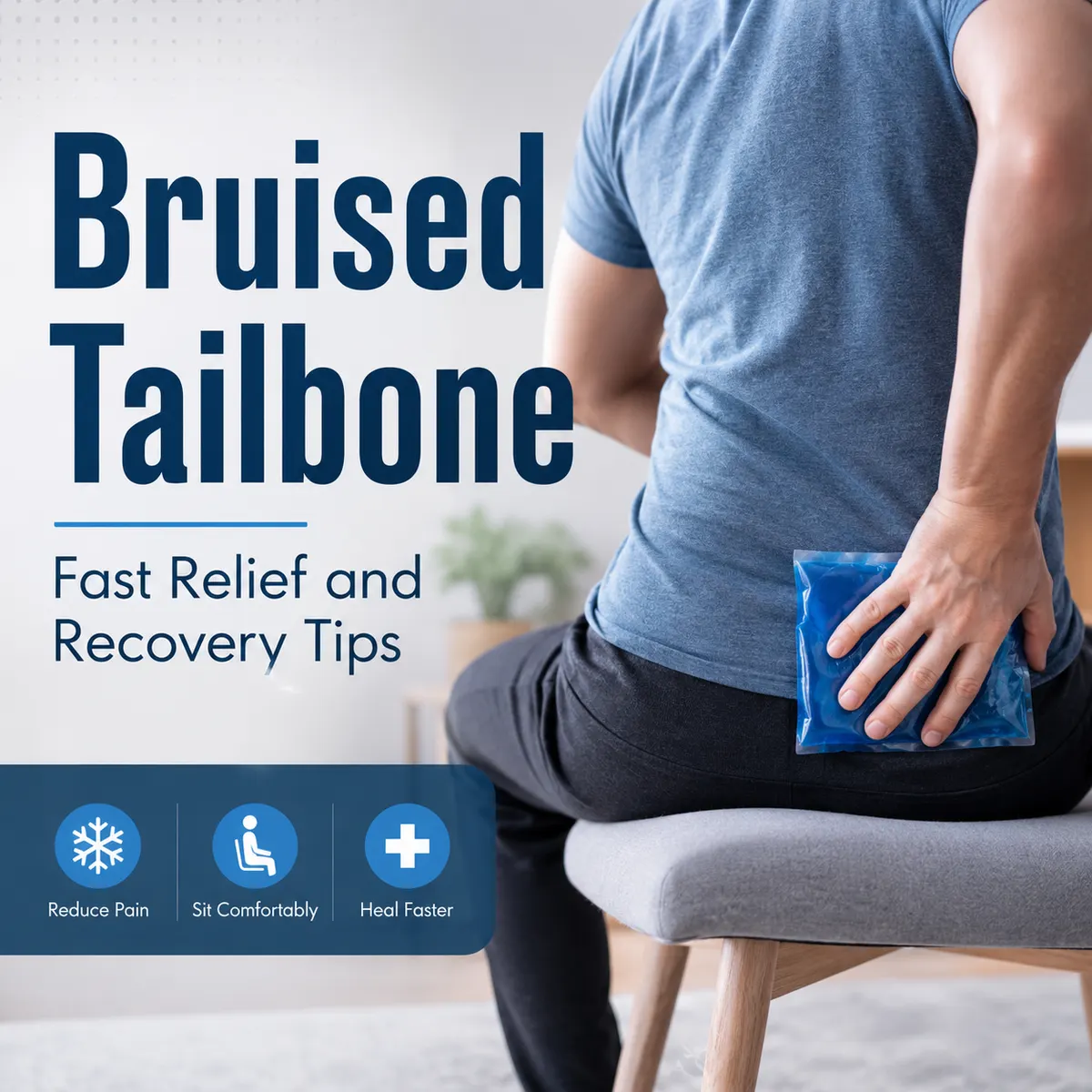
Applying ice can reduce swelling and numb pain. Wrap an ice pack or bag of frozen peas in a cloth and place it on the painful area for 15 to 20 minutes at a time.
Use ice several times a day during the first two days after injury. Never place ice directly on the skin.
3. Switch to Heat After the First Few Days
After swelling goes down, heat may help relax tight muscles and improve blood flow. Use a warm compress or heating pad for 15 to 20 minutes at a time.
If heat increases your pain or swelling, stop using it and return to ice. Some people find alternating ice and heat useful once the first acute phase has passed, but the best choice depends on what feels soothing and does not aggravate the injury.
4. Sit on a Cushion or Donut Pillow
One of the simplest ways to relieve tailbone pain is to reduce pressure while sitting. A coccyx cushion or donut pillow can help shift weight away from the tailbone.
If you do not have one, try leaning slightly forward while sitting to take pressure off the injured area. A wedge-shaped cushion may also help by encouraging a better pelvic position and reducing direct contact with the sore spot.
5. Adjust Your Sitting Position
How you sit matters. Avoid slouching or sitting directly on hard surfaces. Instead:
- Sit on a padded chair
- Lean forward slightly
- Shift your weight to one side if needed
- Stand up and move around often
Taking sitting breaks every 20 to 30 minutes can make a big difference. If your job requires prolonged sitting, setting a timer can help you remember to stand, stretch, and reset your posture before the pain builds up.
6. Take Over-the-Counter Pain Relief
Pain relievers such as ibuprofen or acetaminophen may help reduce discomfort. Ibuprofen can also help with inflammation.
Follow the label directions and avoid these medications if your doctor has told you not to take them. If you have stomach ulcers, kidney disease, liver problems, or take blood thinners, ask a healthcare professional before using them.
It is also wise to avoid taking more than one product with the same active ingredient. If you are unsure which medicine is safest for you, a pharmacist can help you compare options based on your health history.
7. Wear Loose Clothing
Tight clothes can add pressure and irritation. Choose soft, loose-fitting clothing that does not rub against the tailbone area.
Seams, belts, and stiff waistbands can all make the discomfort worse, especially when sitting. Softer fabrics and clothing with a little extra room around the hips may help you feel more comfortable throughout the day.
8. Support Bowel Movements
Constipation can make tailbone pain worse because straining puts pressure on the coccyx. Drink plenty of water, eat fiber-rich foods, and avoid forcing bowel movements.
If needed, a stool softener may help, but check with a pharmacist or doctor before using one.
Foods such as oats, berries, beans, vegetables, and whole grains can support regularity. If your pain makes you avoid bathroom visits, that can lead to more straining later, so staying ahead of constipation is an important part of recovery.
9. Sleep in a Position That Reduces Pressure
Sleeping position can affect recovery. Many people with tailbone pain feel better lying on their side with a pillow between the knees. This helps keep pressure off the lower spine and pelvis.
Avoid lying directly on your back if it increases discomfort. If you sleep on your side, a second pillow behind your back can help keep you from rolling over during the night.
10. Protect the Area During Daily Activities
Small changes during everyday tasks can prevent flare-ups. When getting into a car, sit slowly and use your hands for support. When rising from a chair, lean forward and push up with your arms instead of putting extra strain on the lower spine.
If you need to work at a desk, reposition your chair so your hips are slightly higher than your knees. This can reduce direct pressure on the tailbone and help you tolerate sitting for longer periods without worsening the bruise.
How Long Does a Bruised Tailbone Take to Heal?
A bruised tailbone often improves within a few days to a few weeks, depending on the severity of the injury. Mild bruises may heal in 1 to 2 weeks, while more painful injuries can take 4 to 8 weeks or longer.
Recovery depends on:
- How severe the injury was
- Whether you keep putting pressure on the area
- Your overall health
- Whether there is a fracture or other complication
If your symptoms are not improving after a couple of weeks, the injury may need medical evaluation.
Some people notice steady progress, then a sudden flare-up after a long car ride, a hard chair, or a workout that involved the pelvis and lower back. That does not always mean something new is wrong, but it does mean the area may still be sensitive and needs more time.
When to See a Doctor
Most bruised tailbones heal at home, but you should seek medical care if you have any of the following:
- Severe pain after a fall or injury
- Pain that gets worse instead of better
- Numbness or weakness in the legs
- Trouble controlling your bladder or bowels
- A visible deformity
- Fever or signs of infection
- Pain lasting longer than a few weeks
- Difficulty walking or standing normally
A doctor may examine the area and recommend imaging if a fracture or dislocation is suspected.
For more detailed treatment ideas, you may also find this guide on broken tailbone pain relief and what works fast helpful if your symptoms seem more severe than a simple bruise.
In some situations, persistent tailbone pain can be related to posture, muscle tension, or repetitive strain rather than the bruise itself. If the pain lingers, a clinician can help rule out other causes and suggest a safer recovery plan.
Bruised Tailbone vs. Broken Tailbone
Many people wonder whether tailbone pain means the bone is bruised or broken. The symptoms can overlap, but a broken tailbone is usually more painful and may take longer to heal.
A bruised tailbone often causes pain that improves gradually with rest and pressure relief. A fracture may cause sharper pain, greater sensitivity, and prolonged discomfort. Only a medical professional can confirm the difference if the symptoms are significant.
One clue is how the injury behaves over time. A bruise usually becomes slightly easier each week, even if the healing is slow. A fracture may stay highly tender for longer, especially when sitting, climbing stairs, or moving from a seated to a standing position.
Recovery Tips to Help You Heal Faster
To support healing, focus on reducing strain and avoiding repeated trauma. These habits can make recovery smoother:
- Avoid sitting for long periods
- Use cushions when seated
- Change positions often
- Stay hydrated
- Eat enough fiber to prevent constipation
- Walk gently each day
- Follow pain relief instructions carefully
- Protect the area from another fall or bump
The more you avoid pressure on the coccyx, the faster the bruise can calm down.
It can also help to keep track of what makes the pain worse. For example, if you notice discomfort after driving, a meeting in a hard chair, or an exercise class, adjust your routine so you do less of those activities while the injury heals. Small changes often matter more than people expect.
If your pain started after childbirth, your recovery may be influenced by pelvic floor strain as well as the bruised area itself. In that case, healing may take a little longer, and gentle support from a healthcare professional can be especially useful.
Can You Exercise with a Bruised Tailbone?
Light movement is usually okay if it does not worsen pain. Walking is often the best option because it keeps blood flowing without putting too much pressure on the area.
Avoid exercises that involve:
- Running
- Jumping
- Cycling
- Rowing
- Heavy squats or lifting
- Movements that require prolonged sitting
Return to exercise gradually once the pain has clearly improved.
If you want a gentle way to stay active while recovering, a short, easy mobility session may feel better than a full workout. Some people tolerate light stretching or standing movement well, especially when it keeps the hips, lower back, and pelvis from stiffening up. If you need a low-impact option, this 15-minute yoga routine for energy and flexibility may be a useful place to restart movement once sitting is more comfortable.
Safe activity guidelines during recovery
As a general rule, keep activity below the level that causes a pain spike later in the day. Mild discomfort during movement is sometimes acceptable, but sharp pain, throbbing, or increased soreness afterward usually means you did too much.
When in doubt, choose smaller doses of movement more often instead of a single intense session. This approach can help you stay mobile without repeatedly irritating the tailbone.
What Not to Do with a Bruised Tailbone
Some actions can make healing slower or the pain worse. Try to avoid:
- Sitting on hard surfaces for long periods
- Ignoring severe pain
- Returning to sports too quickly
- Applying ice directly to the skin
- Using too much pressure on the area
- Straining during bowel movements
- Staying completely immobile for days at a time
Balance rest with gentle movement for the best recovery.
It is also a mistake to assume all tailbone pain is just a simple bruise. If symptoms are severe, prolonged, or accompanied by numbness or weakness, getting checked sooner is safer than waiting too long.
Frequently Asked Questions
Is a bruised tailbone serious?
Usually, a bruised tailbone is not serious and improves with home care. However, severe pain, numbness, weakness, or symptoms that do not improve should be checked by a doctor.
What is the fastest way to heal a bruised tailbone?
The fastest relief usually comes from combining rest, ice, pressure relief with a cushion, and over-the-counter pain medicine. Avoiding activities that irritate the area is essential.
Should I use ice or heat for tailbone pain?
Use ice during the first 48 hours to reduce swelling. After that, heat may help relax tight muscles and ease stiffness.
Can I sit with a bruised tailbone?
Yes, but limit how long you sit and use a cushion or padded surface. Leaning forward slightly may reduce pain.
How do I know if my tailbone is bruised or fractured?
Both can cause similar pain. A fracture is more likely if the pain is severe, lasts longer, or came from a major fall. A doctor may need to examine you to tell the difference.
Does a bruised tailbone need imaging?
Not always. Many tailbone injuries are treated based on symptoms and physical examination. Imaging may be considered if the pain is intense, there was a major fall, or the recovery is not following the expected pattern.
Can childbirth cause tailbone pain?
Yes. Pressure during labor and delivery can strain the coccyx or the surrounding soft tissue. If the pain began after childbirth and does not settle with time, a medical professional can help identify the cause and suggest appropriate care.
Final Thoughts
A bruised tailbone can be painful and frustrating, but most cases heal with time and simple home care. The best way to recover faster is to reduce pressure, use ice early, switch to heat later if needed, and avoid activities that aggravate the injury.
For reference on when urgent symptoms may need medical evaluation, the NHS guide to cauda equina syndrome explains warning signs such as bladder or bowel changes, leg weakness, and severe nerve symptoms.
If the pain is severe or does not improve, do not ignore it. A medical evaluation can rule out a fracture or other problem and help you get the right treatment.
With patience, smart positioning, and a few practical changes to your daily routine, most people can get back to normal activities gradually and with less discomfort.