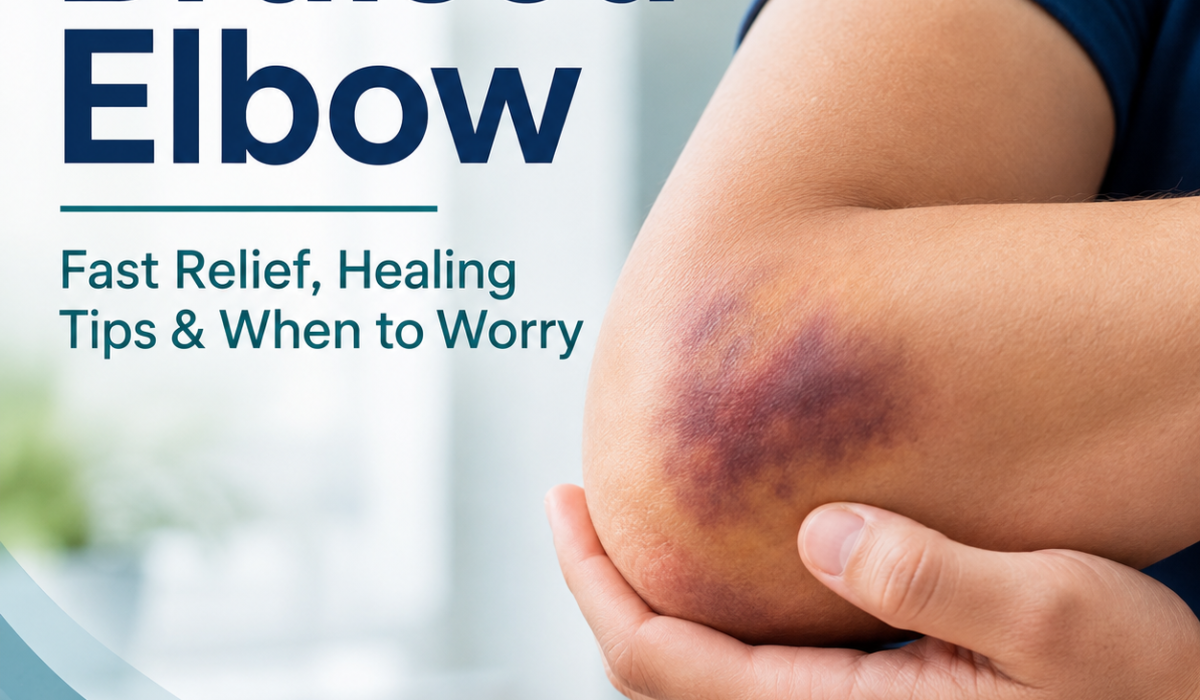
A bruised elbow usually happens after a direct hit, fall, or bump that damages small blood vessels under the skin. That bleeding under the surface causes discoloration, swelling, tenderness, and sometimes limited movement. In most cases, a bruised elbow heals on its own within a couple of weeks with simple home care, but it can feel surprisingly painful because the elbow has very little soft tissue cushioning.
If you are wondering how to get fast relief, how long healing takes, and when elbow bruising may be more serious, this guide covers the essentials. You will also learn what a healing bruise looks like, how to prevent extra irritation, and what symptoms mean you should get medical care sooner rather than later.
Table of Contents
- What is a bruised elbow?
- Common causes of a bruised elbow
- Fast relief for a bruised elbow
- How to help a bruised elbow heal faster
- How long does a bruised elbow take to heal?
- What does a healing bruise look like?
- When to worry about a bruised elbow
- Signs it may be more than a bruised elbow
- Bruised Elbow vs. broken elbow
- Home care do’s and don’ts
- When can you return to normal activity?
- How to prevent bruised elbows
- Frequently asked questions about a bruised elbow
- Bottom line
What is a bruised elbow?
A bruised elbow happens when impact injures the soft tissues around the joint without breaking the skin. The area may become:
- Purple, blue, green, or yellow
- Swollen or puffy
- Tender to touch
- Stiff or uncomfortable to bend and straighten
Because the elbow sits over bone with little cushioning, even a moderate hit can feel painful and look dramatic. Some people notice immediate soreness, while others see the discoloration and swelling appear more clearly over the next few hours. The bruise can also feel warmer than the surrounding skin at first, which is part of the normal inflammatory response.
Most bruises are minor soft tissue injuries, but the elbow is a joint with bones, ligaments, tendons, and a fluid-filled bursa all packed into a small area. That means swelling or pain can sometimes come from more than one structure at the same time. For that reason, paying attention to the full pattern of symptoms matters just as much as the color of the bruise itself.
Common causes of a bruised elbow
Elbow bruising can happen from everyday activities, such as:
- Falling onto the elbow
- Hitting the elbow on a table, door, or wall
- Sports injuries
- Lifting or moving heavy objects awkwardly
- A hard blow during contact sports or accidents
In most cases, the bruise is superficial. However, if the injury was severe, the pain is intense, or movement is limited, there may be more than a simple bruise. Repeated pressure can also cause a sore, bruised feeling over time, especially in people who lean on their elbows at a desk, while driving, or during long periods of work.
Some people are more likely to bruise easily. Thin skin, aging, frequent use of blood thinners, certain supplements, and a history of easy bruising can all make even a minor bump leave a visible mark. If bruising appears often without a clear cause, it is worth mentioning to a clinician.
Fast relief for a bruised elbow
The best early treatment for a bruised elbow is to reduce swelling and protect the area. The first 24 to 48 hours matter most.
1. Rest the elbow
Avoid activities that make the pain worse. Give the joint time to settle, especially if bending, lifting, pushing, or leaning on the elbow increases discomfort. Short-term rest does not mean complete immobility, but it does mean avoiding anything that clearly aggravates the injury.
2. Apply ice
Use a cold pack wrapped in a thin cloth for 15 to 20 minutes at a time, several times a day during the first 1 to 2 days. Ice helps reduce swelling, pain, and inflammation.
Do not place ice directly on the skin, since this can cause irritation or frostbite. If you do not have a cold pack, a bag of frozen vegetables wrapped in a towel can work in a pinch.
3. Elevate the arm
Whenever possible, keep the elbow raised above heart level. This can help reduce swelling and throbbing. Propping the arm on pillows while sitting or lying down may make the area feel more comfortable.
4. Use gentle compression if needed
A light elastic bandage may help control swelling, but it should not be tight. If you notice numbness, tingling, increased pain, or color changes in the hand, loosen it right away. Compression should support the tissue, not cut off circulation.
5. Take pain relief if appropriate
Over-the-counter pain relievers such as acetaminophen or ibuprofen may help. Follow package directions and avoid NSAIDs like ibuprofen if you have been told not to take them because of stomach ulcers, kidney disease, blood thinners, or other medical conditions.
If you are unsure which option is safer for you, ask a pharmacist or healthcare professional. Pain control can make it easier to rest the joint and use gentle movement later on.
6. Avoid heat at first
Heat may feel good later, but during the first couple of days it can increase swelling. Wait until swelling starts to go down before using warm compresses. In the early phase, cold is usually the better choice for a fresh bruise.
How to help a bruised elbow heal faster
After the first 48 hours, the focus shifts from reducing swelling to restoring comfort and movement. A bruise cannot be rushed in the strict sense, but the right care can keep it from lingering longer than necessary.
Keep it moving gently
Once pain starts to improve, gently bend and straighten the elbow a few times a day. Mild movement helps prevent stiffness, but do not push through sharp pain. The goal is to keep the joint from getting stiff, not to test how much discomfort you can tolerate.
Simple movements like opening and closing your hand, slowly rotating the forearm, and carefully flexing the elbow can support circulation around the area. Stop if the motion causes sharp pain or a pulling sensation that feels wrong.
Protect the bruise from repeated impact
Avoid leaning on hard surfaces or using the elbow to brace yourself while it heals. Repeated pressure can slow recovery. If you work at a desk, padding the armrest or adjusting your posture may help. If you sleep on the affected side, try to reposition with pillows so the elbow is not compressed through the night.
Watch for skin changes
It is normal for a bruise to change color as it heals. It may move from purple or blue to green, yellow, and then fade away. That color progression usually means blood under the skin is being broken down and reabsorbed.
Some bruises spread a little before they improve. Gravity can pull the blood in the tissue slightly downward, which may make the mark look larger even though the injury itself is settling down.
Support healing with basic care
Good rest, hydration, and a balanced diet can support tissue repair. Eating enough protein, vitamin C, and other nutrients also helps the body heal. If you are recovering from several injuries at once, or you are not eating well because of stress or illness, healing may take longer than expected.
Gentle self-care matters too. Keeping the area clean if the skin was scraped, avoiding smoking, and allowing yourself enough sleep can all support recovery. The bruise may still be visible, but soreness often eases before the discoloration fully fades.
Know when to seek added support
If bruising keeps returning in the same area or you are slow to heal, it may be worth checking for underlying issues that affect circulation, clotting, or tissue recovery. If your elbow pain also spreads into the upper arm or nearby shoulder, this article on breast and upper back pain is a helpful example of how discomfort can sometimes radiate beyond the original injury site and require a broader look at symptoms.
In some cases, a bruise that seems minor may be made worse by medications or medical conditions. Blood thinners, aspirin use, clotting disorders, and fragile blood vessels can make bruising easier and more noticeable. If that applies to you, ask your healthcare provider whether any changes are needed in your routine or treatment plan.
How long does a bruised elbow take to heal?
Most bruised elbows improve within 1 to 2 weeks. Larger or deeper bruises may take longer, sometimes up to 3 weeks or more. The first improvement is often less pain and swelling, followed by a gradual fading of the skin color.
Healing time depends on:
- How hard the elbow was hit
- Whether swelling is significant
- Your age and overall health
- Whether you take blood thinners
- Whether the bruise is repeatedly irritated
- Whether there is also a sprain, bursitis, or bone injury
If the bruise is getting lighter, pain is decreasing, and movement is improving, that is usually a good sign. On the other hand, if the elbow stays very tender, gets more swollen, or becomes harder to move after the first couple of days, the problem may not be a simple bruise.
People often expect bruising to fade in a straight line, but healing can look uneven. You might notice the color shifts from dark purple to yellowish-brown in patches rather than all at once. That is usually normal and not a sign that the injury is worsening.
What does a healing bruise look like?
A healing bruise often changes appearance over time:
- Day 1–2: Red, blue, or dark purple
- Day 3–5: Blue, purple, or green
- Day 5–10: Green, yellow, or brown
- After that: Fades gradually until gone
Some bruises may spread slightly before they improve. This can be normal if the blood under the skin shifts with gravity. The area may also feel tender when you press on it, even after the color starts fading.
As healing continues, the skin usually becomes less swollen and less sensitive to touch. If the discoloration stops changing or the pain becomes more intense instead of less, that is a reason to take a closer look at what is going on.
When to worry about a bruised elbow
Most elbow bruises are not serious, but certain symptoms can point to a fracture, dislocation, infection, or other injury that needs medical attention.
Seek medical care if you have:
- Severe pain
- Major swelling or deformity
- Trouble straightening or bending the elbow
- Numbness, tingling, or weakness in the hand or fingers
- A visible lump that does not improve
- Pain that gets worse instead of better
- Bruising after a major fall or injury
- An open wound with bruising and swelling
- Redness, warmth, or fever
- A bruise that appears without a clear cause
If the elbow looks crooked, the pain is intense, or you cannot use the arm normally, get evaluated right away. Sudden swelling after a fall can also mean fluid or blood has collected in the joint or surrounding tissue, which may need medical assessment.
Fever, redness, and warmth are especially important warning signs because they can point to infection or inflammation that is not simply from a bruise. Likewise, bruising that happens often in different places without injury should not be ignored.
When a bruise may need imaging
In some cases, a clinician may recommend an X-ray if there is point tenderness, major swelling, loss of motion, or concern for bone injury. That step can help rule out a fracture that is not obvious just by looking at the elbow.
Imaging may also be considered if the injury happened during a high-impact event, if pain is disproportionate to the visible bruise, or if you cannot comfortably bear weight through the arm. A scan does not mean something serious is definitely wrong, but it can provide reassurance and help guide the right treatment.
Signs it may be more than a bruised elbow
Sometimes what seems like a simple bruise is actually a more significant injury. Watch for:
Possible fracture
A fracture may cause sharp pain, swelling, weakness, and pain with movement. You may also feel or hear a crack at the time of injury. Bruising can appear around a fracture, but the pain usually feels deeper and more persistent than a normal contusion.
Possible dislocation
A dislocated elbow may look misshapen and be difficult or impossible to move. This is a medical emergency and should be evaluated quickly.
Bursitis
The elbow has a small fluid-filled sac called the bursa. Trauma can cause it to swell, leading to a soft, swollen bump at the tip of the elbow. If the bump becomes warm, red, or especially tender, it may need medical attention.
Deep tissue injury
A deep bruise can be very painful, take longer to heal, and limit motion more than expected. The skin may not look dramatically discolored at first, even though the underlying tissue is injured.
Deep tissue injuries sometimes hurt most when you try to fully straighten the arm or press directly on the elbow. If the discomfort feels out of proportion to the visible bruise, do not assume it will simply fade away on its own.
Bruised Elbow vs. broken elbow
A bruised elbow and a broken elbow can feel similar at first, but there are clues:
- A bruise usually improves gradually over a few days and still allows some movement
- A fracture often causes strong pain, swelling, and difficulty using the arm
- A bruise changes color as it heals
- A fracture may not improve much without treatment
If you are unsure, especially after a fall or hard impact, medical evaluation is the safest choice. The elbow is a complex joint, and even a small fracture can affect how the arm bends, rotates, or bears pressure.
People sometimes wait to see whether pain gets better, which is reasonable for a mild bruise. But if the elbow is unstable, visibly swollen, or painful to the point that normal daily use is difficult, it is better to get checked than to assume it is minor.
Home care do’s and don’ts
Do
- Rest the elbow
- Ice it during the first 48 hours
- Elevate the arm
- Move it gently as pain allows
- Monitor for worsening symptoms
- Use padding if you must rest the arm on a surface
Don’t
- Massage a fresh bruise aggressively
- Apply heat too early
- Keep playing sports through significant pain
- Ignore numbness or weakness
- Assume severe swelling is “just a bruise”
- Use a tight wrap that cuts off circulation
It can be tempting to “work through it,” especially if the pain seems bearable. But forcing the joint too soon may keep the tissue irritated and extend the healing time. Gentle care usually works better than aggressive treatment.
When can you return to normal activity?
You can usually resume normal activity once pain has decreased, swelling is minimal, and the elbow moves comfortably. Start slowly and avoid contact or heavy use until the area feels strong again.
If activity causes pain to return, back off and give it more time. A good rule of thumb is to increase use gradually rather than jumping straight back into sports, lifting, or repetitive motions.
For athletes, workers, or anyone who relies heavily on the arm, it may help to think in stages: first pain control, then gentle range of motion, then light use, and finally full activity. That gradual approach often prevents a small injury from becoming a longer recovery.
How to prevent bruised elbows
You cannot prevent every injury, but you can lower your risk by:
- Wearing protective gear during sports
- Keeping walkways clear to avoid falls
- Using caution when lifting or carrying heavy items
- Avoiding leaning on hard surfaces for long periods
- Improving balance and home safety, especially if you are prone to falls
If you often bump your elbows at work or during daily tasks, small adjustments can help. Padding a workstation, changing how you carry bags, and keeping frequently used spaces uncluttered may reduce repeat injury. For older adults, better lighting, secure handrails, and supportive footwear can also help prevent falls that lead to bruising.
Frequently asked questions about a bruised elbow
Is it normal for a bruised elbow to swell?
Yes. Mild to moderate swelling is common after a direct hit. The swelling should gradually improve with rest, ice, and elevation.
Can I exercise with a bruised elbow?
Light activity may be okay if it does not increase pain, but avoid exercises that strain or impact the elbow until it feels better. Movements that cause sharp pain, throbbing, or increased swelling are a sign to stop.
Why is my elbow bruised but I do not remember hitting it?
Sometimes minor bumps are forgotten. However, unexplained bruising can also happen more easily if you take blood thinners, have fragile skin, or have an underlying medical issue. Frequent unexplained bruising should be checked by a clinician.
Should I wrap a bruised elbow?
A loose compression wrap can help with swelling, but it should never be tight. If wrapping causes numbness, tingling, or more pain, remove it.
Is a warm compress good for a bruised elbow?
Not right away. Use ice during the first 24 to 48 hours. Warm compresses may help later, once swelling has improved.
Can bruising around the elbow happen from overuse?
Sometimes repeated pressure, leaning, or friction can irritate the soft tissues around the joint and make the area look tender or discolored. If that happens often, reducing strain and checking your workspace or sports technique may help.
When should I be concerned about repeated bruising?
If the same area bruises over and over, or you notice bruises in several places without clear injury, it is a good idea to get evaluated. Recurrent bruising can sometimes point to medication effects or a problem with clotting, and that should be assessed by a healthcare professional.
Bottom line
A bruised elbow is usually a minor injury that improves with rest, ice, elevation, and gentle movement over time. Most heal within 1 to 2 weeks. The most important thing is to watch for warning signs such as severe pain, major swelling, deformity, numbness, or trouble moving the arm.
If your symptoms are mild and steadily improving, home care is usually enough. If they are severe, getting worse, or followed a significant injury, it is important to seek medical evaluation. For general first-aid guidance on when injuries need medical attention, see the Centers for Disease Control and Prevention.