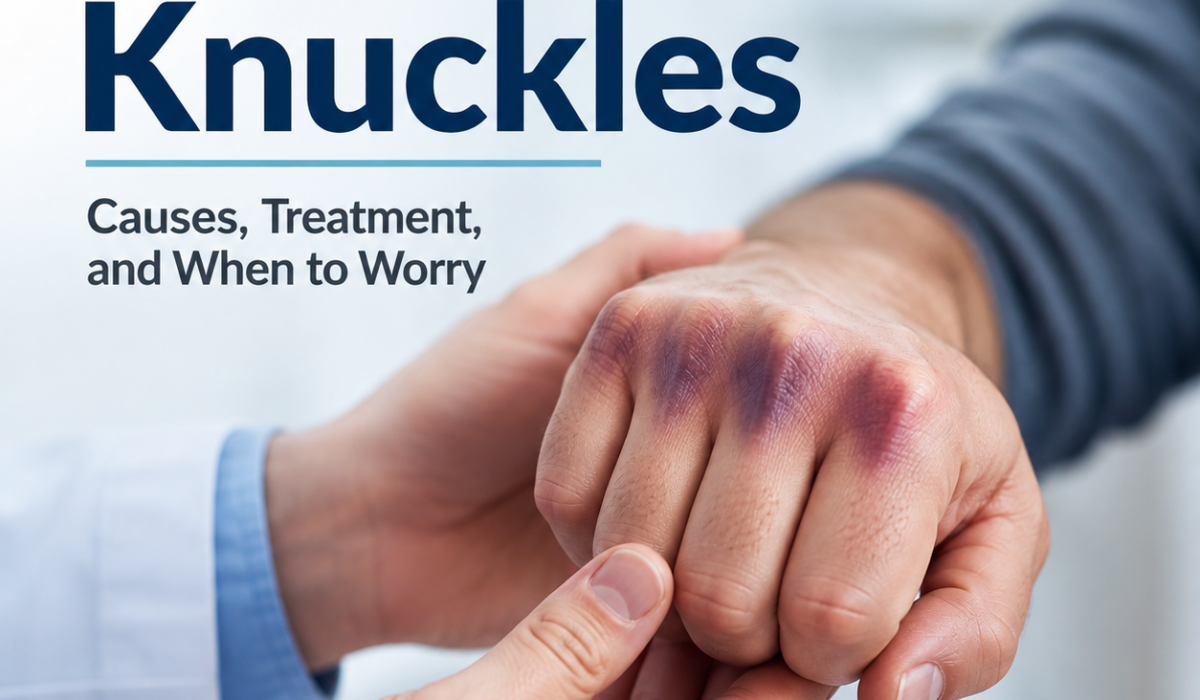
Bruised Knuckles are a common hand injury that can happen after a fall, a bump, punching something hard, or repetitive pressure on the hand. In many cases, the injury is minor and improves with rest and home care. But because the knuckles are part of a complex joint structure, a bruise can sometimes hide a more serious problem such as a fracture, ligament injury, or dislocation.
If you have bruised knuckles, the main question is usually: Is this just a bruise, or do I need medical attention? This article explains the most common causes, how to treat bruised knuckles at home, warning signs to watch for, and when to see a doctor.
- What Is a Bruised Knuckle?
- Common Causes of Bruised Knuckles
- Symptoms of a Bruised Knuckle
- How to Treat Bruised Knuckles at Home
- How Long Does a Bruised Knuckle Take to Heal?
- When a Bruised Knuckle Might Be More Serious
- Bruised Knuckles vs Broken Knuckles
- Frequently Asked Questions About Bruised Knuckles
What Is a Bruised Knuckle?
A bruised knuckle happens when small blood vessels under the skin are damaged, causing blood to leak into the surrounding tissue. This can lead to pain, swelling, skin discoloration, and stiffness. Bruised knuckles may look worse than they are, but they still deserve attention because hand injuries can affect daily tasks like gripping, writing, and opening containers.
The “knuckles” usually refer to the joints at the base of the fingers, especially the metacarpophalangeal joints. Because these joints are used constantly, even a small injury can feel very painful.
In most cases, bruised knuckles improve with simple home care. Still, the appearance of a bruise does not always tell the full story, especially if the hand was hit hard or twisted awkwardly.
Common Causes of Bruised Knuckles
Bruised Knuckles can happen in several ways. Some causes are harmless, while others may need medical evaluation. Understanding the trigger can help you judge whether the injury is likely to heal on its own or whether it needs a closer look.
1. Direct impact or trauma
This is the most common cause. You might bruise your knuckles after:
- Punching a wall, door, or object
- Hitting your hand against furniture
- Falling and landing on your hand
- Getting your hand caught or pinched
The force of the impact damages tiny blood vessels in the skin and soft tissue, which can quickly lead to visible bruising.
2. Sports injuries
Contact sports, boxing, martial arts, football, and basketball can cause knuckle bruising from repeated impact or accidental collisions. In sports settings, bruised knuckles may also happen when the hand is used to block, catch, or brace a fall.
3. Overuse or repetitive strain
Repeated gripping, lifting, or pressure on the hands can sometimes cause minor bruising or soreness around the knuckles, especially if the skin or soft tissue is already irritated. This can happen after heavy manual work, intense training, or frequent tool use.
4. Fracture or bone injury
A bruise may look mild even when the underlying bone is damaged. A boxer’s fracture, for example, often happens after punching a hard surface and can affect the knuckle area. If you want to learn more about related hand injuries, see this guide to broken knuckle symptoms, treatment, and healing tips.
5. Ligament, tendon, or joint injury
The knuckles are supported by ligaments and tendons. A sudden twist, blow, or forceful movement can injure these structures, leading to bruising, swelling, and pain. These injuries may also make the finger feel unstable or weak.
6. Medical conditions or medications
Some people bruise more easily because of:
- Blood-thinning medications
- Certain supplements
- Low platelet counts
- Clotting disorders
- Fragile blood vessels
- Aging skin
If bruises appear often without a clear injury, a medical cause may be involved. In that situation, it is worth speaking with a healthcare professional about the pattern of bruising.
Symptoms of a Bruised Knuckle
A bruised knuckle may cause:
- Mild to moderate pain
- Swelling around the joint
- Bruising or skin discoloration
- Tenderness when touched
- Difficulty making a fist
- Stiffness or reduced movement
- Warmth around the injury
In simple bruises, symptoms usually improve over several days. If pain is severe or movement is limited, the injury may be more than a bruise. Bruised knuckles can also feel achy when you grip, type, or twist your wrist, especially in the first day or two after the injury.
Discoloration may change from red or purple to blue, green, and yellow as the bruise heals. That color shift is normal and usually means the body is breaking down the trapped blood under the skin.
Sometimes the skin around bruised knuckles also feels tight or a little warm because of swelling. Mild stiffness in the morning or after rest is common, especially if you have been avoiding hand movement.
How to Treat Bruised Knuckles at Home
Most minor bruised knuckles can be treated at home with simple care. The goal is to reduce pain, swelling, and further injury while the tissue heals. Good early care can make bruised knuckles less painful and help the hand return to normal function sooner.
Rest the hand
Avoid activities that cause pain or put pressure on the knuckle. Rest helps the tissue heal and prevents the injury from getting worse. For many people, this means taking a short break from sports, lifting, or repetitive hand work.
If you still need to use your hand, keep the motion gentle and avoid forceful gripping. Let pain be your guide, especially during the first couple of days.
Ice the area
Apply a cold pack or wrapped ice pack for 15 to 20 minutes at a time, several times a day during the first 48 hours.
Ice can help:
- Reduce swelling
- Ease pain
- Limit bruising
Do not place ice directly on the skin, as this can cause frostbite. A thin cloth barrier is usually enough.
Many people find that icing after activity is especially helpful, since hand use can temporarily increase throbbing and swelling in bruised knuckles.
Elevate the hand
Keep your hand raised above heart level when possible. Elevation helps reduce swelling and throbbing. This is especially useful after an injury that causes the knuckle to puff up quickly.
Try resting the hand on pillows while sitting or sleeping so fluid drains away from the injured area.
Use light compression if needed
A soft wrap or compression bandage may help with swelling, but it should not be too tight. Remove it if your fingers become numb, cold, pale, or more painful. Good circulation is important, so check the fingers regularly when using a wrap.
If you are unsure whether a wrap is helping, loosening it slightly is better than keeping it too tight. Bruised knuckles should feel supported, not squeezed.
Take over-the-counter pain relief
If needed, medications such as acetaminophen or ibuprofen may help with pain and swelling. Follow the label instructions and avoid these medicines if your doctor has told you not to use them.
People with stomach ulcers, kidney disease, liver concerns, or blood-clotting issues should be especially careful and may need to ask a clinician which option is safest.
Protect the knuckle
Avoid heavy gripping, punching, push-ups, or sports until the pain improves. If needed, a splint or buddy taping may be recommended for certain injuries, but this should be done only when you know there is no fracture or dislocation.
Many people find it helpful to modify daily tasks for a few days, such as using the other hand to open jars, carrying lighter loads, or avoiding prolonged pressure on the injured finger joint.
Bruised Knuckles generally heal better when the hand gets enough rest between activities, rather than being used hard all day and then iced only at night.
What Not to Do
To avoid making the injury worse, do not:
- Keep using the hand through pain
- Massage a fresh bruise aggressively
- Apply heat during the first 48 hours if swelling is present
- Try to “pop” or force a joint back into place
- Ignore worsening pain or deformity
If the knuckle is cut, dirty, or bleeding, clean it gently and watch it closely. An open wound over a knuckle can need more attention than a simple bruise.
It is also wise not to return to sports too early. Re-injury can make bruised knuckles more painful and delay healing.
How Long Does a Bruised Knuckle Take to Heal?
A minor bruised knuckle often improves within a few days and may take 1 to 2 weeks to fully heal. More serious soft tissue injuries can take longer.
Healing time depends on:
- How hard the impact was
- Whether there is swelling
- Whether the bone or joint is injured
- Your age and overall health
If the bruise is not improving after several days, or symptoms are getting worse, medical evaluation is important. Bruised knuckles that linger may be responding to a deeper sprain, a fracture, or repeated irritation during healing.
In general, bruising should slowly fade, tenderness should lessen, and movement should become easier. If those changes are not happening, it is worth getting the hand checked.
When a Bruised Knuckle Might Be More Serious
Not all knuckle injuries are simple bruises. You should be cautious if you notice any of the following:
Severe pain
Pain that is intense, throbbing, or worsening may indicate a fracture, dislocation, or tendon injury.
Major swelling
Significant swelling can suggest deeper tissue damage or joint injury.
Deformity
If the knuckle looks misshapen, sunken, or out of place, the bone may be broken or dislocated.
Trouble moving the finger or hand
If you cannot bend or straighten the finger normally, the injury may involve tendons, ligaments, or bones.
Numbness or tingling
This may indicate nerve compression or circulation problems.
Open wound or cut over the knuckle
A cut over the knuckle can be serious, especially if it happened during a punch or impact. These wounds can hide deeper damage and are at higher risk for infection.
Bruising after punching someone or something
A punch to the mouth or hard object can cause a fight bite or a fracture. Even if the skin damage looks small, medical care may be needed. For general background on hand trauma and related injuries, this broken hand recovery guide may also be useful.
If the injury occurred after a forceful punch, do not assume the damage is minor just because you can still move your fingers. Some hand fractures remain functional at first but worsen when swelling increases.
Bruised Knuckles after a hard impact should be watched closely for the first 24 to 48 hours, since swelling and pain can increase before they improve.
When to See a Doctor
You should seek medical care if:
- The pain is severe or not improving
- Swelling continues to increase
- The knuckle looks bent, crooked, or deformed
- You cannot fully move your finger
- You have numbness, tingling, or weakness
- There is an open cut or bleeding
- The bruise appeared without injury
- You take blood thinners or bruise easily
- The injury happened in a fight or by punching a hard surface
A doctor may examine the hand and order an X-ray to check for a fracture. In some cases, additional imaging or treatment may be needed. If there is any concern about infection from a cut or bite, prompt evaluation matters even more.
Bruised Knuckles paired with worsening redness, drainage, fever, or increasing warmth should be checked promptly because these signs may point to infection rather than a simple bruise.
How Doctors Diagnose a Bruised Knuckle
To figure out whether the injury is just a bruise or something more serious, a doctor may:
- Ask how the injury happened
- Check for pain, swelling, and range of motion
- Press on the bones and joints
- Test finger strength and sensation
- Order an X-ray to look for broken bones or joint damage
If there is an open wound, the doctor may also check for infection or hidden cuts into the joint. In some cases, the skin may look only mildly injured while the deeper structures are more affected.
When symptoms suggest a more complicated hand injury, clinicians may also look for signs that the injury involves the soft tissue around the metacarpophalangeal joint rather than only the skin.
That exam matters because bruised knuckles can coexist with small fractures, torn ligaments, or joint sprains that are not obvious from the outside.
Treatment for More Serious Knuckle Injuries
If the knuckle injury is not just a bruise, treatment may include:
- Splinting or immobilization
- Buddy taping
- Reduction of a dislocated joint
- Antibiotics for open wounds or bite injuries
- Hand therapy after healing
- Surgery in some fracture or tendon cases
Early treatment matters because untreated hand injuries can lead to stiffness, reduced grip strength, or long-term joint problems. Even a small fracture can affect how the finger lines up when you make a fist, so follow-up care is important when symptoms are not settling down.
For more information on injuries involving the hand, the article on broken hand symptoms, treatment & recovery guide provides helpful context on what a more serious injury can look like.
After treatment, a gradual return to motion is often important. Too much rest can make the joint stiff, while too much activity can delay recovery, so the balance matters.
Can You Prevent Bruised Knuckles?
While accidents can happen, you can lower your risk by:
- Wearing protective gloves during sports or manual work
- Using proper technique during training or lifting
- Avoiding punching hard surfaces
- Keeping walkways and work areas clear to prevent falls
- Treating cuts and injuries quickly
- Talking to a doctor if you bruise easily or take blood thinners
Prevention also means paying attention to hand fatigue. Tired muscles and sore joints can make it easier to strike awkwardly or lose your balance, increasing the chance of bruised knuckles or other hand injuries.
If you participate in contact sports or strength training, warming up the hands and wrists can also help reduce risk. A brief warm-up improves circulation and prepares the tissues for impact or gripping.
Good protective habits do not eliminate every injury, but they can make bruised knuckles less likely and reduce the severity when accidents happen.
Bruised Knuckles vs Broken Knuckles
A bruised knuckle and a broken knuckle can look similar at first. Both may cause pain, swelling, and discoloration. The difference is that a bruise affects soft tissue, while a fracture involves the bone.
A broken knuckle is more likely if you have:
- Severe pain
- Obvious swelling
- Deformity
- Trouble moving the finger
- Pain when pressing on the bone
- A history of punching a hard object
Because it is hard to tell the difference without an exam or X-ray, persistent or severe symptoms should not be ignored. If the swelling is large or the hand feels weak, it is safer to treat the injury as potentially more serious until a clinician evaluates it.
Bruised Knuckles may be treated at home, but broken knuckles need proper alignment and follow-up so the hand heals correctly.
Frequently Asked Questions About Bruised Knuckles
Should I ice a bruised knuckle?
Yes, especially during the first 48 hours. Ice can help reduce swelling and pain.
Is it okay to use a bruised knuckle?
Light use may be fine if the pain is mild, but avoid heavy gripping or impact until it heals.
Can a bruised knuckle be fractured?
Yes. Some fractures look like bruises at first, so worsening pain, swelling, or deformity should be checked.
Why is my bruised knuckle swollen?
Swelling happens because of inflammation and fluid buildup after tissue damage.
How do I know if it’s infected?
Signs of infection include increasing redness, warmth, pus, fever, and worsening pain. This is especially important if there is a cut or bite wound.
Final Takeaway
Bruised Knuckles are often caused by minor trauma and usually improve with rest, ice, elevation, and time. However, because knuckles are small but complex joints, a bruise can sometimes hide a fracture, dislocation, or tendon injury.
You should be concerned if the pain is severe, the knuckle looks deformed, movement is limited, or you have numbness, significant swelling, or an open wound. When in doubt, medical evaluation is the safest choice.
A bruised knuckle may be simple, but if it is not healing as expected, it deserves attention. For more general medical background on hand injuries, the Cleveland Clinic explains when swelling and pain need urgent evaluation: Cleveland Clinic’s hand pain overview.
With the right care, most bruised knuckles heal well and do not cause lasting problems. The key is knowing when home treatment is enough and when the injury needs a professional check.
Bruised Knuckles that are mild, improving, and not causing deformity usually heal on their own. If yours is getting better day by day, that is a reassuring sign. If not, it is time to get it looked at.