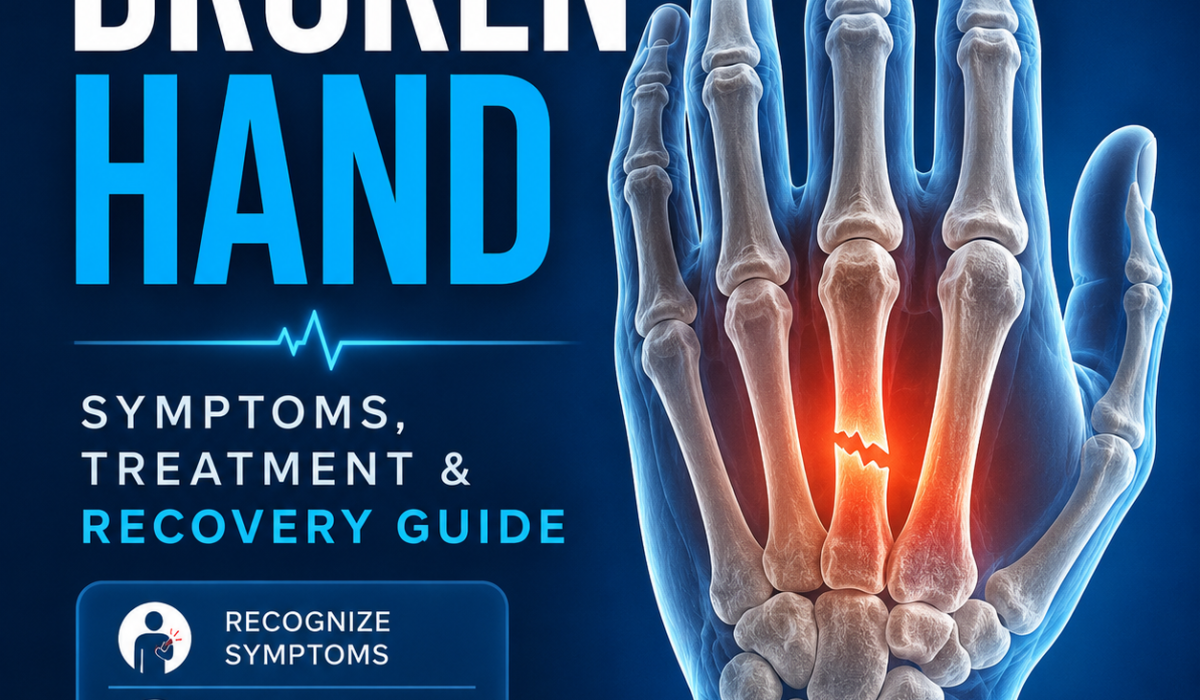
A broken hand can make even simple tasks painful and difficult. Whether it happened during sports, a fall, or an accident, knowing the symptoms, treatment options, and recovery process can help you respond quickly and heal properly. This guide explains what a broken hand looks like, how it is treated, and what to expect during recovery.
Table of Contents
- What Is a Broken Hand?
- Common Symptoms of a Broken Hand
- Broken Hand vs. Sprained Hand
- When to Seek Medical Care
- How a Broken Hand Is Diagnosed
- Treatment for a Broken Hand
- Home Care for a Broken Hand
- Recovery Time for a Broken Hand
- Rehabilitation and Physical Therapy
- Possible Complications
- Can You Move Your Fingers With a Broken Hand?
- What to Expect During Healing
- How to Prevent Future Hand Injuries
- Frequently Asked Questions
- Bottom Line
What Is a Broken Hand?
A broken hand means one or more bones in the hand have fractured. The hand contains many small bones, including the metacarpals in the palm and the phalanges in the fingers. A fracture can affect any of these bones and may be mild or severe.
Some hand fractures are obvious, while others can be mistaken for a sprain or bruise. Because untreated fractures can lead to stiffness, weakness, or permanent deformity, it is important to recognize the signs early.
Hand injuries can also involve nearby structures such as ligaments, tendons, nerves, and blood vessels. That is one reason a painful hand injury should not be brushed off, even if you can still move the fingers a little. If you want to understand how a fracture is managed in a related area, see this guide on broken arm recovery for a useful comparison.
Common Symptoms of a Broken Hand
A broken hand usually causes noticeable pain and swelling, but symptoms can vary depending on the location and severity of the fracture. Common signs include:
- Pain that worsens when moving the hand or fingers
- Swelling around the injured area
- Bruising or discoloration
- Tenderness when touching the hand
- Deformity, such as a crooked finger or bent knuckle
- Trouble gripping, pinching, or making a fist
- Limited range of motion
- Numbness or tingling in the fingers in some cases
- A popping or cracking sound at the time of injury
Other clues may include pain when trying to hold a phone, turn a key, open a jar, or write. Some fractures cause the knuckles to look flattened or a finger to cross over another finger when making a fist. That kind of rotation can be an important sign of a break that needs medical care.
If the hand looks deformed, the pain is severe, or you cannot move your fingers, medical evaluation is needed right away.
Broken Hand vs. Sprained Hand
A broken hand and a sprained hand can feel similar at first. A sprain involves stretched or torn ligaments, while a fracture involves broken bone.
A broken hand is more likely if you notice:
- Visible deformity
- Severe pain with pressure on a specific bone
- Pain that does not improve with rest
- Difficulty using the hand
- Swelling and bruising that develop quickly
Even if the injury seems minor, only a medical exam and imaging such as an X-ray can confirm whether a bone is broken.
Sprains often improve gradually with rest, icing, and protection, but fractures tend to cause sharper pain at one spot and a deeper sense that something is “wrong” in the hand. If you are unsure, it is safer to treat the injury as a possible fracture until it is evaluated.
When to Seek Medical Care
You should get medical attention for a suspected broken hand if:
- The hand is visibly misshapen
- You have severe pain or swelling
- You cannot move your fingers normally
- There is numbness, tingling, or weakness
- The skin is broken near the injury
- Pain continues after rest and icing
- The injury happened from a strong impact or crush
Emergency care is especially important if bone is visible, the hand is cold or blue, or there is loss of circulation.
It is also a good idea to seek care sooner rather than later if the injury happened during a fall on an outstretched hand, a car accident, or a sports collision. These mechanisms can produce more complex fractures than a simple jammed finger. When swelling is growing quickly, rings should be removed immediately to prevent them from becoming stuck.
How a Broken Hand Is Diagnosed
A doctor will usually begin with a physical exam and ask how the injury happened. They may check for swelling, tenderness, deformity, range of motion, and nerve or blood vessel function.
An X-ray is the most common test used to confirm a broken hand. In some cases, if the fracture is small or not clearly visible, additional imaging such as a CT scan may be needed.
During the exam, a clinician may also compare finger position, pinch strength, and the way the fingers line up when you make a fist. These checks help identify rotation or joint involvement, which can affect treatment. If soft tissue damage is suspected, the doctor may also look for tendon injury or check whether sensation is reduced in part of the hand.
For general medical reference on fractures and bone healing, the MedlinePlus broken bones overview is a helpful resource.
Treatment for a Broken Hand
Treatment depends on the type of fracture, which bone is broken, and whether the bones are still aligned. The main goals are to relieve pain, keep the bones in place, and restore normal hand function.
1. Rest and Immobilization
Many broken hands are treated with a splint or cast to keep the bones from moving while they heal. Immobilization helps reduce pain and allows the fracture to mend properly.
A splint may be used at first if swelling is expected. A cast or custom brace may be recommended after that.
In some cases, a hand specialist may recommend buddy taping for a stable finger fracture, while more involved breaks need a rigid splint or cast. The exact device depends on the bone involved, whether the joint is affected, and how likely the fracture is to shift during healing.
2. Pain Management
Pain relief may include over-the-counter medicines such as acetaminophen or anti-inflammatory medications, if appropriate for the person. Ice packs and elevation can also help reduce swelling and discomfort during the early stages.
Medication choices can vary based on age, other health conditions, and whether surgery may be needed. It is always best to follow the advice of a clinician or pharmacist when using pain medicine, especially if you take other prescriptions or have stomach, kidney, or liver concerns.
3. Bone Realignment
If the bones are out of place, a doctor may need to realign them. This is called reduction. It may be done manually in the office or emergency room, sometimes with numbing medicine or sedation.
After reduction, another X-ray is often taken to make sure the bones are in better position. If the fracture tends to shift, the hand may need more secure immobilization or surgical fixation.
4. Surgery
More serious fractures may require surgery, especially if:
- The bones are badly displaced
- The fracture is unstable
- There are multiple broken bones
- The break involves a joint
- The skin is open
- Nerves, tendons, or blood vessels are injured
During surgery, pins, screws, plates, or wires may be used to hold the bones in position while they heal.
Surgery is also more likely when fine alignment matters for hand function, such as fractures that affect the knuckles or cause rotation of a finger. Even a small change in alignment can affect grip, dexterity, and comfort later on.
Home Care for a Broken Hand
If a broken hand is suspected, proper first aid can help limit further injury before medical treatment.
Do:
- Remove rings or jewelry right away
- Rest the hand
- Apply ice wrapped in a cloth for 15 to 20 minutes at a time
- Keep the hand elevated above heart level
- Use a splint if one is available and the hand is unstable
- Seek medical evaluation promptly
Do not:
- Try to force the bones back into place
- Continue using the injured hand
- Apply heat during the first 48 hours
- Ignore numbness, deformity, or severe swelling
If you need to move around while waiting for care, keep the hand supported close to the body. Avoid carrying heavy bags, opening tight containers, or using the injured hand to push yourself up from a chair. Small actions like these can worsen pain or shift the fracture.
Recovery Time for a Broken Hand
Recovery time depends on the type of fracture and the treatment used. Many broken hand fractures take about 4 to 8 weeks to heal, though full recovery may take longer.
Factors that affect healing include:
- Which bone is broken
- Whether the fracture is displaced
- Age and overall health
- Smoking status
- How well the hand is protected during healing
- Whether therapy is needed after immobilization
Even after the bone heals, stiffness, weakness, and reduced grip strength may continue for weeks or months. Rehabilitation often plays an important role in getting the hand back to normal.
Healing also depends on whether the break is simple or involved. A stable crack in one metacarpal may recover more quickly than a fracture that crosses a joint or needed surgery. People who use their hands for work, sports, or instrument playing may notice that a full return to comfort takes longer than the bone-healing timeline alone.
Rehabilitation and Physical Therapy
After the cast or splint comes off, the hand may feel stiff or weak. Exercises and therapy help restore movement, strength, and coordination.
A doctor or hand therapist may recommend:
- Gentle range-of-motion exercises
- Strengthening exercises
- Stretching
- Grip training
- Activities to improve fine motor skills
It is important to follow guidance carefully. Doing too much too soon can delay healing, while doing too little can lead to long-term stiffness.
Therapy often starts with simple motions such as bending and straightening the fingers, making a soft fist, and touching the thumb to each fingertip. Later, the program may progress to squeezing therapy putty, opening clothespins, or rebuilding endurance for daily tasks. Recovery is usually easier when exercises are done consistently and within the limits set by the clinician.
For another example of bone healing and recovery after immobilization, you may also find this collarbone recovery guide useful.
Possible Complications
Most broken hands heal well with proper treatment, but complications can happen. These may include:
- Stiffness in the fingers or wrist
- Loss of strength
- Bone healing in the wrong position
- Chronic pain
- Arthritis if the fracture involves a joint
- Infection in open fractures
- Nerve or tendon damage
Early treatment and proper follow-up lower the risk of these problems.
Problems are more likely when care is delayed or when the hand is used too soon after injury. Watch for worsening pain, swelling that does not improve, or trouble moving a finger after the injury has already been treated. Those signs should be reported to the doctor, especially if they appear after a cast change or after the injury initially seemed to improve.
Can You Move Your Fingers With a Broken Hand?
Sometimes, yes. Being able to move your fingers does not rule out a fracture. Some broken hands still allow limited motion, especially if the break is not severe. However, movement may be painful or weak.
If movement causes significant pain or the hand feels unstable, it should be checked by a medical professional.
It is also possible to have a fracture without dramatic swelling at first. Pain that gets worse when you try to grip, twist, or make a fist can still point to a bone injury. Movement alone is not a reliable sign that everything is okay.
What to Expect During Healing
Healing usually happens in stages:
First few days
Pain, swelling, and bruising are usually at their worst. Rest, ice, elevation, and immobilization are most important.
First few weeks
The bone begins to knit together. Pain gradually improves, but the hand still needs protection.
After immobilization
Stiffness is common. Gentle movement and therapy help restore function.
Full recovery
Strength, flexibility, and grip may continue improving for several months.
During this process, it is normal for the hand to feel different from the uninjured side. Some people notice soreness with weather changes, morning stiffness, or quick fatigue when using the hand for work. These symptoms often improve steadily with time and rehab, but they should be reassessed if they suddenly worsen.
How to Prevent Future Hand Injuries
Some hand fractures cannot be prevented, but risk can be reduced by:
- Wearing protective gear during sports
- Using proper technique during physical activities
- Keeping walkways clear to avoid falls
- Using tools and equipment safely
- Wearing gloves when appropriate
- Addressing balance or vision problems that increase fall risk
Strengthening the forearms, improving balance, and warming up before sports may also help reduce the chance of hand injury. If you have had a previous fracture, protecting the area during higher-risk activities can be especially important while confidence and strength return.
Frequently Asked Questions
How do I know if my hand is broken or just bruised?
A broken hand usually causes more severe pain, swelling, and trouble using the hand than a simple bruise. Deformity, numbness, or pain in one specific area may suggest a fracture. An X-ray is needed for confirmation.
Can a broken hand heal on its own?
Some minor fractures may heal, but they still need proper medical care to make sure the bones stay aligned. Without treatment, the hand may heal incorrectly and lose function.
Do all broken hands need a cast?
Not always. Some fractures can be treated with a splint, brace, or taping, depending on the bone and the type of break. More serious fractures may need surgery.
How long should I keep my hand elevated?
Elevation is especially helpful during the first 48 to 72 hours after the injury, when swelling is usually greatest. Your doctor may recommend continuing it longer if swelling remains.
When can I return to sports or work?
That depends on the fracture, healing progress, and the type of activity. Returning too early can cause re-injury. A doctor should clear you before resuming sports, heavy labor, or activities that strain the hand.
Will my hand be weak after the cast comes off?
Temporary weakness is common after immobilization. The muscles, tendons, and joints may all feel stiff at first, and strength usually returns gradually with normal use and therapy.
What should I do if pain gets worse after initial treatment?
Worsening pain, increasing swelling, numbness, or color changes in the fingers should be checked promptly. These signs can mean the cast or splint is too tight, the fracture has shifted, or another problem is developing.
Bottom Line
A broken hand can cause pain, swelling, deformity, and difficulty using the fingers or wrist. Because it can be hard to tell a fracture from a sprain, getting checked early is the safest choice. Treatment may include splinting, casting, reduction, or surgery, followed by rehabilitation to restore strength and movement. With proper care, most broken hand injuries heal well and allow a full return to normal activities.