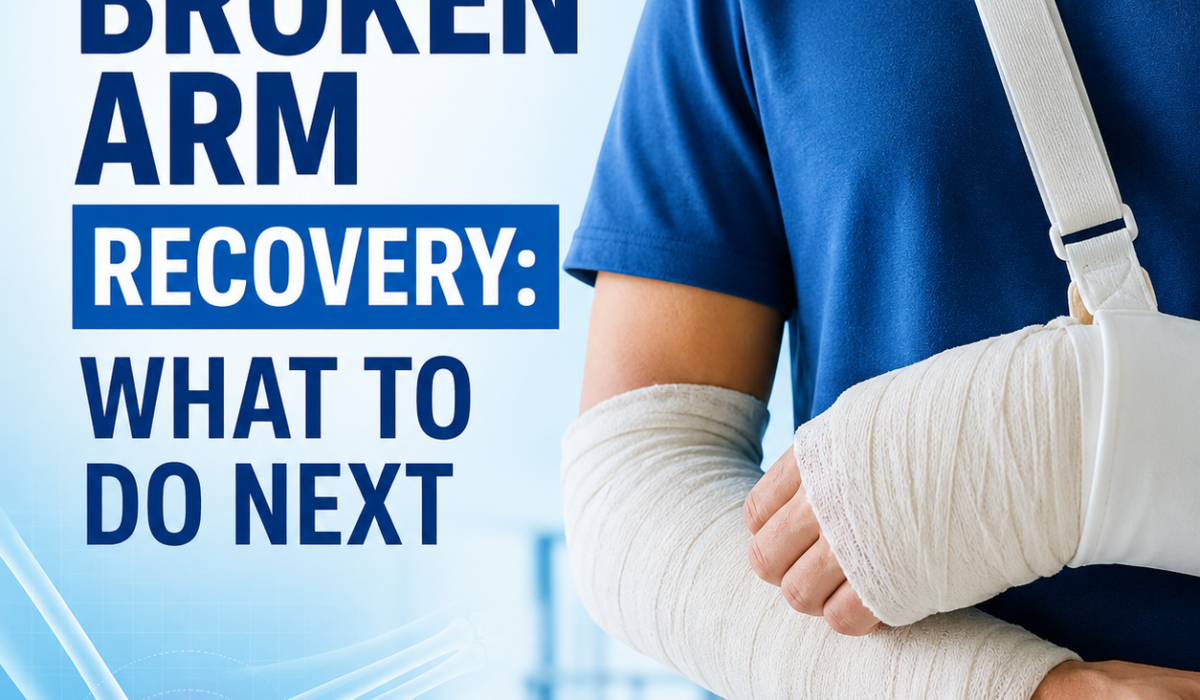
A broken arm can be painful, disruptive, and stressful, but most arm fractures heal well with the right treatment and recovery plan. If you or someone you care about has just been told they have a broken arm, the next steps matter. Proper care helps the bone heal correctly, reduces pain, and lowers the risk of long-term problems.
This guide explains what to do after a broken arm, what recovery usually looks like, and when to seek medical help. It also explains how to support healing at home, what to expect from follow-up care, and how to avoid setbacks during broken arm recovery.
Table of Contents
- What to do right after a broken arm
- How broken arm recovery usually works
- How long does a broken arm take to heal?
- What not to do during broken arm recovery
- When should you call a doctor?
- Do you need surgery for a broken arm?
- What happens during follow-up visits?
- How to care for a cast or splint
- What role does physical therapy play?
- Can you speed up broken arm recovery?
- When can you use your arm normally again?
- Common questions about broken arm recovery
- The bottom line
What to do right after a broken arm
If an arm fracture is suspected or confirmed, the first priority is to protect the injury and get medical care.
1. Keep the arm still
Avoid moving the injured arm as much as possible. If you are waiting for medical care, support the arm with a sling, towel, or folded cloth to prevent further injury.
2. Apply ice
Use a cold pack wrapped in a cloth for 15 to 20 minutes at a time. Ice can help reduce swelling and pain. Do not place ice directly on the skin.
3. Elevate the arm
If possible, keep the arm raised above heart level to help reduce swelling.
4. Control pain safely
Over-the-counter pain relievers may help, but use them only as directed and follow your doctor’s advice, especially if you have other health conditions.
5. Get prompt medical evaluation
A broken arm should be assessed by a healthcare professional. An X-ray is usually needed to confirm the fracture and determine whether the bones are aligned.
For more on bone healing and injury-related swelling, you may also find bone marrow edema treatment and symptoms helpful.
When you are first dealing with broken arm recovery, it helps to stay calm and focus on protecting the injury. Even a simple fracture can worsen if the arm is twisted, lifted, or bumped before it is stabilized.
How broken arm recovery usually works
Broken Arm Recovery depends on the type of fracture, where it occurred, and whether surgery was needed. Some fractures heal in a cast or splint, while more serious breaks may require surgery with pins, plates, or screws.
Common stages of recovery
First few days
This is usually the most painful period. Swelling, bruising, and tenderness are common. The arm may be placed in a splint first before a cast is applied. The splint allows for swelling, while still keeping the bone protected.
First few weeks
During this time, the bone begins to heal and stabilize. A cast or brace may be needed to keep the arm in the correct position. You may have follow-up visits and repeat X-rays to check progress. In some cases, your doctor may adjust the splint or cast to improve comfort and fit.
Several weeks to months
As the bone heals, stiffness and weakness are common. Physical therapy or home exercises may be recommended to restore motion, strength, and function. Recovery at this stage is often gradual, and soreness can return briefly when activity increases.
Good nutrition matters too. Calcium, protein, and vitamin D all support healing, and your healthcare team may recommend adjustments based on your age, health, and fracture type. Sleep, hydration, and rest also help the body repair damaged tissue.
Some people expect to feel normal as soon as the cast comes off, but broken arm recovery often continues after the bone has knit together. Joints, muscles, and tendons may still need time to loosen and strengthen.
How long does a broken arm take to heal?
Healing time varies, but many broken arms take about 6 to 8 weeks to heal in children and 8 to 12 weeks or longer in adults. More severe fractures, open fractures, or fractures requiring surgery may take longer.
Even after the bone heals, full recovery may take additional time because muscles and joints need to regain flexibility and strength. Some people also need time to rebuild confidence in using the arm again.
In some cases, bone-healing problems can delay progress. If you want to understand how inflammation and healing changes appear on imaging, the overview of bone marrow edema may be useful.
The exact timeline for broken arm recovery can also depend on age, overall health, whether the fracture is displaced, and how closely the treatment plan is followed. Children often heal faster than adults because their bones remodel more quickly.
What not to do during broken arm recovery
Certain actions can slow healing or make the injury worse.
Do not remove a cast or splint unless told to
Casts and splints keep the bone stable while it heals. Removing them early can cause the fracture to shift and delay healing.
Do not ignore worsening pain or swelling
Increasing pain, numbness, or tightness may signal a serious problem. These symptoms should be checked promptly.
Do not lift heavy objects
Avoid putting stress on the injured arm before your doctor says it is safe. Even light lifting can be too much too soon in some cases.
Do not get a cast wet unless it is designed to be water-safe
Moisture can damage a standard cast and irritate the skin. A wet cast may also lose its shape and stop supporting the bone properly.
Do not return to sports or strenuous activity too early
Even if pain improves, the bone may still be healing and vulnerable to re-injury. Waiting for medical clearance is an important part of broken arm recovery.
If you are dealing with another arm injury at the same time, such as swelling or skin infection, a related guide on under arm boil treatment may help you tell the difference between bone pain and skin-related symptoms.
It is also wise not to use the arm to test whether the fracture has healed. If a movement causes sharp pain, stop and ask your clinician for guidance.
When should you call a doctor?
Contact a healthcare provider if you notice any of the following:
– Severe pain that is not improving
– Fingers that become numb, cold, blue, or pale
– Swelling that is getting worse
– A cast that feels too tight
– Trouble moving the fingers
– Foul odor or drainage from the cast
– Fever or signs of infection after surgery
– The cast cracks, loosens, or becomes wet
– A new injury or fall occurs during recovery
Seek emergency care if the arm looks deformed, the person cannot move the fingers, or there is heavy bleeding or an open wound with exposed bone.
Any sudden change in hand color, temperature, or movement should be taken seriously. These can suggest a circulation or nerve problem that needs urgent attention.
Do you need surgery for a broken arm?
Not all broken arms need surgery. Many simple fractures heal well with a cast or splint. Surgery may be needed if:
– The bone ends are out of alignment
– The fracture is unstable
– The bone broke through the skin
– Nerves or blood vessels were injured
– The break involves a joint
– The fracture is not healing properly
Your doctor will explain whether surgery is necessary based on X-rays and the type of fracture. For more information on bone-related treatments and recovery, see the article on bowlegs causes and treatment options.
According to the Mayo Clinic’s fracture overview, treatment depends on the location and severity of the break, along with overall health and age: Mayo Clinic fracture guide.
If surgery is needed, broken arm recovery may involve a longer healing period, wound care, and close follow-up to make sure the bone stays in the correct position.
What happens during follow-up visits?
Follow-up care is an important part of broken arm recovery. At these visits, your doctor may:
– Check swelling and pain
– Examine finger movement and circulation
– Take repeat X-rays
– Adjust or replace the cast
– Decide when the cast can be removed
– Recommend physical therapy or exercises
Keeping these appointments helps make sure the bone is healing in the correct position. If you had surgery, follow-up visits are also used to watch for infection, stiffness, or hardware-related concerns.
These visits are also a good time to ask practical questions, such as whether you can drive, work, shower normally, or return to exercise. Clear instructions can make broken arm recovery less confusing and safer.
How to care for a cast or splint
If your broken arm is in a cast or splint, good care can prevent complications.
Keep it dry
Use a plastic cover when bathing if approved by your doctor. Moisture can weaken the cast and irritate the skin.
Check the skin around the edges
Watch for redness, irritation, or pressure spots.
Wiggle your fingers regularly
Gentle finger movement can help circulation and reduce stiffness if your doctor says it is okay.
Avoid inserting objects inside the cast
Scratching inside the cast can injure the skin and lead to infection.
Report odor, swelling, or severe itching
These can be signs of skin irritation, infection, or a cast problem.
If your cast becomes loose, cracked, or uncomfortable, contact your clinician rather than trying to fix it yourself. Proper cast care is a key part of Broken Arm Recovery and can prevent setbacks.
Simple habits, such as keeping the cast elevated while resting and checking the fingers several times a day, can make daily life easier during broken arm recovery.
What role does physical therapy play?
After the cast is removed, the arm may feel stiff, weak, or sore. Physical therapy can help restore:
– Range of motion
– Grip strength
– Muscle function
– Coordination
– Confidence using the arm again
Some people need only a few exercises, while others benefit from supervised therapy, especially after more serious fractures or surgery.
A therapist may also show you safe ways to return to daily tasks such as dressing, lifting light objects, typing, or bathing. These small steps can make Broken Arm Recovery feel more manageable and less frustrating.
If therapy is recommended, staying consistent is important. Skipping exercises can leave the arm stiff longer, while overdoing it can cause pain and swelling to flare up again.
Can you speed up broken arm recovery?
You cannot force a bone to heal instantly, but you can support recovery by:
– Following your doctor’s instructions closely
– Eating a balanced diet with enough protein, calcium, and vitamin D
– Avoiding smoking, which can slow bone healing
– Attending follow-up appointments
– Doing approved exercises consistently
– Resting the arm when needed and avoiding re-injury
Good recovery habits can make a big difference in how well and how quickly the arm heals. In practical terms, the best Broken Arm Recovery plan is the one you can follow consistently every day.
It can also help to plan ahead for daily tasks. Setting out clothes, using easier-to-open containers, and asking for help with carrying items can reduce strain on the healing arm.
When can you use your arm normally again?
Returning to normal activity depends on how well the fracture healed and how strong the arm is after recovery. Your doctor will let you know when it is safe to resume work, sports, lifting, or driving.
In general, full use should be resumed gradually. Even after the bone has healed, strength and flexibility may take time to return.
For people who had a more complicated fracture, the return-to-activity timeline may be slower. Patience is an important part of Broken Arm Recovery, especially if stiffness or weakness lingers after the cast comes off.
Before returning to contact sports or heavy lifting, the arm should feel stable and pain should be minimal. If a task still causes sharp pain, that is a sign the bone or surrounding tissues may need more time.
Common questions about broken arm recovery
Is a broken arm always painful?
Most broken arms are painful, especially right after the injury, but pain levels vary. Some fractures cause severe pain, while others may feel like a deep ache or soreness.
Can you move your arm if it is broken?
Sometimes you can still move the arm, but that does not mean it is not broken. If you suspect a fracture, avoid unnecessary movement and get medical care.
What if the arm is swollen after the cast is on?
Some swelling is normal early on, but severe or worsening swelling, numbness, or discoloration should be checked right away.
How do you know if the bone is healing?
Signs of healing may include less pain, reduced swelling, and improved function. X-rays are often used to confirm healing.
Will the arm be the same after recovery?
Many people regain full or near-full use of the arm. However, complex fractures may leave some stiffness, weakness, or limited motion, especially if treatment was delayed or surgery was required.
What can make recovery slower?
Smoking, poor nutrition, missed follow-up visits, reinjury, and starting activity too soon can all slow broken arm recovery.
The bottom line
Broken Arm Recovery starts with proper medical care, protection of the injury, and following treatment instructions closely. Most arm fractures heal successfully, but recovery takes time and careful attention. Rest, cast care, follow-up visits, and rehabilitation all play important roles in getting back to normal.
If pain worsens, swelling increases, or you notice numbness, color changes, or other concerning symptoms, contact a doctor right away. Early care can help prevent complications and support the best possible recovery.
With patience and the right plan, most people recover function well and return to their normal routines after a broken arm. The key is to protect the fracture, keep appointments, and give the bone enough time to heal.