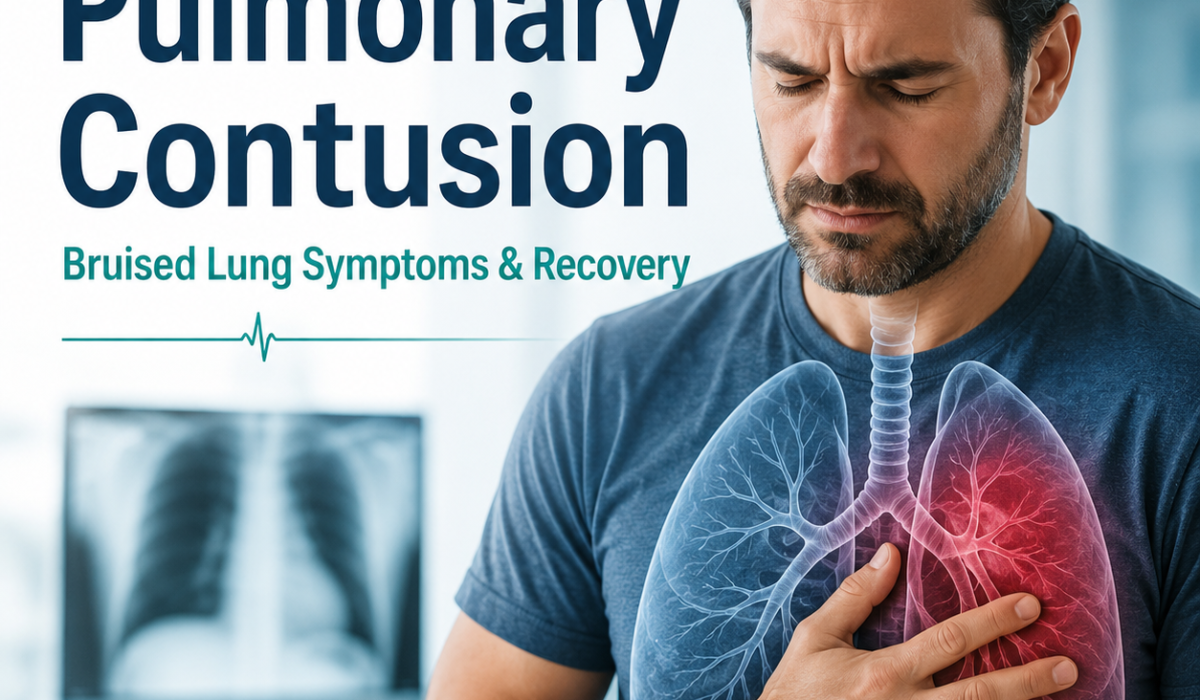
A bruised lung, also called a pulmonary contusion, is a lung injury caused by blunt trauma that damages the small blood vessels and tissues inside the lung. Unlike a simple bruise on the skin, a pulmonary contusion affects the lung’s ability to move oxygen into the blood, which can make breathing difficult and, in some cases, dangerous.
This condition often happens after a car accident, fall, sports injury, or another forceful blow to the chest. Some people notice symptoms right away, while others develop them gradually over several hours. Understanding the symptoms of a bruised lung, how it is diagnosed, and what recovery looks like can help you know when to seek emergency care and what to expect during healing.
Table of Contents
What Is a Bruised Lung?
A pulmonary contusion is a traumatic lung injury in which the lung tissue becomes inflamed and filled with fluid or blood after an impact. This reduces the lung’s ability to exchange oxygen and carbon dioxide normally.
It is important to know that a bruised lung is not the same as a collapsed lung. A collapsed lung, or pneumothorax, happens when air gets into the space around the lung and causes it to shrink. A pulmonary contusion involves damage within the lung tissue itself. Sometimes, both injuries happen together after chest trauma.
For a broader look at related chest injuries, see Broken Rib Recovery: Symptoms, Healing Time & Relief.
In simple terms, a pulmonary contusion makes it harder for oxygen to move from the air sacs into the bloodstream. That is why even a person who looks stable after an injury may still need careful observation. The swelling and bleeding inside the lung can increase over time, and the breathing problem may not reach its worst point immediately after the impact.
Doctors often describe this as a pressure and inflammation problem inside the lung tissue. The injury can range from mild and localized to severe and widespread, depending on how much force hit the chest and whether the ribs, spine, or other organs were also injured. Understanding the pattern of injury helps explain why treatment focuses on supportive care rather than a quick fix.
Common Causes of a Bruised Lung
A pulmonary contusion usually results from blunt chest trauma, including:
- Car crashes
- Motorcycle accidents
- Falls from height
- Contact sports injuries
- Blows to the chest or upper body
- Crush injuries
- Explosions or sudden pressure changes
Children and older adults may be more vulnerable to complications because of differences in body size, bone strength, or overall health.
The same impact that causes a pulmonary contusion can also injure the ribs, chest wall, or nearby organs. In motor vehicle accidents, for example, the chest may strike a steering wheel, seat belt, dashboard, or airbag. In sports, a hard collision or direct hit can be enough to compress the chest and injure the lung tissue underneath.
Some blunt injuries create a broad force across the chest, while others are more concentrated. A broad injury may affect a larger area of the lung, while a concentrated blow may lead to localized bleeding and swelling. Either way, the main concern is how well the lung can exchange oxygen after the trauma.
Symptoms of a Pulmonary Contusion
The symptoms of a pulmonary contusion can vary depending on how severe the injury is. Mild cases may cause only minor discomfort, while severe cases can lead to serious breathing problems.
Common symptoms include:
- Chest pain
- Shortness of breath
- Trouble taking a deep breath
- Coughing
- Rapid breathing
- Fast heart rate
- Wheezing
- Low oxygen levels
- Bruising or tenderness on the chest
- Blood in sputum in some cases
Symptoms may not appear immediately after the injury. In fact, they often become worse over the first 24 to 48 hours as swelling and fluid build up in the lung tissue.
A person may first notice shallow breathing, discomfort when coughing, or pain when lying down. Others may feel okay at first and then become more short of breath later in the day. This delay is one reason a pulmonary contusion can be overlooked at the scene of an accident.
It is also common for pain from chest wall injury to make deep breathing difficult. When that happens, someone may take smaller breaths to avoid discomfort. Unfortunately, shallow breathing can make it harder to clear mucus from the lungs and may raise the risk of infection.
Signs that need urgent medical attention
Seek emergency care right away if you or someone else has chest trauma and develops:
- Worsening shortness of breath
- Bluish lips or fingertips
- Confusion or extreme drowsiness
- Severe chest pain
- Coughing up blood
- Fainting
- Trouble speaking in full sentences
These can be signs that the lungs are not getting enough oxygen. According to the National Heart, Lung, and Blood Institute, chest trauma with breathing changes should be evaluated promptly.
If breathing is getting worse instead of better after a chest injury, do not wait for symptoms to settle on their own. A pulmonary contusion can progress, especially when other injuries are present. Prompt evaluation helps doctors decide whether oxygen, monitoring, or additional treatment is needed.
How Is a Bruised Lung Diagnosed?
Doctors diagnose a pulmonary contusion by combining the injury history, symptoms, physical exam, and imaging tests.
Common tests include:
- Chest X-ray: May show areas of lung injury, though early contusions can sometimes be missed.
- CT scan: Often more sensitive and can detect lung bruising sooner and more clearly.
- Pulse oximetry: Measures oxygen levels in the blood.
- Arterial blood gas test: Checks how well oxygen and carbon dioxide are being exchanged.
- Physical exam: A doctor may listen for abnormal breathing sounds and assess chest tenderness.
Because pulmonary contusions often occur after major trauma, doctors also check for other injuries such as broken ribs, internal bleeding, or heart and spinal injuries.
In practice, diagnosis is about more than a single scan. A person may have a normal early X-ray and still have a clinically important lung bruise. For that reason, doctors consider the mechanism of injury, how hard it was to breathe after the accident, and whether oxygen levels drop over time. Repeating an exam or imaging study may be necessary if symptoms change.
In severe trauma, medical teams may also watch for signs that the injury is affecting ventilation or causing other chest complications. That approach helps ensure a pulmonary contusion is not mistaken for a simpler muscle strain or rib pain alone.
How Is a Bruised Lung Treated?
Treatment depends on how severe the injury is and whether other trauma is involved. Mild cases may only need close monitoring, while more serious cases require hospital care.
Supportive treatment is the main approach
There is no specific medication that “cures” a bruised lung directly. Instead, treatment focuses on helping the lungs heal and making breathing easier.
Treatment may include:
- Oxygen therapy to keep oxygen levels normal
- Pain relief so breathing deeply is less painful
- Monitoring in the hospital for worsening symptoms
- IV fluids if needed
- Breathing support, such as a ventilator in severe cases
- Treatment of other injuries, such as rib fractures or pneumothorax
Pain control is especially important. If pain is not managed well, a person may avoid deep breathing, which can increase the risk of complications like pneumonia.
Supportive care may also include careful positioning, rest, and repeated checks of oxygen levels. In some cases, doctors need to balance pain relief with the need to keep a person awake enough to breathe effectively and follow instructions. The goal is to maintain adequate oxygenation while the injured lung tissue recovers.
Antibiotics are not automatically used unless there is a clear reason, such as a confirmed infection. The focus is usually on preserving lung function, preventing mucus buildup, and treating any associated trauma that may be contributing to pain or low oxygen levels.
Recovery from a Bruised Lung
Recovery from a pulmonary contusion depends on how severe the injury is and whether there are other chest injuries. Mild cases may improve within a few days, while more serious injuries may take 1 to 2 weeks or longer to heal.
In many cases, the recovery process is similar to other chest injuries, especially when pain from broken ribs or chest wall tenderness makes breathing shallow. A careful plan can help reduce complications and support healing from a bruised lung.
What recovery typically involves
During recovery, the goal is to help the lungs stay open and avoid complications. Doctors may recommend:
- Rest and limited physical activity
- Deep breathing exercises
- Use of an incentive spirometer, if prescribed
- Good pain management
- Follow-up appointments to monitor progress
Breathing exercises matter because shallow breathing can lead to mucus buildup. That makes it harder for the body to clear the airways and can slow recovery after a pulmonary contusion.
People recovering at home are usually told to avoid overexertion, follow pain medicine instructions carefully, and return to normal activity gradually. Walking short distances may be encouraged if it does not worsen symptoms, because gentle movement can support circulation and reduce the risk of complications. However, strenuous exercise, heavy lifting, and contact sports should wait until a clinician says it is safe.
If coughing is painful, supporting the chest with a pillow may make it easier to breathe and cough more effectively. That can help clear mucus without adding unnecessary strain. Good hydration and adequate rest are also useful because they help the body recover from injury and reduce the chance of thick secretions building up in the lungs.
How long does a bruised lung take to heal?
Many people begin to feel better within several days, but full recovery can take longer depending on the extent of the injury. Severe pulmonary contusions may require extended hospital care and a slower return to normal activity.
Healing time also depends on age, overall health, and whether there are other injuries. Someone who has a pulmonary contusion along with broken ribs or a collapsed lung may need more time before returning to exercise, work, or sports.
In some cases, symptoms improve in parallel with the reduction of swelling inside the lung. In others, pain from associated chest injuries is what limits recovery the most. That is why the timeline can vary so much from one person to another, even when the diagnosis sounds similar.
Can you recover fully?
Yes, many people recover fully from a bruised lung, especially when the injury is mild and treated promptly. However, recovery can be more complicated if there are associated injuries, infections, or significant breathing problems.
Full recovery is more likely when oxygen levels stay stable, pain is controlled, and breathing exercises are done regularly. Follow-up care matters because it allows clinicians to confirm that the lung is healing and that no delayed complication has developed after the initial trauma.
Possible Complications
Most bruised lungs improve with proper care, but complications can occur, especially in severe trauma cases.
Potential complications include:
- Pneumonia
- Acute respiratory distress
- Low oxygen levels
- Collapsed lung
- Respiratory failure
- Longer hospital stay
- Chronic pain if rib fractures are involved
The risk of complications is higher in people with severe chest trauma, older adults, and those with underlying lung disease.
Complications often develop because the injured lung cannot exchange oxygen efficiently or because shallow breathing prevents the lungs from expanding normally. Mucus can collect, the airway can become less clear, and infection may follow. If oxygen levels fall too low, more intensive treatment may be needed.
Another concern is that a pulmonary contusion can exist alongside a rib fracture, internal bleeding, or a collapsed lung. When more than one injury is present, the breathing problem may be more severe than it first appears. That is why ongoing monitoring after significant trauma is so important.
When to Go to the ER
Because a pulmonary contusion can worsen over time, anyone with chest trauma should be watched closely. Get emergency medical help if there is:
- Difficulty breathing
- Chest pain after injury
- Coughing up blood
- Fast or shallow breathing
- Blue lips or skin
- Confusion
- Loss of consciousness
- Worsening symptoms after a chest impact
Even if symptoms seem mild at first, medical evaluation is important after significant blunt chest trauma.
If emergency care is delayed, low oxygen levels can become more dangerous. A person who is struggling to breathe, becoming sleepy, or unable to speak in full sentences needs immediate attention. These signs suggest the injury may be affecting the body’s ability to move oxygen effectively.
It is also worth seeking care if chest pain is keeping someone from coughing or breathing deeply, because that can increase the chance of a later complication. In the setting of trauma, it is safer to get checked than to assume the pain is only from a bruise on the outside of the chest.
Bruised Lung vs. Broken Rib vs. Collapsed Lung
These injuries can seem similar, but they are different.
- Bruised lung (pulmonary contusion): Injury to the lung tissue itself
- Broken rib: Fracture of one or more ribs, often causing pain when breathing
- Collapsed lung: Air leaks into the space around the lung, causing it to partially or fully collapse
A person can have more than one of these injuries at the same time. That is why chest trauma should always be evaluated by a medical professional.
These conditions can overlap in how they feel. Rib fractures can make every breath painful, while a pulmonary contusion can cause low oxygen and increasing shortness of breath. A collapsed lung may add sudden chest tightness and breathing difficulty. Because the symptoms are similar, imaging and careful examination are often needed to tell them apart.
How to Prevent Complications During Healing
If a doctor has diagnosed a pulmonary contusion and you are recovering at home, follow all instructions carefully.
Helpful steps often include:
- Taking prescribed pain medicine as directed
- Avoiding smoking and secondhand smoke
- Doing breathing exercises if recommended
- Staying hydrated
- Getting enough rest
- Returning for follow-up care
- Seeking help if symptoms worsen
Do not ignore new or increasing shortness of breath, fever, or chest pain, since these may signal a complication. If you are unsure whether bruising or chest pain is from a soft-tissue injury or something deeper, this guide on Blood Clot vs Bruise: How to Tell the Difference can help with basic comparison, but it does not replace medical care.
Good home care is not only about rest. It is also about keeping the lungs active enough to avoid complications. That is why a doctor may encourage coughing, deep breathing, or use of a breathing device even when the chest feels sore. The balance between rest and gentle lung expansion is an important part of healing after a pulmonary contusion.
If symptoms are improving, that is a positive sign, but it does not guarantee the injury has fully healed. Follow-up can help confirm that breathing is back to normal and that there is no late infection or hidden complication. The safest approach is to take new chest symptoms seriously until a clinician says otherwise.
Frequently Asked Questions
Is a bruised lung serious?
It can be. Mild cases may heal with supportive care, but more severe pulmonary contusions can interfere with oxygen levels and become life-threatening, especially if other injuries are present.
Can you walk around with a bruised lung?
Some people with mild symptoms may be able to walk and move around, but this depends on the severity of the injury. If breathing is difficult or oxygen levels are low, hospital treatment may be needed.
Does a bruised lung show up right away?
Not always. Symptoms and imaging findings may develop gradually over several hours, which is why monitoring after chest trauma is important.
What helps a bruised lung heal?
Rest, oxygen if needed, pain control, and deep breathing exercises are commonly used to support healing and prevent complications.
When should I worry after a chest injury?
You should worry if breathing becomes harder, chest pain worsens, you cough up blood, or you feel faint, confused, or unusually tired. These are signs that urgent evaluation is needed.
Key Takeaway
A bruised lung, or pulmonary contusion, is a chest injury that damages lung tissue and can make breathing difficult. Symptoms may include chest pain, shortness of breath, coughing, rapid breathing, and low oxygen levels. Because symptoms can worsen over time, medical evaluation after chest trauma is important.
Treatment focuses on supportive care such as oxygen, pain relief, and monitoring. Many people recover fully, but healing can take several days to weeks depending on the severity of the injury. If symptoms worsen or breathing becomes difficult, emergency care is essential.
After a significant chest injury, the safest approach is close observation, gradual recovery, and prompt reassessment if anything gets worse. With timely care, many people with a pulmonary contusion improve without lasting problems.