A bruised nose can be painful, swollen, and frustrating, especially if it changes the way you breathe, sleep, or go about your day. The good news is that most cases improve well with simple home care. The key is to reduce swelling early, manage pain safely, and watch for signs that the injury may be more serious than a bruise. Good bruised nose relief starts with the right steps in the first day or two.
This guide explains how to get fast relief from a bruised nose, what to do right away, what to avoid, and when to get medical help. If you are also dealing with bruising in other areas from a facial impact, you may find this guide to broken knuckle symptoms, treatment, and healing tips helpful for understanding how impact injuries can vary.
Table of Contents
What Is a Bruised Nose?
A bruised nose happens when small blood vessels under the skin are damaged, usually from a bump, fall, sports injury, or accident. This can cause:
- Pain or tenderness
- Swelling
- Redness or dark discoloration
- Mild bleeding
- Sensitivity when touching the nose
In many cases, the injury is only to the soft tissue and skin. But sometimes a bruised nose can also involve a fracture, especially if the nose looks crooked, feels unstable, or breathing becomes difficult.
Because the nose is made of delicate bone and cartilage, even a small impact can cause more swelling than people expect. That is why bruised nose relief often focuses on controlling inflammation early and avoiding any extra pressure on the area.
A bruise may also spread a little beyond the exact spot that was hit. That can make the nose and the skin around it look worse than the injury really is, even when the damage is limited to the surface. Still, a careful approach matters because bruised nose relief is most effective when swelling is addressed quickly and the nose is protected from another blow.
Fast Bruised Nose Relief: What Helps Most
The fastest way to heal a bruised nose is to treat it early and gently. Here are the most effective steps for bruised nose relief.
1. Use Ice Right Away
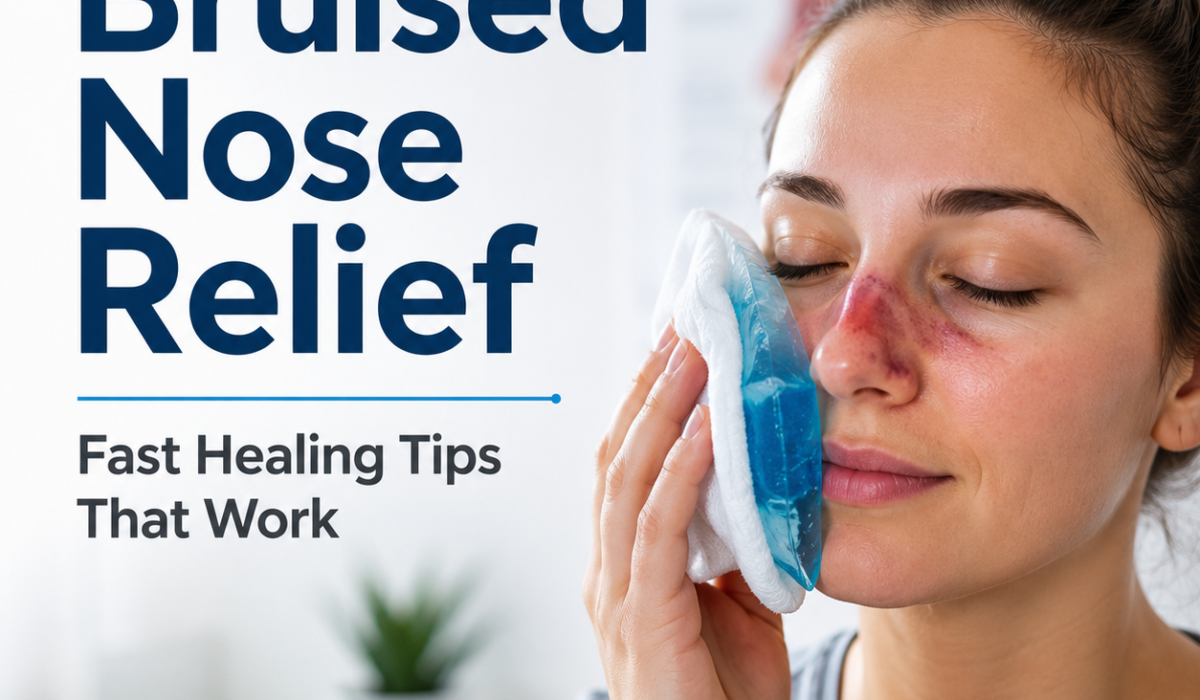
Cold therapy is one of the best ways to reduce swelling and pain in the first 24 to 48 hours.
How to do it:
- Wrap ice or a cold pack in a clean cloth
- Apply it to the nose for 10 to 15 minutes at a time
- Repeat every 1 to 2 hours during the first day
Never place ice directly on the skin, because it can cause irritation or cold injury.
Why it helps:
Cold narrows blood vessels, which helps limit swelling and bruising. It also numbs the area, giving temporary pain relief.
For best results, start cold treatment as soon as possible after the impact. This simple step is one of the most effective parts of bruised nose relief, and it can make the area feel much less sore within the first day. If the nose was hit hard, icing in short sessions can also help stop the swelling from building through the rest of the evening.
2. Keep Your Head Elevated
Keeping your head up helps reduce blood flow and fluid buildup in the injured area.
Do this by:
- Sleeping with an extra pillow
- Resting with your head above heart level
- Avoiding lying flat for long periods
This simple step can make swelling go down faster, especially overnight. It also helps prevent the face from feeling more congested, which can be especially uncomfortable after a nose injury. If the nose feels tight or pulsing, elevation can make the injury feel noticeably more manageable.
3. Take Pain Relief Safely
Over-the-counter pain medicine can help if the nose is sore or throbbing.
Common options include:
- Acetaminophen for pain relief
- Ibuprofen for pain and swelling, if you can take NSAIDs safely
Be careful:
- Avoid aspirin if you have a fresh injury or active bleeding, since it can increase bleeding risk
- Follow the label directions
- Ask a healthcare professional if you have stomach ulcers, kidney disease, liver disease, or take blood thinners
Medication can ease discomfort, but it will not replace rest, icing, and head elevation. For many people, a simple pain reliever is enough to make bruised nose relief much easier during the first few days. If pain keeps increasing instead of settling, that is a sign to pay closer attention to the injury.
4. Avoid Touching or Pressing the Nose
It may be tempting to check the injury often, but repeated touching can worsen swelling and pain.
Try to:
- Leave the nose alone as much as possible
- Avoid rubbing, squeezing, or trying to “straighten” it yourself
- Blow your nose gently, or avoid blowing it for the first day if it increases pain
If the nose was hit hard, pressing on it can make an underlying fracture worse. A bruised nose usually needs calm, consistent care rather than frequent checking or manipulation. The less pressure you place on the area, the better the chances are that bruised nose relief will work smoothly at home.
5. Use Warm Compresses After 48 Hours
After the first two days, switching from cold to warm compresses may help the bruise heal.
How it helps:
- Improves circulation
- Helps the body clear bruising more efficiently
- Can ease lingering soreness
How to use it:
- Apply a warm, not hot, compress for 10 to 15 minutes
- Use it 2 to 3 times a day after swelling starts to decrease
Warmth is usually more helpful once the initial swelling has started to settle. If the nose is still very puffy or throbbing, stay with cold compresses a little longer. A warm compress can be especially comforting once the worst of the inflammation has passed and the bruise is simply fading.
6. Rest and Avoid Reinjury
A bruised nose needs time to heal. Extra strain or another hit can delay recovery.
For faster healing:
- Avoid contact sports for a few days or until fully healed
- Be cautious in crowded places
- Skip activities that increase your chance of being bumped in the face
If you play sports, consider protective gear once you return. Recovery is usually smoother when you protect the nose from a second injury during the first week. This is one of the most overlooked parts of bruised nose relief, but it can make a major difference in how quickly the pain goes away.
Rest does not always mean doing nothing at all. It means avoiding any activity that raises the risk of pressure, jostling, or another impact. Even a mild second hit can restart swelling and make the bruise last longer than expected.
7. Eat and Hydrate Well
Good hydration and nutrition support the body’s healing process.
Helpful habits:
- Drink enough water
- Eat protein-rich foods
- Include fruits and vegetables with vitamin C and other nutrients
- Avoid excess alcohol, which can worsen swelling and slow healing
While diet won’t instantly fix a bruise, it supports recovery. A balanced routine can make bruised nose relief feel more manageable and may help the swelling settle more steadily. If your appetite is low after the injury, light meals and fluids are still better than skipping them entirely.
8. Watch the Breathing and Sinus Feelings
After a nose injury, swelling inside the nostrils can make breathing feel blocked even when the outside bruise looks minor. Mild stuffiness can be normal for a short time. However, worsening congestion, one-sided blockage, or a feeling that air cannot move through the nose may mean the injury is more than a simple bruise.
Try to breathe gently through your mouth if needed and avoid forcing air through the nose. If the nose becomes progressively harder to breathe through, this is not something to ignore. A careful check can help rule out a fracture, internal swelling, or another problem that home care cannot fix.
How Long Does a Bruised Nose Take to Heal?
A mild bruised nose often starts improving within a few days and may heal in about 1 to 2 weeks. Swelling usually improves first, while discoloration can take longer to fade.
Healing time depends on:
- How hard the injury was
- Whether there is a cut or nosebleed
- Whether the nose was fractured
- Your overall health
If pain, swelling, or shape changes are not improving after a few days, it may be more than a simple bruise. In that case, bruised nose relief at home may not be enough, and a closer evaluation could be needed.
Some people notice the nose feels better before the outside color fully fades. That is normal. The skin may still look bruised even after the deeper soreness has begun to improve. The timing can also vary depending on whether the injury caused only surface bruising or deeper tissue irritation.
In a straightforward case, the first 48 hours are usually the most uncomfortable. By day three or four, swelling often begins to soften, and the bruise may shift in color from red or purple to yellow or green as it heals. That color change is a typical sign that the body is breaking down the trapped blood under the skin.
Bruised Nose vs Broken Nose: How to Tell the Difference
A bruised nose and a broken nose can feel similar at first, but certain signs suggest a fracture.
Signs it may be broken:
- Nose looks crooked or misshapen
- Severe swelling or bruising around the eyes
- Loud crack or pop at the time of injury
- Trouble breathing through one or both nostrils
- Significant bleeding
- Nose feels loose or unstable to the touch
- Pain that is severe or getting worse
A bruise usually improves gradually. A broken nose often causes more deformity, stronger pain, or breathing problems. If you are unsure, it is safer to get checked rather than assume the injury is minor.
Swelling can make the nose look distorted even when the bone is not broken, so appearance alone does not always tell the full story. Still, if the nose seems shifted, flattened, or difficult to breathe through, medical assessment is the right next step. That is especially true when bruised nose relief measures do not seem to help after the first day or two.
When to See a Doctor
Get medical care if you notice any of the following:
- Trouble breathing through your nose
- A nose that looks bent, flattened, or displaced
- Heavy or repeated nosebleeds
- Severe swelling that keeps getting worse
- Clear fluid coming from the nose after injury
- Intense pain or tenderness
- Fever or signs of infection
- Bruising around the eyes after significant facial trauma
- A possible concussion, such as dizziness, vomiting, confusion, or headache after the hit
If the injury happened during a car accident, sports collision, or fall from height, it is wise to have it checked even if it seems minor.
For more guidance on when impact injuries need evaluation, the NHS overview of a broken nose is a helpful educational reference.
Seek medical help sooner rather than later if the pain is severe enough that you cannot sleep, if swelling is spreading into the cheeks or under the eyes, or if the nose injury is paired with a deep cut. Bruised nose relief is usually straightforward, but a medical visit can rule out a fracture or other complication when the symptoms are not typical.
What Not to Do With a Bruised Nose
Some habits can slow healing or make the injury worse.
Avoid:
- Applying direct ice to the skin
- Pressing or massaging the nose
- Picking at dried blood
- Blowing the nose forcefully
- Returning to sports too soon
- Using aspirin without medical advice
- Ignoring a nose that looks crooked or blocked
If you have a nosebleed along with the injury, lean forward slightly and pinch the soft part of the nose rather than tilting your head back. That can help limit blood going down the throat while the area settles.
It is also wise not to test the nose repeatedly by pushing on it or checking whether it feels “back in place.” That can increase pain and possibly worsen swelling. The most effective bruised nose relief usually comes from patience and protection, not from trying to force the nose to look normal right away.
Can You Prevent Bruising After a Nose Injury?
You cannot always prevent a bruise once the injury has happened, but you can reduce how bad it gets by acting quickly.
Best prevention for worsening:
- Ice the area as soon as possible
- Keep the head elevated
- Rest
- Avoid reinjury
- Seek care if symptoms suggest a fracture
Quick action is one of the main reasons bruised nose relief works well for mild injuries. The sooner swelling is addressed, the easier it is for the tissue to recover. In practical terms, that means the first few hours matter more than trying to “fix” the bruise later.
For people who are prone to facial injuries, planning ahead can help too. Wearing protective gear during sports, paying attention to surroundings, and treating facial impacts immediately are all smart ways to avoid a more serious nose injury in the future.
Common Questions About Bruised Nose Relief
Should I put ice on a bruised nose?
Yes, during the first 24 to 48 hours. Use it for short intervals with a cloth barrier.
Can I sleep on my side?
It is usually better to sleep with your head elevated and avoid pressure on the injured side.
Is bruising around the eyes normal?
Some bruising can spread downward around the eyes after a facial injury. However, significant bruising around the eyes may also signal a more serious injury and should be checked if the trauma was strong.
Will a bruised nose heal on its own?
Most mild bruised noses heal on their own with home care. Watch for worsening pain, breathing issues, or changes in appearance.
When can I go back to sports?
Only after pain and swelling have improved and you are confident the nose will not be hit again. If there is any chance of fracture, get medical clearance first.
As a general rule, do not rush back into play before the nose is comfortable to touch and normal breathing has returned. Returning too soon can turn a simple bruise into a longer recovery. The safest bruised nose relief plan is the one that gives the tissue enough time to settle fully.
Does a bruised nose need antibiotics?
Usually not. A bruise is not an infection. Antibiotics are only considered if there is a contaminated wound, a clinician sees signs of infection, or another injury requires treatment. If there is a cut on the nose, keep it clean and watch for redness, warmth, pus, or fever.
Can I use makeup to cover a bruised nose?
Yes, but only if the skin is not broken and the area is not too tender. Use clean tools and avoid heavy rubbing. If the skin is scraped or bleeding, wait until it has closed before applying anything to the surface.
Recovery Tips for the Days After the Injury
Once the first wave of swelling begins to settle, small habits can help recovery continue smoothly. Avoid hot showers that leave the nose feeling more inflamed, and keep facial cleansing gentle. If you need to blow your nose, do so softly and one side at a time if possible.
It can also help to monitor the bruise each day under similar lighting. That makes it easier to tell whether the swelling is truly improving. If the bruise is spreading, pain is intensifying, or the shape is changing, those are useful clues that a medical exam may be needed.
Many people find that bruised nose relief becomes easier after the first 48 hours because the discomfort starts to fade. From there, the goal is simply to avoid setbacks while the body does the rest of the work.
The Bottom Line
Bruised Nose Relief starts with quick, simple care: ice early, keep your head elevated, manage pain safely, and avoid further pressure or injury. Most bruised noses heal within one to two weeks, but symptoms like crooked shape, trouble breathing, heavy bleeding, or severe pain may point to a broken nose or another problem that needs medical attention.
If your bruise is mild, consistent home care is usually enough to help it heal faster and with less discomfort. With the right bruised nose relief steps, most people can get back to normal daily activities without complications.
When in doubt, treat the injury gently and watch it closely. A cautious approach can make a big difference in how quickly a bruised nose improves and whether it heals without lasting problems.