A bruised hip can be painful, stiff, and hard to ignore. Whether it happened from a fall, a bump into furniture, sports, or another impact, a hip bruise often causes soreness, swelling, and tenderness that can make walking, sitting, or lying on that side uncomfortable. The good news is that most bruised hips heal on their own with simple home care and time.
Table of Contents
- What Is a Bruised Hip?
- Common Causes of a Bruised Hip
- Symptoms of a Bruised Hip
- How Long Does a Bruised Hip Take to Heal?
- Best Home Remedies for Bruised Hip Relief
- What Not to Do With a Bruised Hip
- When to See a Doctor for a Bruised Hip
- Could It Be More Than a Bruise?
- How to Speed Up Bruised Hip Recovery
- Frequently Asked Questions About Bruised Hip Relief
This guide explains what causes a bruised hip, how long it usually takes to heal, how to ease the pain, and when to seek medical attention. For another example of how soft-tissue injuries can heal, see our bruise healing guide.
What Is a Bruised Hip?
A bruised hip happens when small blood vessels under the skin or deeper in the soft tissue are damaged by a direct blow or pressure. Blood leaks into the surrounding tissue, creating discoloration, swelling, and pain.
A bruise on the hip may look blue, purple, red, green, or yellow as it heals. Some bruises are visible right away, while deeper bruises may hurt more than they show.
The hip area can be especially sensitive because it has many muscles, tendons, and bony structures close to the surface. Even when the skin is not badly damaged, the soft tissue underneath can become inflamed and sore after an impact. That is why a bruised hip may feel much worse when you sit down, climb stairs, or roll over in bed.
Common Causes of a Bruised Hip
A bruised hip usually develops after some kind of impact. Common causes include:
- Falling onto the hip
- Bumping the hip against a hard surface or object
- Sports injuries
- Car accidents
- Direct blows during contact activities
- Heavy pressure from lying or sitting awkwardly for a long time
In some cases, people bruise more easily because of certain medicines, aging skin, or underlying health conditions.
People who are active in sports such as soccer, basketball, martial arts, or cycling may develop a painful hip bruise after a collision, a hard landing, or repeated contact with equipment. Older adults may also bruise more easily after a minor fall because skin and blood vessels become more fragile with age. If you notice that bruises appear often or without a clear reason, it may be worth discussing with a healthcare professional.
Symptoms of a Bruised Hip
A bruised hip can cause several symptoms, including:
- Pain or tenderness in the hip area
- Skin discoloration
- Swelling
- Stiffness
- Difficulty walking or bearing weight
- Pain when lying on the affected side
- A feeling of tightness or soreness in the surrounding muscles
Deep bruises may not look severe on the outside but can still be quite painful.
The pain may be sharp at first and then shift into a dull ache as the area settles down. Some people also notice warmth around the bruise, mild limping, or discomfort when the hip flexes. The symptoms often feel worse in the first 24 to 72 hours, especially if swelling builds up.
How a bruise changes as it heals
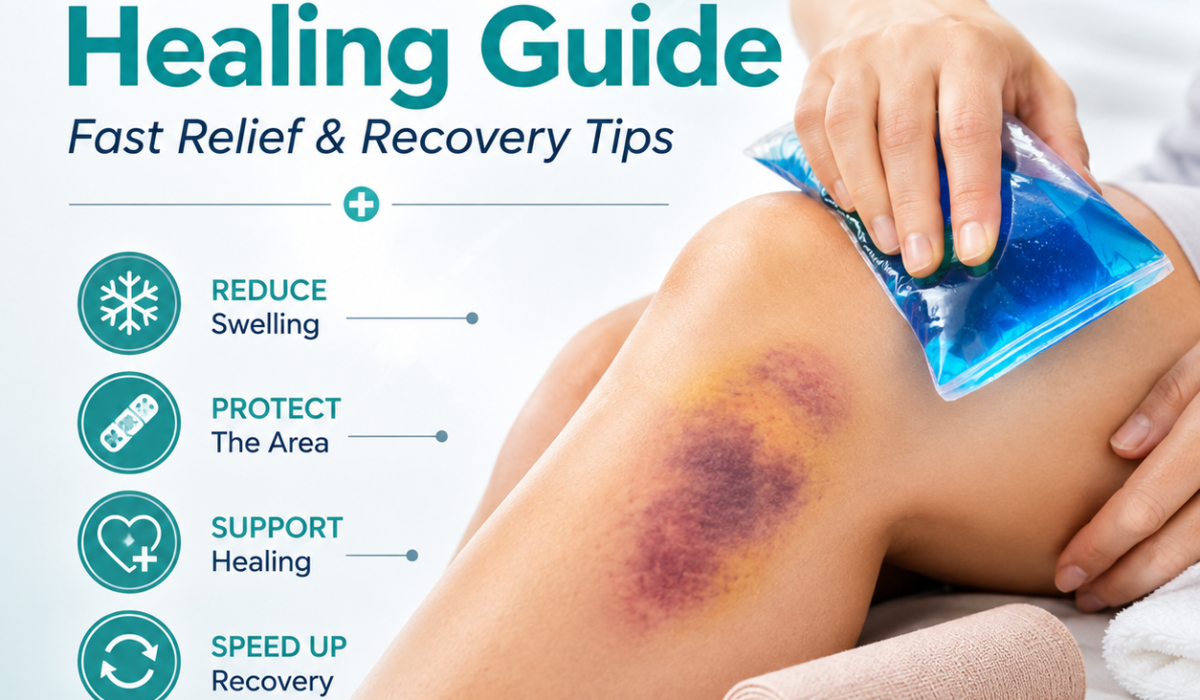
Bruises often change color over time as the body breaks down trapped blood. That color shift is normal and usually means healing is underway. If discoloration spreads quickly or the pain becomes severe, it is worth getting checked.
As healing progresses, a bruise may turn from dark purple or blue to green, yellow, and finally fade away. The exact pattern varies from person to person. A bruise that keeps getting larger, becomes very tense, or causes numbness should not be ignored, because those signs can suggest a deeper collection of blood or another injury.
How Long Does a Bruised Hip Take to Heal?
Healing time depends on how deep the bruise is and how serious the impact was. In many cases, a mild bruised hip improves within a few days to 2 weeks.
More severe bruises, especially deeper soft tissue bruises, may take 3 to 6 weeks or longer to fully heal.
Several factors can affect recovery time:
- Size and depth of the bruise
- Whether swelling is present
- Your age
- Overall health
- Use of blood thinners or other medications
- How much you continue to use the injured area
If pain is not improving after a couple of weeks, or if it gets worse, medical evaluation may be needed.
Recovery is often fastest when the bruise is protected early and re-irritation is avoided. A minor hip bruise may stop hurting significantly within several days, but a deeper contusion can remain tender for weeks, especially when sitting for long periods or sleeping on that side. The bruise itself may fade before the soreness fully disappears.
Best Home Remedies for Bruised Hip Relief
Most bruised hips can be treated at home. The main goal is to reduce pain, swelling, and further irritation while the tissue heals.
1. Rest the Area
Avoid activities that make the pain worse. Rest helps prevent additional injury and allows damaged tissue to recover. If walking is painful, take it slow and limit unnecessary movement.
That does not mean you need complete bed rest. Short, gentle movement around the home can help prevent stiffness, but only if it does not increase pain. Think in terms of protecting the hip from impact and pressure rather than making it completely immobile.
2. Apply Ice
Ice is one of the best early treatments for a bruised hip. It helps reduce swelling and pain.
Use a cold pack or ice wrapped in a cloth for 15 to 20 minutes at a time, several times a day during the first 24 to 48 hours.
Never place ice directly on the skin, since that can cause skin damage.
To make icing more comfortable, place a thin towel between the pack and your skin and stop if the area becomes overly numb or irritated. If you are treating a child or an older adult, check the skin often to make sure it is not too cold.
3. Use Compression if Comfortable
A compression wrap may help reduce swelling, but it should not be too tight. The hip area can be difficult to wrap, so this is only useful if it can be done safely and comfortably.
If compression increases pain, numbness, or tingling, stop using it.
Because the hip is a broad area, compression is often less practical than it is for an ankle or wrist injury. A snug pair of supportive shorts may be more comfortable than a tight wrap, but anything that causes pressure over the bruise should be avoided.
4. Elevate When Possible
Elevation can help reduce swelling, although it may be less practical for the hip than for an arm or leg injury. Lying down in a comfortable position with support under the body can still help ease pressure.
If you are resting on a couch or bed, place pillows so your pelvis and lower back are supported evenly. Avoid twisting the body into a position that puts extra strain on the sore side.
5. Take Over-the-Counter Pain Relief
Over-the-counter pain relievers such as acetaminophen or ibuprofen may help reduce discomfort. Anti-inflammatory medicines can also help with swelling.
Always follow the label directions and avoid these medicines if your doctor has told you not to take them. If you take blood thinners or have stomach, kidney, or liver issues, speak with a healthcare professional before using pain medication.
For general advice on safe medicine use, the MedlinePlus health library offers reliable patient information from the U.S. National Library of Medicine.
6. Rest the Hip, But Don’t Stay Completely Still
Light movement can help prevent stiffness once the worst pain starts to improve. Gentle walking and easy stretching may support healing, but only if they do not increase pain.
When the bruise starts to settle, simple activities like slow walking around the house, standing up from a chair carefully, or gentle range-of-motion movements may help the area loosen up. The key is to stay below your pain limit. Sharp pain, increasing limp, or throbbing afterward are signs you have done too much.
7. Support Sleep and Daily Comfort
Sleeping position can make a big difference. Try lying on the uninjured side with a pillow between your knees, or on your back with cushions to reduce pressure on the sore area. During the day, choose chairs with enough padding to avoid extra strain.
If the bruise hurts at night, try adjusting your mattress position, using an extra pillow under your knees, or placing a folded blanket to keep pressure off the hip. Even small changes in support can make it easier to rest well, and good rest helps the body heal.
What Not to Do With a Bruised Hip
To avoid making the injury worse, try not to:
- Apply heat too early, especially in the first 48 hours
- Massage the bruise aggressively
- Return to sports or hard exercise too soon
- Ignore severe pain
- Keep putting pressure on the injured side
Heat may be helpful later in the recovery process, but ice is usually better in the early stage.
It is also smart to avoid alcohol in excess right after injury, since it can make swelling worse and may increase the chance of another fall. If you tend to bruise easily, check with a doctor before taking new supplements or medicines that could affect clotting. A gentle approach usually leads to better healing than trying to “push through” the pain.
When to See a Doctor for a Bruised Hip
Most bruised hips are minor, but some symptoms may point to a more serious injury. Get medical attention if you notice:
- Severe pain
- Inability to walk or bear weight
- Major swelling
- A bruise that keeps getting larger
- Numbness or tingling
- Deformity around the hip or leg
- Pain that does not improve after several days
- Bruising after a major fall or accident
- Fever or signs of infection
- Bruising that appears without any injury
You should also seek medical care promptly if you are older, take blood thinners, or have a history of bone problems, since a fall may cause a fracture or other hidden injury.
If you are recovering from another recent injury, such as a bone bruise, it can be easy to confuse lingering pain with a new soft-tissue bruise. That is another reason to get checked if symptoms are not improving.
Emergency care may be needed if the pain is sudden and severe after trauma, if the leg looks crooked, or if you cannot take even a few steps. It is better to rule out a fracture, dislocation, or large internal bleed than to assume the injury is minor.
Could It Be More Than a Bruise?
Sometimes a painful hip injury is more serious than a simple bruise. Conditions that can mimic a bruised hip include:
- Hip fracture
- Muscle strain
- Bursitis
- Deep hematoma
- Ligament injury
- Joint injury
- Nerve irritation
If pain is severe, movement is very limited, or walking becomes difficult, it is important to rule out a fracture or other injury.
A deep hematoma can feel like a firm lump under the skin and may cause more pressure than a typical bruise. Bursitis can create pain on the outside of the hip and may flare when you lie on that side. A muscle strain often hurts more during movement than at rest. Because these conditions overlap, a medical exam can help determine what is really going on.
Bruised Hip versus broken bone
Most people with a bruise can still move the hip, even if they do so cautiously. With a fracture, weight-bearing is usually much harder and pain tends to be intense and persistent. If the injury followed a significant fall or collision, do not assume it is only a bruise. Imaging may be needed to confirm the diagnosis.
How to Speed Up Bruised Hip Recovery
While you cannot instantly heal a bruise, you can support recovery by:
- Getting plenty of rest
- Using ice early
- Avoiding extra pressure on the area
- Eating a balanced diet with enough protein, vitamin C, and iron
- Staying hydrated
- Slowly returning to normal activity as pain improves
A healthy lifestyle supports the body’s natural healing process.
Some people also notice better recovery when they avoid long periods of sitting on hard surfaces and gradually increase movement instead of resuming full activity all at once. If you play sports, wait until you can walk, squat, and climb stairs comfortably before returning to practice.
Nutrition can also matter during recovery. Protein supports tissue repair, vitamin C helps collagen formation, and iron supports healthy blood function. A balanced diet with fruits, vegetables, lean protein, and plenty of fluids gives your body the tools it needs to recover efficiently. Good sleep and stress management can help too, since healing is harder when the body is run down.
Bruised Hip Relief at a Glance
For quick relief, remember the basics:
- Rest the area
- Ice for 15 to 20 minutes at a time
- Use pain medicine if appropriate
- Avoid aggravating activities
- Watch for warning signs
Most bruised hips get better on their own, but healing takes time. Mild bruises may improve within a week or two, while deeper injuries can take several weeks.
If you are unsure whether the injury is truly improving, compare how it feels from one day to the next. Less swelling, less tenderness, and easier walking are all signs that recovery is moving in the right direction. If those signs are missing, it is wise to seek advice.
Frequently Asked Questions About Bruised Hip Relief
How do I know if my hip is bruised or broken?
A bruise usually causes pain, swelling, and discoloration but still allows some movement, even if it hurts. A fracture often causes severe pain, trouble standing or walking, and pain that is much worse with weight-bearing. If you are unsure, especially after a fall, get checked by a doctor.
Is walking good for a bruised hip?
Gentle walking may be okay if it does not increase pain. However, if walking causes limping or significant discomfort, rest is better until symptoms improve.
Should I use heat or ice?
Use ice during the first 24 to 48 hours to reduce swelling and pain. Heat may be helpful later if the area feels stiff, but it should not be used right after injury if swelling is still present.
Why does a bruised hip hurt so much?
The hip has a lot of muscle, soft tissue, and pressure from body weight when you sit or lie down. Even a minor impact can cause deep soreness and inflammation.
How long does bruising last on the hip?
Visible bruising often fades within 1 to 3 weeks, though deeper bruises may take longer to fully disappear.
Can I exercise with a bruised hip?
Light activity may be possible once pain starts to settle, but avoid workouts that cause impact, twisting, sprinting, or direct pressure on the area. A good rule is to wait until normal walking feels comfortable before returning to exercise, then build back gradually.
Does a bruised hip need medical treatment?
Many bruised hips do not need medical treatment beyond home care. However, evaluation is important if the pain is severe, the bruise is unusually large, or you cannot bear weight. A doctor may check for a fracture, hematoma, or other injury if the symptoms do not match a simple bruise.
Final Thoughts
A bruised hip can be painful and disruptive, but in most cases it heals well with rest, ice, and simple home care. Recovery time depends on how deep the injury is, but many people start feeling better within days and continue improving over 1 to 3 weeks.
If pain is severe, walking is difficult, or symptoms are not improving, it is important to rule out a more serious injury. Paying attention to warning signs and giving the body time to heal are the best steps toward full recovery.
With the right care, a bruised hip usually settles down gradually rather than all at once. Be patient with the healing process, avoid re-injury, and get medical help when the symptoms do not follow the normal pattern of recovery.
For most people, a bruised hip is temporary and manageable, but it deserves attention when the pain feels out of proportion or recovery stalls. Listening to your body is one of the simplest ways to recover well and avoid turning a minor bruise into a longer-lasting problem.