A broken thumb can make even simple tasks difficult, from gripping a phone to opening a jar or writing. Because the thumb plays such an important role in hand function, it is important to recognize broken thumb symptoms early and get the right treatment. In many cases, what seems like a sprain may actually be a fracture, especially after a fall, sports injury, or direct impact.
This guide explains the common signs of a broken thumb, how it is diagnosed, treatment options, and practical recovery tips to help you heal properly. It also covers what to expect during recovery, when to get urgent care, and how to reduce the risk of long-term stiffness or weakness.
Table of Contents
- What Is a Broken Thumb?
- Symptoms of a Broken Thumb
- Broken Thumb vs Sprained Thumb
- When to Seek Medical Care
- How a Broken Thumb Is Diagnosed
- Treatment for a Broken Thumb
- How Long Does a Broken Thumb Take to Heal?
- Recovery Tips for a Broken Thumb
- Possible Complications
- How to Prevent Thumb Injuries
- Frequently Asked Questions About Broken Thumbs
What Is a Broken Thumb?
A broken thumb means that one of the bones in the thumb has cracked or fractured. The thumb has two bones, called phalanges, and the bone closest to the hand is connected to the first metacarpal. A fracture can happen in any of these bones and may range from a small crack to a complete break.
Broken thumbs often happen from:
- Falling onto an outstretched hand
- Sports injuries, especially in contact sports
- Jamming the thumb
- Accidents involving heavy objects or machinery
- Car or bicycle accidents
Because thumb movement is essential for gripping and pinching, proper healing is important for long-term hand function. If the injury also affects other parts of the hand, you may find our guide on broken hand symptoms, treatment & recovery guide helpful.
Symptoms of a Broken Thumb
The symptoms of a broken thumb can vary depending on how severe the fracture is. Common signs include:
- Pain at the base or along the thumb
- Swelling
- Bruising or discoloration
- Tenderness when touching the thumb
- Difficulty moving the thumb
- Weak grip or inability to pinch
- Deformity or unusual shape
- Numbness or tingling in some cases
- Pain that gets worse when using the hand
Some thumb fractures are obvious, especially if the thumb looks crooked or bent. Others may feel like a bad sprain, which is why medical evaluation is important after an injury. Recognizing broken thumb symptoms early can help prevent healing problems later.
In the first day or two, swelling can make the thumb feel tight and stiff. Pain may also increase when you try to pinch, twist, or press on the injured area. If the thumb becomes visibly misshapen or if you cannot use it normally, those are strong reasons to get checked quickly.
Broken Thumb vs Sprained Thumb
A broken thumb and a sprained thumb can feel similar at first. Both may cause swelling, pain, and difficulty moving the thumb. The difference is that a sprain involves stretched or torn ligaments, while a fracture means the bone is broken.
A broken thumb is more likely if:
- Pain is severe or persists
- The thumb looks misshapen
- You cannot move or use the thumb normally
- There is significant bruising or swelling
- Pain increases with pressure on the bone
Only a medical exam and imaging, usually an X-ray, can confirm whether the thumb is broken. In some cases, people assume the injury is minor because they can still move the joint. However, a small fracture can still be painful and may become worse if the thumb is used too soon.
When to Seek Medical Care
You should seek medical care as soon as possible if you suspect a broken thumb. Prompt treatment helps prevent complications such as poor healing, stiffness, or loss of thumb strength.
Get urgent medical attention if:
- The thumb is visibly deformed
- There is severe pain or swelling
- You cannot move the thumb
- The thumb feels numb or cold
- There is an open wound or bone is exposed
- The injury happened during a major accident
If the pain is mild but persistent after an injury, it is still a good idea to see a healthcare professional. The Mayo Clinic provides a useful overview of fracture symptoms and care at Mayo Clinic’s fracture information page.
For thumb injuries, waiting too long can make recovery harder. Early care can help reduce swelling, support the bone, and guide you toward the right level of immobilization. If broken thumb symptoms are ignored, the thumb may heal in an awkward position or remain painful for longer than expected.
How a Broken Thumb Is Diagnosed
To diagnose a broken thumb, a doctor will usually:
- Ask how the injury happened
- Examine the thumb for tenderness, swelling, range of motion, and alignment
- Check circulation and nerve function
- Order an X-ray to confirm the fracture and determine its location
In some cases, if the fracture is complex or difficult to see, additional imaging may be needed. A clear diagnosis is especially important when broken thumb symptoms overlap with a sprain or soft tissue injury.
During the exam, your clinician may press along the bone and ask you to move the thumb gently. This helps determine whether the pain is coming from the bone, a joint, or the surrounding ligaments. If the injury is near a joint, the doctor may also check whether the thumb is stable when it moves.
Treatment for a Broken Thumb
Treatment depends on the type of fracture, whether the bones are aligned, and how severe the injury is. The main goals are to reduce pain, keep the bone stable, and restore thumb function.
1. Immobilization
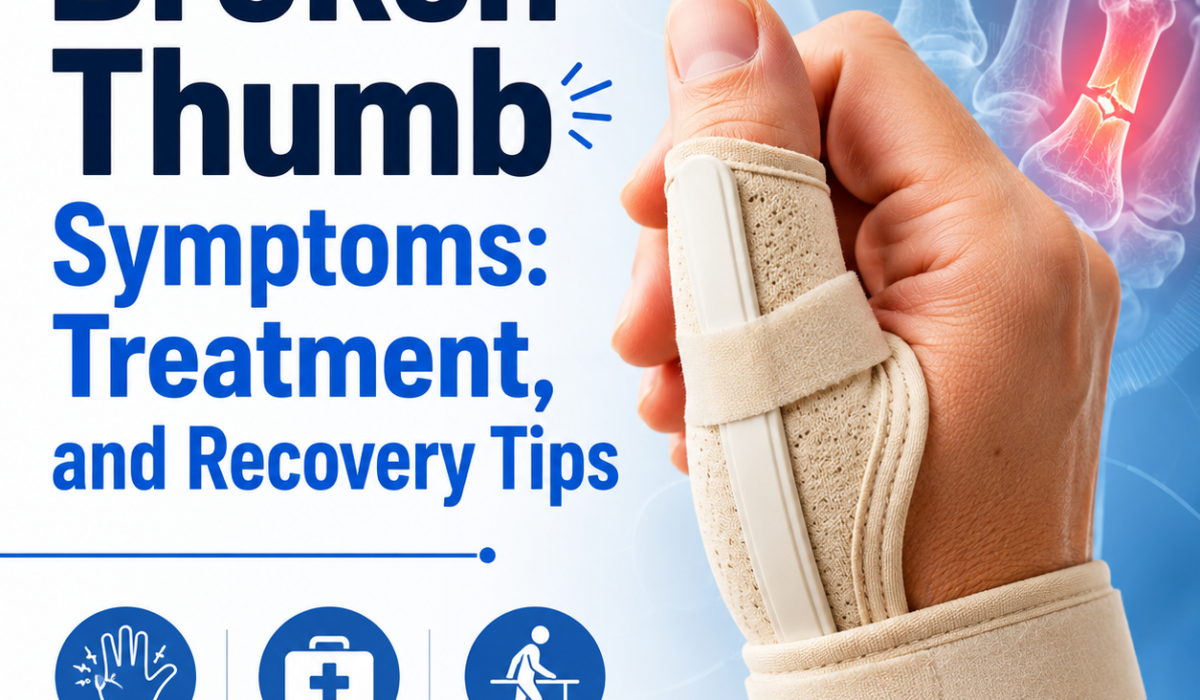
Many broken thumbs are treated with a splint or cast to keep the thumb still while it heals. Immobilization helps the bone heal in the correct position and reduces pain.
A thumb spica splint is commonly used because it supports the thumb and wrist.
2. Pain Relief
Over-the-counter pain relievers, such as acetaminophen or ibuprofen, may help reduce pain and swelling. A doctor may recommend stronger medication if needed.
3. Reduction
If the broken bone has shifted out of place, a doctor may need to realign it. This is called a reduction. It may be done without surgery in some cases, but sometimes surgery is required.
4. Surgery
Surgery may be necessary if:
- The bone is severely displaced
- The fracture is unstable
- The joint is involved
- The fracture is open
- The injury affects tendons, ligaments, or nerves
Surgical treatment may involve pins, screws, or plates to hold the bones in place while they heal.
After treatment begins, the thumb is usually protected for several weeks. Even if pain improves quickly, the bone still needs time to knit together. Following instructions carefully is one of the best ways to avoid repeat injury and keep the thumb aligned during healing.
How Long Does a Broken Thumb Take to Heal?
Healing time depends on the severity of the fracture, your age, overall health, and whether surgery was needed. In general, many broken thumbs take about 4 to 8 weeks to heal, though full strength and motion may take longer.
Even after the bone heals, it can take several more weeks of rehabilitation to regain flexibility, grip strength, and normal function. Recovery is often slower if the injury is near a joint or if broken thumb symptoms were present for several days before treatment.
Healing also depends on how closely you follow your treatment plan. A stable fracture may improve steadily with a splint alone, while a more complex break may need follow-up visits, repeat X-rays, and hand therapy before normal use returns.
Recovery Tips for a Broken Thumb
Following the right recovery steps can help you heal faster and reduce complications.
Keep the Thumb Immobilized
Wear your splint or cast exactly as instructed. Removing it too early can slow healing or cause the bone to heal incorrectly.
Rest the Hand
Avoid activities that put stress on the thumb, such as lifting heavy objects, sports, or repetitive gripping.
Elevate the Hand
Keeping the hand elevated above heart level can help reduce swelling, especially during the first few days after injury.
Use Ice Carefully
Ice can help with pain and swelling during the early phase of injury. Wrap the ice pack in a cloth and use it for short intervals, usually 15 to 20 minutes at a time.
Keep the Cast or Splint Dry
If you have a cast or splint, follow care instructions to keep it dry and intact.
Follow Up With Your Doctor
Return for follow-up visits so your doctor can check healing and adjust treatment if needed.
Start Rehabilitation When Advised
After the bone begins to heal, gentle exercises or hand therapy may be recommended to restore movement and strength. Do not begin exercises unless your doctor says it is safe. A gradual return to motion can help prevent stiffness after the cast comes off.
For people recovering from other hand fractures, the healing process can be similar. You may also want to read about broken hand symptoms, treatment & recovery guide for comparison and rehab tips.
If your doctor recommends hand therapy, attend the sessions and practice the exercises at home exactly as directed. Gentle movement at the right time can improve circulation, reduce stiffness, and help you regain pinch strength. On the other hand, pushing too hard too soon can delay recovery and increase pain.
Can You Move a Broken Thumb?
Sometimes people can still move a broken thumb, especially if the fracture is small or not displaced. Being able to move it does not mean it is not broken. If movement causes pain, weakness, or instability, it should be evaluated.
It is also possible for a fracture to seem less serious at first and then become more painful as swelling develops. For that reason, any thumb injury that affects grip, pinch, or normal use deserves attention.
Possible Complications
Without proper treatment, a broken thumb can lead to:
- Poor bone healing
- Joint stiffness
- Loss of grip strength
- Chronic pain
- Thumb instability
- Arthritis in the joint
- Long-term limitation in hand function
These problems are more likely if the fracture is ignored, not immobilized properly, or if rehabilitation is delayed. Ongoing broken thumb symptoms after treatment should also be reported to your doctor, since they may signal slow healing or a complication.
Watch for warning signs such as worsening pain, increasing swelling, new numbness, or a thumb that feels weaker instead of better. Those changes can mean the thumb needs another medical review.
How to Prevent Thumb Injuries
Not all thumb injuries can be prevented, but these steps may lower your risk:
- Use protective gear during sports
- Learn proper techniques for gripping and catching
- Be careful on wet or uneven surfaces to avoid falls
- Use tools and equipment safely
- Strengthen hand and wrist muscles if recommended
For athletes, taping or bracing may sometimes help protect a previously injured thumb, especially when returning to play. For daily activities, using good technique and avoiding rushed movements can also reduce stress on the thumb joint.
Frequently Asked Questions About Broken Thumbs
How do I know if my thumb is broken or just bruised?
A broken thumb often causes intense pain, swelling, bruising, and difficulty using the thumb. A bruise usually improves more quickly and does not usually cause major loss of movement or visible deformity. An X-ray is the best way to tell.
Can a broken thumb heal on its own?
A broken thumb should not be left untreated. Even if the pain improves, the bone may heal in the wrong position, leading to weakness, stiffness, or long-term problems.
Do all broken thumbs need a cast?
Not always. Some minor fractures may only need a splint, while more serious breaks may need a cast or surgery. The treatment depends on the fracture type and alignment.
Is it okay to work with a broken thumb?
It depends on the job. Work that involves lifting, gripping, typing, or manual tasks may worsen the injury. Follow your doctor’s advice before returning to work.
When can I use my thumb again?
This depends on how badly it was broken and how well it heals. Many people need several weeks before resuming normal activity, and full recovery can take longer.
Final Thoughts
A broken thumb is a serious hand injury that should be taken seriously, even if the broken thumb symptoms seem mild at first. Pain, swelling, bruising, and trouble moving the thumb are common warning signs. Getting an early diagnosis and following the right treatment plan can help prevent complications and support a full recovery.
If you think your thumb may be broken, seek medical care promptly. Proper immobilization, rest, and follow-up care are the best ways to protect thumb function and get back to normal activities safely.