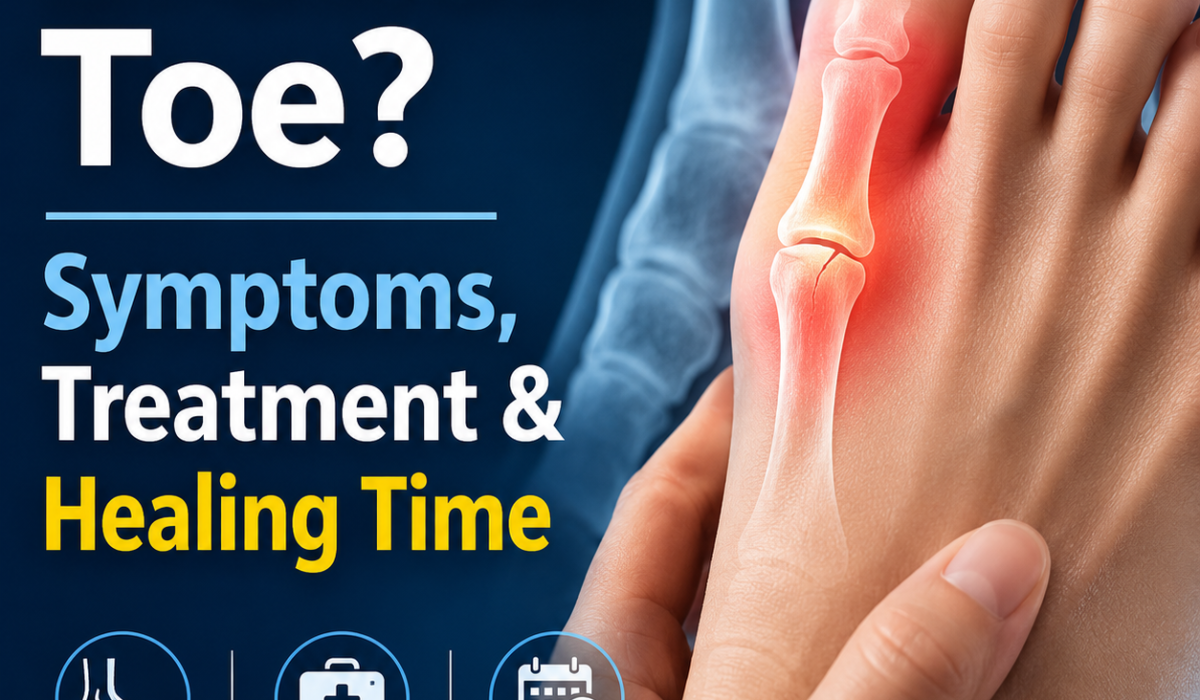
A broken toe is a common injury that can happen after stubbing your toe, dropping something heavy on your foot, or twisting it awkwardly. While some toe fractures are mild and heal well at home, others need medical treatment to prevent long-term pain, deformity, or problems walking.
If you think you may have a broken toe, the most important thing is to know the symptoms, understand when to seek medical care, and learn how long healing usually takes.
Table of Contents
- What Is a Broken Toe?
- Symptoms of a Broken Toe
- How to Tell If a Toe Is Broken or Just Bruised
- When to See a Doctor for a Broken Toe
- How Is a Broken Toe Diagnosed?
- Broken Toe Treatment
- Healing Time for a Broken Toe
- What Affects Broken Toe Healing Time?
- Can You Walk on a Broken Toe?
- What Happens If a Broken Toe Is Left Untreated?
- Broken Toe Care at Home
- Signs of a More Serious Injury
- Frequently Asked Questions
- Bottom Line
What Is a Broken Toe?
A broken toe, also called a toe fracture, means one of the bones in the toe has cracked or broken. Any toe can be injured, but the big toe is especially important because it helps with balance, walking, and push-off when you take a step.
Not every toe injury is a fracture. A toe can also be bruised, sprained, or dislocated. The symptoms can overlap, which is why it can be hard to tell the difference without an exam or an X-ray.
Toe fractures are usually caused by a direct impact, but they can also happen from repeated stress. Athletes, runners, people who wear tight shoes, and anyone who spends a lot of time on their feet may be at higher risk. For another common foot injury, see Broken Foot Symptoms: 7 Signs You Shouldn’t Ignore.
Symptoms of a Broken Toe
Common broken toe symptoms include:
- Pain right after the injury
- Swelling around the toe
- Bruising or discoloration
- Tenderness when touching the toe
- Pain when walking or putting weight on the foot
- Trouble bending the toe
- A crooked, bent, or misshapen toe
- A popping sound at the time of injury
- Nail injury or bleeding under the toenail
Some fractures are obvious, especially if the toe looks crooked or you cannot walk normally. Others are less severe and may feel like a bad bruise at first.
Pain may be worse when you wear shoes, press on the toe, or try to push off while walking. Swelling can make the toe feel tight, and bruising may spread into the foot or under the nail over the first day or two. In some cases, the toenail may turn dark from blood trapped under it.
If you have a broken toe, you may also notice that the joint feels stiff or that the toe does not move the same way as the others. That can happen even with a small fracture because the surrounding soft tissue becomes inflamed.
How to Tell If a Toe Is Broken or Just Bruised
A bruised toe and a broken toe can feel similar, especially in the first day or two. However, a broken toe is more likely if you have:
- Sharp pain that is severe or does not improve
- Swelling and bruising that spread quickly
- Pain when pressing on the bone
- Difficulty walking
- Visible deformity
- Pain that gets worse instead of better over time
A bruise usually improves gradually with rest, while a fracture often stays painful when you try to move or use the toe. Even so, only a medical exam can confirm the diagnosis.
One helpful clue is the pattern of pain. A bruise often hurts in the soft tissue around the toe, while a fracture may create a more pinpoint pain right over the bone. That said, swelling can blur the difference. If the toe is very tender, bent at an odd angle, or painful enough to change how you walk, it is safer to treat it as a possible fracture until it is checked.
When to See a Doctor for a Broken Toe
You should seek medical care if:
- The toe looks crooked or out of place
- The pain is severe
- You cannot walk or bear weight
- There is an open wound or bone showing
- The toe is numb, pale, or cold
- The toenail is badly damaged
- Swelling and bruising are extensive
- The injury involves the big toe
- Symptoms are not improving after a few days
The big toe is especially important because fractures there may need more support and closer follow-up. If the toe is significantly displaced, a doctor may need to realign it.
Getting checked sooner can also help if you have diabetes, poor circulation, nerve problems, or a condition that affects bone healing. In those situations, even a small injury can become more complicated if it is ignored.
If the pain is severe right after the injury, if the toe is clearly deformed, or if you cannot put weight on the foot without limping heavily, the injury may need imaging and more specific treatment. When in doubt, urgent care or a primary care visit is a reasonable next step.
How Is a Broken Toe Diagnosed?
A doctor usually starts with a physical exam and asks how the injury happened. They may gently press on the toe and check how you move it.
An X-ray is often used to confirm whether the toe is broken and to see whether the bone is out of alignment. In some cases, especially with small or stress fractures, the fracture may not be obvious right away, but an X-ray still helps guide treatment.
Sometimes the doctor may also check the skin, toenail, circulation, and sensation in the toe. This matters because an open wound, nail-bed injury, or circulation problem can change the treatment plan. If the fracture seems unstable or the pain does not match the X-ray findings, follow-up imaging may be recommended later.
Broken Toe Treatment
Treatment depends on the type of fracture, which toe is affected, and whether the bone is aligned properly. Many broken toes heal with simple care.
1. Rest and protect the toe
Avoid activities that worsen pain. Try to limit walking or standing for long periods, especially in the first few days.
Rest does not always mean complete bed rest. It usually means avoiding impact, running, jumping, heavy lifting, and anything that repeatedly bends the toe. Gentle movement for daily tasks is often fine if it does not increase pain.
2. Ice
Apply ice wrapped in a cloth for 15 to 20 minutes at a time, several times a day. This can help reduce swelling and pain.
Do not place ice directly on the skin. Short, repeated icing sessions are usually better than one long session because they help control swelling without irritating the tissue.
3. Elevation
Raise your foot above heart level when possible to help reduce swelling.
Elevation is especially useful during the first 48 hours. If you are sitting on the couch or lying down, place the foot on pillows so the toes sit higher than your chest.
4. Buddy taping
For some simple toe fractures, the injured toe may be taped to the neighboring toe for support. This is called buddy taping. A small piece of gauze is usually placed between the toes to prevent skin irritation.
Buddy taping is not appropriate for every injury, especially if the toe is badly misaligned, has an open wound, or the big toe is involved in a more serious way.
If buddy taping is used, it should not feel tight. The toe should stay warm and pink, not numb or blue. If tape causes more pain, skin problems, or circulation changes, it should be removed and the injury rechecked.
5. Stiff-soled shoe or walking boot
A stiff-soled shoe, post-op shoe, or walking boot may help keep pressure off the toe and reduce bending while it heals.
These supports can make walking more comfortable and may lower the risk of re-injury. In some cases, they are preferred over taping, especially when the fracture involves the big toe or when extra stability is needed.
6. Pain relief
Over-the-counter pain relievers such as acetaminophen or ibuprofen may help, if you can take them safely. Follow the package instructions or your doctor’s advice.
People with ulcers, kidney disease, blood-clotting problems, or medication allergies should check before using pain medicine. If you are not sure which option is safest, a pharmacist or clinician can help.
7. Reduction or surgery
If the toe is displaced, a doctor may need to move the bone back into place. Rarely, surgery is needed for severe fractures, multiple breaks, open fractures, or injuries that involve the joint.
Surgery is not common for small toe fractures, but it may be necessary if the bone will not stay aligned, if the joint surface is affected, or if the fracture is unstable. In those cases, orthopedic follow-up is often important.
For readers looking for related recovery guidance, the healing process for a fracture elsewhere in the lower limb is similar in some ways. You can also read Broken Leg Recovery: What to Do and When to Worry for general recovery principles about rest, protection, and warning signs.
Healing Time for a Broken Toe
Most broken toes heal in about 4 to 6 weeks. Some may take longer, especially if the injury is severe, the big toe is involved, or you keep putting stress on the foot too soon.
General healing time by type of injury:
- Minor toe fracture: about 4 to 6 weeks
- Big toe fracture: often 6 weeks or more
- Stress fracture: may take several weeks to a few months
- Severe or displaced fracture: may take longer and need follow-up treatment
Pain often improves before the bone is fully healed, but the toe can still be vulnerable. Returning to activity too early can delay recovery.
Healing also depends on whether the fracture stays still while the bone mends. The less the toe is bumped, bent, or overloaded, the better the chances of a smooth recovery. Swelling may last longer than pain, and it is normal for the toe to feel tender for a while after you start using it again.
What Affects Broken Toe Healing Time?
Several factors can influence how fast a broken toe heals:
- Which toe is injured
- Whether the fracture is displaced
- Whether the break is clean or comminuted
- Your age and overall health
- Whether you smoke
- Whether you have diabetes or circulation problems
- How well you protect the toe during healing
A broken big toe usually takes longer because it bears more weight and is more important for walking.
Other factors can also slow healing, including poor nutrition, too much activity too soon, and repeated pressure from tight footwear. Shoes with a wide toe box can make a big difference because they reduce friction and help the toe stay protected while swelling goes down.
If you have had previous foot injuries, arthritis, or foot shape issues such as bunions or hammertoes, the injured toe may be harder to support comfortably. In those cases, the recovery plan may need to be adjusted to fit your foot and daily activity level.
Can You Walk on a Broken Toe?
Some people can still walk on a broken toe, especially if the fracture is small. However, walking may be painful and can slow healing if you do too much.
If walking increases pain, use a stiff-soled shoe, reduce activity, and follow medical advice. If you cannot bear weight, the injury should be evaluated.
Try to shorten your steps and avoid pushing off forcefully with the injured foot. Going barefoot can make the toe more vulnerable to bumping and bending, so supportive footwear is usually better than sandals or loose slippers during recovery. If you must be on your feet for work, ask whether temporary work changes are possible.
What Happens If a Broken Toe Is Left Untreated?
A minor toe fracture may still heal on its own, but leaving a more serious fracture untreated can lead to:
- Ongoing pain
- Toe deformity
- Trouble walking
- Stiffness in the toe joint
- Poor bone alignment
- Arthritis later on, especially in joint fractures
Getting the right treatment helps lower the risk of long-term problems.
Untreated fractures can also heal in the wrong position. That may lead to pressure points in shoes, altered gait, and pain in other parts of the foot, ankle, knee, or even the lower back over time. In a joint injury, early care can help preserve motion and reduce the chance of lasting stiffness.
Broken Toe vs Stubbed Toe
A stubbed toe usually causes pain, swelling, and bruising but does not always mean the bone is broken. A broken toe is more likely if the pain is severe, the toe looks deformed, or you cannot walk comfortably.
If the symptoms are mild and improve steadily over a few days, it may be a stubbed or bruised toe. If symptoms are strong or persistent, it is safer to get checked.
Many people assume the pain will go away quickly, but a fracture often has a more specific pattern: sharp pain at the injury site, swelling that lingers, and tenderness that stays focused on the bone. A stubbed toe usually starts improving more predictably with rest. If the injury came from a heavy object falling on the foot, the chance of a fracture is higher.
Broken Toe Care at Home
If your injury seems minor and your doctor has not advised otherwise, home care can help:
- Rest the foot
- Ice the toe regularly for the first 48 hours
- Keep the foot elevated
- Wear roomy shoes or a stiff-soled shoe
- Avoid running, jumping, or sports
- Use buddy taping only if appropriate and recommended
- Watch for worsening pain, swelling, or color changes
Do not try to force the toe back into place yourself.
It can also help to keep the foot clean and dry, especially if there is any skin irritation from tape or footwear. If swelling is still present, changing into wider shoes or an open-toe protective sandal at home may reduce pressure. Avoid high heels until walking feels normal again.
A slow return to activity is usually the safest approach. Start with short walks if they do not increase pain, then build up gradually. If pain returns after activity, that is a sign to back off and give the toe more time.
Signs of a More Serious Injury
Get urgent medical care if the toe:
- Is bent at an unusual angle
- Has an open cut over the fracture
- Has numbness or loss of sensation
- Turns blue, pale, or cold
- Causes severe pain that is not improving
- Has a nail bed injury with heavy bleeding
- Is the big toe and you cannot walk normally
These signs may indicate a displaced fracture, circulation problem, or another injury that needs prompt treatment.
If you notice worsening swelling, increasing redness, pus, fever, or pain that becomes more intense instead of better, get reevaluated. Those symptoms may suggest infection or another complication, especially if there was a cut or broken skin near the injury.
Frequently Asked Questions
How do you know if your toe is broken?
Common signs include pain, swelling, bruising, tenderness, and trouble walking. A toe that looks crooked or causes sharp pain when touched may be broken. An X-ray is the best way to confirm it.
Can a broken toe heal on its own?
Some minor toe fractures heal without surgery, especially if they are stable and properly protected. However, it is still a good idea to get medical advice, because untreated displacement can cause long-term issues.
How long should you buddy tape a broken toe?
Buddy taping is often used for several weeks, depending on the injury and your doctor’s instructions. It should be done correctly and not too tightly to avoid circulation problems.
Should you go to urgent care for a broken toe?
Urgent care is a good option if the toe is very painful, crooked, swollen, or you cannot walk well. You should also go if there is an open wound or numbness.
Is a broken toe a fracture?
Yes. A broken toe is the same as a toe fracture. “Broken” is the common term, while “fracture” is the medical term.
When can you return to sports or exercise?
Return depends on pain, swelling, and how well the toe tolerates walking and pushing off. Many people need several weeks before they can jog, jump, or play sports again. If an activity causes pain during or after it, the toe probably needs more time.
Can a broken toe get infected?
A closed fracture usually does not get infected, but an open wound near the injury raises the risk. Clean any cut promptly and seek care if the skin is broken, especially if the wound is deep or dirty.
Do all broken toes need an X-ray?
Not always, but an X-ray is often helpful because symptoms can look similar to a sprain or bruise. Imaging is especially important when the toe is deformed, the big toe is involved, or the pain is severe.
Bottom Line
A broken toe is usually painful, swollen, and tender, and it may cause bruising or difficulty walking. Many toe fractures heal in about 4 to 6 weeks with rest, ice, elevation, and proper support. More serious injuries, especially those involving the big toe or a displaced bone, may need medical treatment.
If your toe looks crooked, you cannot bear weight, or the pain is severe, it is important to get it checked. Early care can help the toe heal properly and reduce the risk of long-term problems.
For reliable medical guidance on symptoms and urgent warning signs, see the MedlinePlus fracture information from the U.S. National Library of Medicine.