A broken or dislocated jaw can be painful, frightening, and difficult to ignore. It may happen after a fall, sports injury, car accident, or physical impact to the face. In some cases, the jaw is fractured; in others, the jaw joint is dislocated, meaning the lower jaw has shifted out of its normal position. Both conditions need prompt medical attention because they can affect chewing, speaking, breathing, and the ability to open or close the mouth properly.
This article explains the signs, causes, and treatment of a broken or dislocated jaw, along with when to seek emergency care and what to expect during recovery. If you want a related overview of facial injury symptoms, see broken blood vessels on the face and other facial trauma changes.
Table of Contents
- What is a broken jaw?
- What is a dislocated jaw?
- Signs and symptoms of a broken jaw
- Signs and symptoms of a dislocated jaw
- Broken Jaw vs dislocated jaw: how to tell the difference
- Common causes of a broken or dislocated jaw
- When to seek emergency care
- How a broken or dislocated jaw is diagnosed
- Treatment for a broken jaw
- Treatment for a dislocated jaw
- Home care after a jaw injury
- Recovery time
- Possible complications
- Can a broken jaw heal on its own?
- When should you see a doctor after jaw trauma?
- Preventing jaw injuries
- Key takeaways
What is a broken jaw?
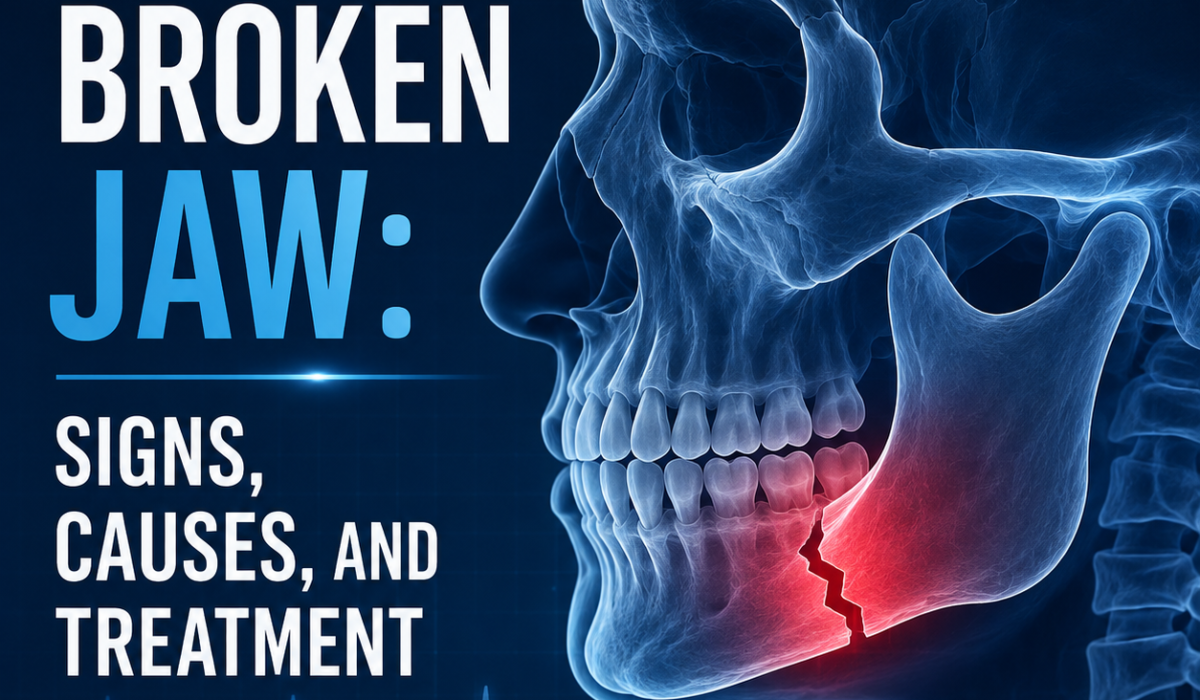
A broken jaw, also called a mandibular fracture, is a crack or break in the lower jawbone. The mandible is the only movable bone in the face, so injuries to it can significantly affect everyday functions.
A jaw fracture may occur in one place or several. It can range from a small, stable crack to a severe break where bone fragments move out of place. A broken jaw may involve the chin, the angle of the jaw, the body of the jaw, or the area near the jaw joint, and each location can affect symptoms and treatment planning.
Because the lower jaw helps control chewing, speech, and bite alignment, even a small fracture can cause noticeable changes. Some people first notice that their teeth no longer meet the same way or that opening the mouth feels painful or uneven.
What is a dislocated jaw?
A dislocated jaw happens when the lower jaw slips out of the temporomandibular joint, or TMJ, which connects the jaw to the skull. The jaw may become stuck open or shift to one side.
A dislocation is different from a fracture, but the symptoms can overlap. Sometimes both injuries happen together, especially after trauma. A dislocated jaw can also happen after yawning, dental work, vomiting, or other situations that open the mouth very wide, especially in people who have had previous dislocations.
When the joint is out of place, the muscles around it may tighten and make the jaw difficult to move. That is why a dislocated jaw usually needs prompt medical care rather than waiting for it to settle on its own.
Signs and symptoms of a broken jaw
Common signs of a broken jaw include:
- Jaw pain, especially when moving the mouth
- Swelling and bruising along the jaw or face
- Tenderness to touch
- Difficulty opening or closing the mouth
- Trouble chewing or biting
- Misaligned teeth or a bite that feels “off”
- Numbness in the chin, lower lip, or face
- Bleeding inside the mouth
- Loose or damaged teeth
- A visible deformity or uneven jawline
In more severe cases, a broken jaw can also cause:
- Difficulty speaking clearly
- Drooling because swallowing is painful
- Breathing problems if swelling or misalignment affects the airway
Some people with a broken jaw also notice that their teeth do not line up the way they used to, or that one side of the mouth hurts more than the other. Bruising may appear under the jaw, along the chin, or inside the mouth. If numbness is present, it can suggest nerve involvement and should be taken seriously.
Symptoms that may appear later
Not every jaw fracture is obvious immediately. Swelling can mask the deformity at first, and pain may increase over the next several hours. A person might initially think they only have a bruise, then later realize that biting feels strange or the jaw does not move normally. That delayed change is one reason a broken jaw should be checked after significant facial trauma.
Signs and symptoms of a dislocated jaw
A dislocated jaw may cause:
- Sudden jaw pain
- Inability to close the mouth
- Mouth stuck open or partially open
- Jaw shifting to one side
- Clicking or popping before the dislocation
- Trouble speaking or swallowing
- Excess saliva or drooling
- Facial swelling around the jaw joint
A dislocated jaw is often very painful and can be very obvious because the jaw does not sit in its normal position. In some cases, the lower jaw appears pushed forward, and the teeth may no longer come together as expected. This can make speech sound slurred and may make swallowing difficult.
If the jaw has dislocated before, a person may recognize warning signs such as clicking, locking, or a feeling that the joint is slipping. Even so, a repeat dislocation still needs professional evaluation because the surrounding tissues can become irritated or injured each time it happens.
Broken Jaw vs dislocated jaw: how to tell the difference
It can be hard to tell the difference without a medical exam, but there are some general clues:
- A broken jaw often causes swelling, bruising, and bite misalignment
- A dislocated jaw often makes it hard or impossible to close the mouth
- Both can cause pain, facial asymmetry, and trouble speaking or eating
Because symptoms overlap, any suspected jaw injury should be evaluated by a healthcare professional. A person may have both a fracture and a joint dislocation at the same time, especially after severe trauma. That is one reason self-diagnosis is unreliable.
In general, a broken jaw is more likely to cause pain when pressure is applied to the bone or teeth, while a dislocated jaw is more likely to make the mouth stay open or feel locked. Still, those patterns are not enough to confirm the diagnosis. Imaging and an exam are usually needed.
Common causes of a broken or dislocated jaw
Jaw injuries usually happen when the face is hit with enough force to damage the bone or joint. Common causes include:
- Falls
- Sports injuries
- Car accidents
- Physical assault
- Workplace accidents
- Impact from hard objects
- Seizures or medical events that cause sudden jaw movement in rare cases
Some people are more likely to experience jaw dislocation if they have a history of TMJ problems, loose ligaments, or previous dislocations. People with worn or unstable joints may notice that the jaw slips out more easily during wide yawns, dental procedures, or prolonged mouth opening.
A broken jaw often comes from direct force, such as a fall onto the chin or a blow during contact sports. A dislocated jaw can also happen without a direct hit if the joint opens too far. Either way, the injury can affect the same structures that control speech and chewing.
For more background on jaw joint strain and recurring instability, the MedlinePlus overview of TMJ disorders is a helpful medical reference.
When to seek emergency care
A broken or dislocated jaw can be a medical emergency. Get immediate medical attention if you have:
- Trouble breathing
- Trouble swallowing
- Heavy bleeding
- Severe facial swelling
- Jaw pain after major trauma
- A jaw that cannot close
- A jaw that looks crooked or out of place
- Loose teeth, numbness, or a change in bite
- Loss of consciousness or head injury symptoms
If breathing is affected, call emergency services right away. Even if the airway seems fine, a broken jaw should not be ignored when there is significant pain, visible deformity, or trouble moving the mouth normally.
If you are with someone who may have a jaw injury, avoid forcing the mouth closed or trying to realign the jaw yourself. Keep the person calm, reduce movement, and get professional help as soon as possible.
How a broken or dislocated jaw is diagnosed
A doctor, dentist, oral surgeon, or emergency clinician will usually diagnose the injury through:
- Physical examination
- Questions about how the injury happened
- Checking how the jaw opens, closes, and aligns
- Examining the teeth, gums, and facial bones
- Imaging tests such as X-rays or CT scans
A CT scan is often used when the injury is complex or when a fracture is suspected but not clearly seen on X-ray. The clinician may also look for cuts inside the mouth, signs of dental trauma, or changes in how the upper and lower teeth fit together.
Diagnosis is especially important if there is numbness in the lip or chin, because that can mean the fracture is affecting a nerve. The exam also helps identify whether the problem is mostly in the bone, the joint, or both.
Treatment for a broken jaw
Treatment depends on the type and severity of the fracture.
1. Immobilization and rest
Minor fractures may be treated by keeping the jaw stable so the bone can heal properly. This may involve:
- A soft or liquid diet
- Avoiding chewing
- Pain management
- Follow-up appointments to monitor healing
For stable injuries, the goal is often to protect the jaw while the bone knits back together. The care plan may include dietary changes for several weeks so the injured area is not stressed too early.
2. Wiring or banding the jaw
Some fractures require the jaw to be held in place with wires, bands, or other fixation methods. This helps keep the teeth aligned while the bone heals.
When the jaw is immobilized, speaking and eating can be more difficult, so patients usually receive instructions for hydration, nutrition, and oral care. Follow-up appointments matter because the clinician needs to confirm that the bite remains aligned as swelling goes down.
3. Surgery
More serious fractures may need surgery to realign and stabilize the bone. A surgeon may use:
- Plates and screws
- Wires
- Other fixation devices
Surgery is more likely if the fracture is displaced, involves multiple breaks, affects the bite, or makes normal jaw function difficult. Open fractures, tooth involvement, and injuries that create instability may also need operative care.
4. Pain control and antibiotics
Doctors may prescribe pain relief medication. Antibiotics may be used if the fracture is open, if teeth are involved, or if there is a high risk of infection.
Good pain control can make it easier to eat, drink, and rest, which supports healing. If antibiotics are prescribed, they should be taken exactly as directed to lower the risk of infection in the bone or surrounding tissues.
Treatment for a dislocated jaw
A dislocated jaw usually needs to be put back into place by a trained medical professional. This process is called reduction.
Manual reduction
The doctor may gently guide the jaw back into position. Muscle relaxants, sedation, or pain medication may be used to make the procedure safer and more comfortable.
Once the jaw is repositioned, the person may feel immediate improvement in the ability to close the mouth, although soreness can continue for some time. Because the joint and nearby muscles may remain irritated, patients often need brief rest and careful follow-up after the reduction.
Support after reduction
After the jaw is repositioned, the patient may need:
- Soft foods
- Limited jaw movement
- A support bandage or brace in some cases
- Follow-up care to reduce the risk of repeat dislocation
If the jaw keeps dislocating, additional treatment may be needed, including procedures to stabilize the joint. People with recurrent dislocations may also be advised to avoid very wide mouth opening and to discuss long-term management with a specialist.
Home care after a jaw injury
Home care depends on the diagnosis and treatment plan, but common recommendations include:
- Eat soft foods or liquids as directed
- Avoid chewing hard or sticky foods
- Take prescribed medications exactly as instructed
- Use ice packs to reduce swelling during the first 24 to 48 hours
- Keep follow-up appointments
- Maintain good oral hygiene if safe to do so
- Avoid opening the mouth wide, yawning excessively, or clenching the jaw
Do not try to force a dislocated jaw back into place at home.
It can also help to keep meals small and frequent so you can maintain nutrition without stressing the jaw. If brushing teeth is difficult, ask the care team what oral hygiene methods are safest during recovery. Cleanliness matters because mouth injuries can raise the risk of infection.
Some patients may need extra support to manage speech or eating during the first days after treatment. If so, follow the instructions given by your clinician rather than testing the jaw with hard foods or wide movements too soon.
Recovery time
Recovery time varies based on the type of injury.
- Minor jaw fractures may heal in a few weeks
- More serious fractures can take several weeks to months
- A dislocated jaw may improve faster after reduction, but the joint may remain sore for some time
Healing depends on the severity of the injury, whether surgery was needed, and how well aftercare instructions are followed.
During recovery from a broken jaw, follow-up visits are important so your clinician can confirm that the bite is aligning correctly and the bone is healing as expected. A slow return to normal chewing is often safer than rushing back to regular foods too soon. In some cases, a broken jaw needs repeated assessments to make sure the fracture is not shifting.
Even after the bone has healed, stiffness, tenderness, or clicking may continue for a while. That does not always mean something is wrong, but lingering symptoms should still be discussed with a healthcare professional.
Possible complications
Without proper treatment, a broken or dislocated jaw can lead to complications such as:
- Chronic pain
- Problems with biting or chewing
- Long-term jaw stiffness
- Repeated dislocations
- Infection
- Tooth damage
- Poor bone healing
- Temporomandibular joint dysfunction
- Breathing or swallowing issues in severe cases
Prompt treatment helps lower the risk of these complications. A broken jaw that heals in the wrong position can leave the bite uneven and may create ongoing discomfort. A dislocated jaw that keeps slipping out of place can lead to repeated inflammation and reduced confidence in normal jaw movement.
Complications are more likely when care is delayed, when the fracture is severe, or when follow-up instructions are not followed closely. That is why medical evaluation matters even if the injury seems manageable at first.
Can a broken jaw heal on its own?
A broken jaw should not be assumed to heal correctly without medical care. Even a small fracture can heal improperly, leading to bite problems, pain, and long-term jaw dysfunction. A dislocated jaw also needs professional reduction to restore proper alignment.
Even when symptoms seem mild at first, a broken jaw may still need imaging and follow-up care to prevent misalignment or delayed healing. A person may feel tempted to wait if they can still talk or open the mouth a little, but normal movement does not rule out a fracture. For that reason, prompt evaluation is the safest choice after a significant injury.
When should you see a doctor after jaw trauma?
You should see a doctor after any significant blow to the jaw or face, especially if you have:
- Pain that worsens
- Swelling that increases
- Trouble opening or closing your mouth
- A bite that feels different
- Numbness in the face or chin
- Loose teeth
- Jaw clicking, locking, or shifting
If symptoms are mild but persistent, medical evaluation is still important.
Even when the injury seems minor, a broken jaw can be missed if swelling and bruising are not carefully assessed. If the pain is not improving, or if you cannot comfortably eat, speak, or close your mouth, the jaw should be examined. The same advice applies if a dislocated jaw was reduced but continues to feel unstable afterward.
Preventing jaw injuries
Not every jaw injury can be prevented, but some steps can reduce risk:
- Wear a mouthguard during contact sports
- Use seat belts while driving
- Follow workplace safety guidelines
- Use caution on slippery surfaces to prevent falls
- Seek treatment for recurrent TMJ dislocation or jaw problems
For readers interested in broader dental protection, this guide to braces rubber bands explains how orthodontic care supports bite alignment in some patients.
If you already know your jaw joint is prone to slipping, talk with a clinician about practical ways to reduce strain. That may include avoiding extreme mouth opening, being careful during dental visits, and following any personalized recommendations for TMJ stability.
Key takeaways
A broken or dislocated jaw is a serious injury that can affect speaking, chewing, swallowing, and breathing. A broken jaw involves damage to the bone, while a dislocated jaw means the joint has moved out of place. Both can cause pain, swelling, bite changes, and difficulty moving the mouth.
If you suspect a jaw injury, especially after trauma, seek medical care as soon as possible. Quick diagnosis and treatment improve healing, reduce complications, and help restore normal jaw function. In many cases, early care for a broken jaw can make recovery simpler and safer.
When in doubt, treat the problem as urgent. A timely exam can confirm whether you have a fracture, a dislocation, or both, and it can help you get the right treatment before symptoms worsen.