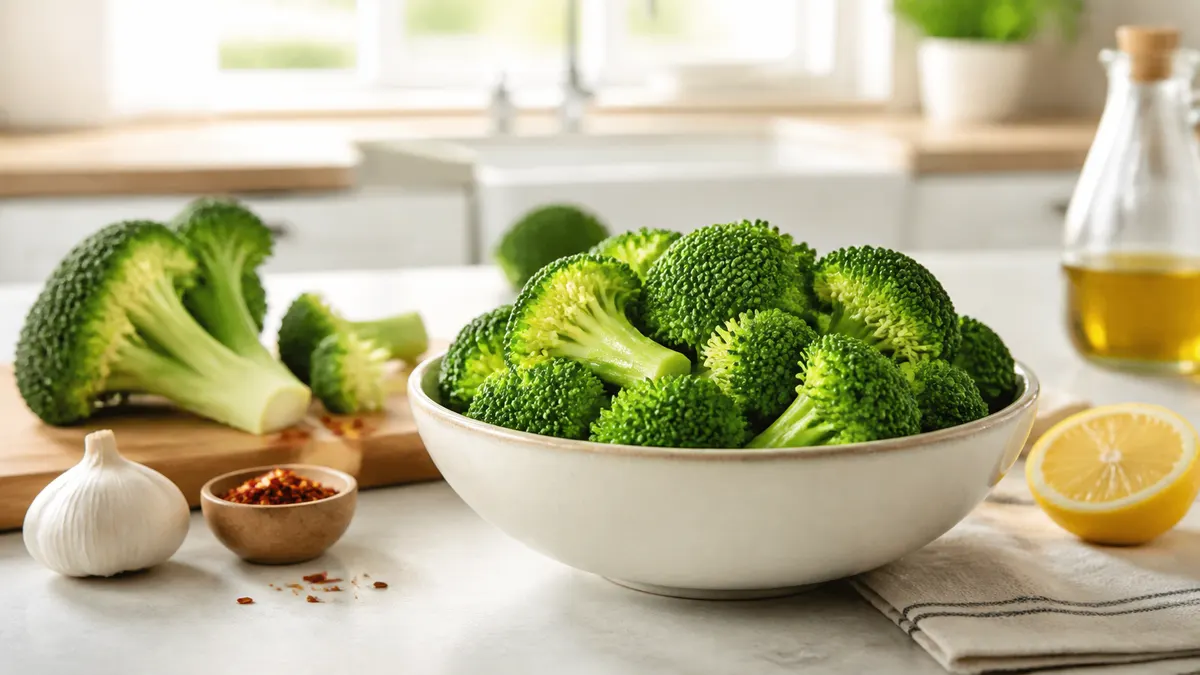
Broccoli health benefits begin with its contribution to nutrient intake. This low-calorie cruciferous vegetable supplies vitamins, minerals, fiber, and plant compounds, but not every proposed health effect is established in people.
If you’ve been searching for the real broccoli benefits, this guide breaks down the most important ones in a clear, practical way. You’ll learn how broccoli supports your body, why it deserves a regular place on your plate, and how to get the most from it. For more ideas on nutrient-rich produce, see healthiest vegetables.
Table of Contents
- What Makes Broccoli So Healthy?
- Broccoli Provides Nutrients for Normal Immune Function
- It Helps Support Healthy Digestion
- Broccoli Fits a Heart-Healthy Eating Pattern
- It Is Rich in Antioxidants
- Broccoli May Help Support Healthy Weight Management
- It Supports Bone Health
- Broccoli and Inflammation: What Is Still Being Studied?
- Other Broccoli Benefits Worth Knowing
- Is Broccoli Better Raw or Cooked?
- How Much Broccoli Should You Eat?
- Easy Ways to Add Broccoli to Your Diet
- Are There Any Downsides to Eating Broccoli?
- Final Thoughts
What Makes Broccoli So Healthy?
Broccoli is a cruciferous vegetable, the same family as cauliflower, Brussels sprouts, kale, and cabbage. It is packed with vitamins, minerals, fiber, and plant compounds that support overall health.
Broccoli provides vitamin C, vitamin K, folate, fiber, and potassium. It also contains glucosinolates that can form compounds such as sulforaphane during preparation and digestion. Its nutrient content and experimental plant-compound research are different parts of the broccoli health benefits discussion.
Because broccoli is nutrient-dense but low in calories, it is often considered one of the best foods for long-term health. It also fits easily into many eating styles, from simple weeknight dinners to plant-forward meal prep. When people talk about broccoli health benefits, they are usually talking about this mix of vitamins, minerals, fiber, and natural plant compounds working together.
Broccoli is also versatile. You can steam it, roast it, sauté it, add it to soups, or eat it raw with dip. That flexibility makes it easier to eat consistently, and consistency is what helps you get the most from broccoli benefits over time.
Broccoli Provides Nutrients for Normal Immune Function
One of the clearest broccoli benefits is its vitamin C content. Vitamin C is needed for normal immune function, but eating broccoli has not been shown to prevent infection or strengthen immunity beyond normal function.
Vitamin C also acts as an antioxidant. Its established biological roles help explain the nutritional value of broccoli, without showing that a serving makes the body more resistant to everyday illnesses.
Why this matters
Meeting nutrient needs is important for normal immune function. The NIH overview of immune function and nutrition does not establish broccoli as a way to recover faster from an infection; broccoli health benefits should be described in terms of nutritional contribution.
Broccoli also provides folate and other nutrients needed for normal body function. Adding a vegetable you enjoy can improve meal variety, one of the practical broccoli benefits, without promising extra resistance to illness.
If your meals are often low in fruits and vegetables, adding broccoli can be one way to increase nutrient intake. A varied diet supplies nutrients that broccoli alone cannot provide.
It Helps Support Healthy Digestion
Broccoli provides fiber that can help support bowel regularity. NIDDK guidance on constipation includes broccoli among fiber-containing foods and recommends increasing fiber gradually with adequate liquids.
Low fiber intake can contribute to constipation, but digestive symptoms have many causes. Broccoli can also cause gas or bloating, so improved comfort is not a guaranteed broccoli benefit.
How it helps
– Adds dietary fiber
– Can contribute to bowel regularity
– May cause gas or bloating in some people
If you’re trying to improve digestion naturally, broccoli is a smart food choice. These broccoli health benefits can be especially useful when your meals are otherwise low in produce. The fiber in broccoli adds bulk to meals and may help keep your digestive rhythm more consistent.
Broccoli also contains water. If you are not used to eating much fiber, smaller portions and gradual increases may be more comfortable; the amount that suits someone varies. There is no reason to expect broccoli benefits to be more noticeable than those of every other vegetable.
In everyday meals, broccoli can pair well with rice, chicken, tofu, beans, or pasta, which makes it easier to add without changing your whole diet. That practicality is one reason broccoli health benefits are accessible to so many people.
Broccoli Fits a Heart-Healthy Eating Pattern
Broccoli contributes vegetables and fiber to a heart-healthy eating pattern. It has not been established that eating broccoli alone meaningfully lowers cholesterol or protects blood vessels.
Broccoli also contains potassium. The NIH DASH eating plan combines vegetables with fruit, whole grains, beans, and other foods while limiting sodium and saturated fat. This supports a dietary-pattern approach rather than treating broccoli as a blood-pressure remedy.
Heart-friendly reasons to eat broccoli
– Contains fiber
– Provides potassium and other nutrients
– Adds a vegetable option to a varied eating pattern
For anyone building a heart-conscious eating pattern, broccoli is a convenient vegetable option. Broccoli health benefits are best understood as part of overall food choices, alongside other habits such as regular physical activity.
Broccoli is especially useful because it can replace less nutritious side dishes without feeling boring. Roasted broccoli, for example, can satisfy cravings for something savory and filling while still supporting your goals. That is one of the most underrated broccoli benefits: it helps healthy eating feel realistic.
It Is Rich in Antioxidants
Antioxidants are substances that help protect your cells from damage. Broccoli is full of them, including vitamin C, beta-carotene, and flavonoids.
One of broccoli’s most studied compounds is sulforaphane, which can form from glucosinolates during preparation and digestion. Laboratory studies explore its effects on cell-defense pathways, but these findings do not demonstrate long-term disease prevention from a serving of broccoli.
What this means for you
Antioxidant chemistry does not establish an anti-aging or disease-prevention effect from a food. The National Cancer Institute review of cruciferous vegetables describes mixed human cancer findings; cancer prevention is not a proven broccoli health benefit.
Antioxidants do not work in isolation. They work best as part of a diet that includes a range of colorful produce. Still, broccoli stands out because it delivers a strong antioxidant package in a food that is easy to buy and prepare. This makes broccoli benefits especially appealing for people trying to improve diet quality without complicating their routine.
Research on concentrated extracts or antioxidant supplements cannot be assumed to apply to ordinary broccoli servings. Supplements are not established substitutes for a varied diet or prescribed treatment, and NCI’s review of antioxidant supplements reports no general cancer-prevention benefit.
Broccoli May Help Support Healthy Weight Management
Broccoli adds vegetable volume and fiber with relatively few calories. It can fit meals for a range of weight goals, but it does not guarantee fullness, prevent overeating, or cause weight loss on its own.
Because broccoli is nutrient-dense, it gives your body important vitamins and minerals without adding much to your calorie intake. That is one of the most useful broccoli health benefits for people who want meals that are filling but not heavy.
Why broccoli works well for weight management
– Low in calories when served plain
– Provides fiber
– Adds volume to meals
– Calories also depend on sauces, oils, and the rest of the dish
This makes broccoli a practical choice for lunches, dinners, and meal prep. It is one of the easiest broccoli benefits to notice when you want filling meals that still feel light. You can add it to bowls, stir-fries, sheet-pan meals, or grain-based dishes without much effort.
Broccoli’s fiber and water can contribute to a satisfying meal, but appetite responses vary. Weight changes depend on the overall eating pattern and other factors. The most practical broccoli health benefits here are vegetable variety and meal flexibility.
For anyone trying to build better habits, broccoli is a smart “base” vegetable. It is filling, flexible, and easy to season. Those qualities make broccoli benefits practical, not just nutritional.
It Supports Bone Health
Broccoli is a source of vitamin K, which is involved in the function of bone proteins. It also supplies some calcium and other nutrients, but these contributions do not show that broccoli itself increases bone strength.
Many people think only dairy foods matter for bone health, but vegetables like broccoli also contribute in meaningful ways. If you are looking for a food that fits into a bone-friendly pattern, broccoli health benefits deserve attention.
Bone-supporting nutrients in broccoli
– Vitamin K
– Calcium
– Vitamin C
– Phosphorus
Including broccoli regularly can help support bone maintenance, especially when combined with other nutrient-rich foods and regular physical activity. If you want more tips for stronger bones, read bone health tips to strengthen your bones naturally.
Bone health depends on more than calcium alone. Your body also needs vitamin K, vitamin C, and other nutrients to maintain normal structure and function. That is why broccoli health benefits are broader than many people expect. Even a modest serving can contribute to your overall intake across the week.
Broccoli can add variety when dairy intake is limited, but it provides only a modest amount of calcium. The NIH calcium fact sheet lists about 21 mg in a half cup of raw broccoli; higher-calcium foods or fortified alternatives remain important for meeting total needs.
Broccoli and Inflammation: What Is Still Being Studied?
Inflammation is a normal body response, while persistent inflammation can accompany disease. Broccoli compounds have been studied for anti-inflammatory activity, but that does not establish ordinary broccoli servings as a treatment.
A small human study of broccoli sprouts measured changes in inflammatory markers. Sprouts, extracts, and mature broccoli florets differ, and a marker change does not by itself demonstrate relief of symptoms or prevention of disease. More research is needed before claiming a clinical anti-inflammatory broccoli health benefit.
Why the overall eating pattern matters
A diet rich in fruits, vegetables, whole grains, and healthy fats can support better long-term health. Broccoli fits well into this pattern and offers more than just basic nutrition.
Broccoli can contribute to a varied eating pattern without being described as an inflammation treatment. Pairing it with other vegetables, olive oil, beans, nuts, or fish creates meal variety; it does not guarantee an anti-inflammatory effect.
Because inflammation is influenced by many factors, the goal is consistency, not perfection. Regular servings of broccoli can help nudge your diet in a better direction without requiring major changes. That is one of the strongest broccoli health benefits: it is easy to practice in real life.
Other Broccoli Benefits Worth Knowing
Other nutritional features of broccoli include:
– Carotenoids such as lutein and zeaxanthin
– Vitamin C, which is needed for collagen formation
– Fiber and vegetable variety
– A nonstarchy vegetable option for balanced meals
These nutrients make broccoli a useful vegetable option, but there is no established “detox” effect from normal portions. Blood-sugar studies using concentrated sprout extracts also do not establish the same effect from eating broccoli; a 2025 trial in prediabetes did not meet its prespecified primary glucose-reduction target.
Broccoli also works well alongside other vegetables, which helps you build variety into your meals. The more often you rotate vegetables, the easier it becomes to cover a wider range of nutrients. That is one reason broccoli benefits are often discussed alongside other cruciferous vegetables.
Frozen broccoli can be convenient for busy weeks, but it still needs correct storage and handling. Follow the package directions and keep it properly frozen; freezing does not eliminate every food-safety risk. The FDA food-storage guidance explains why temperature and handling still matter.
Is Broccoli Better Raw or Cooked?
A common question people ask is whether broccoli is healthier raw or cooked. The answer depends on what you want.
– Raw broccoli has a crisp texture and avoids cooking-related vitamin losses, but storage can still reduce vitamin C.
– Lightly cooked broccoli has a softer texture and retains many nutrients.
– Prolonged cooking can reduce heat-sensitive vitamins and make broccoli mushy.
Steaming and roasting offer different textures, and cooking time and method affect nutrient retention. Prolonged heating can reduce vitamin C. For more ideas about produce, the Harvard Nutrition Source offers food features.
Roasting broccoli is another popular option because it creates a deeper flavor and a satisfying texture. Sautéing with a little olive oil and garlic is also a good way to keep broccoli appealing. When a food tastes good, you are more likely to eat it often, and that is how broccoli health benefits become part of everyday life.
If raw broccoli causes discomfort, a smaller serving or a cooked preparation may be easier to tolerate, although responses vary. Raw broccoli can work well in salads or snack plates if you enjoy its crunch. Either way, broccoli benefits include the nutrients it adds to a varied diet.
How Much Broccoli Should You Eat?
There is no established requirement for a specific amount of broccoli. A half cup or a cup can be a practical portion depending on the meal and appetite. Choose a variety of vegetables rather than treating a particular broccoli portion or frequency as a health treatment.
You do not need to eat huge amounts to benefit. Even small, regular servings can help improve overall nutrient intake. In other words, many broccoli health benefits come from consistency rather than large portions.
For some people, eating broccoli daily is easy and enjoyable. For others, a few servings per week is a better starting point. The best plan is the one you can stick with. Broccoli benefits are most useful when broccoli becomes a normal part of your meals instead of an occasional side dish.
If you are increasing fiber intake, drink enough water and build up gradually. That can help your body adjust more comfortably. Once your routine is in place, broccoli health benefits can support digestion, fullness, and overall meal quality without much extra effort.
Easy Ways to Add Broccoli to Your Diet
If you want to enjoy more broccoli benefits, try these simple ideas:
– Add steamed broccoli to dinner plates
– Mix chopped broccoli into salads
– Roast broccoli with olive oil and garlic
– Stir it into pasta, rice, or grain bowls
– Add it to omelets or scrambled eggs
– Use it in soups and casseroles
– Blend it into vegetable-packed side dishes
The key is consistency. Broccoli is easiest to enjoy when it’s part of meals you already like, and that consistency makes the broccoli health benefits easier to build into everyday eating.
You can also pair broccoli with lemon juice, pepper, parmesan, tahini, or simple herbs to make it more appealing. Small flavor changes can make a big difference in how often you eat it. That matters because broccoli benefits add up best over time, not in one meal.
If you need a quick option, keep frozen broccoli on hand. It cooks fast and can be added to many dishes without extra prep. That convenience makes broccoli health benefits easier to maintain during busy weeks.
Are There Any Downsides to Eating Broccoli?
For most people, broccoli is safe and highly beneficial. However, eating very large amounts may cause bloating or gas, especially if your body is not used to a high-fiber diet.
Broccoli contains goitrogenic compounds that can interfere with iodine use, particularly when iodine intake is inadequate. According to the NIH iodine fact sheet, reasonable amounts are generally not a concern for people with adequate iodine intake who eat a varied diet.
Broccoli is also rich in vitamin K. People using warfarin or similar vitamin K-antagonist anticoagulants should keep vitamin K intake consistent and discuss major changes with their prescribing clinician, as explained in the NIH vitamin K fact sheet. This interaction does not apply equally to all blood thinners.
Washing broccoli thoroughly before cooking is also a good idea, especially if you are eating it raw. And if you are sensitive to high-fiber foods, start with smaller portions and see how your body responds. These simple steps help you enjoy broccoli benefits without unnecessary discomfort.
Final Thoughts
Broccoli supplies vitamin C, vitamin K, fiber, and other nutrients and fits many balanced meals. Those nutritional broccoli benefits are well established; stronger claims about treating inflammation, preventing illness, or directly controlling blood sugar are not established for ordinary servings.
The best part is that broccoli is easy to cook, easy to add to meals, and affordable for most households. If you want a simple way to improve your diet, broccoli is one of the smartest foods to include regularly.
Eating more broccoli is not a magic fix, but it is a strong step toward better overall health. When you make room for broccoli health benefits in your weekly meal plan, you give your body a simple, practical boost.
Over time, those small choices can add up. Whether you prefer it raw, steamed, roasted, or mixed into a main dish, broccoli can support a healthier pattern of eating without much effort. That is why broccoli health benefits remain a favorite topic for anyone looking to eat better in a realistic way.