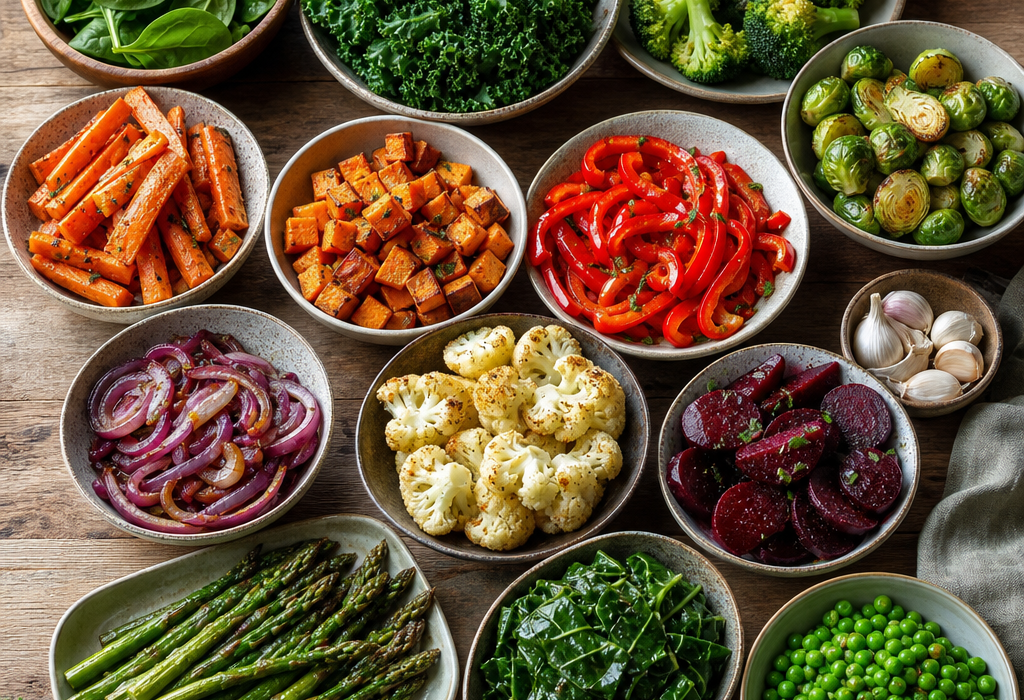
Eating more healthiest vegetables is one of the simplest ways to improve your health, support healthy weight management, and lower the risk of chronic disease. But not all vegetables offer the same nutrition. Some stand out because they are especially rich in vitamins, minerals, fiber, antioxidants, and disease-fighting plant compounds.
If you are wondering which vegetables are the healthiest to eat every day, this guide breaks down the 14 healthiest vegetables on Earth and explains why they deserve a regular place on your plate. You will also find practical ways to eat more of them, whether you prefer raw snacks, roasted sides, or quick weeknight meals.
- What Makes a Vegetable “Healthy”?
- 1. Spinach
- 2. Kale
- 3. Broccoli
- 4. Brussels Sprouts
- 5. Carrots
- 6. Sweet Potatoes
- 7. Bell Peppers
- 8. Garlic
- 9. Onions
- 10. Cauliflower
- 11. Beets
- 12. Asparagus
- 13. Collard Greens
- 14. Green Peas
- Which Vegetables Are Healthiest for Daily Eating?
- Are Raw or Cooked Vegetables Healthier?
- How to Eat More Healthy Vegetables Every Day
- Common Questions About the Healthiest Vegetables
- Final Thoughts
What Makes a Vegetable “Healthy”?
A truly healthy vegetable is usually low in calories, high in fiber, rich in vitamins and minerals, full of antioxidants and plant compounds, and easy to add to meals regularly. The healthiest vegetables tend to deliver a lot of nutrition for very few calories, which makes them especially useful for long-term wellness.
The best vegetables help support digestion, heart health, immunity, eye health, brain function, and healthy inflammation levels. The healthiest choices are often colorful, leafy, cruciferous, or deeply pigmented. If you build your meals around the healthiest vegetables, you naturally increase the amount of beneficial nutrients on your plate without making food feel complicated.
For a broader look at evidence-based eating patterns, you can also review the Harvard T.H. Chan School of Public Health’s vegetable guide, which explains why vegetables are so valuable in a balanced diet.
1. Spinach
Spinach is one of the most nutrient-dense choices among the healthiest vegetables you can eat. It is loaded with vitamin K, vitamin A, folate, iron, magnesium, and antioxidants. Because it has a mild flavor, it is easy to add to meals without changing the taste too much.
Why it is healthy
– Supports bone health with vitamin K
– Helps eye health with lutein and zeaxanthin
– Provides folate for cell growth and repair
– Very low in calories
Best ways to eat it
Spinach works well in salads, smoothies, soups, omelets, pasta, and stir-fries. Light cooking helps reduce volume so you can eat more of it easily. If you are building a routine around healthiest vegetables, spinach is one of the easiest vegetables to use daily.
2. Kale
Kale is often called a superfood because of its exceptional nutrient profile. It is high in vitamins A, C, and K, plus calcium, potassium, and powerful antioxidants. Among the healthiest vegetables, kale is especially known for its bold flavor and versatility.
Why it is healthy
– May support heart health
– Helps reduce oxidative stress
– Supports bone strength
– Contains fiber for digestion
Best ways to eat it
Kale can be massaged into salads, baked into chips, blended into smoothies, or sautéed with garlic and olive oil. If you want more variety in your list of healthiest vegetables, kale is an easy one to rotate with spinach.
3. Broccoli
Broccoli is one of the best vegetables for overall health. It belongs to the cruciferous family, which is known for protective plant compounds like sulforaphane. Many nutrition experts place broccoli near the top of the healthiest vegetables list because it offers so much nutrition in such a simple form.
Why it is healthy
– Rich in vitamin C and vitamin K
– Supports detoxification processes in the body
– May help reduce inflammation
– Contains fiber for gut health
Best ways to eat it
Steam, roast, stir-fry, or add broccoli to soups and casseroles. Light cooking preserves much of its nutrition. Broccoli also pairs well with other healthiest vegetables like carrots, cauliflower, and bell peppers.
4. Brussels Sprouts
Brussels sprouts are small but powerful. They are also cruciferous vegetables and offer a strong mix of fiber, vitamin C, vitamin K, and antioxidants. Like many of the healthiest vegetables, they deliver a lot of nutrition in a compact serving.
Why it is healthy
– Supports digestive health
– Helps with immune function
– Provides compounds linked to lower disease risk
– Very filling for the calories
Best ways to eat it
Roasting brings out their naturally sweet flavor. They also taste great shredded into slaws or sautéed with onions. If you do not love Brussels sprouts at first, give them a few different preparations before deciding where they rank among your favorite healthiest vegetables.
5. Carrots
Carrots are famous for their high beta-carotene content, which the body converts into vitamin A. They are excellent for eye health and immune support, and they are one of the most approachable healthiest vegetables for children and adults alike.
Why it is healthy
– Supports vision
– Helps maintain healthy skin
– Provides antioxidants
– Offers natural sweetness with few calories
Best ways to eat it
Eat carrots raw with hummus, roasted as a side dish, blended into soups, or grated into salads and baked goods. They are one of the easiest healthiest vegetables to keep on hand for quick snacks.
6. Sweet Potatoes
Sweet potatoes are technically a starchy vegetable, but they are still one of the healthiest vegetables on earth. They are rich in beta-carotene, potassium, vitamin C, and fiber. Their natural sweetness makes them a popular choice for people who want comfort food with better nutrition.
Why it is healthy
– Supports immune function
– Helps stabilize energy levels
– Promotes gut health with fiber
– May support healthy blood pressure
Best ways to eat it
Bake, roast, mash, or cube sweet potatoes into bowls, soups, and breakfast dishes. They fit well into meals built around healthiest vegetables, especially when paired with leafy greens and cruciferous vegetables.
7. Bell Peppers
Bell peppers, especially red ones, are among the best sources of vitamin C. They also contain carotenoids and other antioxidants that support health in many ways. Their crunch, color, and sweetness make them a standout among healthiest vegetables.
Why it is healthy
– Strengthens immune function
– Supports collagen production for skin
– Helps protect cells from damage
– Low in calories and high in water content
Best ways to eat it
Enjoy bell peppers raw, roasted, stuffed, grilled, or sliced into stir-fries and fajitas. They are especially useful when you want to add color to meals without adding many calories, which is part of what makes them one of the healthiest vegetables for everyday eating.
8. Garlic
Garlic is a vegetable and also a flavorful medicinal food. It contains sulfur compounds, especially allicin, which are associated with many health benefits. While people often use garlic as a seasoning, it still earns a place on the list of healthiest vegetables because of its unique compounds.
Why it is healthy
– Supports heart health
– May help maintain healthy cholesterol levels
– Has natural antimicrobial properties
– Adds flavor without excess salt
Best ways to eat it
Use garlic in soups, sauces, dressings, roasted vegetables, and marinades. Crushing or chopping it before cooking helps activate its beneficial compounds. Garlic also makes other healthiest vegetables more enjoyable, which can help you eat them more consistently.
9. Onions
Onions are rich in antioxidants, flavonoids, and sulfur compounds. They are a staple in many healthy diets because they add flavor and beneficial plant nutrients. When used often, onions help make the healthiest vegetables taste better without relying on heavy sauces or extra salt.
Why it is healthy
– May support heart health
– Contains compounds that fight oxidative stress
– Helps build flavor in healthy cooking
– Works well in almost any savory dish
Best ways to eat it
Add onions to soups, stews, omelets, salads, roasted vegetable dishes, and sautés. They combine well with almost every item on the healthiest vegetables list, which makes meal planning much easier.
10. Cauliflower
Cauliflower has become popular as a low-carb vegetable, but its value goes far beyond that. It is nutrient-rich, versatile, and part of the cruciferous family. If you are trying to eat more healthiest vegetables while keeping meals flexible, cauliflower is one of the most adaptable choices available.
Why it is healthy
– High in fiber and vitamin C
– Supports digestion
– Contains protective plant compounds
– Easy to use in many recipes
Best ways to eat it
Roast it, mash it, rice it, add it to soups, or use it as a base for healthier pizza crusts and side dishes. Cauliflower also works nicely with broccoli and Brussels sprouts, creating a simple trio of healthiest vegetables for the week.
11. Beets
Beets are known for their deep color and natural sweetness. They contain folate, manganese, potassium, and unique antioxidants called betalains. Their color alone makes them easy to recognize among the healthiest vegetables, but their nutrition is what really sets them apart.
Why it is healthy
– Supports blood flow and circulation
– Provides anti-inflammatory antioxidants
– Helps with exercise performance in some people
– Can support liver health
Best ways to eat it
Roast beets, grate them raw into salads, blend them into smoothies, or use them in soups like borscht. Pairing beets with leafy greens gives you two different categories of healthiest vegetables in one meal.
12. Asparagus
Asparagus is low in calories but rich in folate, vitamin K, fiber, and antioxidants. It is also known for supporting healthy digestion and cellular function. Because it cooks quickly, asparagus is a convenient addition to many meals built around healthiest vegetables.
Why it is healthy
– Supports healthy digestion
– Provides folate for cell growth
– Contains antioxidants that protect cells
– May act as a natural diuretic
Best ways to eat it
Steam, roast, grill, or sauté asparagus with olive oil, lemon, and herbs. It is especially good alongside salmon, eggs, or grain bowls that already include other healthiest vegetables.
13. Collard Greens
Collard greens are leafy greens packed with nutrients. They are especially high in vitamins A, C, and K, and are a good source of calcium and fiber. As one of the most traditional healthiest vegetables, collards have long been valued in home cooking because they are filling and nutrient-dense.
Why it is healthy
– Supports bone health
– Helps the immune system
– Provides fiber for satiety and digestion
– Offers strong antioxidant benefits
Best ways to eat it
Collards can be steamed, sautéed, added to soups, or used as wraps instead of tortillas. Their sturdy leaves make them useful when you want a more substantial leafy green from the healthiest vegetables category.
14. Green Peas
Green peas are often overlooked, but they are surprisingly nutritious. They provide fiber, protein, vitamins A, C, and K, and several B vitamins. They deserve more attention than they usually get and easily belong on any list of healthiest vegetables.
Why it is healthy
– Supports fullness and healthy weight management
– Helps digestion with fiber
– Provides plant-based protein
– Easy to add to many meals
Best ways to eat it
Add peas to soups, rice dishes, pasta, stir-fries, and salads. Frozen peas are convenient and still nutritious, which makes them one of the most practical healthiest vegetables to keep in the freezer.
Which Vegetables Are Healthiest for Daily Eating?
If you want the healthiest vegetables to eat every day, focus on variety. A mix of leafy greens, cruciferous vegetables, and colorful vegetables gives your body a wider range of nutrients. In other words, the best daily strategy is not to choose only one vegetable, but to rotate several of the healthiest vegetables throughout the week.
Some of the best daily choices include spinach, kale, broccoli, carrots, bell peppers, cauliflower, and Brussels sprouts. Eating a variety of vegetables is more effective than relying on just one “best” vegetable. Different colors provide different antioxidants and protective compounds, and that diversity is part of what makes the healthiest vegetables so valuable.
If you need meal inspiration, a helpful place to start is a balanced plate that includes at least two vegetables at lunch or dinner. For readers who also want to build better routines around eating patterns, this Type 2 diabetes remission: Ask Dmine proven path to better health article may be a useful companion read.
Are Raw or Cooked Vegetables Healthier?
Both raw and cooked vegetables can be healthy, and the best choice depends on the vegetable.
Raw vegetables are great for:
– Crunch and freshness
– Preserving certain heat-sensitive nutrients
– Quick snacks and salads
Cooked vegetables are great for:
– Easier digestion
– Better absorption of some nutrients
– More variety in flavor and texture
For example, cooking tomatoes, carrots, and spinach can help your body absorb certain nutrients more effectively. On the other hand, raw bell peppers and leafy greens are excellent in salads and snacks. A smart approach to the healthiest vegetables includes both raw and cooked options so your meals stay practical and enjoyable.
How to Eat More Healthy Vegetables Every Day
If you struggle to eat enough vegetables, try these simple strategies:
- Add spinach to smoothies
- Include at least two vegetables in lunch and dinner
- Keep cut vegetables ready in the fridge
- Roast a large tray of mixed vegetables for the week
- Use vegetables as the base of meals instead of the side
- Add greens to eggs, soups, and pasta
- Snack on carrots, peppers, or cucumber with dip
- Season vegetables well so they taste satisfying enough to repeat
- Use frozen vegetables when fresh options are not convenient
Small changes can make a big difference over time. When you make the healthiest vegetables easier to see, easier to prepare, and easier to enjoy, you are much more likely to eat them consistently.
Meal planning can also help. For example, you might build a Monday dinner around broccoli and carrots, a Tuesday lunch around spinach and bell peppers, and a Wednesday side dish around cauliflower and asparagus. That kind of repetition makes the healthiest vegetables feel less like a chore and more like a normal part of eating.
Another simple idea is to keep a vegetable-first mindset. Before choosing a snack or side dish, ask which of the healthiest vegetables you can add without much effort. Even one extra serving a day can move your habits in a better direction.
Common Questions About the Healthiest Vegetables
Which vegetable is the healthiest overall?
There is no single healthiest vegetable for everyone, but spinach, kale, broccoli, and Brussels sprouts are often considered top choices because they are rich in essential nutrients. Many people cycle through several of the healthiest vegetables instead of depending on one favorite.
What is the best vegetable for weight loss?
Non-starchy vegetables such as spinach, broccoli, cauliflower, zucchini, and bell peppers are excellent for weight loss because they are low in calories and high in fiber. They are also easy to combine with protein and healthy fats, which can make meals more satisfying.
What vegetable should I eat every day?
Leafy greens like spinach and kale are excellent daily choices, along with a mix of colorful vegetables such as carrots, peppers, and broccoli. A daily mix of healthiest vegetables gives you more variety in nutrients and flavor.
Are frozen vegetables healthy?
Yes. Frozen vegetables are often picked at peak freshness and can be just as nutritious as fresh vegetables. They are a convenient option for busy households and can help you stay consistent with the healthiest vegetables even when your schedule is packed.
Do vegetables really help prevent disease?
A diet rich in vegetables is linked to better heart health, improved digestion, and lower risk of several chronic conditions. No single food prevents disease on its own, but vegetables are a major part of a healthy diet. That is one reason the healthiest vegetables are worth eating often, not occasionally.
Final Thoughts
The healthiest vegetables on Earth are not just nutrient-rich—they are versatile, affordable, and easy to include in everyday meals. Spinach, kale, broccoli, Brussels sprouts, carrots, sweet potatoes, bell peppers, garlic, onions, cauliflower, beets, asparagus, collard greens, and green peas all offer unique health benefits.
The best approach is to eat a wide variety of vegetables regularly. By choosing different colors and types, you can give your body the vitamins, minerals, fiber, and antioxidants it needs to thrive. That is why the healthiest vegetables are best viewed as a group, not a single winner.
If your goal is better health, start by adding more of these 14 healthiest vegetables to your meals each week. Consistency matters more than perfection, and even small increases in vegetable intake can support long-term wellness.
Over time, the simplest habits often create the biggest results. Build meals around the healthiest vegetables, keep them visible and ready to use, and look for easy ways to include them at breakfast, lunch, dinner, and snacks.