The 1918 flu pandemic was one of the deadliest infectious disease outbreaks in modern history. Often called the Spanish flu, it spread around the world with frightening speed, infected a huge share of the global population, and killed millions of people within a short time.
If you are looking for 1918 flu pandemic facts, the most important thing to know is this: it was not just a bad flu season. It was a global health crisis that overwhelmed hospitals, disrupted daily life, and changed how governments and doctors think about pandemics.
This article explains the key facts in clear, simple terms, including what caused the pandemic, how it spread, who was affected, how many people died, and why it still matters today.
- What Was the 1918 Flu Pandemic?
- Why Was It Called the Spanish Flu?
- How Bad Was the 1918 Flu Pandemic?
- How Did the Pandemic Spread?
- What Were the Main Waves of the Pandemic?
- Who Was Most Affected?
- What Symptoms Did the 1918 Flu Cause?
- Why Was the 1918 Flu So Deadly?
- What Did People Do to Stop It?
- Was There a Vaccine or a Cure?
- How Long Did the Pandemic Last?
- How Did the 1918 Flu End?
- Why Is the 1918 Flu Still Important Today?
- Common Questions About the 1918 Flu Pandemic
- The Bottom Line
What Was the 1918 Flu Pandemic?
The 1918 flu pandemic was a worldwide outbreak of influenza A virus, specifically a strain of H1N1. It occurred during and after World War I and spread across nearly every continent.
Unlike seasonal flu, which affects people every year, the 1918 pandemic was exceptionally severe. It infected large numbers of healthy young adults, caused unusual symptoms in some patients, and led to rapid death in many cases.
Although it is commonly called the Spanish flu, the name is misleading. Spain was not necessarily the origin of the outbreak. The nickname stuck because Spain, being neutral in World War I, reported the illness more openly than many other countries that were censoring wartime news.
For readers who want a broader public-health comparison, the World Health Organization’s influenza resources are a useful reference for how flu viruses are tracked today: WHO influenza overview and guidance.
Why Was It Called the Spanish Flu?
The term Spanish flu came from public reporting, not from where the virus started.
During World War I, many countries involved in the war limited news about the outbreak to avoid lowering morale. Spain, however, had a freer press and reported the epidemic widely. As a result, many people mistakenly assumed the disease began there.
Today, historians and scientists agree that the name is inaccurate. The pandemic likely did not originate in Spain, and its exact origin is still debated.
How Bad Was the 1918 Flu Pandemic?
The 1918 flu pandemic was extraordinarily severe. It spread rapidly around the world in multiple waves and caused far more deaths than a typical flu outbreak.
Commonly cited estimates suggest that:
- About one-third of the world’s population was infected
- Around 50 million people died globally
- Some estimates place the death toll even higher
These numbers are approximate because record-keeping was incomplete in many places, especially during wartime and in regions with limited medical infrastructure.
One reason the 1918 flu pandemic remains so significant is that it spread so quickly in places where people were already under stress from war, displacement, and food shortages. That combination made the crisis harder to contain and much deadlier than many people expected at the time.
Historians also note that the 1918 flu pandemic placed extraordinary pressure on local leaders, public health officers, and hospitals. In many communities, ordinary routines were suspended, and the disease became part of every family’s daily concern.
How Did the Pandemic Spread?
The virus spread through respiratory droplets and close contact, just like influenza viruses do today. Crowded military camps, troop ships, trains, factories, and cities made it easy for the disease to move quickly from person to person.
World War I played a major role in spreading the illness:
- Soldiers traveled across continents
- Large groups lived in close quarters
- Medical systems were already strained
- Public health communication was limited in many areas
As infected people moved, the virus reached communities in Europe, North America, Asia, Africa, and beyond.
Modern readers can better understand this transmission pattern by comparing it with basic infection-control guidance used today. The Centers for Disease Control and Prevention explains how influenza spreads and how people can reduce risk: CDC information on how flu spreads.
Because the 1918 flu pandemic moved so efficiently through transport networks, it showed how travel can connect distant communities during an outbreak. A disease that begins in one place can quickly become a global problem when people are moving in large numbers.
What Were the Main Waves of the Pandemic?
The pandemic came in multiple waves, and the second wave was often the deadliest.
First wave
The first major wave appeared in early 1918. It was relatively mild compared with what came later, and many people did not realize how serious the outbreak would become.
Second wave
The second wave, in late 1918, was far more lethal. This wave caused many of the pandemic’s deaths and spread quickly across the world.
Third wave
A third wave followed in early 1919 in some places and was also deadly, though usually less severe than the second wave.
The pattern of waves is one reason the 1918 flu pandemic is still studied closely by epidemiologists and historians. It shows that a disease can appear manageable at first and then become much more dangerous later, especially when conditions allow it to spread widely.
That wave pattern also explains why many communities were caught off guard. A period of relative calm sometimes followed by a more severe surge made planning difficult and encouraged false confidence.
Who Was Most Affected?
One of the most surprising facts about the 1918 flu pandemic is that it did not only kill the elderly and very young, as many flu outbreaks do. It also killed many healthy adults between the ages of 20 and 40.
This unusual age pattern made the pandemic especially tragic because it struck people in what is often considered the healthiest stage of life.
People at higher risk included:
- Young adults
- Pregnant women
- People with weakened immune systems
- Those living in crowded conditions
- People without access to medical care
Children and older adults were also affected, but the high death rate among healthy adults was one of the most notable features of the outbreak.
The 1918 flu pandemic also had a broader social impact because it removed workers, parents, soldiers, and caregivers from families and communities at a time when support systems were already under strain. In many places, that created long-term hardship beyond the immediate deaths.
For many households, the impact was practical as well as emotional. Schools closed, workplaces lost staff, and families had to care for the sick with little outside help. Those disruptions made the crisis feel larger than a medical event alone.
What Symptoms Did the 1918 Flu Cause?
The illness often began like a severe flu, with symptoms such as:
- Fever
- Cough
- Fatigue
- Headache
- Body aches
- Sore throat
In many severe cases, patients quickly developed:
- Shortness of breath
- Pneumonia
- Bluish skin from lack of oxygen
- Bleeding from the nose or mouth
- Rapid decline and death
Reports from the time described some patients turning blue or gray because their lungs could not get enough oxygen. In some cases, death came within days.
Doctors and nurses in 1918 often had limited tools for diagnosis and treatment, so much of what they observed was based on bedside care and symptom tracking. That makes firsthand records especially valuable to historians today.
The symptoms were frightening because they could worsen quickly. People who seemed to have a typical flu one day might develop severe breathing problems soon after, leaving little time for effective medical intervention.
Why Was the 1918 Flu So Deadly?
Several factors made the pandemic unusually lethal.
1. The virus itself was highly dangerous
The H1N1 strain that caused the pandemic was especially aggressive.
2. Many people had no immunity
Because the virus was new, people’s immune systems were not prepared to fight it.
3. Hospitals were overwhelmed
There were not enough doctors, nurses, beds, or supplies in many places.
4. War conditions made things worse
Crowding, poor nutrition, stress, and troop movement all helped the virus spread.
5. Secondary infections killed many patients
A lot of deaths were caused not only by influenza itself but also by bacterial pneumonia and other complications.
In addition, medical care in 1918 was not what it is today. There were no modern intensive care units, no ventilators in the modern sense, and no proven antiviral medicines. That left health workers trying to manage a fast-moving disease with very limited resources.
The combination of weak medical tools and high transmission made the 1918 flu pandemic especially devastating. Even communities with strong local hospitals often found that they could not keep up once cases surged.
What Did People Do to Stop It?
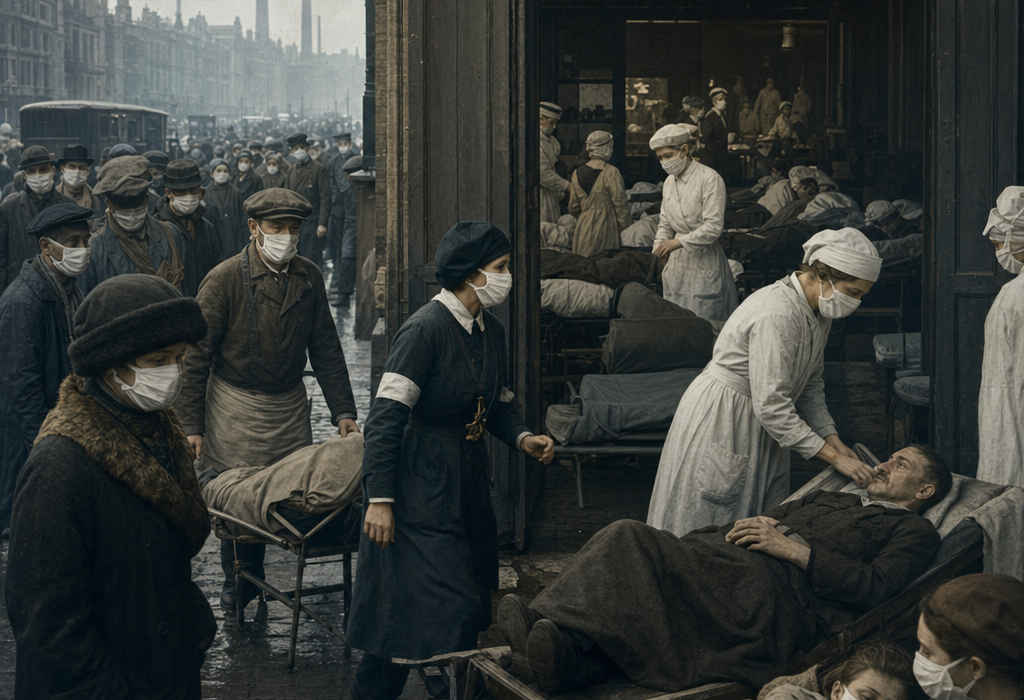
Without vaccines or antiviral drugs, people relied on public health measures such as:
- Quarantines
- Closing schools and theaters
- Banning large gatherings
- Wearing face masks
- Isolating sick individuals
- Improving sanitation and ventilation
Some cities acted earlier and more aggressively than others. Places that implemented public health measures quickly often had lower death rates than places that delayed action.
This is one of the most important 1918 flu pandemic facts for public health history: timing mattered.
The response also showed that the same basic tools used to slow respiratory outbreaks today were already known more than a century ago. The difference was that communities in 1918 had fewer scientific resources and much less coordinated guidance.
Public compliance also mattered. In places where people accepted restrictions, reduced contact, and followed local guidance, spread could be slowed more effectively than in communities where fear, confusion, or resistance weakened the response.
Was There a Vaccine or a Cure?
No effective flu vaccine existed in 1918. Scientists had not yet identified influenza viruses the way they are understood today. The exact cause of influenza was not fully known at the time, and medical tools were limited.
There was also no antiviral treatment. Doctors could offer only supportive care, such as rest, fluids, oxygen, and treatment for complications. Many remedies used at the time were ineffective by modern standards.
People sometimes ask whether the 1918 flu pandemic could have been stopped if modern medicine had existed then. The answer is probably yes, or at least the death toll would likely have been much lower. Better vaccines, antibiotics for secondary bacterial infections, oxygen therapy, and better hospital care would have changed the outcome for many patients.
That comparison helps show how much medicine has changed over the past century. It also explains why historical outbreaks remain so useful for understanding the value of prevention, research, and public-health preparedness.
How Long Did the Pandemic Last?
The worst period of the pandemic lasted from 1918 into 1919, though some places experienced outbreaks slightly earlier or later.
The exact duration varied by region because the virus spread in waves. Some communities were hit hard, recovered, and then faced another outbreak months later.
That uneven timeline is another reason the 1918 flu pandemic is such an important case study. It reminds us that pandemics do not always move in a straight line, and local conditions can change the course of an outbreak dramatically.
In some places, the return of cases after an initial decline was especially disruptive. People hoped the danger had passed, only to face renewed illness and new losses a short time later.
How Did the 1918 Flu End?
The pandemic did not end suddenly. Over time, the virus changed, population immunity increased, and many of the most dangerous outbreaks subsided.
Influenza viruses can evolve, which means related strains continued to circulate after 1918. The original pandemic strain eventually disappeared, but it left a lasting legacy in medicine and public health.
Even after the main waves passed, many families and communities continued dealing with grief, economic loss, and the long recovery that followed. In that sense, the end of the outbreak did not mean an immediate return to normal life.
The 1918 flu pandemic faded gradually rather than disappearing overnight. That slow ending is part of what made the experience so exhausting for survivors and public officials alike.
Why Is the 1918 Flu Still Important Today?
The 1918 flu pandemic is still studied because it teaches important lessons about:
- How quickly a respiratory virus can spread
- Why public health response matters
- How crowded conditions increase risk
- Why clear communication is essential
- How pandemics can affect society, not just health
It also helped shape modern pandemic planning. Lessons from 1918 influenced later responses to influenza outbreaks and other infectious diseases. Public health officials continue to study the 1918 flu pandemic because it offers a real-world example of how a virus can overwhelm systems that are not prepared.
Many comparisons have been made between 1918 and later disease outbreaks, especially when communities face shortages, misinformation, or delayed action. The core lesson remains the same: preparedness saves lives.
The 1918 flu pandemic is also useful because it shows the importance of reliable information. In a crisis, rumor can spread as quickly as a virus, and confusion can make people less likely to act in ways that protect themselves and others.
What Lessons Did the World Learn?
The 1918 flu pandemic showed that:
- Early action can save lives
- Public trust is critical
- Accurate reporting matters
- Hospitals need surge capacity
- Global travel can accelerate disease spread
- New viruses can behave in unexpected ways
These lessons remain relevant whenever new outbreaks emerge.
It also helped establish the importance of records, surveillance, and international cooperation. Without data, scientists could not compare outbreaks, identify patterns, or learn what public health steps worked best.
That is why modern epidemiology still draws on lessons from the 1918 flu pandemic. Historical evidence does not just tell a story; it helps build better responses for the future.
Common Questions About the 1918 Flu Pandemic
Was the 1918 flu the deadliest pandemic in history?
It is one of the deadliest pandemics ever recorded and is often considered the deadliest influenza pandemic in modern history.
Did the 1918 flu start in Spain?
Probably not. The name “Spanish flu” is misleading and came from Spain’s open reporting during wartime, not from the virus’s origin.
How many people died from the 1918 flu?
Estimates commonly range around 50 million deaths worldwide, though the exact number is uncertain.
Why did young adults die so often?
Scientists believe the virus, immune responses, and complications like pneumonia all contributed. The high death rate among healthy adults was unusual and remains a major topic in medical history.
Could a pandemic like 1918 happen again?
A similar pandemic is possible in the sense that new influenza strains can still emerge. However, modern medicine, surveillance, vaccines, and public health systems provide more tools than people had in 1918.
One important modern parallel is the need for people to stay informed about flu risks and other respiratory illnesses. If you want an example of current educational material on disease prevention and complications, see Diabetes and coronavirus: What Patients Need to Know, which shows how underlying health conditions can affect outcomes during infectious disease outbreaks.
The Bottom Line
The 1918 flu pandemic was a global crisis that infected a huge portion of the world and killed tens of millions of people. It spread quickly, came in deadly waves, and affected young adults in unusual numbers. Because there was no vaccine or effective treatment at the time, communities had to rely on isolation, masks, and public health measures to slow it down.
Understanding these 1918 flu pandemic facts helps explain not only one of history’s most devastating outbreaks, but also why pandemic preparedness remains so important today. The story of the 1918 flu pandemic is ultimately a story about the consequences of delay, the value of public health, and the importance of learning from history.
Even more than a century later, the 1918 flu pandemic remains a warning and a guide. When communities understand the science, act early, and communicate clearly, they are better prepared to face the next outbreak.
Learning about the 1918 flu pandemic also helps put modern flu prevention in context. The tools are better now, but the basic principles of reducing spread, protecting vulnerable people, and responding quickly are still the same.