People with diabetes often have a lot of questions about coronavirus. The most important thing to know is this: diabetes and coronavirus can be a risky combination when blood sugar is not well controlled, but good diabetes management can help lower that risk. If you have diabetes, staying informed, staying prepared, and knowing when to seek medical care are essential.
This article explains what patients with diabetes need to know about coronavirus, including symptoms, risks, prevention, medication management, and what to do if you get sick. For another diabetes-related read, see Brittle Diabetes: Why This Rare Condition Needs Recognition.
Table of Contents
- Why Coronavirus Matters More for People with Diabetes
- Are People with Diabetes at Higher Risk?
- Common Symptoms of Coronavirus
- How COVID-19 Can Affect Blood Sugar
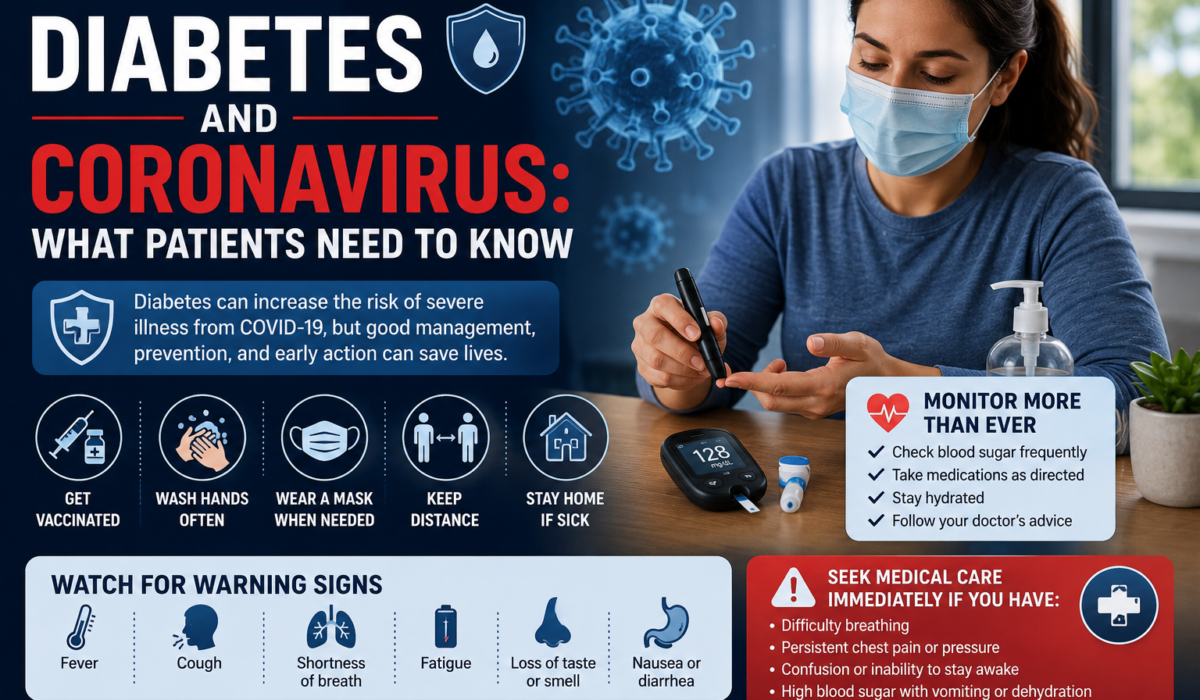
- How to Protect Yourself from Coronavirus
- What to Do If You Get COVID-19
- Diabetes Medicines and Coronavirus: What to Know
- When Should You Call a Doctor?
- When Is Emergency Care Needed?
- How to Manage Diabetes During a Pandemic or Outbreak
- Healthy Habits That Help Lower Risk
- Key Takeaway
Why Coronavirus Matters More for People with Diabetes
Coronavirus, also called COVID-19, can affect anyone. But people with diabetes are more likely to become seriously ill if they catch it, especially if blood sugar levels are not well controlled.
When diabetes is poorly managed, the body may have a harder time fighting infections. High blood sugar can also make inflammation worse and may slow recovery. In some cases, COVID-19 can cause blood sugar to rise, even in people whose diabetes has been stable.
That does not mean every person with diabetes will get severely ill. It means extra care is important. Good planning, regular glucose checks, and early communication with your healthcare team can make a real difference when diabetes and coronavirus overlap.
Are People with Diabetes at Higher Risk?
Yes. People with both type 1 and type 2 diabetes may have a higher risk of:
- Severe illness from COVID-19
- Hospitalization
- Breathing problems
- Complications related to dehydration or high blood sugar
- Longer recovery time
The risk may be even higher if a person also has:
- Older age
- Obesity
- Heart disease
- Kidney disease
- High blood pressure
- A weakened immune system
Having diabetes does not mean you will get COVID-19, and it does not guarantee severe illness. But it does mean prevention and early action are especially important. Many public-health and diabetes organizations continue to recommend that people with diabetes stay up to date on vaccines and follow the latest guidance from trusted sources like the U.S. Centers for Disease Control and Prevention COVID-19 guidance.
Common Symptoms of Coronavirus
COVID-19 symptoms can vary from mild to severe. Common symptoms include:
- Fever or chills
- Cough
- Shortness of breath
- Fatigue
- Sore throat
- Runny nose
- Headache
- Muscle aches
- Loss of taste or smell
- Nausea, vomiting, or diarrhea
Some people have no symptoms at all.
If you have diabetes and coronavirus symptoms develop, monitor your blood sugar more closely than usual. Illness can change how your body uses insulin and can make glucose levels harder to control. Even mild symptoms can affect glucose trends, so checking early and often is a smart part of sick-day care.
Symptoms may also overlap with other respiratory illnesses, so testing matters if COVID-19 is circulating in your area or if you have had a known exposure. If you are unsure whether symptoms are from COVID-19, influenza, allergies, or another infection, contact your healthcare provider for advice.
How COVID-19 Can Affect Blood Sugar
Coronavirus can affect blood sugar in several ways.
Blood sugar may rise
Illness often causes the body to release stress hormones, which can raise blood glucose. Fever, infection, and dehydration can also make blood sugar higher than usual. This is one reason diabetes and coronavirus require close monitoring.
Blood sugar may drop
If you are eating less, vomiting, or taking diabetes medication without enough food, blood sugar may become too low. Low blood sugar can be especially dangerous if you are weak, dizzy, or unable to keep fluids down.
Risk of diabetic ketoacidosis may increase
People with type 1 diabetes, and sometimes people with type 2 diabetes, may develop diabetic ketoacidosis (DKA) during illness. This is a medical emergency. It happens when the body does not have enough insulin and starts breaking down fat too quickly, producing dangerous acids called ketones.
Signs of DKA may include:
- High blood sugar
- Nausea or vomiting
- Stomach pain
- Deep or rapid breathing
- Fruity-smelling breath
- Confusion
- Severe weakness
If these symptoms happen, seek emergency care right away. DKA can progress quickly, especially when illness, dehydration, and insulin problems happen together.
For more clinical background on how COVID-19 affects infection and risk, the World Health Organization coronavirus resource page is a reliable reference.
How to Protect Yourself from Coronavirus
The best way to reduce risk is to prevent infection as much as possible.
Get vaccinated
COVID-19 vaccines help reduce the risk of severe illness, hospitalization, and death. People with diabetes are generally encouraged to stay up to date on recommended COVID-19 vaccines and boosters.
Wash hands often
Wash your hands with soap and water for at least 20 seconds, especially:
- After being in public places
- After touching shared surfaces
- Before eating
- Before checking blood sugar or giving insulin
Avoid close contact with sick people
Try to stay away from people who are sick or may have COVID-19.
Improve ventilation
If possible, improve airflow indoors by opening windows or using air filters.
Wear a mask when needed
Masks may be useful in crowded indoor spaces, healthcare settings, or during periods of high community spread.
Keep diabetes under control
Managing diabetes well is one of the best ways to reduce your risk of complications if you do get sick. Careful glucose management supports immune health, energy, and recovery.
Use a prevention plan you can actually follow
For many people, the best prevention plan is the one that fits everyday life. Keep hand sanitizer in the car or bag, stock a few masks for higher-risk settings, and know where you can test quickly if symptoms appear. Small habits matter when diabetes and coronavirus are both on your mind.
Should People with Diabetes Take Extra Precautions?
Many people with diabetes should be more cautious, especially if they have other health problems or struggle with glucose control. Extra precautions may include:
- Avoiding crowded indoor spaces during outbreaks
- Keeping a supply of medicines and testing supplies at home
- Making a plan for sick days
- Staying connected with your healthcare provider
- Checking blood sugar more often when exposed to illness
If you are unsure how strict your precautions should be, ask your doctor based on your personal health situation. Your age, other conditions, medication routine, and recent A1C all matter when deciding how cautious to be.
Some people may also benefit from extra planning around work, travel, or caregiving responsibilities. If your schedule makes exposure more likely, prepare ahead with testing supplies, backup medication, and a list of emergency contacts.
What to Do If You Get COVID-19
If you think you have COVID-19, act quickly.
1. Test as soon as possible
Use a home COVID-19 test if available, or contact a healthcare provider about testing.
2. Monitor blood sugar closely
Check glucose more often than usual, especially if you have symptoms, fever, or are eating less.
3. Stay hydrated
Drink plenty of fluids to help prevent dehydration. Water, broth, and sugar-free drinks are often good choices.
4. Continue diabetes medicines unless told otherwise
Most people should keep taking their diabetes medications, but some medications may need to be paused during illness. This depends on your situation and your doctor’s advice.
5. Follow sick day rules
Your healthcare team may give you specific instructions for illness, including:
- How often to check blood sugar
- When to check ketones
- When to adjust insulin
- When to call for help
6. Rest and isolate
Stay home and limit contact with others to avoid spreading the virus.
It also helps to keep a written note of the date your symptoms started, your highest glucose readings, and any medications you took. That record can make it easier to spot patterns and explain what is happening if you need medical advice.
Diabetes Medicines and Coronavirus: What to Know
Many patients wonder whether they should stop taking their diabetes medications during COVID-19. In most cases, do not stop your diabetes treatment without medical advice.
Insulin
If you use insulin, you may still need it even if you are not eating normally. In fact, illness can sometimes increase the need for insulin.
Metformin
Metformin may sometimes need to be paused if you are dehydrated, vomiting, or have kidney problems. This is something to discuss with your doctor.
SGLT2 inhibitors
Medicines like empagliflozin, dapagliflozin, and canagliflozin may increase the risk of ketoacidosis during illness, even if blood sugar is not very high. Ask your healthcare provider whether you should stop them temporarily when sick.
Other medicines
Some other diabetes medications may need adjustment if you are not eating or drinking normally. Your provider can tell you what to do based on your treatment plan.
If your care team has already given you a sick-day plan, keep it somewhere visible. A refrigerator door, medicine cabinet, or phone note can work well. The goal is to remove confusion before diabetes and coronavirus symptoms make decision-making harder.
When Should You Call a Doctor?
Call your healthcare provider if you have diabetes and coronavirus:
- Test positive for COVID-19
- Have symptoms of COVID-19
- Have blood sugar that stays high or low
- Cannot keep fluids down
- Have ketones in your urine or blood
- Feel confused, weak, or unusually sleepy
- Are not sure how to manage your medicines while sick
Early contact can help prevent serious complications. If your provider offers telehealth, that may be a fast way to review glucose numbers, medicine changes, and warning signs without leaving home.
When Is Emergency Care Needed?
Seek emergency help right away if you have:
- Trouble breathing
- Chest pain or pressure
- Blue or gray lips or face
- Severe confusion
- Loss of consciousness
- Signs of diabetic ketoacidosis
- Severe dehydration
- Blood sugar that is dangerously high or low and not improving
If symptoms become severe, do not wait. When diabetes and coronavirus cause a rapid decline, prompt treatment is safest.
Emergency care may also be needed if you cannot safely monitor your blood sugar at home, if you cannot drink enough fluids, or if repeated vomiting keeps you from taking needed medication. In those situations, it is better to be evaluated sooner rather than later.
Can COVID-19 Cause Diabetes Complications?
Yes. COVID-19 can make diabetes harder to manage and may lead to complications such as:
- Higher-than-usual blood sugar
- Diabetic ketoacidosis
- Dehydration
- Worsening kidney function
- Increased risk of heart-related problems
Some people have also developed new blood sugar problems during or after COVID-19, but the relationship is still being studied. People who already have diabetes should focus on preventing infection and controlling glucose carefully.
Even after the infection improves, it can take time for blood sugar patterns to settle. If your readings remain unusual for several days, follow up with your clinician so your treatment can be adjusted if needed.
How to Manage Diabetes During a Pandemic or Outbreak
Even when coronavirus cases rise, it is important not to ignore your diabetes care.
Keep a home supply ready
Try to keep enough on hand:
- Insulin or diabetes pills
- Glucose meter supplies or CGM sensors
- Test strips
- Ketone strips
- Syringes, pens, or pump supplies
- Healthy foods and snacks
Make a sick day plan
Know in advance:
- When to check glucose
- When to check ketones
- What medicines to continue
- Who to call for help
Stay connected to your care team
Telehealth visits can help you review glucose control, update medications, and address concerns without an in-person visit.
Do not skip regular care
Eye exams, foot checks, lab work, and routine follow-up remain important even during periods of higher COVID-19 activity.
Many patients also find it useful to prepare a simple “backup week” plan: extra test strips, a backup charger for devices, a list of prescriptions, and a few shelf-stable meals. That small amount of preparation can reduce stress if you suddenly need to isolate because of diabetes and coronavirus exposure.
Healthy Habits That Help Lower Risk
Good daily habits can support both diabetes control and immune health:
- Eat balanced meals
- Stay physically active as allowed
- Sleep enough
- Manage stress
- Avoid smoking
- Limit alcohol
- Keep blood pressure and cholesterol under control
These habits will not prevent coronavirus by themselves, but they help strengthen overall health.
Stress management matters more than many people realize. Stress can affect glucose readings, appetite, sleep, and motivation to keep up with treatment. Even brief walks, breathing exercises, prayer, journaling, or quiet time can support steadier routines during periods when diabetes and coronavirus concerns are high.
Nutrition also matters. Try to keep some easy-to-digest foods available in case your appetite drops. Examples include soup, yogurt, crackers, applesauce, and oral rehydration options if recommended by your care team. If you use insulin, having predictable carbohydrate options at home can help you avoid unexpected lows.
Frequently Asked Questions
Is coronavirus more dangerous for type 1 or type 2 diabetes?
Both type 1 and type 2 diabetes can increase the risk of complications. The exact risk depends on overall health, blood sugar control, age, and other medical conditions.
Should I check my blood sugar more often if I have COVID-19?
Yes. Illness often changes blood sugar levels. More frequent checking can help you catch problems early.
Can I get the COVID-19 vaccine if I have diabetes?
In general, yes. Most people with diabetes are encouraged to stay current with COVID-19 vaccination. Ask your healthcare provider if you have specific concerns.
Do I need to stop eating if I’m sick?
No. Try to keep taking in fluids and enough carbohydrates if possible, especially if you use insulin. If you cannot eat, follow your sick day plan and contact your doctor.
What if my blood sugar is high but I don’t feel very sick?
Illness can cause blood sugar to rise before you feel very unwell. If your readings stay high, follow your care plan and contact your healthcare provider.
Key Takeaway
People with diabetes should take coronavirus seriously, because the infection can lead to more severe illness and can make blood sugar harder to control. The good news is that careful diabetes management, vaccination, good hygiene, and a clear sick day plan can all help reduce risk.
If you have diabetes, know your symptoms, monitor your glucose closely when sick, keep your medications and supplies ready, and contact a healthcare provider early if you become ill. Fast action can make a big difference when diabetes and coronavirus intersect.