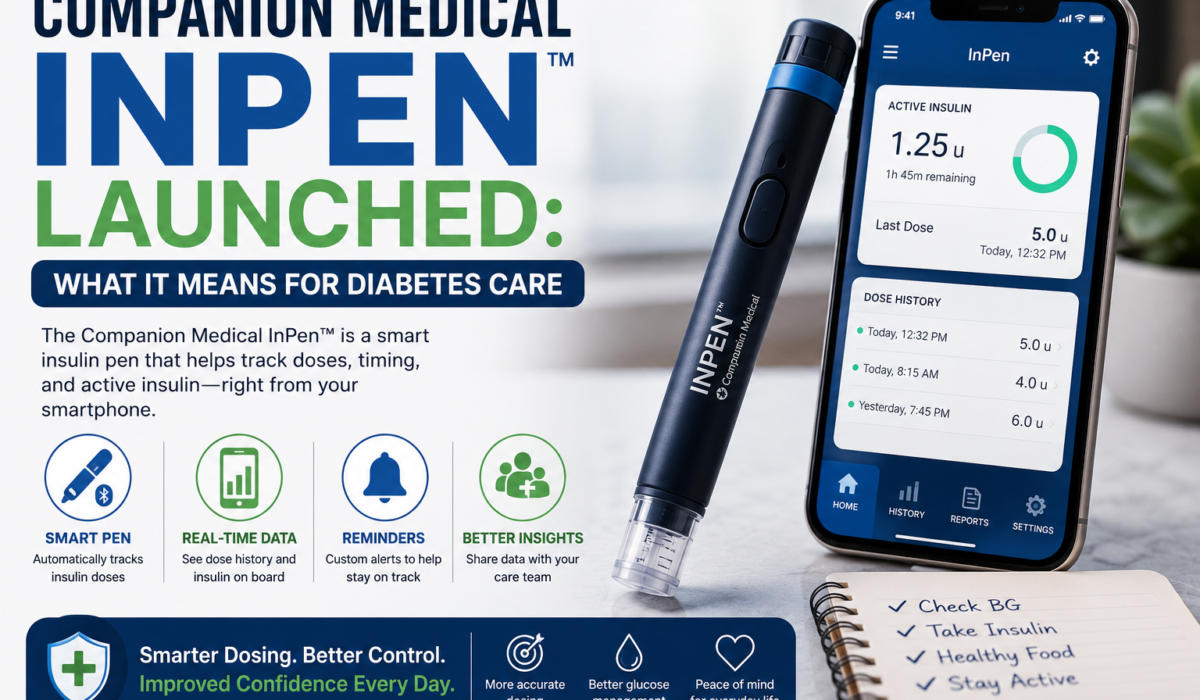
The launch of the Companion Medical InPen marked an important step forward in diabetes management, especially for people who use insulin every day. It brought together the convenience of an insulin pen with the insight of digital tracking, helping users take more control over dosing, timing, and overall glucose management.
For many people with diabetes, one of the biggest challenges is not just taking insulin, but keeping track of how much was taken, when it was taken, and how it fits into the rest of the day. The InPen was designed to solve that problem by combining a smart insulin pen with a companion app that records doses and helps support better decision-making.
This article explains what the Companion Medical InPen is, why its launch mattered, how it works, and what it means for diabetes care today.
What Is the Companion Medical InPen?
The Companion Medical InPen is a smart insulin pen designed for people with diabetes who need mealtime insulin. It looks and feels like a reusable insulin pen, but it includes Bluetooth connectivity and works with a mobile app to track insulin doses.
In simple terms, it helps answer three questions that are critical for insulin users:
- How much insulin did I take?
- When did I take it?
- How much insulin may still be active in my body?
That last point is especially important because taking extra insulin too soon can increase the risk of hypoglycemia, while missing a dose can lead to high blood sugar. For more context on how diabetes complications can develop over time, see Diabetes complications: Ask Dmine on why diabetes is called the mother of all diseases.
The InPen was built to make insulin therapy easier to follow in everyday life. It keeps the familiar feel of a standard injection pen while adding the digital support many people need.
Why the Launch of InPen Was Important
Before smart insulin pens, many insulin users relied on memory, written notes, or manual logging in apps. This made it easy to forget a dose or lose track of timing, especially for people with busy routines.
The launch of the Companion Medical InPen was important because it helped bring digital health features to a traditional insulin delivery method. It offered a more practical option for people who wanted technology support without switching to an insulin pump.
The InPen launch mattered for several reasons:
- It improved dose tracking
- It supported better insulin timing
- It reduced the need for manual recordkeeping
- It offered real-time data through a mobile app
- It made insulin therapy feel more manageable for daily use
For many people, this was a meaningful middle ground between standard insulin pens and more advanced pump systems. If you are interested in how connected diabetes devices continue to evolve, you may also like Combined Infusion Set and CGM Sensor: Easy Diabetes Tech.
In that sense, the Companion Medical InPen was more than a product launch. It was part of a larger shift toward practical diabetes technology that supports real-world routines.
How the InPen Works
The InPen is a reusable injection pen that pairs with a smartphone app. Once connected, it automatically logs insulin doses and displays useful information in the app.
Here is how it generally works:
- The user inserts a compatible insulin cartridge into the pen.
- The pen connects to a smartphone app via Bluetooth.
- When a dose is delivered, the pen records it.
- The app stores the dose history and shows insulin on board.
- The app may also provide reminders and dosing support, depending on settings and clinical guidance.
This automatic logging is one of the InPen’s biggest advantages. Instead of relying on memory, users can review their insulin history in one place. That can be especially useful on busy days, when it is easy to forget whether an injection was already taken.
The app-based record also gives users a better sense of patterns. Over time, this can help people and clinicians see how mealtime insulin fits into meals, activity, and blood sugar trends.
For readers who want to learn more about the basics of insulin use, the NIDDK overview of insulin treatment is a reliable reference.
What Makes the InPen Different from a Regular Insulin Pen?
A standard insulin pen delivers insulin, but it does not track doses or timing. The InPen adds digital tracking and app-based support.
Key differences include:
- Automatic dose recording: Helps reduce missed or double doses
- Dose reminders: Can prompt users if they forget a mealtime injection
- Insulin tracking: Shows active insulin still in the body
- Data sharing: Makes it easier for healthcare providers to review patterns
- User-friendly design: Retains the convenience of a pen, not a pump
This combination made the Companion Medical InPen especially appealing to people who wanted smarter insulin management without a major lifestyle change. It preserved the feel of a familiar device while offering a more connected experience.
For readers comparing diabetes approaches, it can help to think of the InPen as a bridge: it adds smart features without requiring the commitment of a full pump system.
Who Can Benefit Most from the InPen?
The Companion Medical InPen was designed mainly for people who use rapid-acting insulin, especially those with type 1 diabetes and some people with type 2 diabetes who require multiple daily injections.
It may be especially helpful for:
- People using mealtime insulin
- Those who often forget whether they injected
- Users who want dose history without manual logging
- People looking for more insight into insulin timing
- Patients and clinicians who want better data for treatment adjustments
It is not a replacement for medical advice, but it can make daily insulin use easier to understand and manage. For anyone living with diabetes, better visibility into routine decisions can reduce stress and improve consistency.
The InPen also fits people who are comfortable with smartphones and want a practical tool they can carry every day. Because it does not require a pump site or tubing, it may feel less intimidating to some users.
How the InPen Supports Everyday Decision-Making
One of the most useful parts of the Companion Medical InPen is the way it supports everyday decision-making. Many people with diabetes do not struggle with the idea of taking insulin; they struggle with timing and recall.
For example, if someone is unsure whether they already took a dose at lunch, the app history can help avoid an accidental repeat. If a user is trying to figure out whether enough time has passed since the last injection, insulin-on-board data can offer a clearer picture.
This is important because good diabetes care often depends on small, repeated choices. The InPen does not make those choices for the user, but it helps make them more informed.
It can also reduce the mental load of diabetes management. Instead of holding every detail in memory, users have a digital record they can reference quickly.
The Role of the App in Diabetes Care
The app is a major part of what makes the Companion Medical InPen useful. It turns the pen into a connected diabetes tool rather than just an injection device.
The app can help users:
- Review past insulin doses
- Track insulin on board
- Set reminders for missed doses
- Log meals or glucose data
- Share information with healthcare providers
This can improve communication during doctor visits because the data is more complete and easier to review than memory-based reporting. It may also help users notice patterns that would otherwise be hard to spot, such as repeated missed doses at the same time of day.
For general diabetes education and treatment information, the U.S. National Institute of Diabetes and Digestive and Kidney Diseases offers a helpful overview at NIDDK’s diabetes resource page.
How the InPen Fits into Modern Diabetes Technology
The launch of the InPen reflected a broader trend in diabetes care: using technology to simplify daily self-management. Many people want tools that offer insight without making treatment more complicated.
The Companion Medical InPen fits into modern diabetes care because it:
- Supports digital diabetes tracking
- Works with smartphones
- Helps users make more informed injection decisions
- Bridges the gap between manual pens and automated systems
For people not ready for an insulin pump, it offered a useful alternative that still delivered smart features. It also showed that innovation in diabetes care does not always mean replacing familiar devices. Sometimes, the biggest improvement is making a familiar device easier to use well.
This is why the InPen launch stood out in the broader conversation about diabetes tools. It met people where they were and added technology in a way that felt practical, not overwhelming.
Benefits of the Companion Medical InPen
The main benefits of the Companion Medical InPen include:
1. Better dose tracking
Users no longer have to guess whether they took a dose.
2. Improved insulin timing awareness
The app can show when insulin was last injected and how much is still active.
3. Less manual logging
This saves time and reduces the chance of missing important information.
4. More confidence in daily management
Many users feel more secure knowing their dosing history is recorded.
5. Easier pattern review
Healthcare teams can use the data to make better treatment decisions.
6. Better support for real-life schedules
Because the device is designed for daily use, it can fit into school, work, travel, and family routines without requiring a major change in habits.
7. Stronger self-awareness
People often become more aware of insulin timing, meal timing, and dose patterns when the information is visible in one place.
These benefits help explain why the Companion Medical InPen attracted attention from both patients and clinicians.
Limitations to Keep in Mind
Like any diabetes device, the InPen has limitations.
- It does not replace glucose monitoring
- It still requires manual injections
- It depends on a compatible smartphone and app use
- It does not automatically adjust insulin delivery like an automated pump system
Understanding these limits helps set realistic expectations. The InPen is a support tool, not a cure or a full automation system. It can improve organization and insight, but it still relies on the user to inject insulin correctly and to monitor blood glucose as recommended.
That said, limitations do not erase its value. For many people, a tool that helps them avoid missed doses and better understand active insulin can make a real difference.
How It May Affect Conversations with Doctors
Another advantage of the Companion Medical InPen is that it can make appointments more productive. When dose history is available, healthcare teams can ask more specific questions and focus on actual patterns rather than memory.
That may lead to better discussions about:
- Meal timing
- Dose frequency
- Correction habits
- Missed injections
- Blood sugar responses after meals
In a condition as day-to-day and data-driven as diabetes, that kind of detail can matter a lot. It can help providers decide whether a treatment plan needs adjustment or whether the main issue is simply inconsistent timing.
For people who want to improve the quality of clinic visits, this kind of device data can be a valuable support.
What the Launch Meant for Patients
For patients, the launch of the Companion Medical InPen meant more convenience, better organization, and stronger support for daily insulin use. It offered a simpler way to manage injections while gaining some of the benefits of connected diabetes technology.
In practical terms, it meant:
- Fewer forgotten doses
- Better understanding of insulin timing
- More usable data for treatment discussions
- A more modern approach to insulin pen therapy
For many people, that made diabetes care feel a little less stressful and a lot more manageable. Even when a device does not change insulin needs, it can change how confidently a person handles the routine.
That sense of confidence is one of the most underrated parts of diabetes technology. When the process feels easier to follow, people are often more likely to stick with it consistently.
What the Launch Meant for Healthcare Providers
Healthcare providers also benefited from the InPen’s launch because it improved access to real-world insulin use data. Instead of relying only on patient recollection, clinicians could review actual dose history.
This made it easier to:
- Spot missed doses
- Identify patterns of overcorrection
- Adjust insulin plans more accurately
- Support adherence more effectively
In a condition like diabetes, where daily decisions matter so much, that kind of visibility can be valuable. It can also help providers give more personalized advice, because they can work from what is actually happening rather than what a patient remembers happening.
When patients and clinicians have the same data, conversations often become more focused and productive. That was one of the practical strengths of the Companion Medical InPen.
Related Reading
If you want to explore more diabetes-related topics, you may also find these articles useful:
- Beyond Banting Diabetes Research Book: Key Insights
- Diabetes Care During the Pandemic: ADCES 2020 President on Support, Telehealth, and Flexibility
- Disappearing diabetes: Ask Dmine: What It Means
The Bigger Picture in Diabetes Care
The Companion Medical InPen launch highlighted a shift toward smarter, patient-centered diabetes tools. People living with diabetes often need solutions that are both medically effective and easy to fit into daily life.
The InPen showed that innovation does not always have to mean replacing familiar routines. Sometimes, the best advances come from improving tools people already use.
That is why the launch stood out: it made insulin therapy more connected, more trackable, and more supportive without changing the fundamental injection experience.
As diabetes technology continues to evolve, tools like the InPen help set the standard for devices that are useful, practical, and centered on everyday needs.
Final Thoughts
The launch of the Companion Medical InPen was a meaningful development in diabetes care because it combined the reliability of an insulin pen with the intelligence of digital tracking. For people who use mealtime insulin, it offered a practical way to track doses, reduce errors, and better understand insulin activity throughout the day.
In a field where small mistakes can have a big impact, tools like the InPen can make daily management easier and more precise. Its launch represented more than a new device release—it reflected the growing role of smart technology in helping people live better with diabetes.
For many users, the real value of the Companion Medical InPen was not just convenience. It was the confidence that comes from knowing their dosing history, timing, and insulin activity were easier to see and manage.
In everyday use, the Companion Medical InPen showed how a familiar device can become more helpful when it is paired with the right digital support. That practical mix is what made the Companion Medical InPen launch so important for modern diabetes care.