Vegetable stock is a useful foundation for soups, sauces and grains. This recipe adapts the Monir Chef archive's vegetable-and-water ratio to a smaller household batch. It uses a gentle simmer to draw flavor from clean aromatic vegetables, then separates the liquid from the solids.
Batch size: start with 2.4 litres of water; the strained yield varies with evaporation and how much liquid the vegetables retain. Simmering time: about 45–60 minutes, with preparation and cooling in addition.
Ingredients and equipment
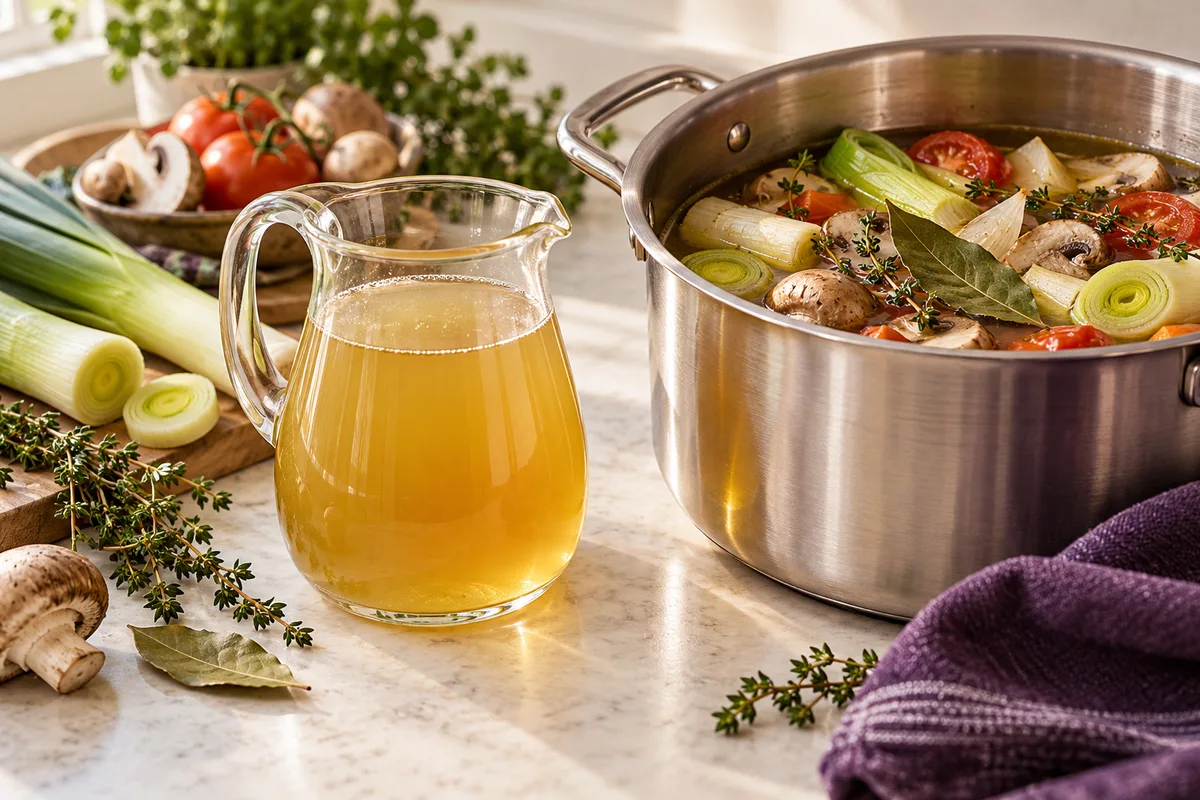
- About 1.1 kg clean non-starchy aromatic vegetables, such as leeks, tomatoes and mushrooms, trimmed and cut into manageable pieces
- 2.4 litres cold water
- A small herb sachet containing a bay leaf, a few black peppercorns and a sprig of thyme; a clove is optional
Use a pot large enough to hold the vegetables and water without crowding the rim, a fine-mesh strainer and clean shallow containers if you are storing the stock. This is a flexible vegetable blend, so the flavor will change with the produce you choose. Check for allergens in any added ingredients.
Method
- Prepare the vegetables. Wash them well and remove dirt, damaged portions and any inedible trimmings. Do not use spoiled vegetables. Cut large pieces smaller so they can release flavor evenly.
- Start with cold water. Put the vegetables and herb sachet into the pot and add the measured water.
- Bring to a gentle simmer. Heat gradually, then reduce the heat when the liquid begins to bubble gently. Avoid a vigorous rolling boil. Skim surface foam if it develops.
- Simmer for 45–60 minutes. Keep an eye on the liquid level. Taste cautiously with a clean spoon once it has cooled enough to sample. Stop when the liquid has a pleasant vegetable flavor; longer is not automatically better.
- Strain. Remove the sachet and pour through the fine-mesh strainer into a clean vessel. Let it drain without forcing every particle through the mesh.
- Use or cool promptly. Use the stock straight away in a recipe, or divide it into shallow containers for rapid cooling and refrigeration. Do not leave a large pot on the counter for hours waiting for it to cool.
Choose scraps with care
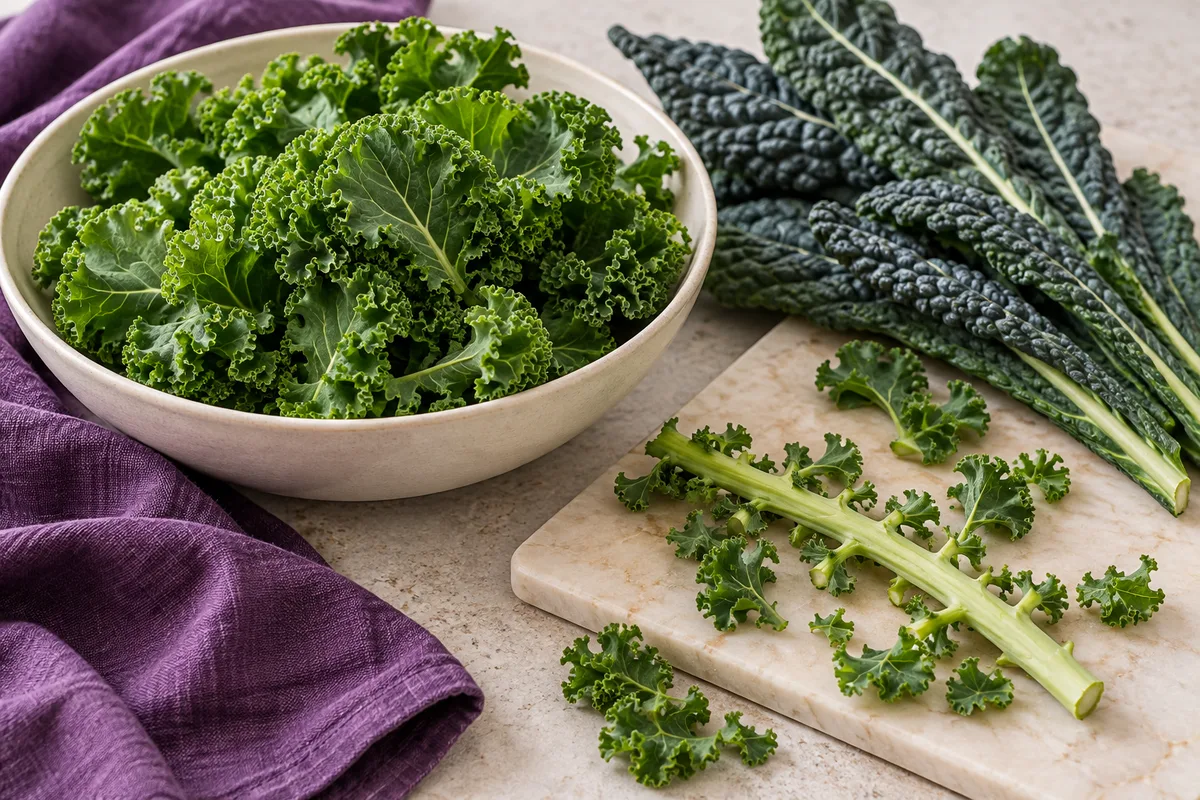
Clean leek tops, mushroom stems and sound vegetable trimmings can be useful, but a stock pot is not a place for everything in the compost bowl. A large quantity of strongly flavored cabbage-family vegetables may dominate the result. Very starchy ingredients can make it cloudy and heavier than intended. Begin with a balanced aromatic mixture, then record what you used so a good batch is repeatable.
How to use the stock
Leave it unsalted if you plan to reduce it or use it in a sauce; season the finished dish instead. Use it for vegetable soups, braises or cooking grains. Its strength depends on the starting vegetables and reduction, so taste before substituting it for water in a delicate dish.
Freeze in portions that fit your usual recipes and label them with the date and contents. Freezing does not correct poor handling before storage. For shopping and preparation, read how to choose and prepare fresh vegetables.
Adaptation note: this half-size version corrects the source's instruction to cool a large batch at room temperature. It is an editorial recipe adaptation, not a claim of an independently tested ShamsMag recipe. Image: AI-generated illustration.