Kale's sturdy leaves can be an advantage in a soup or sauté, but the thick central stem may stay firm after the leaf has softened. Removing that stem and choosing a suitable cut makes the finished dish easier to cook and eat.
Recognize the leaves you are using
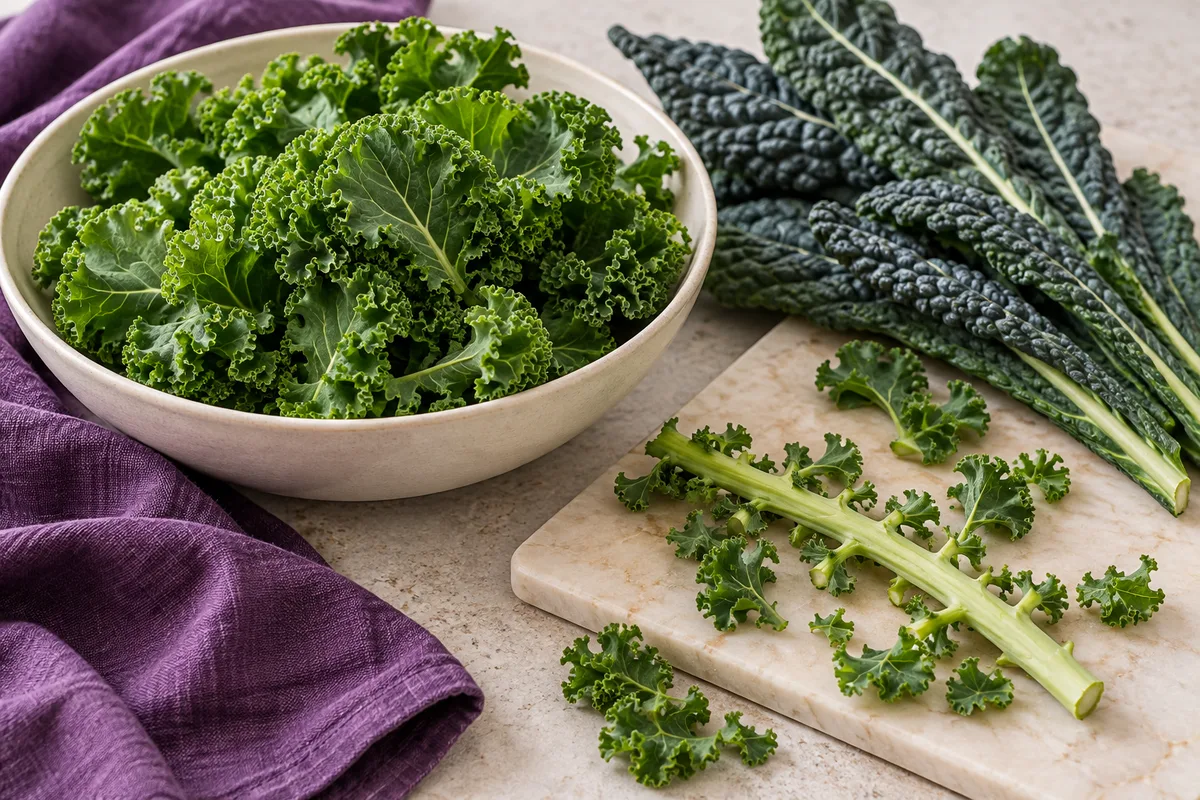
Curly kale has a ruffled surface and a substantial texture. Cavolo nero, also called Tuscan or dinosaur kale, has long, dark leaves with a textured surface. Red kale adds another color and can have more tender leaves. Look at the actual leaves in your bunch: variety names help, but leaf size and maturity still affect the preparation.
Very young, tender leaves can work in a raw salad. Larger, tougher leaves are often more appealing in a cooked dish. This guide does not treat every bunch as interchangeable or assign one cooking time to all kale.
Remove a tough central stem
- Clean the leaves under running water and drain them on clean equipment.
- Fold a leaf along its central stem so the two sides come together.
- Hold the stem and strip the leaf away if it comes off comfortably. Alternatively, put the leaf on a board and cut along each side of the stem.
- Inspect the leaf for remaining tough pieces before cutting it for your dish.
Use whichever trimming method gives you control; there is no benefit in tearing a delicate leaf to demonstrate a particular technique. The source guide focuses on using the leaves, so it does not provide a separate tested recipe for the removed stems.
For a sauté, make the pieces manageable
Cut the leaves into strips or bite-size pieces. Add them in amounts you can turn easily in the pan, rather than compressing a whole bunch into one solid mass. Cook until the texture suits the meal, checking a thicker piece rather than only the smallest shreds.
Garlic, onion and olive oil are useful flavor directions from the archive. Cheese or a little butter can give a richer finish. Taste before adding more seasoning, especially when the kale will be combined with other salted ingredients.
For soup, think about the spoon
Long uncut leaves can be awkward to serve in a bowl. Cut them to a size that works with the other ingredients, and allow enough cooking for them to become tender. The source names ribollita and caldo verde among dishes that use kale, but those dishes need their own complete recipes; this preparation lesson is not a substitute for one.
For salad, start with tenderness
Choose tender young leaves and remove any tough stems. Dry the prepared leaves before dressing them so extra water does not dilute the flavor. If the leaves remain unpleasantly tough, choose a cooked preparation instead of assuming that more dressing will solve the texture.
Continue learning in ShamsMag Cooking.
Editorial source
Adapted and consolidated from the owner's Monir Chef posts 4845–4848. Cover: AI-generated illustration.