Stress and anxiety can show up suddenly, leaving you overwhelmed, tense, and unable to focus. If you need quick relief, the good news is that there are simple, proven techniques that can help calm your mind and body fast. While these strategies are not a cure for chronic anxiety or ongoing stress, they can lower your immediate symptoms and help you regain control in the moment.
Below are 16 effective ways to relieve stress and anxiety quickly, starting with the easiest and most practical methods. If you want more long-term support, a companion read like 14 Day Stress Reset: Calm Your Mind in 2 Weeks can help you build steadier habits over time. You can also use these tools alongside a structured daily plan such as the 14-Day Stress Reset Calendar for Calm Fast.
- 1. Take Slow, Deep Breaths
- 2. Use the 5-4-3-2-1 Grounding Technique
- 3. Relax Your Muscles on Purpose
- 4. Go for a Short Walk
- 5. Drink Water
- 6. Reduce Caffeine
- 7. Step Away from the Stressor
- 8. Listen to Calm Music
- 9. Use Reassuring Self-Talk
- 10. Splash Cold Water on Your Face
- 11. Try Box Breathing
- 12. Write Down What’s on Your Mind
- 13. Practice a Quick Mindfulness Check-In
- 14. Stretch Your Body
- 15. Eat a Light, Balanced Snack
- 16. Reach Out to Someone You Trust
Fast ways to relieve stress and anxiety
If you need to relieve stress and anxiety right now, start with the simplest tools first. These methods are meant to calm your nervous system, reduce physical tension, and help you think more clearly in the moment.
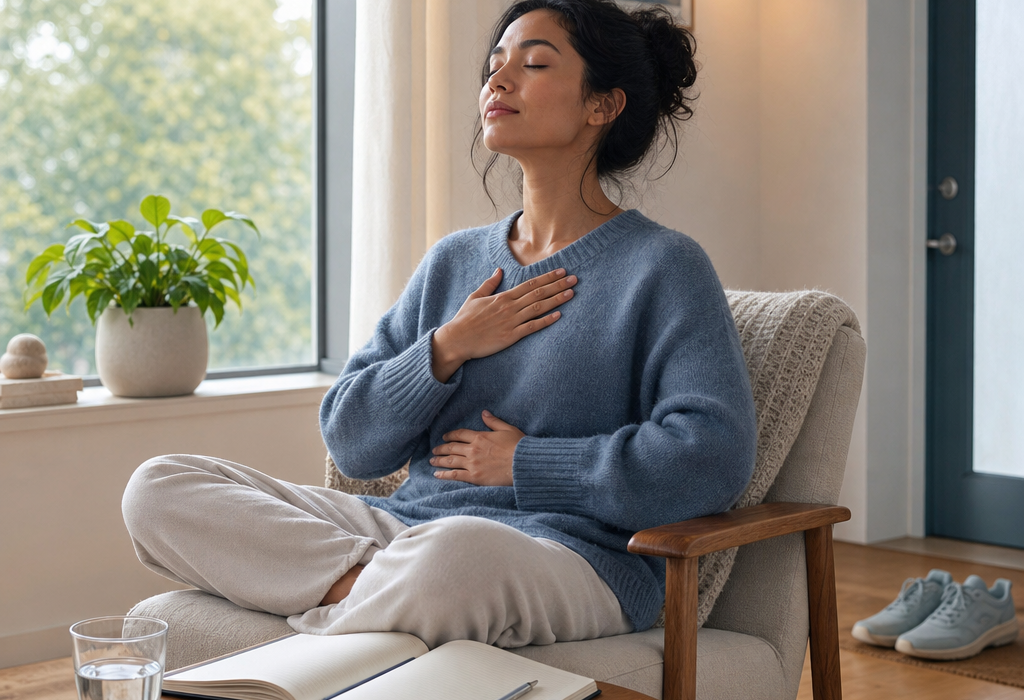
1. Take Slow, Deep Breaths
One of the fastest ways to relieve stress and anxiety is to slow your breathing. When you’re stressed, your breathing often becomes shallow and rapid, which can make your body feel even more alert.
Try this:
– Inhale through your nose for 4 seconds
– Hold for 4 seconds
– Exhale slowly for 6 seconds
– Repeat for 1 to 3 minutes
Deep breathing activates the body’s relaxation response and can help lower your heart rate almost immediately. If you practice it often, your body may learn to settle more quickly when pressure rises. For many people, this is the easiest first step when they want to relieve stress and anxiety without leaving the room.
2. Use the 5-4-3-2-1 Grounding Technique
If your thoughts are racing, grounding helps bring your attention back to the present moment.
Name:
– 5 things you can see
– 4 things you can touch
– 3 things you can hear
– 2 things you can smell
– 1 thing you can taste
This technique is especially useful during panic, overthinking, or moments when anxiety feels disconnected from reality. It gives your brain a concrete task, which can interrupt spiraling thoughts and make the environment feel more familiar again. Grounding can also help relieve stress and anxiety by shifting attention away from fear and back to what is real and immediate.
3. Relax Your Muscles on Purpose
Stress often causes muscle tension without you realizing it. Progressive muscle relaxation can help release that tension quickly.
Start with your feet and work upward:
– Tighten a muscle group for 5 seconds
– Release for 10 seconds
– Move to the next area
Focus on your legs, stomach, shoulders, hands, and face. This method helps your body shift out of “fight or flight” mode. If you notice jaw clenching, shoulder tension, or a tight chest, this simple practice can make a noticeable difference. Many people find that stress and anxiety ease more when the body relaxes first and the mind follows.
4. Go for a Short Walk
Movement can reduce stress hormones and improve mood fast. Even a 10-minute walk can help clear your mind and relieve physical tension.
Walking is especially helpful because it:
– Reduces restlessness
– Improves circulation
– Gives your brain a break from stressful thoughts
If possible, walk outside for the added benefit of fresh air and natural light. A short walk can also give you a sense of control when everything feels too heavy. If you are struggling to leave the house in the middle of a stressful day, even a brief trip to the mailbox, hallway, or porch can be a helpful start. A short walk is one of the most practical ways to relieve stress and anxiety when your body feels stuck.
5. Drink Water
Dehydration can make you feel tired, irritable, or more anxious than usual. If you haven’t had much to drink, a glass of water may help you feel more balanced.
This is a simple step, but it matters. Sometimes stress symptoms are made worse by basic physical needs being ignored. Drinking water will not solve the cause of stress, but it can reduce the discomfort that makes stress and anxiety feel more intense.
6. Reduce Caffeine
Caffeine can increase heart rate, jitteriness, and nervous energy, which may worsen anxiety. If you’re already stressed, another cup of coffee or energy drink can make symptoms feel stronger.
Try switching to:
– Water
– Herbal tea
– Decaf coffee
– A smaller amount of caffeine earlier in the day
If anxiety is frequent, watching caffeine intake can make a noticeable difference. Many people who need to relieve stress and anxiety fast discover that cutting back on stimulants is one of the most practical changes they can make.
7. Step Away from the Stressor
If possible, physically remove yourself from the source of stress for a few minutes. This could mean:
– Leaving a noisy room
– Closing your laptop
– Turning off notifications
– Taking a short break from a difficult conversation
Even a brief pause can help you think more clearly and stop the stress response from building. Stepping away does not mean avoiding responsibility. It means giving yourself enough space to respond calmly instead of reacting while overwhelmed.
8. Listen to Calm Music
Music can influence your mood and nervous system quickly. Slow, soothing music may help lower tension and distract your mind from anxious thoughts.
Choose music that feels relaxing to you, such as:
– Instrumental tracks
– Soft acoustic music
– Nature sounds
– Ambient playlists
This can be a useful tool while you work, travel, or try to fall asleep. For some people, pairing calm music with breathing exercises makes it easier to relieve stress and anxiety without forcing the mind to stay still on its own.
9. Use Reassuring Self-Talk
What you say to yourself during stress matters. Negative thoughts can make anxiety worse, while calm, realistic statements can help settle your mind.
Try saying:
– “This feeling will pass.”
– “I am safe right now.”
– “I can handle this one step at a time.”
– “I do not need to solve everything at once.”
Self-talk works best when it is simple, believable, and kind. The goal is not to pretend everything is fine. The goal is to reduce fear enough that you can think clearly and take the next useful step. When stress and anxiety are high, a steady inner voice can be surprisingly powerful.
10. Splash Cold Water on Your Face
Cold water can trigger a quick physical reset. Splashing your face or holding something cool against your skin may help interrupt intense anxiety or panic.
This technique works because it stimulates the body’s calming reflexes and can help you feel more present. It is not a fix for the cause of stress, but it can reduce the intensity in the moment. If you are at home, a cold washcloth can work just as well.
11. Try Box Breathing
Box breathing is a structured breathing method often used by athletes, first responders, and military personnel to stay calm under pressure.
How to do it:
– Inhale for 4 seconds
– Hold for 4 seconds
– Exhale for 4 seconds
– Hold for 4 seconds
– Repeat for several rounds
This gives your mind a pattern to follow and helps slow down anxious thoughts. Many people use box breathing when they need to relieve stress and anxiety before a big meeting or difficult conversation. It is also a useful skill to practice when you are calm, so it feels more natural when you really need it.
12. Write Down What’s on Your Mind
Stress often feels worse when thoughts are trapped in your head. Writing them down can help you organize what’s bothering you and reduce mental overload.
You can write:
– What you’re worried about
– What is actually within your control
– The next small step you can take
This is especially useful if you feel overwhelmed by too many responsibilities at once. Writing can help turn a vague feeling of pressure into a clearer list of concerns. That clarity often makes it easier to relieve stress and anxiety because your mind is no longer trying to hold everything at once.
13. Practice a Quick Mindfulness Check-In
Mindfulness helps you notice your thoughts and feelings without immediately reacting to them. Even one minute of mindful attention can create some distance from stress.
Try this:
– Notice your breathing
– Notice physical sensations in your body
– Observe your thoughts without judgment
– Bring your attention back whenever it drifts
Mindfulness is not about forcing your mind to be empty. It is about gently returning to the present. If you practice regularly, it can become easier to spot early signs of tension before they build into something bigger.
14. Stretch Your Body
Tight muscles and anxious feelings often go hand in hand. Simple stretching can help release physical tension and improve your sense of ease.
Focus on:
– Neck rolls
– Shoulder stretches
– Forward bends
– Gentle twists
– Wrist and hand stretches
Stretch slowly and breathe deeply while doing it. This is a fast way to interrupt the stress buildup in your body. If you sit for long periods, stretching can also help you notice where tension has been hiding in your posture.
15. Eat a Light, Balanced Snack
Low blood sugar can contribute to shakiness, irritability, and feeling emotionally off. If you haven’t eaten in a while, a small snack may help stabilize your energy.
Good options include:
– A banana and peanut butter
– Yogurt
– Nuts
– Whole grain crackers
– Fruit with protein
Avoid heavy meals if you feel nauseous from anxiety. The goal is to support your body without overwhelming it. When your body is steadier, it is often easier to relieve stress and anxiety without the added discomfort of hunger or energy crashes.
16. Reach Out to Someone You Trust
Sometimes the fastest relief comes from human connection. Talking to a friend, family member, or trusted coworker can make stress feel more manageable.
You do not need to explain everything perfectly. Even saying “I’m feeling overwhelmed and need a minute to talk” can help.
Connection reduces isolation, which is often a major part of anxiety. If you are trying to relieve stress and anxiety and nothing seems to help, being heard by someone safe can lower the emotional intensity more than going through it alone.
What Helps Stress and Anxiety Fast?
If you need immediate relief, the best fast-acting techniques are usually:
– Slow breathing
– Grounding exercises
– Short walks
– Muscle relaxation
– Calm self-talk
– Leaving the stressful environment briefly
These methods work because they help calm your nervous system, which is often stuck in a high-alert state during stress and anxiety. The more often you use them, the more quickly your body may learn to settle.
How to Build a Simple Calm-Down Routine
It can help to combine a few tools instead of relying on only one. For example, you might start with deep breathing, then drink water, then take a short walk or stretch your shoulders. If your thoughts are still racing, write down what is bothering you and choose one next action.
A simple routine may look like this:
– Pause and breathe for one minute
– Step away from the stressor
– Drink water
– Use grounding or box breathing
– Speak a calming sentence to yourself
This kind of routine can be especially helpful when you need to relieve stress and anxiety during a workday, before sleep, or after a difficult interaction. Repeating the same steps trains your body to recognize safety faster.
Why Fast Relief Matters
When stress or anxiety spikes, it can affect:
– Your breathing
– Heart rate
– Muscle tension
– Concentration
– Sleep
– Decision-making
Fast relief techniques can help interrupt that cycle before it gets worse. They are especially useful during a panic attack, before a stressful meeting, after bad news, or whenever you feel emotionally overwhelmed. For trustworthy symptom and treatment information, the National Institute of Mental Health’s anxiety disorders overview is a reliable resource.
When Stress and Anxiety Become Too Much
Occasional stress is normal, but if anxiety is frequent, severe, or starts affecting daily life, it may be time to look deeper. Consider speaking with a healthcare professional if you notice:
– Trouble sleeping often
– Constant worry
– Panic attacks
– Difficulty working or studying
– Avoiding normal activities
– Physical symptoms like chest tightness or ongoing stomach issues
If you ever feel like you might hurt yourself or cannot stay safe, seek immediate emergency help right away.
Final Thoughts
Learning how to relieve stress and anxiety fast can make a real difference in how you handle difficult moments. Techniques like deep breathing, grounding, walking, and calming self-talk are simple, practical, and effective when used consistently.
No single method works for everyone, so it helps to try a few and notice which ones calm your body and mind most quickly. The more you practice these tools, the easier it becomes to manage stress before it takes over. If symptoms keep returning, build on these quick fixes with longer-term habits and support so you can relieve stress and anxiety with more confidence over time. Over time, these habits can make it easier to return to a steady baseline even when life feels demanding.