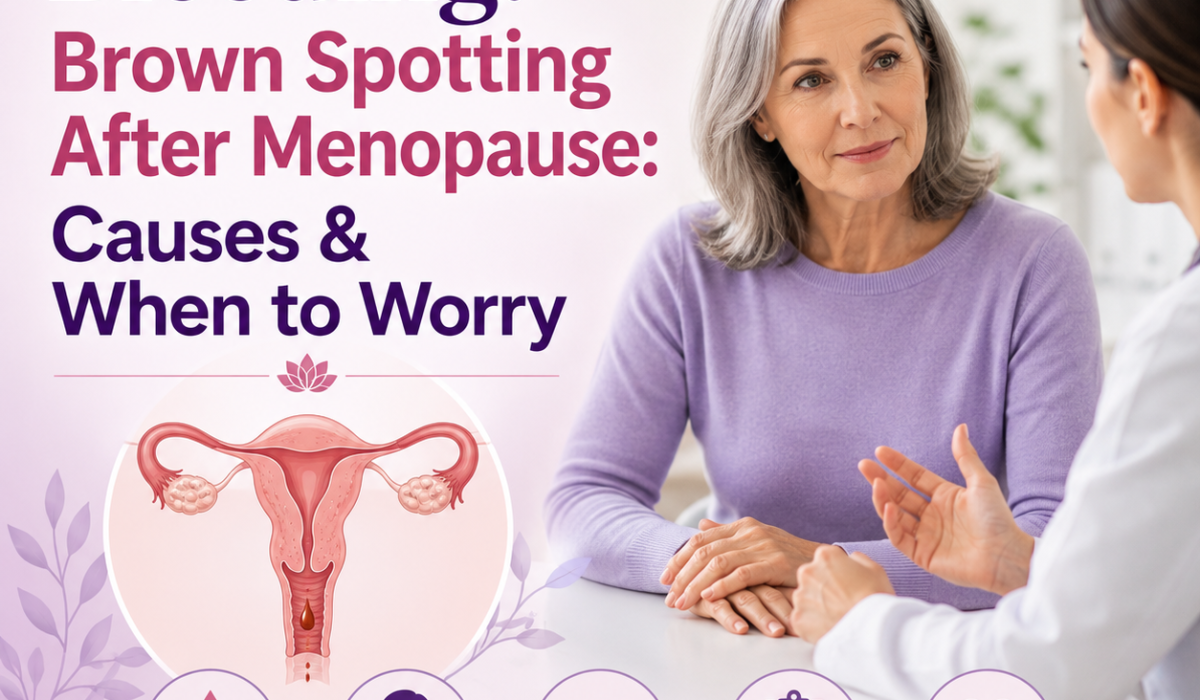
Brown spotting after menopause can be unsettling, especially if you thought your periods were long behind you. Postmenopausal bleeding should always be checked by a healthcare professional, even when it looks like only a small amount of brown discharge. In some cases, the cause is harmless, such as vaginal dryness or hormone changes. In other cases, postmenopausal bleeding can be a sign of a condition that needs prompt treatment.
This guide explains the most common causes of postmenopausal bleeding, when it may be normal, and when to seek medical attention. It also covers what doctors look for, how the evaluation usually works, and what treatment may involve depending on the cause.
- What Does Postmenopausal Bleeding Mean?
- Common Causes of Postmenopausal Bleeding
- Is Postmenopausal Bleeding Normal?
- When Should You Worry?
- How Doctors Evaluate Postmenopausal Bleeding
- Treatment Depends on the Cause
- Can It Go Away on Its Own?
- How to Reduce the Risk
- Frequently Asked Questions
- The Bottom Line
What Does Postmenopausal Bleeding Mean?
Brown spotting usually means there is a small amount of blood that has taken longer to leave the body. As blood ages, it can turn brown instead of bright red. After menopause, even light spotting matters because your body should no longer be having regular periods.
Menopause is defined as 12 consecutive months without a menstrual period. Any bleeding, including brown discharge or spotting, after that point is considered postmenopausal bleeding and should be evaluated. If you want a related overview of bleeding-related concerns, see bleeding after Pap smear.
In other words, postmenopausal bleeding is not a symptom to watch casually. The timing, amount, color, and whether it happens after sex can all help a doctor find the cause. Some people notice only a few brown streaks on underwear or toilet tissue, while others see a small amount of red bleeding that turns brown over time. Either way, it deserves attention.
It is also helpful to remember that spotting may come from the vagina, cervix, or uterus. A small amount of blood can look more noticeable once it mixes with vaginal fluid, so the exact source may not be obvious at home. That is one reason evaluation matters even when the symptom seems minor.
Common Causes of Postmenopausal Bleeding
Brown spotting after menopause can happen for several reasons. Some are minor, while others require medical treatment. Understanding the common causes of postmenopausal bleeding can make the next steps feel less confusing.
In many cases, more than one factor contributes. For example, vaginal dryness may make tissues fragile, while intercourse or a pelvic exam may trigger a small bleed. The color may later appear brown because the blood is older by the time it leaves the body.
1. Vaginal Dryness and Atrophy
One of the most common causes is vaginal atrophy, also called genitourinary syndrome of menopause. After estrogen levels drop, the vaginal tissues become thinner, drier, and more fragile. This can lead to:
- Light spotting
- Brown discharge
- Bleeding after sex
- Discomfort or burning
- Itching or irritation
Because the tissues are more delicate, even minor friction can cause small amounts of bleeding that appear brown later. This is one reason postmenopausal bleeding may happen after intercourse or pelvic irritation. Some people also notice urinary symptoms, such as burning with urination or more frequent urinary infections, because low estrogen can affect nearby tissues too.
Vaginal atrophy does not always cause dramatic symptoms. A person may simply notice intermittent dryness, mild soreness, or a trace of brown discharge. Even so, the change can be enough to cause bleeding when the tissue is stretched or rubbed.
2. Hormone Replacement Therapy
If you are using hormone replacement therapy (HRT), spotting can sometimes occur, especially early in treatment or when doses are adjusted. This is more common with certain types of HRT, such as:
- Continuous combined therapy
- Estrogen-only therapy in women with a uterus
- Incorrect dosing or missed medication
Even if HRT is a likely cause, postmenopausal bleeding should still be reported to your doctor. The National Institute on Aging notes that any vaginal bleeding after menopause should be discussed with a clinician: NIA guidance on vaginal bleeding after menopause.
HRT-related spotting is often linked to the timing of treatment changes. For example, bleeding may happen after starting a new regimen, changing the dose, or missing a few doses. Still, it is not safe to assume every episode is medication-related without checking for other causes.
3. Cervical or Uterine Polyps
Polyps are small, usually noncancerous growths that can form in the cervix or uterus. They may cause:
- Brown spotting
- Bleeding after intercourse
- Irregular discharge
Polyps are often benign, but they may still need to be removed or tested. In some cases, they are found during the workup for postmenopausal bleeding because they can mimic more serious problems. A polyp can bleed on its own or become irritated during sex or a pelvic exam.
Not every polyp causes symptoms, which is why it may take imaging or a procedure to identify one. If a doctor sees a polyp on exam or ultrasound, they may recommend removal so the tissue can be examined more closely.
4. Infections
An infection in the vagina, cervix, or uterus can cause unusual discharge and spotting. Signs may include:
- Brown or bloody discharge
- Foul odor
- Pelvic discomfort
- Itching or burning
- Pain during sex or urination
Infections are more common in tissues affected by low estrogen, and they should be treated promptly. If postmenopausal bleeding is paired with odor, pain, or fever, it deserves quicker evaluation. Infection can also cause inflammation that makes tissue more likely to bleed with contact.
Sometimes symptoms are subtle, especially early on. A person may first notice only a change in discharge color before developing more obvious pain or irritation. That is another reason to pay attention to even mild brown spotting.
5. Endometrial Thinning or Irritation
The endometrium is the lining of the uterus. After menopause, it usually becomes thin. Sometimes, irritation or minor changes in this lining can cause spotting. In some cases, the lining may become too thin and fragile, leading to light bleeding.
This type of postmenopausal bleeding may be brief, but it still matters because the uterus should not be bleeding without a clear reason. If bleeding repeats, a doctor may want to look more closely at the uterine lining to make sure nothing abnormal is going on.
Endometrial irritation can happen on its own or alongside hormone use. It may also be more noticeable if a person takes medications that affect clotting or has a history of uterine procedures. The details matter, which is why medical history is part of the evaluation.
6. Injury or Friction
Spotting may happen after:
- Sexual intercourse
- Pelvic exams
- Use of vaginal products
- Insertion of devices or applicators
This is especially likely if vaginal tissues are dry or fragile. If the spotting is clearly linked to irritation, it may be minor, but it should still be mentioned to your doctor if it continues. For another example of bleeding triggered by contact, you may also find bleeding during sex helpful.
Even small abrasions can leave a brown stain later, especially if the bleeding is light. Lubrication issues, tight pelvic muscles, or sensitivity from soaps and products can make friction-related spotting more likely.
7. Endometrial Hyperplasia
Endometrial hyperplasia means the uterine lining has become too thick, often due to excess estrogen without enough progesterone. It can cause abnormal spotting or bleeding and may sometimes be a precancerous condition.
Because endometrial hyperplasia can overlap with other causes of postmenopausal bleeding, doctors often recommend imaging or tissue sampling if they suspect the lining is abnormal. Some forms are simple and mild, while others carry a greater risk of turning into cancer over time.
This is one of the reasons clinicians take postmenopausal bleeding seriously, even when the amount of blood is small. A tiny change in bleeding pattern can still point to a lining problem that should not be overlooked.
8. Endometrial or Other Gynecologic Cancers
Although less common, brown spotting after menopause can be a warning sign of endometrial cancer, cervical cancer, or other reproductive system cancers. This is why postmenopausal bleeding should never be ignored.
Possible warning signs include:
- Bleeding that happens repeatedly
- Bleeding heavier than light spotting
- Pelvic pain or pressure
- Unexplained weight loss
- Bleeding after sex
Most cases are not cancer, but cancer must be ruled out. If there is a family history of hormone-related cancers, that may also affect the evaluation.
The goal is not to assume the worst. Rather, it is to avoid missing a serious problem when there is a symptom that can have many possible causes. Early detection can make treatment simpler and outcomes better in many cases.
Is Postmenopausal Bleeding Normal?
Postmenopausal bleeding is not considered normal, even if it happens only once. It may have a harmless explanation, but it still needs medical evaluation to make sure nothing serious is causing it.
If you are on HRT, your doctor may expect some breakthrough spotting depending on the type and timing of treatment. Even then, persistent or new spotting should be checked. Brown spotting after menopause can sometimes be linked to a medication change, but the pattern should be reviewed.
In short, any unexplained postmenopausal bleeding deserves attention rather than self-diagnosis. The cause may turn out to be simple, but the only safe way to know is to be examined.
It is also worth noting that “normal” bleeding patterns before menopause do not apply afterward. A bleed that might have seemed routine at a younger age should be treated differently once periods have stopped for good.
When Should You Worry?
You should contact a healthcare provider as soon as possible if you notice any postmenopausal spotting or bleeding, including brown discharge.
Seek prompt medical advice if:
- The spotting happens more than once
- It continues for more than a few days
- You have bleeding after sex
- You have pelvic pain, cramping, or pressure
- The discharge has a bad smell
- You have itching, burning, or irritation
- You are taking HRT and the bleeding is new or ongoing
- You have any personal history of uterine, cervical, or ovarian issues
Get urgent medical care if:
- Bleeding becomes heavy
- You feel faint or weak
- You have severe pelvic pain
- You notice large clots
- You are soaking pads quickly
Even if the spotting looks mild, a repeat episode of postmenopausal bleeding should not be ignored. It is better to evaluate early than wait for symptoms to worsen.
If you are unsure whether what you are seeing counts as bleeding, it is still worth contacting a clinician. Brown discharge, pink staining, or tiny streaks of blood can all be part of the same issue, and the safest approach is to document the timing and bring it up at the visit.
How Doctors Evaluate Postmenopausal Bleeding
To find the cause, a doctor may ask about:
- When the spotting started
- How often it happens
- Whether it happens after sex
- Any medications or hormone therapy you use
- Other symptoms such as pain, dryness, or odor
They may also perform:
- A pelvic exam
- A Pap test, if needed
- Vaginal swabs to check for infection
- A transvaginal ultrasound to look at the uterus and lining
- An endometrial biopsy if the uterine lining needs further evaluation
These tests help determine whether the spotting is due to dryness, polyps, hormone therapy, or a more serious condition. In many cases, postmenopausal bleeding is explained by a treatable cause once the right evaluation is done.
A transvaginal ultrasound is often used because it can show how thick the uterine lining is and whether anything looks unusual inside the uterus. If the lining is thin and there are no other concerning findings, that can be reassuring. If the lining is thicker than expected, a biopsy may be recommended.
An endometrial biopsy may sound intimidating, but it is commonly used when doctors need a closer look at the uterine lining. It helps distinguish between benign changes and conditions that require treatment. The test is typically brief, though some people experience cramping or temporary discomfort.
In some situations, doctors may also check blood counts or other labs if the bleeding has been frequent or if there are signs of anemia. The exact workup depends on your symptoms, age, risk factors, and what the initial exam shows.
Treatment Depends on the Cause
Treatment for postmenopausal bleeding depends on what is causing it.
Once the source of bleeding is found, the treatment plan is usually more straightforward. Some causes can be managed with simple changes, while others need procedures or ongoing follow-up.
If it is due to vaginal dryness or atrophy:
- Vaginal moisturizers or lubricants
- Low-dose vaginal estrogen, if appropriate
- Avoiding irritants such as harsh soaps
If it is due to HRT:
- Adjusting the type or dose of hormone therapy
- Reviewing how and when medications are taken
If it is due to polyps:
- Removal of the polyp
- Testing the tissue if needed
If it is due to infection:
- Antibiotics, antifungals, or other treatment depending on the cause
If it is due to thickening of the uterine lining:
- Additional testing
- Medication or a procedure to remove abnormal tissue
If cancer is found:
- Treatment may include surgery, radiation, chemotherapy, or hormone therapy depending on the type and stage
Because the treatment plan depends on the cause, postmenopausal bleeding is one of those symptoms where a clear diagnosis matters more than guessing.
For example, treating dryness with moisturizer alone may be enough if fragile tissue is the problem. But if the cause is a growth, infection, or abnormal lining, that same approach would not fix the underlying issue. This is why a proper diagnosis is so important.
Can Postmenopausal Bleeding Go Away on Its Own?
Sometimes light brown spotting may stop on its own, especially if it was caused by minor irritation or vaginal dryness. However, the cause should still be evaluated because postmenopausal bleeding can be the first sign of a condition that needs treatment.
Waiting to see if it happens again is not recommended if you are truly postmenopausal. Even one episode of postmenopausal bleeding is enough to justify a medical check.
Some people are tempted to wait because the spotting seems brief or because it happened only after sex. While that history can help identify a benign cause, it does not remove the need to rule out other possibilities. The safest path is to report the symptom and let a clinician decide whether further testing is needed.
If the bleeding does stop, it does not always mean the cause has resolved. A polyp, hormonal imbalance, or early lining change can come and go. That is why symptom-free periods should not replace medical evaluation.
How to Reduce the Risk of Vaginal Bleeding After Menopause
While not all causes can be prevented, these steps may help reduce irritation and dryness:
- Use water-based lubricants during sex
- Avoid scented soaps and douches
- Use vaginal moisturizers if recommended
- Stay consistent with prescribed hormone therapy
- Attend regular gynecologic checkups
- Report any new bleeding early
If you have ongoing vaginal dryness, talk with your clinician before trying over-the-counter products that may irritate sensitive tissue. Helpful products should reduce friction rather than worsen symptoms.
Simple habits can also help. Wearing breathable underwear, avoiding harsh cleaning products, and being gentle with vaginal tissues may lower the chance of irritation. If sex is uncomfortable, using more lubricant and taking things slowly may reduce friction-related spotting.
When symptoms are persistent, a doctor can suggest treatment options that are more effective than trial and error. That may include local estrogen therapy, medication changes, or further evaluation if bleeding continues despite home care.
Frequently Asked Questions
Why is my brown spotting after menopause not bright red?
Brown spotting usually means the blood is older and has oxidized before leaving the body. It still counts as abnormal bleeding after menopause.
Can stress cause postmenopausal bleeding?
Stress does not usually cause postmenopausal bleeding by itself. If spotting happens, it should not be blamed on stress without a medical evaluation.
Does one-time spotting after menopause matter?
Yes. Even a single episode of bleeding or brown spotting after menopause should be reported to a doctor.
What if I’m taking hormone replacement therapy?
Some spotting can occur with HRT, but new, persistent, or heavy bleeding still needs to be checked.
Is brown discharge after menopause always serious?
No, but it should always be evaluated. Many causes are benign, but some are not. That is why postmenopausal bleeding gets medical attention even when symptoms seem mild.
How long should I wait before calling a doctor? You should not wait long if you know you are postmenopausal. A brief call to your clinician can help you decide whether the symptom needs urgent evaluation or a scheduled appointment.
Can brown spotting happen after a pelvic exam? Yes, especially if tissues are dry or fragile. Even then, it is worth mentioning if the spotting continues or happens outside that situation.
The Bottom Line
Postmenopausal bleeding is not normal and should always be checked by a healthcare provider. The cause may be something minor, such as vaginal dryness, hormone therapy, or a polyp. But it can also signal infection, endometrial thickening, or cancer.
If you notice any postmenopausal bleeding, especially if it happens more than once or is accompanied by pain, odor, or bleeding after sex, make an appointment for evaluation. Early assessment is the best way to find the cause and get the right treatment.
Brown spotting after menopause can feel alarming, but prompt evaluation usually leads to clearer answers and better outcomes. Even when the cause is benign, treatment can improve comfort, reduce anxiety, and prevent the problem from returning.
When in doubt, treat any new bleeding after menopause as a reason to check in with your clinician rather than a symptom to ignore.