When you’re sick, eating the right foods to eat when sick can help you feel better faster, stay hydrated, and give your body the energy it needs to recover. The best choices are usually easy to digest, gentle on the stomach, and rich in fluids, vitamins, and minerals. Whether you’re dealing with a cold, flu, sore throat, upset stomach, or low appetite, choosing the right foods can make a big difference.
This guide covers the best foods to eat when sick, why they help, and how they support recovery. It also answers common questions about what to eat, what to avoid, and when food can actually help you heal. If you want more guidance on nutrition and illness, you may also find Diabetes and coronavirus: What Patients Need to Know useful for related recovery and hydration tips.
Why Food Matters When You’re Sick
Your body needs extra support when fighting off an illness. Even if you do not feel hungry, your immune system uses energy to recover. The right foods to eat when sick can help by keeping you hydrated, soothing your stomach and throat, providing vitamins and minerals, replacing lost fluids and nutrients, and giving you energy without overwhelming digestion.
The goal is not to eat heavy meals. Instead, focus on foods that are nourishing, easy to tolerate, and comforting. In many cases, small meals and snacks are better than trying to force a large plate of food.
When symptoms are intense, think of food as support rather than a strict routine. A few bites of something gentle can still help your body get the fuel it needs.
It also helps to remember that recovery is not only about one perfect meal. The best foods to eat when sick are often the ones you can keep down, enjoy enough to repeat, and combine with enough fluids to stay steady throughout the day.
15 Best Foods to Eat When Sick
1. Chicken Soup
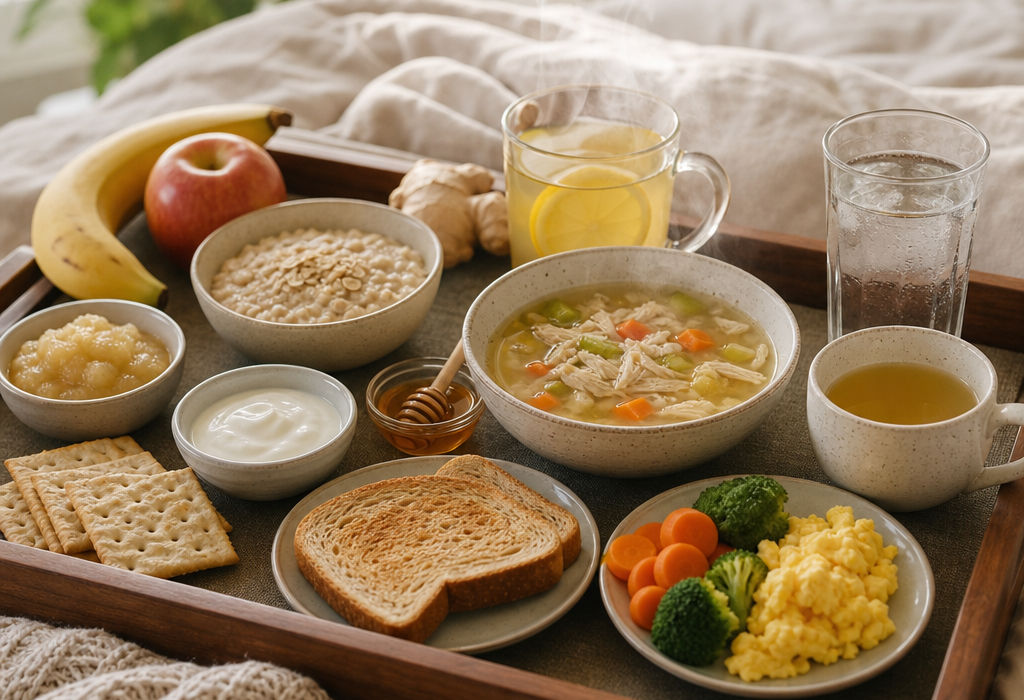
Chicken soup is one of the most trusted foods to eat when sick, and for good reason. It provides fluids, electrolytes, protein, and warmth in a form that is easy to digest. The steam may also help clear nasal congestion.
Why it helps:
- Hydrates the body
- Soothes sore throat and congestion
- Provides protein for recovery
- Easy on the stomach
Choose a homemade or low-sodium version when possible. A broth-heavy soup with soft vegetables can be especially comforting when your appetite is low. If you feel weak, a cup of soup every few hours can be easier than trying to eat a full meal all at once.
2. Broth
If you cannot handle a full meal, broth is a gentle place to start. Chicken, vegetable, or bone broth can help replace fluids and provide some minerals without feeling heavy.
Why it helps:
- Rehydrates
- Easy to sip
- Mild flavor
- Helpful when appetite is low
Broth is especially useful if you have nausea, vomiting, or a fever. Warm broth may also feel soothing when your throat is irritated. For many people, broth is one of the simplest foods to eat when sick because it can be taken slowly and tolerated even when other foods seem too much.
3. Bananas
Bananas are soft, easy to chew, and gentle on the stomach. They are one of the best foods to eat when sick with stomach issues or when you need a quick energy boost.
Why it helps:
- Easy to digest
- Contains potassium
- Helps replace lost electrolytes
- Soft and soothing
Bananas are often recommended when recovering from vomiting or diarrhea. If you are eating again after little appetite, start with half a banana and see how you feel. They are also convenient to keep around because they require no cooking and work well with other mild foods.
4. Applesauce
Applesauce is a simple, mild food that is easy to swallow and digest. It is often well tolerated when you do not feel like eating much.
Why it helps:
- Gentle on the stomach
- Provides some carbohydrates for energy
- Easy to eat if chewing feels difficult
- Can be soothing when you have a sore throat
Choose unsweetened applesauce when possible. For extra comfort, try serving it slightly chilled or at room temperature depending on what feels best. Applesauce is a practical option because it fits well alongside other foods to eat when sick like toast or oatmeal.
5. Toast
Plain toast, especially dry toast, can be a helpful food when your stomach is unsettled. It is light, easy to digest, and can settle nausea for some people.
Why it helps:
- Simple and bland
- Easy to tolerate
- Provides quick energy
- Useful with nausea
Whole-grain toast may offer more fiber, but plain white toast may be better if your stomach is sensitive. If you want a little more substance, a thin layer of honey or applesauce can make it easier to eat. Toast is one of the most common foods to eat when sick because it is quick, affordable, and easy to keep down.
6. Rice
Plain white rice is another bland, easy-to-digest option. It is often recommended when you are dealing with stomach upset because it is gentle and filling without being too rich.
Why it helps:
- Low in fat
- Easy to digest
- Helps provide energy
- Can be paired with broth or mild foods
Rice works well with soup or steamed vegetables as you begin eating more normally. If plain rice is hard to swallow, try making it softer with extra broth. It is one of those foods to eat when sick that can be adjusted to fit how your stomach feels.
7. Oatmeal
Oatmeal is comforting, soft, and nourishing. It gives you energy and can be customized with gentle toppings like banana or applesauce.
Why it helps:
- Warm and easy to swallow
- Provides fiber
- Helps keep you satisfied
- Mild enough for many people
If you have nausea, keep it plain and avoid heavy add-ins like too much sugar or butter. Oatmeal is one of the most flexible foods to eat when sick because it can be as simple or filling as you need. A thin oatmeal bowl can work well at breakfast, lunch, or even as a light evening meal.
8. Crackers
Saltines or plain crackers can help when you feel nauseous or have trouble eating a full meal. Their dry texture can sometimes calm the stomach.
Why it helps:
- Bland and light
- Easy to snack on
- Helpful for nausea
- Can provide a little salt if you’ve lost fluids
Eat them slowly and in small amounts. Crackers can also work well before getting out of bed if mornings are the hardest part of your sick day. Many people keep crackers nearby because they are one of the most accessible foods to eat when sick during sudden nausea.
9. Yogurt
Yogurt can be a good food to eat when sick because it contains protein and probiotics, which may support gut health. It can be especially helpful if you are recovering from a stomach bug or taking antibiotics.
Why it helps:
- Soft and easy to eat
- Contains protein
- May support digestive health
- Often soothing if cold foods feel good
Choose plain yogurt with little added sugar. If dairy makes your stomach worse, skip it. For people who tolerate it well, yogurt can be one of the most convenient foods to eat when sick because it requires no cooking and can be eaten in a few small spoonfuls.
10. Ginger
Ginger is well known for helping with nausea. It can be consumed as ginger tea, ginger chews, or fresh ginger added to warm water or soup.
Why it helps:
- May reduce nausea
- Can soothe the stomach
- Warming and comforting
- Easy to use in small amounts
Ginger tea is one of the best drinks to pair with food when you are sick. If you want a simple option, try sipping it before a light snack to see whether your stomach settles. For people who struggle with queasiness, ginger can make other foods to eat when sick feel more manageable.
11. Honey
Honey can soothe a sore throat and may help calm a cough. It can be stirred into tea, warm water, or eaten by the spoonful.
Why it helps:
- Soothes throat irritation
- May reduce coughing
- Adds gentle sweetness
- Easy to use with warm liquids
Do not give honey to children under 1 year old. For older children and adults, honey can make many foods to eat when sick feel more pleasant without adding anything too heavy. It works especially well when you need something soothing but still light.
12. Oranges and Other Citrus Fruits
Citrus fruits like oranges, lemons, and grapefruit are rich in vitamin C and fluids. They can support overall nutrition, though they may be irritating if you have a very sore throat or acid reflux.
Why it helps:
- Provides vitamin C
- Contains water
- Can support hydration
- Refreshing when you have a low appetite
If fresh citrus feels too acidic, try diluted juice or other fruits instead. Many people find oranges useful when they want something fresh but still gentle. This is a good example of how foods to eat when sick can be adjusted based on symptoms rather than following one fixed plan.
13. Steamed Vegetables
Steamed vegetables are easier to digest than raw ones and provide important vitamins and minerals. Carrots, zucchini, spinach, and green beans are good choices.
Why it helps:
- Supplies nutrients
- Gentle when cooked well
- Easy to combine with rice or soup
- Supports overall recovery
Avoid heavy seasoning or lots of oil if your stomach is sensitive. Soft-cooked vegetables can be added to soup, rice, or a light broth-based meal for extra nourishment. As your appetite returns, this is one of the foods to eat when sick that can help you transition back to more regular meals.
14. Scrambled Eggs
Scrambled eggs are a simple source of protein that can help your body recover. They are soft, mild, and easy to prepare.
Why it helps:
- High in protein
- Soft texture
- Quick to make
- Good when appetite is returning
Keep them plain or lightly seasoned, and avoid frying them in lots of grease. Eggs are especially helpful when you can eat a little more than crackers but still want something gentle. They also round out the list of foods to eat when sick by adding a satisfying protein option.
15. Smoothies
Smoothies can be a helpful option when you are too tired or nauseous to eat solid food. They can combine fruit, yogurt, oats, and fluids into one easy meal.
Why it helps:
- Easy to drink
- Customizable
- Can provide calories, protein, and vitamins
- Good when chewing feels difficult
Use simple ingredients and avoid too much sugar. If dairy bothers you, use a non-dairy base. A smoothie can be one of the most practical foods to eat when sick because it delivers nutrition without much effort and can be adapted to taste or symptom changes.
When making a smoothie, keep the recipe gentle. A banana, oats, and a mild liquid base are often enough. If you want extra calories, add a little yogurt or nut butter only if your stomach tolerates it.
Best Foods to Eat When Sick by Symptom
Different illnesses may call for slightly different foods. Here’s a simple breakdown.
If You Have Nausea
Best foods:
- Crackers
- Toast
- Bananas
- Applesauce
- Ginger tea
Eat small amounts slowly and avoid greasy or spicy foods. Cold or room-temperature foods may also feel easier than hot meals.
If You Have a Sore Throat
Best foods:
- Honey
- Warm soup
- Broth
- Oatmeal
- Yogurt
Choose soft, smooth foods that are easy to swallow. Warm fluids can be especially calming when irritation makes swallowing uncomfortable.
If You Have Diarrhea
Best foods:
- Rice
- Bananas
- Toast
- Applesauce
- Broth
Focus on hydration and bland foods until your stomach settles. If symptoms last more than a short time, it helps to pay attention to fluid replacement as much as food choices.
If You Have a Cold or Flu
Best foods:
- Chicken soup
- Broth
- Citrus fruits
- Steamed vegetables
- Smoothies
These foods help support hydration and nutrient intake while your body fights infection. They can also make it easier to keep eating even when congestion or fatigue lowers your appetite.
For cold and flu symptoms, it is often best to rotate between a few foods to eat when sick instead of relying on one meal all day. That keeps food from becoming too repetitive while still staying gentle.
What to Drink When Sick
Food is important, but fluids are just as essential. Dehydration can slow recovery and make symptoms worse.
Good drinks when sick include:
- Water
- Broth
- Herbal tea
- Ginger tea
- Warm water with honey and lemon
- Oral rehydration drinks
- Diluted fruit juice
Sip fluids regularly, even if you do not feel thirsty. For official guidance on hydration and illness recovery, see the CDC’s water and healthy hydration information.
If you are struggling to drink enough, keep a cup nearby and take a few sips every 15 to 20 minutes. Small, frequent sips are often easier than drinking a full glass at once. This approach works well alongside foods to eat when sick because it reduces stress on your stomach while still supporting recovery.
If plain water feels too boring, try warm tea or diluted juice. The most important thing is to keep fluids going in a way that feels tolerable and sustainable.
Foods to Avoid When Sick
Some foods can make symptoms worse or be harder to digest.
Try to limit:
- Greasy or fried foods
- Very spicy foods
- Heavy cream-based dishes
- Alcohol
- Too much caffeine
- Very sugary foods
- Raw vegetables if your stomach is upset
- Large meals that feel too heavy
If you have nausea, diarrhea, or a sore throat, simple foods are usually the best choice. The best foods to eat when sick are often the ones that are easiest to tolerate, not the ones that are the most filling.
When you feel sensitive, it is usually better to avoid strong odors and rich meals as well. Even healthy foods can be too much if they are heavily seasoned or cooked with lots of fat, so keep the focus on comfort and tolerance.
How to Eat When You Don’t Have an Appetite
When you are sick, it is normal to eat less. The key is to start small and choose foods you can tolerate.
Helpful tips:
- Eat small meals or snacks every few hours
- Start with bland foods
- Try warm foods if cold foods do not appeal to you
- Eat slowly
- Focus on fluids first if you cannot handle food
- Don’t force large meals
Even a few bites can help keep your energy up. If one option sounds unpleasant, switch to another from the list of foods to eat when sick until you find something that feels manageable.
It can also help to keep easy foods on hand before you get sick, such as broth, crackers, oatmeal, or applesauce. That way, you do not have to plan much when you already feel weak or tired.
Another useful strategy is to eat by the clock rather than by hunger. When appetite is low, small planned snacks can prevent long gaps without nutrition and make it easier to return to normal meals later.
Frequently Asked Questions
What is the best food to eat when sick?
Chicken soup is one of the best overall foods to eat when sick because it provides fluids, protein, and comfort in an easy-to-digest form.
What should I eat when I feel nauseous?
Try crackers, toast, bananas, applesauce, or ginger tea. These foods are bland and easier on the stomach.
Is it okay to eat dairy when sick?
It depends on your symptoms. Yogurt may be helpful for some people, but dairy can worsen symptoms for others, especially if you have nausea or congestion.
Should I eat if I have a fever?
Yes, if you can. Choose light, nourishing foods and drink plenty of fluids. If you do not feel like eating much, focus on hydration first.
Can food help me recover faster?
Food cannot cure an illness, but it can support your immune system, prevent dehydration, and help your body recover more comfortably.
How often should I eat when I’m sick?
There is no perfect schedule, but many people do better with small amounts every few hours. The idea is to keep your energy steady without overwhelming your stomach.
Final Thoughts
The best foods to eat when sick are simple, gentle, and nourishing. Chicken soup, broth, bananas, toast, rice, oatmeal, yogurt, ginger, honey, and smoothies are all smart choices that can help you feel better while your body heals.
The main goal is to stay hydrated, eat small amounts if needed, and choose foods that are easy to tolerate. By focusing on soft, nutrient-rich meals, you can support recovery and make illness a little easier to manage.
If your symptoms are severe, last a long time, or make it hard to keep fluids down, it is important to contact a healthcare professional. Otherwise, keep things simple, sip often, and choose the foods to eat when sick that feel best for your body.