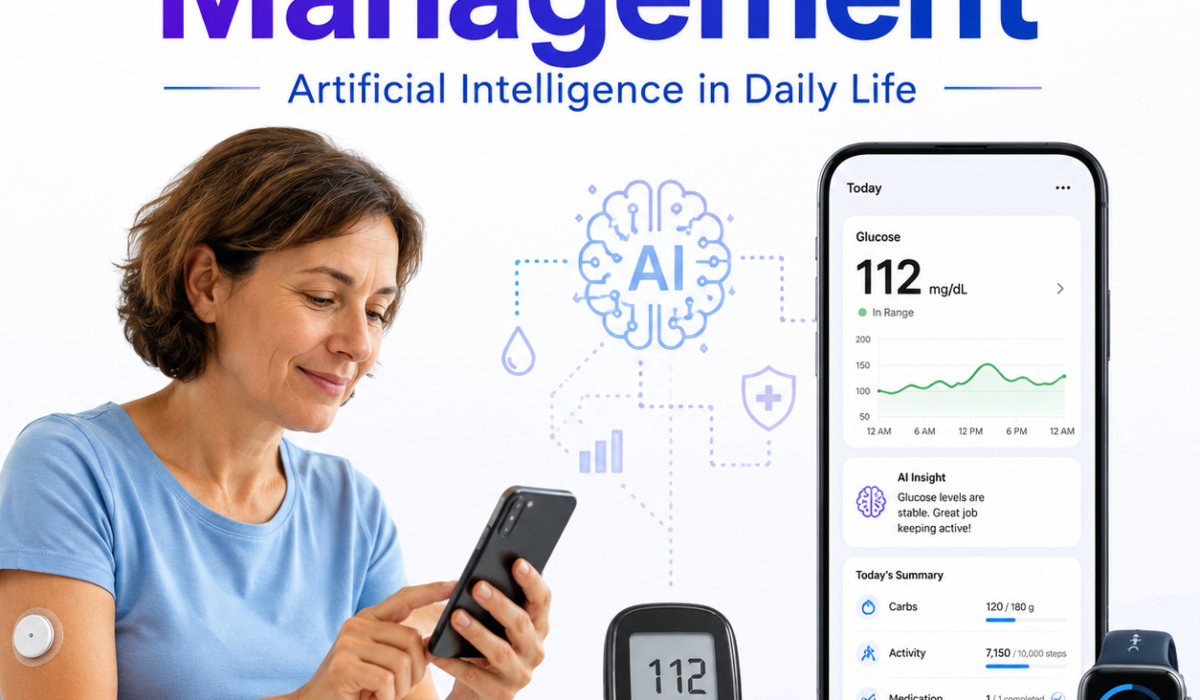
Artificial intelligence is becoming a practical part of everyday diabetes care. For many people living with diabetes, the biggest challenge is not just taking medication or checking blood sugar, but making the right decisions throughout the day. What should you eat? When should you exercise? Is your glucose trend safe? Should you correct a high reading now or wait? Artificial intelligence can help answer these questions by analyzing patterns, predicting changes, and supporting faster decisions.
In simple terms, artificial intelligence in daily life for diabetes management means using smart technology to make diabetes care easier, more accurate, and more personalized. From continuous glucose monitors and smart insulin pens to mobile apps and virtual health assistants, AI is helping people manage diabetes with less guesswork and more confidence.
Table of Contents
- What Artificial Intelligence Means in Diabetes Care
- Why AI Matters for People with Diabetes
- Common Ways Artificial Intelligence Is Used in Daily Diabetes Management
- Benefits of AI for Diabetes Management in Everyday Life
- Real-Life Examples of AI in Diabetes Management
- Can Artificial Intelligence Replace Doctors or Diabetes Educators?
- Are AI Diabetes Tools Safe?
- How to Choose an AI Tool for Diabetes Management
- The Future of Artificial Intelligence in Diabetes Care
- Frequently Asked Questions
- Conclusion
What Artificial Intelligence Means in Diabetes Care
Artificial intelligence, often called AI, refers to computer systems that can learn from data and make predictions or recommendations. In diabetes management, AI looks at information such as blood sugar readings, food intake, activity levels, sleep, medication use, and sometimes heart rate or stress patterns.
Instead of just storing this data, AI tools try to understand what it means. For example, they may identify that your glucose tends to rise after certain meals, or that your blood sugar drops overnight after evening exercise. Over time, these systems can help people and healthcare providers make better daily decisions.
That is why diabetes management is increasingly connected with smarter digital tools. The goal is not to replace people’s judgment, but to make the process of managing blood sugar more informed and less overwhelming.
Why AI Matters for People with Diabetes
Managing diabetes every day can feel overwhelming because blood glucose changes for many reasons. Food, stress, illness, exercise, sleep, hormones, and medication all affect it. Even when people do everything “right,” glucose levels can still fluctuate.
AI helps by reducing the amount of manual interpretation needed. It can:
- Detect patterns that are hard to notice
- Predict possible highs and lows
- Send timely reminders
- Support medication and meal planning
- Help improve glucose control over time
For people with busy schedules, AI can act like a digital support system, making diabetes management more manageable and less stressful. It can also help people spot connections they may not have noticed before, such as how late meals, poor sleep, or stress affect glucose readings the next morning.
Common Ways Artificial Intelligence Is Used in Daily Diabetes Management
1. Continuous Glucose Monitoring with Smart Insights
Continuous glucose monitors, or CGMs, are one of the most useful tools in modern diabetes care. These devices track glucose levels throughout the day and night. AI can analyze CGM data to show trends, predict changes, and alert users before glucose reaches a dangerous level.
Instead of just seeing a single number, users can see:
- Whether glucose is rising or falling
- How fast it is changing
- What patterns happen after meals or exercise
- Whether overnight levels are stable
This helps people take action earlier, which can reduce the risk of emergencies. For a deeper look at monitoring technology, readers can also explore CGM for Diabetes: 39 New CGMs for Diabetes Best Picks for 2026.
2. Smart Insulin Pens and Dose Suggestions
Some insulin pens and connected devices can track injection timing, dose history, and patterns in glucose response. AI can use this information to support more accurate dosing decisions.
In daily life, this may help people avoid:
- Forgetting a dose
- Double dosing
- Taking insulin too late
- Missing the connection between food and insulin timing
In some systems, AI can also help suggest insulin adjustments based on current trends, though these decisions should always be reviewed according to medical guidance.
3. Meal Tracking and Nutrition Guidance
Food has a major impact on blood sugar, and managing meals is often one of the hardest parts of diabetes care. AI-powered nutrition apps can make meal tracking easier by recognizing foods from photos, estimating carbohydrates, and learning eating habits over time.
These tools can help users:
- Log meals more quickly
- Identify foods that cause glucose spikes
- Plan balanced meals
- Understand portion sizes
- Compare food choices before eating
This is especially useful for people trying to reduce daily decision fatigue. A small change in food awareness can support better habits over time and make diabetes management feel less reactive.
4. Exercise Support and Activity Prediction
Physical activity can lower blood sugar, but the effect varies depending on the type, intensity, and timing of exercise. AI can analyze activity patterns and glucose responses to help people exercise more safely.
For example, AI tools may warn users when:
- Exercise could lead to low blood sugar
- A post-meal walk may help reduce a glucose spike
- A workout session needs a snack beforehand
This makes exercise planning more personalized and safer. Many people use this kind of support to fit movement into their day without worrying as much about unexpected glucose changes.
5. Medication Reminders and Adherence Support
Taking medication consistently is essential for diabetes control. AI-based reminder systems can help users stay on schedule by sending alerts for:
- Insulin injections
- Oral diabetes medications
- Blood sugar checks
- Prescription refills
- Doctor appointments
Some systems also learn user habits and send reminders at the most effective times, which can improve adherence without feeling intrusive. This support can be especially valuable for people balancing work, family, travel, and multiple health tasks.
6. Virtual Assistants and Chatbots
AI-powered chatbots and virtual assistants are becoming common in health apps and patient support systems. These tools can answer basic questions, provide reminders, and help users understand trends in their glucose data.
They may assist with questions such as:
- What does a high glucose trend mean?
- Why did my blood sugar drop after dinner?
- How can I keep my morning readings more stable?
These tools are not a replacement for medical advice, but they can provide quick support between appointments. The best ones explain data in plain language so users can take action with more confidence.
7. Smarter Trend Review Between Appointments
One of the most helpful uses of artificial intelligence in daily life for diabetes management is the ability to summarize patterns before the next clinic visit. Instead of manually reviewing weeks of data, users can see which times of day tend to cause trouble and what habits may be connected.
That kind of summary can help patients and clinicians talk more effectively about nutrition, medication timing, and lifestyle changes. It can also make appointment time more productive because everyone starts with clearer data.
Benefits of AI for Diabetes Management in Everyday Life
Better Blood Sugar Awareness
AI helps users see what is happening in real time instead of reacting after the fact. This improves awareness of patterns and makes it easier to prevent major swings.
More Personalized Care
Every person with diabetes is different. AI can learn from individual data and provide insights based on personal habits, rather than general rules alone.
Less Manual Tracking
Writing down every meal, reading, and insulin dose can be tiring. AI reduces the burden by automating data collection and interpretation.
Earlier Warnings
Predictive alerts can help prevent hypoglycemia and hyperglycemia before they become serious. This is especially valuable at night, during travel, or during busy workdays.
Improved Long-Term Outcomes
When used consistently, AI tools may help improve time in range, reduce complications, and support better overall diabetes management.
More Confidence in Daily Decisions
People often feel uncertain about small but important choices, such as whether a snack is needed before a walk or whether a reading is likely to settle on its own. AI can reduce that uncertainty by translating data into practical guidance.
That confidence matters because diabetes care happens all day, not just during clinic visits. Even a simple reminder or trend alert can make it easier to stay on track.
Real-Life Examples of AI in Diabetes Management
A person with type 1 diabetes may use a CGM connected to an AI-enabled app that warns them when glucose is falling during the night. This allows them to treat the low before it becomes severe.
A person with type 2 diabetes may use a meal-tracking app that shows how certain breakfast choices repeatedly cause glucose spikes. Over time, they can adjust their breakfast routine and see better results.
Another user may receive medication reminders from a smart app and notice improved consistency with their treatment plan. Small improvements like these can make a meaningful difference in daily management.
Someone else may use an AI-powered report to discuss patterns with a clinician before starting a new routine. That report can help identify whether afternoon snacks, poor sleep, or weekend schedule changes are affecting glucose control.
These examples show how artificial intelligence in daily life for diabetes management works best when it supports everyday routines rather than replacing them.
Can Artificial Intelligence Replace Doctors or Diabetes Educators?
No. AI is a helpful tool, but it does not replace healthcare professionals. Diabetes care often involves medical decisions that require context, physical exams, lab results, and professional judgment.
AI works best as support. It can help users and clinicians by offering data-driven insights, but final treatment decisions should be made with a qualified healthcare provider. For clinical standards and patient education, the American Diabetes Association offers useful guidance at diabetes.org.
This is especially important when symptoms change suddenly, medications need adjustment, or glucose swings become difficult to explain. Technology can support care, but it should not be used as a substitute for professional medical advice.
Are AI Diabetes Tools Safe?
AI tools can be safe and useful when they are based on reliable data, properly tested, and used as directed. However, users should be aware that no technology is perfect.
Some limitations include:
- Incorrect predictions based on incomplete data
- Errors in food recognition or carb estimation
- Overdependence on alerts and automation
- Privacy concerns with health data
- Different performance levels across devices and apps
Before using any AI-powered diabetes tool, it is important to understand how it works and whether it has been approved or recommended by a healthcare professional.
It also helps to review privacy settings, data-sharing policies, and device permissions so you know how personal health information is being used. Safe use is part of effective diabetes management, especially when technology is involved.
How to Choose an AI Tool for Diabetes Management
When selecting a tool, look for features that fit your daily needs. Useful questions include:
- Does it connect with your glucose monitor or device?
- Is it easy to use every day?
- Does it provide clear and understandable insights?
- Can it track the data that matters most to you?
- Does it protect your personal health information?
A good AI tool should simplify diabetes care, not make it more complicated.
It is also helpful to choose tools that fit your routine rather than ones that require constant attention. The best digital support is usually the tool you can use consistently without feeling overwhelmed.
If you already rely on a connected glucose device, pairing it with a smart companion app may make daily review easier. If you prefer simple reminders, a lighter app may be a better fit. The right choice depends on how you actually live, not just on the features list.
The Future of Artificial Intelligence in Diabetes Care
The future of AI in diabetes management is promising. As technology improves, tools may become even better at predicting glucose changes, recommending personalized routines, and helping people respond faster to daily challenges.
Future developments may include:
- More accurate glucose predictions
- Better meal and carb recognition
- Smarter insulin support systems
- Personalized coaching based on lifestyle patterns
- Deeper integration with wearable health devices
These advancements may make diabetes management more proactive and less stressful.
As connected devices become more advanced, people may be able to see how sleep, stress, movement, and eating patterns work together across the week. That broader view could help people make smarter choices before problems build up.
Frequently Asked Questions
How is artificial intelligence used in diabetes management?
AI is used to analyze glucose data, predict blood sugar trends, support medication reminders, track meals, and provide personalized insights for daily care.
Can AI help prevent low blood sugar?
Yes, many AI-powered tools can detect falling glucose trends and send alerts before a low becomes serious.
Is AI useful for type 2 diabetes?
Yes, AI can be useful for both type 1 and type 2 diabetes by helping with glucose tracking, meal planning, medication adherence, and activity monitoring.
Do I still need to see my doctor if I use AI tools?
Yes. AI tools are supportive, but they do not replace medical care, diagnosis, or treatment planning from a healthcare professional.
Are AI diabetes apps worth using?
For many people, yes. They can simplify daily decisions, improve awareness, and help build better habits, especially when used consistently.
What should I watch for before trusting an AI feature?
Check whether the feature explains its recommendations clearly, whether it uses reliable health data, and whether it protects privacy. If anything seems unclear, ask your clinician before depending on it for treatment decisions.
Conclusion
Artificial intelligence in daily life for diabetes management is transforming how people handle a condition that requires constant attention. By turning glucose data, meals, activity, and medication patterns into useful insights, AI helps make diabetes care more practical and personalized.
Whether it is through a smart glucose monitor, a meal-tracking app, or a reminder system, AI can reduce guesswork and support better day-to-day choices. While it cannot replace medical advice, it can be a powerful partner in helping people live more confidently with diabetes.
For readers comparing tools and learning how devices fit into modern care, AI is most useful when it supports real routines, improves awareness, and strengthens long-term diabetes management without adding extra complexity.
As these tools continue to improve, many people will find that diabetes management becomes easier to organize, especially when AI turns scattered information into a clear daily plan. Used wisely, diabetes management can feel less reactive and more proactive, giving people more control over everyday choices and long-term health.
That is the real value of AI in this space: not replacing the human side of care, but making diabetes management simpler, more responsive, and more consistent over time.
Artificial intelligence will not eliminate the daily work of checking numbers, planning meals, or adjusting routines, but it can make those tasks easier to manage. For many people, the best results come when artificial intelligence in daily life for diabetes management is used as a steady assistant that supports better habits, clearer thinking, and more timely action.
As adoption grows, artificial intelligence in daily life for diabetes management may become even more integrated into wearables, connected meters, and coaching tools. That progress could help people notice risks sooner, prepare for changes earlier, and stay more consistent with their care plans.
In the end, diabetes management works best when technology and human judgment work together. AI can organize the data, highlight the patterns, and reduce the noise, while people and clinicians decide what matters most and what to do next.
When used carefully, artificial intelligence in daily life for diabetes management can bring more clarity to a condition that often feels unpredictable. It offers practical support for today and a more personalized path for the future.