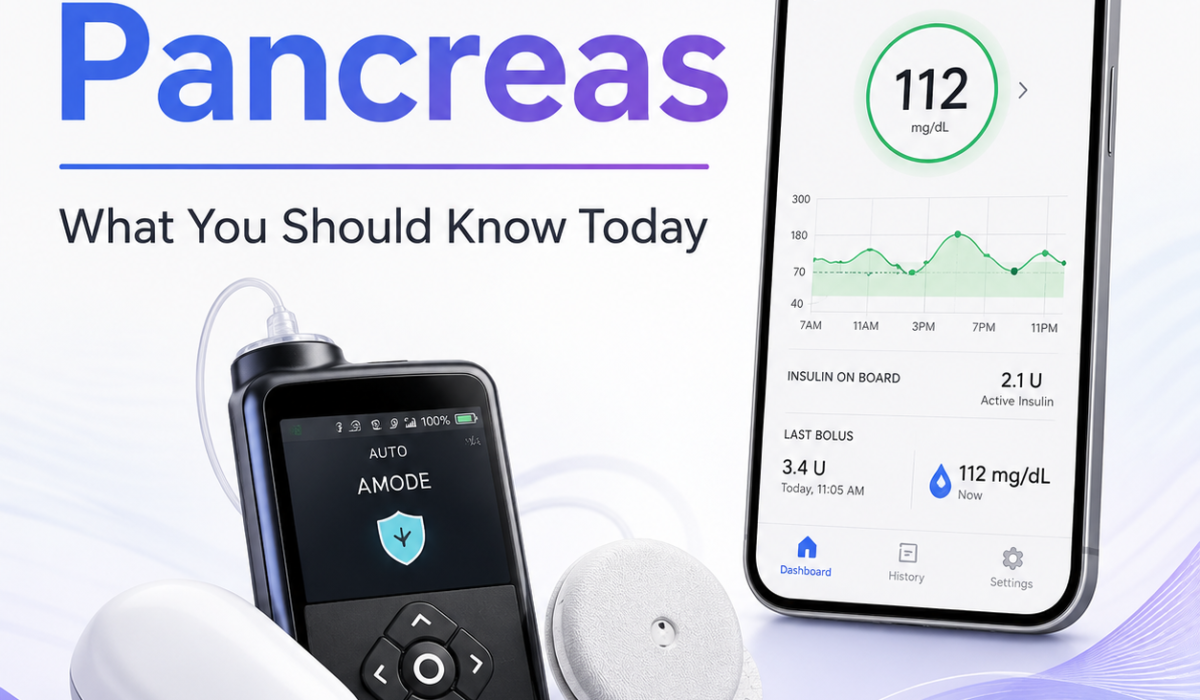
An artificial pancreas is one of the most important advances in diabetes technology. For people living with type 1 diabetes, and in some cases insulin-dependent type 2 diabetes, it can help reduce the daily burden of glucose monitoring and insulin adjustments. The goal is simple: keep blood sugar levels in a healthier range with less manual effort.
Despite the name, an artificial pancreas is not a surgically implanted organ. It is a system that combines continuous glucose monitoring, an insulin pump, and software that automatically adjusts insulin delivery. In plain terms, it works like an automated blood sugar management tool that helps mimic some functions of a healthy pancreas.
This article explains what an artificial pancreas is, how it works, who it may help, its benefits and limitations, and what people should know before considering one.
Table of Contents
- What Is an Artificial Pancreas?
- How Does an Artificial Pancreas Work?
- Why Is an Artificial Pancreas Important?
- Who Can Benefit from an Artificial Pancreas?
- Benefits of Artificial Pancreas Systems
- Limitations and Challenges
- Is It the Same as an Insulin Pump?
- Is It the Same as a Closed-Loop System?
- What Are the Different Types of Artificial Pancreas Systems?
- How Effective Is an Artificial Pancreas?
- What Should You Know Before Starting One?
- What Are Common Questions About Artificial Pancreas Technology?
- Future of Artificial Pancreas Systems
- Bottom Line
What Is an Artificial Pancreas?
An artificial pancreas is a diabetes management system designed to automatically regulate blood glucose levels. It uses data from a continuous glucose monitor (CGM) and insulin pump technology to make real-time insulin adjustments.
In many cases, the term refers to a closed-loop insulin delivery system. That means the system “reads” glucose levels, interprets the trend, and delivers insulin with minimal input from the user. Some systems are fully automated, while others still require the user to announce meals or give correction boluses.
Although the term sounds futuristic, artificial pancreas technology is already available in several forms today. For readers who want a broader overview of related automated insulin tools, Tandem Control-IQ Diabetes Management System Explained offers a helpful example of how this technology works in practice.
It is also helpful to understand that the artificial pancreas does not replace all diabetes self-care. It reduces the amount of manual work, but it still depends on good device use, consistent supplies, and ongoing follow-up with a care team.
How Does an Artificial Pancreas Work?
To understand how the system works, it helps to break it into three parts.
1. Continuous Glucose Monitor
A CGM tracks glucose levels throughout the day and night. A small sensor placed under the skin measures glucose in the interstitial fluid and sends readings to a receiver, smartphone, or pump.
CGM data gives the system a steady stream of information, which is far more useful than occasional fingerstick checks alone. Because glucose can rise or fall quickly after meals, exercise, stress, or illness, having frequent data points helps the device respond faster and more intelligently.
2. Insulin Pump
An insulin pump delivers rapid-acting insulin through a catheter or infusion set placed under the skin. Instead of multiple daily injections, the pump provides basal insulin continuously and can give extra doses when needed.
Some users prefer pumps because they allow more flexible dosing and can be easier to manage during travel or variable routines. Others need time to adapt to wearing a device on the body, especially if they are new to diabetes technology.
3. Control Algorithm
The software is the “brain” of the system. It analyzes glucose trends and automatically decides when to increase, decrease, or pause insulin delivery. The goal is to keep blood glucose in target range and reduce both high and low blood sugar events.
Some systems also use a hybrid approach. In these setups, the device automates basal insulin but still requires the user to enter carbohydrate counts for meals.
The logic behind this automation is based on prediction. The system is not simply reacting to the current glucose value; it is trying to anticipate what will happen next. That is why sensor accuracy, device settings, and user behavior all play an important role in success.
Why Is an Artificial Pancreas Important?
Managing diabetes can be exhausting. Blood sugar changes because of food, exercise, stress, illness, hormones, sleep, and even changes in routine. Traditional insulin therapy requires constant attention and quick decisions.
An artificial pancreas can help by:
- reducing the burden of daily diabetes management
- lowering the risk of hypoglycemia
- improving time in range
- helping people sleep better with overnight glucose control
- reducing glucose variability
- making diabetes care less stressful
For many users, the biggest advantage is not just better numbers, but peace of mind. People often describe the technology as a way to reduce the constant mental background noise that comes with diabetes decisions.
That reduction in mental load can matter just as much as the clinical numbers. When someone spends less time worrying about overnight lows or sudden highs, they often feel more confident during work, school, exercise, and social events.
Who Can Benefit from an Artificial Pancreas?
Artificial Pancreas systems are most commonly used for people with type 1 diabetes, especially those who need intensive insulin therapy. They may also be used in some people with insulin-dependent type 2 diabetes or other forms of diabetes in specific situations, depending on medical advice and device approval.
People who may benefit include those who:
- have frequent low blood sugar episodes
- struggle with blood sugar swings
- want more automated insulin delivery
- find multiple daily injections hard to manage
- want help overnight or during exercise
- have trouble maintaining target glucose levels
However, not everyone is a good fit. Device availability, age, insurance coverage, dexterity, comfort with technology, and individual treatment goals all matter.
Education is also important. People who are comfortable reviewing CGM trends, responding to alerts, and adjusting their habits around meals and activity often get better results. In addition, support from diabetes educators and clinicians can make the transition smoother.
Benefits of Artificial Pancreas Systems
Artificial Pancreas technology offers several potential benefits.
Better Blood Sugar Control
One of the main goals is to keep glucose levels in the target range more consistently. Many users experience improved time in range and fewer extreme highs and lows.
That improvement can be especially useful for people whose glucose tends to rise overnight or drift unpredictably during the day. By automatically making small corrections, the system can reduce the need for repeated manual adjustments.
Reduced Hypoglycemia
Low blood sugar can be dangerous and frightening. Closed-loop systems may reduce the frequency and severity of hypoglycemia, especially overnight.
For some people, this is the most meaningful benefit. Fewer overnight lows may improve sleep quality, and less fear of hypoglycemia can make daily life less stressful.
Less Mental Load
Diabetes decision-making can be overwhelming. Automation can reduce the number of decisions a person has to make each day.
Instead of constantly calculating corrections and worrying about trends, users can focus more on living their lives. That does not remove responsibility, but it can reduce burnout.
Overnight Stability
Many people find blood sugar harder to manage while sleeping. An artificial pancreas can adjust insulin during the night to help prevent unexpected lows or highs.
This is one reason many families and caregivers are interested in the technology. Overnight automation can provide reassurance when the user is asleep and unable to respond quickly to changing glucose levels.
More Flexible Lifestyle
While it does not remove the need for attention, the system may make exercise, travel, and daily routines easier to manage.
People who have unpredictable schedules, shift work, or frequent activity changes often appreciate the extra support. It can also be useful when routines are disrupted by illness, vacations, or school events.
Potential Long-Term Support for Better Habits
Some users find that once they see how much glucose changes with certain meals or activities, they become more aware of patterns. In that sense, the system can act as both a management tool and a learning tool.
Over time, that feedback may help people make more informed choices about meal timing, exercise, sleep, and correction dosing. The technology does not replace diabetes education, but it can reinforce it.
Limitations and Challenges
Even though the technology is impressive, it is not perfect. Users should understand the limitations before relying on it.
It Is Not a Cure
An artificial pancreas does not eliminate diabetes. It still requires ongoing monitoring, supplies, and user participation.
People need to remember that sensors can fail, infusion sites can become irritated, and insulin delivery can be interrupted. Backup plans remain essential.
Meal Announcements May Still Be Needed
Most current systems are hybrid closed-loop systems, which means users often need to enter carbohydrates before meals. Large or high-fat meals can still cause glucose spikes.
That means the device may be excellent at smoothing daily control, but it cannot fully compensate for every meal choice or timing issue. Food composition, portion size, and when the bolus is given still matter.
Sensor Accuracy Matters
If the CGM readings are inaccurate or delayed, the system’s insulin decisions may be affected.
This is why users are often taught how to verify readings when something seems off. Understanding when to trust the device and when to confirm with a fingerstick is an important safety skill.
Insulin Takes Time to Work
Unlike the natural pancreas, an insulin pump uses rapid-acting insulin, which does not respond instantly. That means the system must predict glucose trends before they happen.
Because of that delay, some glucose spikes may still occur before insulin has enough time to take effect. This is one of the core engineering challenges in automated diabetes care.
Device Issues Can Occur
Infusion set failures, sensor errors, tubing problems, and adhesion issues can interfere with performance.
For anyone using diabetes technology, troubleshooting is part of normal life. Knowing how to change a sensor, replace an infusion set, or switch to backup insulin can prevent small problems from turning into larger ones.
Cost and Access Can Be Barriers
These systems can be expensive, and insurance coverage varies. Some people may not have easy access to the technology.
Access issues are important because the people who could benefit most are not always the people who can get the devices most easily. Coverage, regional approval, and clinic support may all affect availability.
Not Every Person Will Like Wearing Devices
Some users dislike the feeling of having multiple devices attached to the body. Others worry about alarms, skin reactions, or carrying supplies.
These concerns are practical, not trivial. Comfort and consistency matter, and a system is only helpful if a person can realistically use it day after day.
Is an Artificial Pancreas the Same as an Insulin Pump?
Not exactly.
An insulin pump is a tool that delivers insulin continuously. An artificial pancreas system includes an insulin pump, a CGM, and an automated control algorithm.
In other words, every artificial pancreas system uses a pump, but not every pump is part of an artificial pancreas setup.
That difference matters because the automation is what changes the experience. A standard pump can deliver insulin very effectively, but it does not independently adjust based on sensor data unless it is part of a broader closed-loop system.
Is It the Same as a Closed-Loop System?
In many cases, yes.
The term artificial pancreas is often used to describe closed-loop insulin delivery. A fully closed loop would theoretically automate all insulin decisions without user input. In real-world use today, most systems are hybrid closed-loop, meaning they automate much of the process but still need user participation for meals and some corrections.
If you want to see how one commercial system fits into this category, the Tandem Control-IQ Diabetes Management System Explained article provides a useful real-world reference for automated insulin delivery.
There is also a difference between “closed loop” as a technical concept and “closed loop” as it appears in daily life. In practice, users still need to respond to alerts, manage supplies, and keep an eye on glucose trends, even when the system is doing much of the work.
What Are the Different Types of Artificial Pancreas Systems?
There are a few variations, depending on how much automation they provide.
Hybrid Closed-Loop Systems
These are the most common systems available today. They automatically adjust basal insulin based on CGM readings but still require meal boluses.
For many users, this is the best balance of convenience and control. It offers automation without expecting the system to handle every situation on its own.
Fully Closed-Loop Systems
These are more automated and may eventually require little to no meal input. Some are still under development or limited in availability.
Fully closed-loop systems are an important research goal because they could further reduce burden and improve consistency. However, food intake, activity, stress, and illness are complex variables, so real-world performance still has room to improve.
Research Prototypes
Some systems are being tested in clinical trials and may include faster insulin, dual hormone delivery, or more advanced prediction algorithms.
Research efforts continue because better prediction, faster insulin action, and more refined sensor data could make the systems even safer and more responsive in the future. To understand the broader diabetes innovation landscape, you can also review the National Institute of Diabetes and Digestive and Kidney Diseases overview of artificial pancreas research.
How Effective Is an Artificial Pancreas?
For many people, the system can be very effective. Studies have shown improvements in average glucose levels, time in range, and reductions in both hyperglycemia and hypoglycemia. Many users also report better quality of life.
That said, effectiveness depends on several factors:
- how consistently the device is used
- whether sensors are calibrated or functioning properly
- meal timing and carbohydrate counting
- individual insulin needs
- physical activity
- device settings and medical follow-up
Results can vary, and no system works perfectly for everyone.
Some people see strong improvements right away, while others need a period of adjustment. Success often improves when the device is used consistently and the user gets comfortable with its alerts, menus, and timing.
It is also worth noting that expectations should be realistic. The system may reduce highs and lows, but it does not remove the need for judgment. Illness, stress, long meals, and unusual exercise can still create challenges.
What Does Daily Use Look Like?
In everyday life, the experience of using an artificial pancreas is usually a mix of automation and routine maintenance. Most users wear a CGM sensor, keep an insulin pump attached, and respond to alerts or prompts as needed.
A typical day may include checking whether the sensor is working, giving a mealtime bolus, and confirming that the infusion site is secure. The system then handles ongoing basal adjustments in the background.
Users also need to keep supplies on hand, replace infusion sets on schedule, charge or manage device batteries if needed, and watch for changes in skin comfort. That means the system simplifies diabetes care, but it does not make it disappear.
For families, this can still be a major improvement. The ability to sleep more comfortably, worry less about nighttime lows, and reduce constant manual corrections can significantly improve quality of life.
What Should You Know Before Starting One?
If you are thinking about an artificial pancreas, there are a few practical things to consider.
Learn the Basics of Diabetes Technology
Understanding CGM trends, insulin pump settings, basal rates, carb ratios, and correction factors can help you use the system more effectively.
Set Realistic Expectations
The system can reduce workload and improve control, but it still needs active use and occasional troubleshooting.
Review Safety Steps
Know how to respond if the sensor fails, the pump disconnects, or glucose levels rise unexpectedly.
Discuss Goals with Your Care Team
The best device for one person may not be the best for another. Your diabetes team can help you decide whether you are a good candidate.
Practice Meal Management
Because many systems still require meal boluses, carbohydrate counting remains important.
It can also help to prepare for the practical side of use. That includes learning where to place sensors and infusion sets, how to rotate sites, and what to do if your skin becomes irritated. Small details often make the biggest difference in long-term comfort.
If you are comparing options, ask about the learning curve, customer support, data sharing features, and whether the device works with your lifestyle. A system that fits your routine is usually easier to maintain than one with slightly better features that feels awkward to use.
What Are Common Questions About Artificial Pancreas Technology?
Can an artificial pancreas stop low blood sugar completely?
No. It can reduce the risk, but it cannot eliminate low blood sugar entirely. Users still need to monitor for symptoms and respond appropriately.
Does it work overnight?
Yes, overnight control is one of the strongest advantages of these systems. Many people see improved nighttime stability.
Do you still need insulin injections?
Most users rely on an insulin pump rather than injections, though backup insulin may still be needed in some situations.
Can children use an artificial pancreas?
Some systems are approved for children, depending on age and region. A pediatric diabetes specialist can help determine suitability.
Can people with type 2 diabetes use it?
In some cases, yes, particularly if they use intensive insulin therapy. Eligibility depends on clinical needs and device approval.
Is it hard to use?
There is a learning curve. Many people adapt well with training and support, but comfort with technology is important.
Does it replace healthy habits?
No. Meal planning, activity, sleep, and routine follow-up still matter. The system supports those habits, but it does not make them unnecessary.
What if the sensor or pump fails?
Users need a backup plan. That usually includes knowing how to switch to injections, test glucose more often, and contact the care team if readings become unsafe or persistently high.
Future of Artificial Pancreas Systems
Artificial Pancreas technology continues to improve. Researchers are working on:
- faster-acting insulin
- smarter algorithms
- better integration with smartphones and wearables
- fewer calibration requirements
- fully automated systems
- dual-hormone systems that use insulin and glucagon
The future goal is a system that feels even more like a natural pancreas, with less input and better glucose stability.
As technology advances, the experience may become more seamless. Better prediction models, improved sensor life, and tighter integration with digital health tools could all help make the next generation easier to use.
Researchers are also interested in personalization. A system that adapts more intelligently to a person’s patterns, habits, and insulin sensitivity could improve outcomes even further.
Bottom Line
An artificial pancreas is an advanced diabetes management system that combines a CGM, insulin pump, and automated software to help regulate blood sugar. It is not a true replacement for the pancreas, but it can make diabetes care easier, safer, and more effective for many people.
For individuals with type 1 diabetes and some insulin-dependent type 2 diabetes patients, it may offer better blood sugar control, fewer lows, and less daily stress. Still, it has limitations, requires training, and is not suitable for everyone.
If you are considering an artificial pancreas, the best next step is to talk with your diabetes care team about whether the technology fits your needs, lifestyle, and treatment goals.