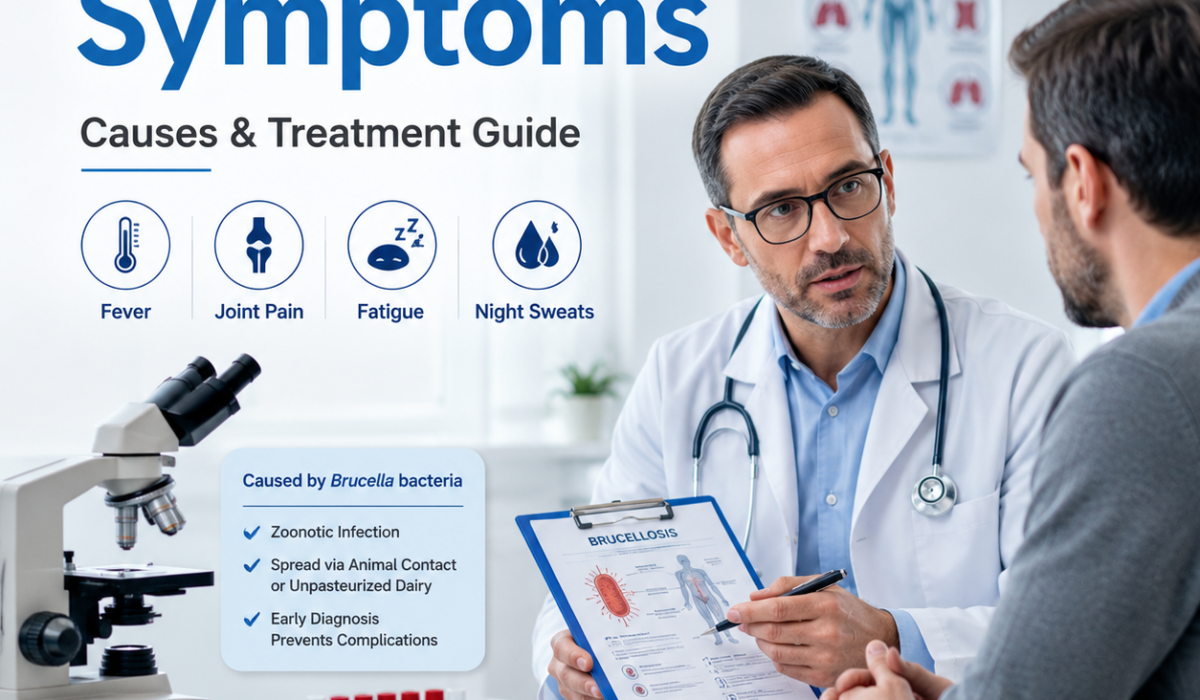
Brucellosis is a bacterial infection that can affect humans and animals. It is most often spread through contact with infected animals or by consuming contaminated dairy products. Because its symptoms can look like the flu or other common illnesses, brucellosis symptoms are sometimes missed at first. Understanding the symptoms, causes, and treatment of brucellosis can help you recognize the condition early and get proper medical care.
Table of Contents
What Is Brucellosis?
Brucellosis is an infection caused by bacteria in the Brucella group. It is a zoonotic disease, which means it can spread from animals to humans. Commonly affected animals include cattle, goats, sheep, pigs, dogs, and sometimes wildlife.
In humans, brucellosis symptoms can include fever, fatigue, body aches, and other signs that may come and go. Without treatment, the illness can last for weeks, months, or even longer and may lead to complications affecting the joints, liver, heart, or nervous system.
Brucellosis Symptoms
The symptoms of brucellosis can vary from mild to severe. Some people develop symptoms within days, while others may not feel sick for several weeks after exposure.
Common symptoms of brucellosis include:
- Fever
- Chills
- Sweating, especially at night
- Fatigue or weakness
- Loss of appetite
- Weight loss
- Headache
- Muscle and joint pain
- Back pain
- Abdominal pain
- Nausea
Less common or severe symptoms may include:
- Enlarged liver or spleen
- Swollen lymph nodes
- Depression or irritability
- Persistent cough
- Testicular swelling or pain
- Heart inflammation
- Neurological symptoms such as confusion or stiff neck
One of the most recognizable signs is intermittent fever, meaning the fever may rise and fall over time. Because brucellosis symptoms overlap with many other illnesses, lab tests are usually needed for confirmation.
If you want to learn more about another infection that can spread through the respiratory system, see this guide to bronchopneumonia symptoms.
What Causes Brucellosis?
Brucellosis is caused by bacteria from the Brucella species. Humans usually get infected in one of the following ways:
1. Eating or drinking contaminated animal products
This is one of the most common causes of human brucellosis. People can become infected by consuming:
- Unpasteurized milk
- Soft cheeses made from raw milk
- Other dairy products from infected animals
2. Direct contact with infected animals
People who work with animals are at higher risk. Infection can occur when bacteria enter the body through:
- Cuts or broken skin
- The eyes, nose, or mouth
- Handling blood, placenta, tissues, or birth fluids from infected animals
3. Breathing in contaminated particles
In rare cases, people can inhale the bacteria, especially in laboratories, slaughterhouses, or farms.
4. Rare person-to-person spread
Brucellosis usually does not spread from one person to another. Rare cases have been reported through:
- Breastfeeding
- Sexual contact
- Blood transfusion
- Organ transplant
For a reliable public health overview of the infection, see the Centers for Disease Control and Prevention’s brucellosis information.
Who Is at Risk?
Anyone can get brucellosis, but some people are at higher risk, including:
- Farmers
- Veterinarians
- Slaughterhouse workers
- Meat processors
- Laboratory workers
- Hunters
- People who consume unpasteurized dairy products
- People living in areas where brucellosis is common
If you work with animals or consume raw dairy, your risk may be higher.
How Is Brucellosis Diagnosed?
Doctors usually diagnose brucellosis using a combination of symptoms, exposure history, and testing.
Common diagnostic methods include:
- Blood tests to look for Brucella antibodies or bacteria
- Blood cultures to detect the bacteria directly
- Bone marrow cultures in some cases
- Additional tests if complications are suspected, such as imaging or heart tests
Because the symptoms are nonspecific, telling your doctor about animal exposure, travel, and raw dairy consumption is very important. This is especially true when brucellosis symptoms persist or return after seeming to improve.
Brucellosis Treatment
Brucellosis is treated with antibiotics. Treatment usually requires more than one antibiotic and lasts for several weeks to reduce the chance of relapse.
Common antibiotic treatment
Doctors often prescribe a combination such as:
- Doxycycline plus rifampin
- Doxycycline plus streptomycin or gentamicin
The exact treatment depends on:
- The patient’s age
- Pregnancy status
- Severity of illness
- Whether there are complications affecting the bones, brain, heart, or other organs
Why treatment must be completed
Stopping antibiotics too early can allow the infection to return. Brucellosis can be stubborn, and relapse is possible if treatment is incomplete. Following the full plan is the best way to reduce ongoing brucellosis symptoms.
Treatment for severe or complicated cases
If brucellosis affects the heart, nervous system, or bones, treatment may involve:
- Longer antibiotic courses
- Hospital care
- Specialist management
- Surgery in rare cases, such as for heart valve infection or abscesses
Home Care and Recovery
Along with antibiotics, recovery often includes:
- Plenty of rest
- Drinking enough fluids
- Managing pain and fever with doctor-approved medicines
- Following up with a healthcare provider to monitor improvement
Some people feel better quickly, but fatigue and weakness may last for weeks. Regular follow-up is important because brucellosis symptoms can return.
If your doctor recommends rest while symptoms improve, it may also help to read about other infection-related breathing concerns such as bronchoscopy procedure recovery and expectations when respiratory testing is needed.
Possible Complications of Brucellosis
If untreated or poorly treated, brucellosis can lead to serious complications. These may include:
- Arthritis or joint inflammation
- Bone infections
- Liver or spleen enlargement
- Infection of the heart lining or valves
- Nervous system infection
- Chronic fatigue
- Recurring fever
Early treatment lowers the risk of these complications.
Can Brucellosis Be Prevented?
Yes, brucellosis can often be prevented with safe food handling and proper animal precautions.
Prevention tips:
- Drink only pasteurized milk and dairy products
- Avoid soft cheeses or raw dairy unless pasteurized
- Wear gloves when handling animals or animal tissues
- Cover cuts and wounds when working with livestock
- Use protective gear in labs and slaughterhouses
- Cook meat thoroughly
- Wash hands after handling animals
- Follow animal vaccination and control programs where available
Prevention is especially important for people in high-risk occupations and regions where brucellosis is more common. Reducing exposure lowers the chance of infection and helps prevent future brucellosis symptoms.
When to See a Doctor
See a healthcare provider if you have:
- Fever that keeps returning
- Night sweats
- Unexplained fatigue
- Joint or muscle pain
- A history of exposure to livestock or raw dairy
- Symptoms that last more than a few days without a clear cause
Seek prompt medical attention if you also have chest pain, severe headache, confusion, stiff neck, or trouble breathing, as these may signal complications. These warning signs should not be ignored if brucellosis symptoms are present.
Frequently Asked Questions About Brucellosis
Is brucellosis contagious?
Brucellosis is not usually spread from person to person. It is mainly acquired from infected animals or contaminated animal products.
How long does brucellosis last?
With proper treatment, many people improve within a few weeks, but full recovery may take longer. Untreated brucellosis can last for months or become chronic.
Can brucellosis be cured?
Yes. Brucellosis can usually be cured with the right antibiotics taken for the full prescribed course.
What foods can cause brucellosis?
The main food source is unpasteurized milk and dairy products, especially raw milk cheeses.
Is brucellosis serious?
It can be serious if not treated early. While many people recover fully, delayed treatment can lead to long-term complications.
Conclusion
Brucellosis is a bacterial infection spread mainly through infected animals and unpasteurized dairy products. Its symptoms often include fever, sweating, fatigue, muscle pain, and weight loss, but it can also affect the joints, organs, and nervous system. The good news is that brucellosis is treatable with antibiotics, especially when diagnosed early.
If you have symptoms and possible exposure to livestock or raw dairy, seek medical evaluation promptly. Early diagnosis, complete treatment, and prevention steps can greatly reduce the risk of complications and help you recover fully from brucellosis symptoms.