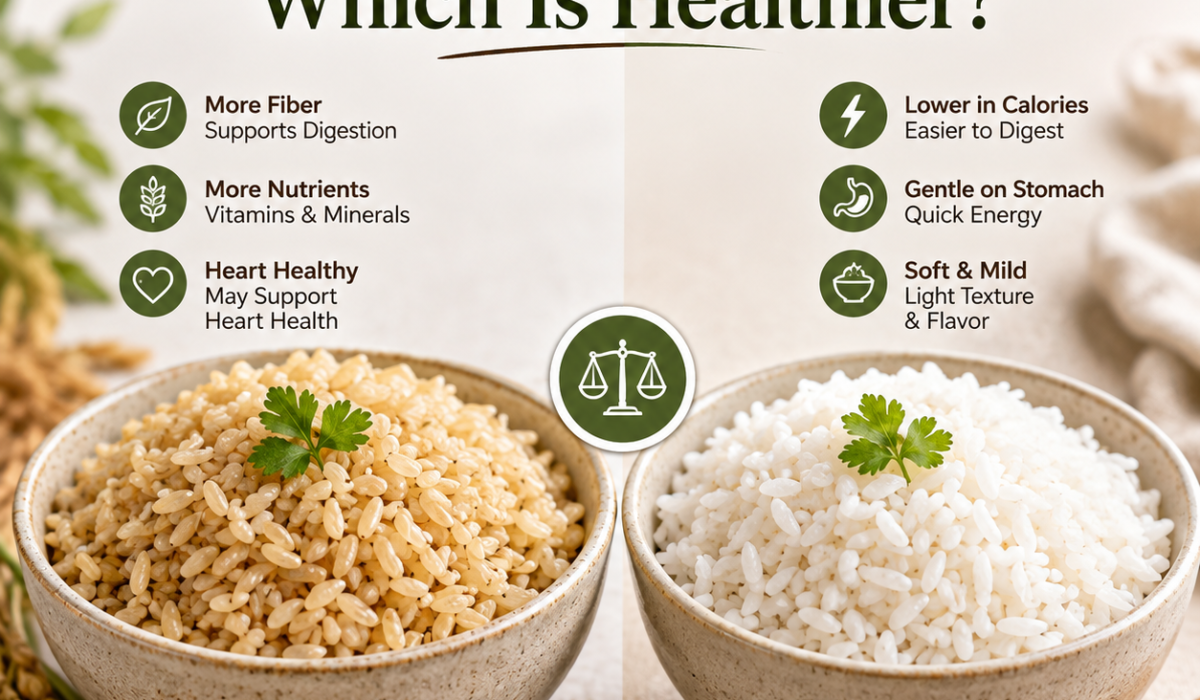
Rice is one of the most common foods in the world, but when it comes to brown rice vs white rice, many people want a simple answer: which is healthier? The short version is that brown rice is generally considered healthier because it contains more fiber, vitamins, and minerals. However, white rice can still be a healthy choice depending on your diet, digestion, activity level, and overall health goals.
This article explains the differences clearly, so you can decide which type of rice fits your needs best. If you are comparing brown rice vs white rice for everyday meals, weight management, or blood sugar control, the details below will help you make a practical choice.
Table of Contents
- The Main Difference Between Brown Rice and White Rice
- Which Is Healthier: Brown Rice or White Rice?
- Nutrition Comparison
- Health Benefits of Brown Rice
- Health Benefits of White Rice
- Brown Rice vs White Rice for Weight Loss
- Brown Rice vs White Rice for Diabetes
- Brown Rice vs White Rice for Digestion
- Is Brown Rice Always the Better Choice?
- What About Arsenic in Rice?
- Which Rice Is Better for Everyday Eating?
- How to Make Rice Healthier
- Simple Answer: Brown Rice vs White Rice
- Conclusion
The Main Difference Between Brown Rice and White Rice
Brown rice and white rice start as the same grain. The difference is how much of the outer layers are kept during processing.
- Brown rice keeps the bran, germ, and endosperm
- White rice has the bran and germ removed, leaving mostly the starchy endosperm
Because of this, brown rice retains more nutrients, while white rice has a softer texture, cooks faster, and lasts longer in storage. In the brown rice vs white rice comparison, this processing difference explains nearly everything that follows, from fiber content to how full you feel after a meal.
Brown rice is a whole grain, so it keeps more of the grain’s natural structure. White rice is refined, which makes it smoother and milder in taste. Neither one is automatically “bad”; they simply serve different purposes in the kitchen and in the body.
Which Is Healthier: Brown Rice or White Rice?
In most cases, brown rice is healthier than white rice. It contains:
- More fiber
- More magnesium
- More B vitamins
- More antioxidants
- A lower glycemic impact in many cases
These nutrients make brown rice a better option for people looking to improve digestion, support heart health, or stay full longer after meals. It is also one of the reasons the brown rice vs white rice debate usually ends in favor of the whole grain.
That said, white rice is not “bad.” It can still be part of a balanced diet, especially when eaten with vegetables, lean protein, and healthy fats. Some people also tolerate it better than brown rice, particularly if they have a sensitive stomach.
According to the Harvard T.H. Chan School of Public Health, whole grains are generally linked with better overall health outcomes than refined grains, which supports the common nutrition advice behind the brown rice vs white rice comparison.
So, when people ask whether brown rice vs white rice matters, the answer is yes—but the best choice depends on the rest of your diet and your personal health needs.
Nutrition Comparison
Here is a general look at how the two compare.
Brown Rice
Brown rice is a whole grain, which means it keeps its natural nutrients intact. It typically provides:
- More fiber
- More protein than white rice
- More magnesium, phosphorus, and selenium
- More vitamins like niacin and folate
- More beneficial plant compounds
Because the outer layers remain, brown rice offers more texture and a nutty flavor. In a brown rice vs white rice comparison, that extra fiber is the biggest nutritional advantage.
White Rice
White rice is milled and polished, which removes some nutrients. However, many varieties are enriched, meaning some vitamins and minerals are added back. White rice still provides:
- Energy from carbohydrates
- Small amounts of protein
- B vitamins in enriched versions
- An easy-to-digest grain option
White rice has a softer texture and more neutral taste, which makes it useful in many dishes. It may not be as nutrient-dense as brown rice, but it can still be part of a healthy eating pattern.
When you compare brown rice vs white rice side by side, the biggest nutrition difference is fiber. That single detail changes how filling the grain feels and how quickly it affects blood sugar.
Health Benefits of Brown Rice
1. Better for Digestion and Fullness
Because brown rice has more fiber, it digests more slowly and can help you feel full longer. This may reduce overeating and support healthy weight management. For people focusing on satiety, the brown rice vs white rice choice often comes down to how long they want to stay satisfied after a meal.
2. Supports Heart Health
Whole grains like brown rice are linked to better heart health. The fiber and nutrients in brown rice may help support healthy cholesterol levels and blood pressure. If heart-friendly eating is your goal, brown rice usually has the edge in the brown rice vs white rice comparison.
3. Helps with Blood Sugar Control
Brown rice generally raises blood sugar more slowly than white rice. This makes it a better choice for people who want more stable energy or are watching blood sugar levels. The lower glycemic impact is one of the main reasons many nutrition plans favor brown rice.
4. More Nutrient-Dense
Since brown rice keeps the bran and germ, it naturally contains more nutrients than white rice. This can be helpful if you want to get more nutrition from everyday meals. When you choose brown rice more often, you get a more complete grain with fewer processing losses.
5. Fits Well Into Balanced Meals
Brown rice works especially well in bowls, stir-fries, salads, and grain-based meal prep. It pairs nicely with vegetables, beans, eggs, chicken, and fish. If you want a filling base for a balanced plate, brown rice vs white rice often leans toward the brown option because it adds more substance without changing the meal too much.
Health Benefits of White Rice
1. Easier to Digest
White rice is gentle on the stomach and often easier to digest than brown rice. That makes it a common choice for people with digestive issues, sensitive stomachs, or during recovery from illness.
2. Quick Energy Source
Because white rice is digested more quickly, it can be a useful source of fast energy, especially for athletes or highly active people. If you need a simple carb before or after a workout, white rice can be practical and effective.
3. Often Preferred in Certain Diets
White rice is widely used in many cultural diets and can work well in balanced meals. When paired with protein and vegetables, it can still be part of a nutritious eating pattern. In other words, brown rice vs white rice is not a question of good versus bad; it is often about the meal context.
4. Lower in Phytates
Brown rice contains phytates, compounds that can reduce the absorption of some minerals. White rice has fewer phytates, which may make some nutrients easier to absorb in certain cases.
5. Helpful When You Need Simplicity
Some people want food that is plain, familiar, and easy to prepare. White rice fits that need well. It is especially useful when you want a neutral base that will not overpower the rest of the dish.
Brown Rice vs White Rice for Weight Loss
If your goal is weight loss, brown rice is usually the better choice because its fiber content may help you feel full longer and eat less overall.
However, portion size matters more than the type of rice alone. A small serving of white rice can fit into a healthy weight-loss plan if the rest of the meal is balanced.
Best approach:
- Choose brown rice more often
- Watch portion sizes
- Pair rice with protein and vegetables
- Avoid heavy sauces and fried add-ons
If you already eat a high-fiber diet, the difference between brown rice vs white rice for weight loss may be smaller than expected. The overall meal pattern matters most.
One practical strategy is to build a plate with half vegetables, one-quarter protein, and one-quarter grains. In that framework, brown rice may give you a small advantage, but both varieties can work when portions are controlled. If you are using rice for meal prep, the best brown rice vs white rice choice is the one that helps you stay satisfied without overeating later.
Brown Rice vs White Rice for Diabetes
For people managing blood sugar, brown rice is generally the better option. It has more fiber and a lower glycemic impact than white rice in many cases.
Still, everyone responds differently to foods. Some people with diabetes may tolerate small portions of white rice better than large servings of brown rice, especially if it is eaten with protein, fiber, and healthy fats.
Useful tips:
- Keep portions moderate
- Choose brown rice when possible
- Eat rice with non-starchy vegetables and protein
- Monitor blood sugar response if needed
If you want to keep blood sugar steadier, the brown rice vs white rice decision should be based not only on the grain itself but also on the full meal. Lentils, beans, chicken, tofu, and vegetables can all help slow down the absorption of carbohydrates.
For a broader look at how nutrition habits affect health, you can also explore Borderline Cholesterol: What It Means & What to Do and similar nutrition-focused guidance that emphasizes balanced meals and smarter grain choices.
Brown Rice vs White Rice for Digestion
If you have a sensitive stomach, white rice may be easier to digest than brown rice. The extra fiber in brown rice can be too much for some people, especially if they are dealing with:
- Irritable bowel syndrome
- Diarrhea
- Stomach upset
- Recovery after illness
In these cases, white rice is often the better short-term choice.
Brown rice can still work for many people, but some need to introduce it slowly. So in the brown rice vs white rice discussion, digestion is one area where white rice may actually be the more comfortable option.
If you are recovering from digestive upset, choose a smaller portion and keep the meal simple. Plain rice, mild vegetables, and easy-to-digest protein can be a good starting point.
Is Brown Rice Always the Better Choice?
Not always. Brown rice is more nutrient-dense, but it is not automatically the best option for everyone.
You may prefer white rice if you:
- Need a softer, easier-to-digest food
- Want quicker cooking time
- Are eating before or after intense exercise
- Have a digestive condition that makes high-fiber foods harder to tolerate
Brown rice may be better if you:
- Want more fiber
- Are trying to manage blood sugar
- Want a more filling grain
- Prefer whole-grain foods
Many people use both depending on the meal. That flexible approach keeps the brown rice vs white rice decision practical instead of strict.
In real life, the healthiest pattern is not choosing one grain forever. It is choosing the right grain for the right situation. That may mean brown rice most of the time, and white rice when comfort, convenience, or digestion matters more.
What About Arsenic in Rice?
One concern often raised in the brown rice vs white rice debate is arsenic. Rice can absorb arsenic from soil and water, and brown rice often contains more arsenic than white rice because it keeps the outer layers where arsenic may accumulate.
This does not mean you should avoid brown rice altogether. It simply means it is smart to vary your grains and prepare rice properly.
Tips to reduce arsenic exposure:
- Rinse rice before cooking
- Cook it in extra water and drain the excess
- Rotate with other grains like quinoa, oats, barley, or farro
- Choose rice from trusted sources
For general food safety guidance, the U.S. Food and Drug Administration food safety resources are a useful place to start when learning how different foods are regulated and handled.
Arsenic concerns are a reminder that even healthy foods are best eaten in variety. If you eat rice often, rotating whole grains can help balance nutrition and limit exposure. That makes the brown rice vs white rice decision less about avoiding one option and more about eating a wider range of grains overall.
Which Rice Is Better for Everyday Eating?
For most people, brown rice is the healthier everyday option because it offers more fiber and nutrients.
But the best rice for you depends on your needs:
- Choose brown rice if you want more nutrition and better blood sugar support
- Choose white rice if you need something lighter, softer, or easier to digest
The healthiest diet is not about choosing one food forever. It is about balance and consistency over time.
If you eat rice regularly, think about how it fits into the rest of your day. If breakfast and lunch are already low in fiber, brown rice may help close the gap. If you have a sensitive stomach or need a fast-digesting carb, white rice may be the better fit. In other words, brown rice vs white rice is best judged by context, not by a single rule.
How to Make Rice Healthier
No matter which type you choose, you can make rice healthier by pairing it well.
Try these ideas:
- Add vegetables for more fiber and vitamins
- Include lean protein like chicken, beans, tofu, or fish
- Use healthy fats such as avocado, olive oil, or nuts
- Keep portions moderate
- Choose steamed, boiled, or lightly seasoned rice instead of fried versions
You can also boost the nutrient value of a meal by serving rice alongside colorful vegetables and legumes. A simple bowl with brown rice, beans, and vegetables is much more filling than rice alone.
If you want to build meals that support stronger nutrition overall, pairing rice with vegetables such as Broccoli Benefits: 7 Surprising Reasons to Eat More can make a simple grain bowl much more balanced and filling.
Other smart ways to improve a rice meal include using broth for flavor, adding herbs and spices instead of heavy sauces, and keeping fried toppings to a minimum. These small changes make both brown and white rice a healthier choice.
Simple Answer: Brown Rice vs White Rice
If you want the most direct answer:
- Brown rice is healthier overall
- White rice is easier to digest and can still be part of a healthy diet
The best choice depends on your personal health goals, digestion, and how you plan to eat it.
For most healthy adults, the brown rice vs white rice choice should lean toward brown rice more often than not. But for anyone with a sensitive stomach, picky appetite, or need for quick energy, white rice can be the more practical option.
A useful mindset is to ask: what does this meal need? More fiber and fullness, or more ease and comfort? That question often gives you the clearest answer.
Conclusion
When comparing brown rice vs white rice, brown rice usually wins in terms of nutrition because it contains more fiber, vitamins, and minerals. It is generally better for fullness, blood sugar control, and long-term health.
Still, white rice has its place. It is easier to digest, quick to cook, and can be a useful source of energy. The healthiest option is the one that fits your body, your meals, and your lifestyle.
If you eat rice regularly, consider using brown rice more often while still including white rice when it makes sense for your needs. In practice, the best brown rice vs white rice choice is often the one that helps you eat consistently and enjoy your meals.
So, instead of treating the choice as all-or-nothing, use both wisely. Brown rice can be your everyday whole grain, while white rice can remain a useful option for comfort, convenience, or digestion. That balanced approach makes the comparison easier and more sustainable in the long run.