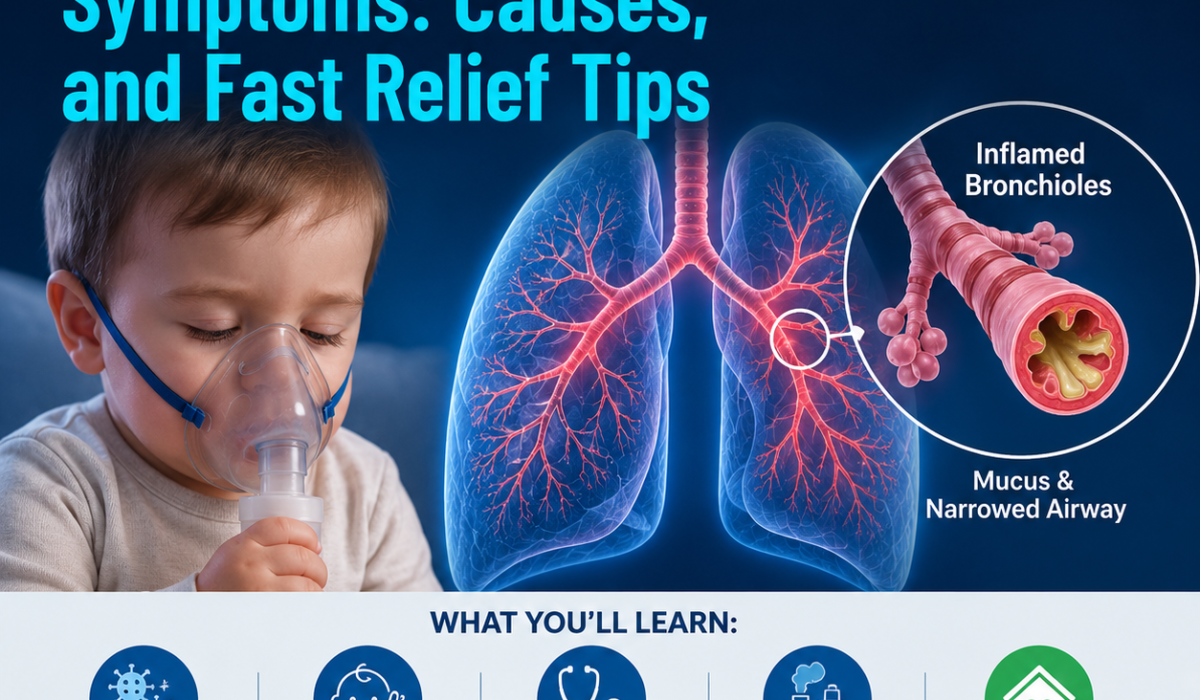
Bronchiolitis is a common lung infection that affects the small airways in the lungs, called bronchioles. It is most often seen in babies and young children, especially during cold and flu season. If your child has bronchiolitis symptoms such as a cough, wheezing, or trouble breathing, the cause may be bronchiolitis.
This article explains the symptoms, causes, treatment options, and practical relief tips so you can better understand what bronchiolitis is and when to seek medical help.
Table of Contents
- What Is Bronchiolitis?
- Bronchiolitis Symptoms
- What Causes Bronchiolitis?
- Is Bronchiolitis Contagious?
- Bronchiolitis vs. Bronchitis
- How Is Bronchiolitis Diagnosed?
- Bronchiolitis Treatment
- Fast Relief Tips for Bronchiolitis
- When to Call a Doctor
- When to Seek Emergency Care
- How Long Does Bronchiolitis Last?
- Can Bronchiolitis Be Prevented?
- Common Questions About Bronchiolitis
- Summary
What Is Bronchiolitis?
Bronchiolitis is an inflammation of the bronchioles, the tiny air passages that carry air into the lungs. When these airways become swollen and filled with mucus, breathing becomes harder.
It usually starts like a common cold and then may progress to coughing, wheezing, and shortness of breath. In most cases, bronchiolitis is caused by a virus, with respiratory syncytial virus (RSV) being the most common cause. For a broader overview of RSV-related illness, see the Breztri Aerosphere guide for related breathing support information and discuss any medicine questions with a clinician.
According to the CDC’s RSV overview, RSV is a leading cause of lower respiratory tract infections in infants and young children.
Bronchiolitis Symptoms
The early bronchiolitis symptoms often look like a mild cold. As the illness develops, bronchiolitis symptoms may become more noticeable.
Common symptoms include:
- Runny nose
- Stuffy nose
- Mild fever
- Cough
- Wheezing
- Fast breathing
- Shortness of breath
- Trouble feeding or drinking
- Irritability
- Tiredness
- Brief pauses in breathing in severe cases, especially in very young infants
Signs that breathing may be getting worse:
- Flaring nostrils
- Skin pulling in between the ribs or under the neck when breathing
- Grunting sounds while breathing
- Rapid breathing
- Lips or face turning blue
Bronchiolitis Symptoms can last for one to two weeks, though coughing may continue longer.
In many families, the first clue is a cold that seems to worsen rather than improve, especially when bronchiolitis symptoms include wheezing and feeding problems.
What Causes Bronchiolitis?
Bronchiolitis is usually caused by a viral infection. The virus spreads through:
- Coughing and sneezing
- Close contact with an infected person
- Touching contaminated surfaces and then touching the nose, mouth, or eyes
Common viruses that cause bronchiolitis:
- Respiratory syncytial virus (RSV)
- Rhinovirus
- Influenza
- Parainfluenza
- Adenovirus
- Human metapneumovirus
Who is at higher risk?
Bronchiolitis can affect anyone, but it is most common and most concerning in:
- Babies under 2 years old
- Premature infants
- Children with heart or lung conditions
- Children with weakened immune systems
- Babies exposed to tobacco smoke
- Children in daycare or crowded settings
Because bronchiolitis symptoms can escalate quickly in small infants, risk factors matter when deciding how closely to monitor a child at home.
Is Bronchiolitis Contagious?
Yes, bronchiolitis is contagious when it is caused by a virus. It spreads easily, especially among young children.
To help prevent spread:
- Wash hands often
- Avoid close contact with sick people
- Clean toys and surfaces regularly
- Keep babies away from tobacco smoke
- Limit exposure to crowded places during peak virus seasons
When bronchiolitis symptoms appear in one child, keeping siblings and caregivers on strict hygiene routines can reduce spread in the household.
Bronchiolitis vs. Bronchitis
People often confuse bronchiolitis with bronchitis.
- Bronchiolitis affects the small airways and is most common in infants and young children.
- Bronchitis affects the larger airways and is more common in older children and adults.
Both can cause cough and wheezing, but bronchiolitis in babies can become more serious because their airways are smaller and easier to block. If bronchiolitis symptoms seem severe, a prompt medical check is important.
How Is Bronchiolitis Diagnosed?
Doctors usually diagnose bronchiolitis based on symptoms and a physical exam. They may listen to the lungs for wheezing or reduced airflow and ask about breathing, feeding, and fever.
In many cases, no special test is needed. However, tests may be used if symptoms are severe or the diagnosis is unclear. These may include:
- Oxygen level check
- Nasal swab for viruses
- Chest X-ray in some cases
Because bronchiolitis symptoms can overlap with other illnesses, doctors may also consider asthma, pneumonia, or another infection before confirming the diagnosis.
Bronchiolitis Treatment
There is no cure for viral bronchiolitis, and antibiotics do not work unless there is a separate bacterial infection. Treatment focuses on relieving symptoms and supporting breathing.
Usual treatment options:
- Rest
- Fluids to prevent dehydration
- Nasal suctioning for mucus
- Fever reducers such as acetaminophen or ibuprofen, when appropriate
- Oxygen therapy in more severe cases
- Hospital care if breathing becomes difficult or oxygen levels drop
Most mild cases can be managed at home with careful monitoring and supportive care.
For families comparing bronchiolitis treatment options, the safest approach is usually supportive care rather than unnecessary medicines.
Fast Relief Tips for Bronchiolitis
There is no instant cure, but some steps can help your child breathe more comfortably and recover more easily.
1. Clear the nose frequently
A blocked nose can make breathing and feeding harder, especially for infants. Use saline drops and a bulb syringe or nasal suction device to gently remove mucus. This is one of the simplest ways to ease bronchiolitis symptoms at home.
2. Keep your child hydrated
Offer breast milk, formula, water, or age-appropriate fluids as directed by a doctor. Small, frequent feedings may be easier than large ones.
3. Use a cool-mist humidifier
Moist air can help ease congestion and make breathing more comfortable. Clean the humidifier regularly to prevent mold and bacteria buildup.
4. Keep the child upright
Holding your child in an upright position may help them breathe more easily. For babies, always follow safe sleep guidelines when they are sleeping.
5. Reduce exposure to irritants
Avoid cigarette smoke, strong perfumes, dust, and other irritants that can worsen breathing symptoms.
6. Watch for dehydration
Signs of dehydration include:
- Fewer wet diapers
- Dry mouth
- No tears when crying
- Lethargy
If your child is not drinking enough, contact a doctor.
7. Give fever medicine only as directed
If your child has a fever or seems uncomfortable, fever-reducing medicine may help. Always use the correct dose for age and weight, and do not give medication without medical advice for very young babies.
These relief steps do not cure the infection, but they can make bronchiolitis symptoms easier to manage while the body fights the virus.
When to Call a Doctor
You should contact a doctor if your child:
- Has trouble breathing
- Is breathing very fast
- Is refusing to feed
- Seems unusually sleepy or hard to wake
- Has a high fever
- Has symptoms that are getting worse
- Has signs of dehydration
Infants under 3 months old should be evaluated quickly if they show any signs of bronchiolitis, because they are at higher risk of complications. If bronchiolitis symptoms are mild but not improving, a doctor can help decide whether observation, testing, or treatment changes are needed.
When to Seek Emergency Care
Get emergency help right away if your child:
- Has blue lips or face
- Is struggling to breathe
- Has long pauses in breathing
- Cannot drink or keep fluids down
- Becomes limp or difficult to wake
These may be signs of severe bronchiolitis and need immediate medical attention.
How Long Does Bronchiolitis Last?
Most children start to improve within a week, but the cough and congestion can last longer. Breathing symptoms are often worst in the first few days. Recovery time depends on the child’s age, overall health, and how severe the infection is.
Even after the worst bronchiolitis symptoms fade, a lingering cough may continue for a while as the airways heal.
Can Bronchiolitis Be Prevented?
You cannot prevent every case, but you can lower the risk by taking simple precautions.
Prevention tips:
- Wash hands often
- Keep sick people away from babies
- Clean toys and surfaces regularly
- Avoid tobacco smoke exposure
- Breastfeed if possible, as it may help support immunity
- Follow vaccine recommendations for your child
- Ask a doctor about preventive RSV measures if your baby is high risk
Good prevention habits can reduce the chance that bronchiolitis symptoms appear during peak virus season.
Common Questions About Bronchiolitis
Is bronchiolitis serious?
It can be mild in many children, but it can become serious in infants, especially those who are very young or have other health conditions.
Does bronchiolitis need antibiotics?
Usually no. Since bronchiolitis is caused by a virus, antibiotics do not help unless there is a bacterial infection too.
Can adults get bronchiolitis?
It is much less common in adults, but adults can still get viral infections that affect the lower airways.
Is wheezing always bronchiolitis?
No. Wheezing can happen with asthma, pneumonia, allergies, and other conditions. A doctor can help identify the cause.
If a parent notices bronchiolitis symptoms in a younger sibling, it is wise to separate shared items and watch for early changes in breathing or feeding.
Summary
Bronchiolitis is a viral infection that inflames the small airways in the lungs, usually affecting babies and young children. Common symptoms include cough, wheezing, runny nose, fast breathing, and trouble feeding. Most cases improve with supportive care such as fluids, nasal suctioning, and rest.
Fast relief focuses on easing congestion, keeping your child hydrated, and watching for warning signs. If breathing becomes difficult, lips turn blue, or your child is unable to feed, seek medical help right away.
Understanding bronchiolitis symptoms and causes can help you act quickly and care for your child with confidence.