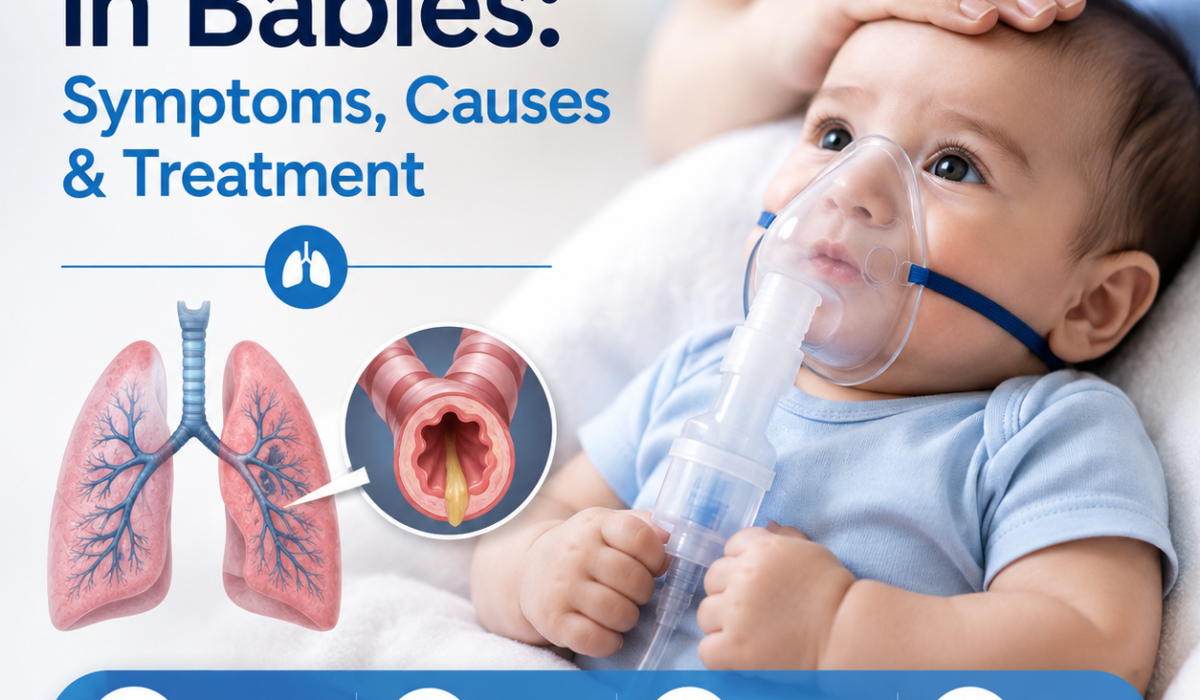
Bronchiolitis in babies is a common viral lower respiratory tract infection causing inflammation and mucus buildup in the small airways (bronchioles) of infants. Most commonly caused by Respiratory Syncytial Virus (RSV), bronchiolitis typically peaks in severity around days 3 to 5 and is managed with supportive care, close hydration monitoring, and prompt recognition of respiratory distress.
Table of Contents
- What Is Bronchiolitis in Infants?
- Causes, RSV, and Transmission
- Symptom Progression: From Cold to Chest Infection
- Red-Flag Symptoms Requiring Emergency Care
- Evidence-Based Home Care & Hydration
- Hospital Interventions & Oxygen Therapy
- Prevention, Hygiene & RSV Immunizations
- Frequently Asked Questions (FAQ)
- Evidence-Based Clinical Sources
What Is Bronchiolitis in Infants?
Bronchiolitis occurs when viral pathogens infect the epithelial cells lining the smallest branching airways of the lungs (the bronchioles). The resulting inflammatory response causes cellular necrosis, edema of the airway walls, and excessive mucus secretion, leading to partial airway obstruction and wheezing in infants under two years old.
To understand key diagnostic differences, read our comparative guide on Bronchiolitis vs RSV: Key Differences and related pediatric respiratory care for Whooping Cough symptoms and management.
Causes, RSV, and Transmission
- Respiratory Syncytial Virus (RSV): Responsible for approximately 70% to 80% of all bronchiolitis cases.
- Other Viral Pathogens: Human rhinovirus, human metapneumovirus, influenza, and parainfluenza.
- Transmission: Spread easily via respiratory droplets (coughing, sneezing) and contact with contaminated surfaces or hands.
Symptom Progression: From Cold to Chest Infection
The infection follows a predictable trajectory over 7 to 14 days:
- Days 1–2 (Early Phase): Mild upper respiratory symptoms including clear rhinorrhea (runny nose), mild cough, and low-grade fever.
- Days 3–5 (Peak Phase): Worsening cough, rapid breathing (tachypnea), audible wheezing, crackles on auscultation, and reduced feeding efficiency.
- Days 6–10+ (Recovery Phase): Gradual improvement in breathing effort and energy, though a mild residual cough may linger for 2 to 3 weeks.
Red-Flag Symptoms Requiring Emergency Care
Seek immediate pediatric emergency medical attention if your baby shows any of these critical warning signs:
- Severe Work of Breathing: Deep chest retractions (skin sucking in between the ribs, below the ribcage, or at the base of the neck), grunting, or prominent nasal flaring.
- Rapid Respiratory Rate: Breathing faster than 60 breaths per minute consistently.
- Apnea: Noticeable pauses in breathing lasting more than 10 to 15 seconds.
- Cyanosis / Pallor: Bluish tint to the lips, tongue, or fingertips, or marked skin pallor.
- Dehydration: Significantly fewer wet diapers (fewer than 3 in 24 hours), absent tears when crying, and dry mouth.
- Extreme Lethargy: Difficulty waking or unresponsiveness.
Evidence-Based Home Care & Hydration
For mild cases managed safely at home under pediatric guidance:
- Frequent, Smaller Feedings: Offer small, frequent amounts of breast milk or formula to maintain hydration without exhausting the baby.
- Nasal Saline & Gentle Suctioning: Use pediatric saline drops followed by a bulb syringe or nasal aspirator prior to feedings and sleep to clear upper airway congestion.
- Cool-Mist Humidifier: Keeps respiratory secretions moist and easier to clear.
- Fever Management: Use infant acetaminophen or ibuprofen (only if older than 6 months) strictly per pediatric dosing instructions. Never give aspirin to children.
- Smoke-Free Environment: Keep the baby completely away from tobacco smoke and environmental irritants.
Hospital Interventions & Oxygen Therapy
Hospitalized infants receive supportive therapy including supplemental humidified oxygen (via high-flow nasal cannula) and IV or nasogastric hydration. Clinical guidelines from the American Academy of Pediatrics advise against the routine use of albuterol bronchodilators, systemic corticosteroids, or antibiotics for uncomplicated viral bronchiolitis.
Prevention, Hygiene & RSV Immunizations
- Practice frequent hand hygiene with soap and water before handling your infant.
- Avoid close contact with individuals experiencing cold or flu symptoms.
- Discuss maternal RSV vaccination (administered during pregnancy) or infant monoclonal antibody immunization (Nirsevimab) with your pediatrician.
Frequently Asked Questions (FAQ)
Can antibiotics cure bronchiolitis?
No. Bronchiolitis is caused by viruses, and antibiotics are ineffective against viral infections.
How long does bronchiolitis last in babies?
Most babies recover within 1 to 2 weeks, with peak symptoms occurring around day 4. A mild cough may persist for up to 3 weeks.
Evidence-Based Clinical Sources
- American Academy of Pediatrics (AAP): Clinical Practice Guideline: Diagnosis, Management, and Prevention of Bronchiolitis (Pediatrics, 2014, Reaffirmed).
- National Institute for Health and Care Excellence (NICE UK): Bronchiolitis in children: diagnosis and management (NICE Guideline NG9).
- CDC: Respiratory Syncytial Virus (RSV) and Bronchiolitis in Infants.
- Mayo Clinic: Bronchiolitis Symptoms, Causes, and Care.
Article Medically Reviewed: August 2026 | Reviewed in accordance with Shams Mag Editorial Policy.