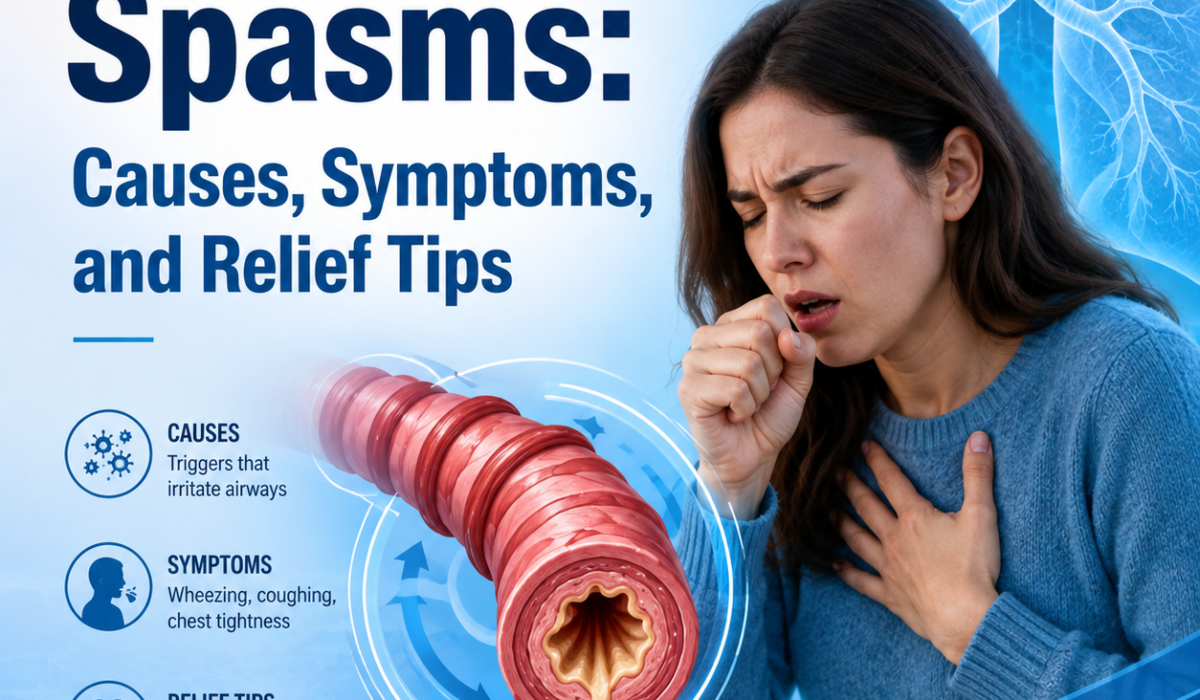
Bronchial Spasms can make breathing feel suddenly tight, difficult, and frightening. They happen when the muscles around the airways tighten, causing the bronchi to narrow and airflow to become restricted. This can lead to wheezing, coughing, chest tightness, and shortness of breath.
Understanding what causes airway tightening, how to recognize the symptoms, and what relief options may help can make a big difference in managing them safely and effectively.
Table of Contents
- What Are Bronchial Spasms?
- Common Causes of Bronchial Spasms
- Symptoms of Bronchial Spasms
- What to Do During a Bronchial Spasm
- Relief Tips and Home Measures
- When Bronchial Spasms Are an Emergency
- How Bronchial Spasms Are Diagnosed
- Treatment Options for Bronchial Spasms
- How to Prevent Bronchial Spasms
- Bronchial Spasms vs. Asthma
- Frequently Asked Questions
- The Bottom Line
What Are Bronchial Spasms?
Bronchial Spasms, also called bronchospasms, occur when the muscles surrounding the bronchial tubes contract. These tubes carry air in and out of the lungs. When they tighten, the airways become narrower, making it harder to breathe.
Bronchial Spasms are not a disease on their own. They are a symptom of an underlying issue, such as asthma, allergies, an infection, or exposure to an irritant.
In everyday life, people may notice the problem most when breathing becomes noisy or effortful after exercise, in cold weather, or around dust, smoke, or strong odors. Some episodes are mild and brief, while others can become serious quickly. Because the symptom can overlap with other respiratory conditions, understanding the trigger is an important part of treatment.
For readers also dealing with breathlessness, this overview on shortness of breath may help connect the symptom with other possible causes and relief strategies.
Common Causes of Bronchial Spasms
Several conditions and triggers can lead to airway tightening. Some are temporary, while others are linked to ongoing respiratory problems.
1. Asthma
Asthma is one of the most common causes of bronchial spasms. In people with asthma, the airways are overly sensitive and can react strongly to triggers such as pollen, dust, exercise, or cold air. Inflammation and extra mucus can make the airways even narrower during a flare-up.
Because asthma symptoms often come and go, people may not realize that a sudden episode of wheezing or coughing is part of the same pattern. When asthma is the underlying condition, long-term control usually matters as much as fast relief during symptoms.
2. Allergies
Allergic reactions can cause the airways to swell and tighten. Common triggers include:
- Pollen
- Pet dander
- Mold
- Dust mites
- Certain foods or medications in some cases
Allergies may also make the nose and sinuses congested, which can add to the feeling of not getting enough air. When allergy seasons are high, some people notice that breathing problems become more frequent even if they do not have asthma.
3. Respiratory infections
Colds, the flu, bronchitis, and other respiratory infections may irritate the airways and trigger spasms. Mucus buildup and airway inflammation can make breathing more difficult. Infections can also leave the airway lining more sensitive for a while, which means symptoms may linger even after the worst part of the illness has passed.
4. Exercise
Some people develop exercise-induced bronchospasm, especially during intense physical activity or when exercising in cold, dry air. Symptoms may appear during or shortly after exercise. This does not always mean exercise should be avoided, but it may mean warm-ups, trigger control, and medical guidance are important.
5. Irritants in the environment
The airways can react to substances such as:
- Cigarette smoke
- Air pollution
- Strong chemical fumes
- Dust
- Aerosol sprays
- Burning wood or incense smoke
These irritants can affect people with sensitive lungs even when they do not have a formal diagnosis of asthma. Poor indoor air quality, unventilated cleaning products, or exposure to fumes at work can all contribute to repeated symptoms.
6. Medications
Certain medications may trigger bronchial spasms in sensitive individuals. Examples can include some beta-blockers and, in rare cases, other drugs depending on the person’s condition and history. Anyone who notices breathing problems after starting a new medication should speak with a healthcare professional before making changes on their own.
7. Cold air
Breathing in cold air may cause the airways to tighten in some people, especially those with asthma or sensitive lungs. Dry winter air can be especially irritating because it may cool and dry the airway lining more quickly.
8. Stress or anxiety
Although stress does not directly cause every episode, anxiety can worsen breathing symptoms and may trigger or intensify airway tightening in some people. When symptoms start, panic can create a cycle where breathing feels even harder, which makes relaxation and steady breathing especially useful.
9. Acid reflux and upper airway irritation
For some people, reflux can irritate the throat and breathing passages, making coughing and chest discomfort worse. While reflux is not the same thing as bronchial spasm, it can contribute to airway sensitivity and repeated respiratory symptoms in susceptible individuals.
10. Occupational and chemical exposure
Workplaces that involve dust, smoke, fumes, latex, cleaning agents, or strong odors may trigger repeated episodes. If symptoms happen mainly at work, it is worth considering environmental exposure as part of the cause.
Symptoms of Bronchial Spasms
Bronchial Spasms often develop quickly and may range from mild to severe. Common symptoms include:
- Wheezing, especially when exhaling
- Shortness of breath
- Chest tightness
- Coughing
- Trouble taking a deep breath
- A feeling of pressure in the chest
- Rapid breathing
- Fatigue from struggling to breathe
In severe cases, the person may have difficulty speaking full sentences or may appear pale, restless, or anxious. Symptoms may also feel worse when lying down, when exposed to a trigger, or during the night.
Some people mainly notice a dry cough or a tight, “stuck” feeling in the chest rather than obvious wheezing. Others describe a whistling sound when breathing out, especially after physical activity or exposure to cold air. The symptoms can vary depending on the cause and how sensitive the airways are at that moment.
How Bronchial Spasms Feel
Many people describe airway tightening as feeling like the chest is squeezing or the air is “stuck.” Breathing may become noisy, shallow, or unusually effortful. The person may also feel panicked because the symptoms can come on suddenly.
During an episode, inhaling may feel possible but exhaling feels slow or incomplete. That mismatch can make the breathing pattern feel unnatural and uncomfortable. Some people also feel chest heaviness, throat irritation, or a need to cough repeatedly without getting much relief.
What to Do During a Bronchial Spasm
If a bronchial spasm occurs, the goal is to reduce airway irritation and help open the airways. The best response depends on the cause and severity.
1. Use prescribed rescue medication
If you have asthma or a similar condition and a doctor has prescribed a quick-relief inhaler, use it exactly as directed. These medicines help relax the airway muscles and are often the first line of relief.
2. Move away from triggers
Leave the area if you are exposed to smoke, dust, fumes, pollen, or another irritant. Fresh air may help reduce ongoing airway irritation. If possible, close windows near heavy outdoor pollution or move to a cleaner indoor environment.
3. Sit upright
Sitting upright can make breathing easier than lying flat. Try to stay calm and avoid sudden exertion. Leaning slightly forward with relaxed shoulders may help some people feel more in control of breathing.
4. Slow your breathing
Gentle, controlled breathing may help reduce panic and support better airflow. Inhale slowly through the nose if possible and exhale steadily through pursed lips. Breathing too quickly can make the chest feel tighter, so a slower rhythm is often more comfortable.
5. Stay hydrated
If a respiratory infection or thick mucus is contributing to the problem, drinking water may help keep secretions thinner. This will not stop a spasm immediately, but it may support recovery.
6. Use a humidifier if appropriate
Warm, moist air may be soothing for some people, especially if dry air is irritating the airways. Make sure the humidifier is clean to prevent mold growth. If humidity seems to worsen symptoms or causes stuffiness, it may not be the right choice for that person.
7. Track what happened before the episode
If symptoms improve, write down the likely trigger, the time they started, and what helped. This can make future prevention easier and may help a clinician identify the cause more quickly.
Relief Tips and Home Measures
Home care can sometimes help reduce mild symptoms or support recovery after a breathing episode. These tips are not a substitute for medical treatment when symptoms are severe.
Identify and avoid triggers
One of the most effective ways to reduce airway tightening is to figure out what causes it. Common trigger control steps include:
- Keeping the home free of dust and mold
- Avoiding cigarette smoke
- Limiting exposure to strong odors and chemicals
- Checking pollen counts before going outside
- Using allergy management strategies if needed
If you are trying to reduce indoor exposure, the CDC’s indoor air quality guidance is a useful place to learn more about lowering common irritants in the home.
Manage allergies
If allergies are a trigger, treating them may help reduce airway irritation. This may involve avoiding allergens, using medication recommended by a clinician, or following an allergy care plan. Reducing dust accumulation, washing bedding regularly, and using air filtration when recommended may also help.
Protect yourself in cold weather
Covering the nose and mouth with a scarf or mask in cold air may help warm the air before it enters the lungs. This can be especially helpful for people who notice symptoms when walking outdoors in winter.
Warm up before exercise
If exercise triggers symptoms, a gradual warm-up can sometimes help. People with known exercise-induced bronchospasm should follow medical advice on prevention and inhaler use. Avoiding sudden bursts of intense activity may also reduce the chance of an episode.
Avoid smoking
Smoking and secondhand smoke can significantly worsen airway inflammation. Quitting smoking and avoiding smoky environments can reduce the chance of episodes and improve long-term respiratory health.
Follow your asthma or lung treatment plan
If you have asthma, chronic bronchitis, COPD, or another lung condition, regular treatment can help reduce flare-ups. This may include controller medications, inhalers, or other therapies prescribed by a healthcare professional. Following the plan consistently often prevents symptoms from becoming more frequent or severe.
Support recovery after an episode
After symptoms settle, rest, hydration, and trigger avoidance may help the lungs recover. Some people need more time than others before their breathing feels completely normal again, especially if the trigger was an infection.
When Bronchial Spasms Are an Emergency
Seek emergency medical help right away if breathing becomes severe or the symptoms do not improve. Warning signs include:
- Severe shortness of breath
- Blue or gray lips or fingernails
- Inability to speak more than a few words
- Confusion or drowsiness
- A rescue inhaler not helping
- Rapid worsening of symptoms
- Chest pain or tightness that is severe or unusual
These symptoms may indicate a serious asthma attack or another urgent respiratory problem.
If you are unsure whether symptoms are severe enough, it is safer to seek urgent care early rather than wait. Breathing problems can change quickly, and prompt treatment may prevent a worse episode.
How Bronchial Spasms Are Diagnosed
A healthcare professional usually diagnoses airway tightening by reviewing symptoms, triggers, and medical history. They may also perform tests to better understand the cause.
Common tests may include:
- Lung function testing
- Peak flow measurement
- Allergy testing
- Chest examination
- Oxygen level checks
- Imaging or additional testing if another condition is suspected
Diagnosis is important because treatment depends on whether the spasms are caused by asthma, allergies, infection, or another problem.
In some cases, doctors may also ask about frequency, time of day, exercise habits, exposure to smoke, workplace hazards, and recent illness. That detail helps separate one-time irritation from an ongoing breathing condition that needs a longer-term plan.
Treatment Options for Bronchial Spasms
Treatment focuses on opening the airways and addressing the underlying cause.
Quick-relief medications
These are often used during a spasm to relax airway muscles quickly. They are especially important for people with asthma or exercise-related symptoms.
Controller medications
For people with ongoing airway problems, daily medications may reduce inflammation and help prevent future episodes. These treatments are often used when symptoms happen more than occasionally or are triggered by multiple factors.
Treating infections
If a respiratory infection is causing the spasms, the underlying illness may need targeted treatment and supportive care. Rest, fluids, and medical guidance are often part of recovery.
Allergy treatment
If allergies are the main trigger, managing allergic inflammation may reduce episodes over time. This can include trigger avoidance, prescription treatment, or other clinician-recommended steps.
Oxygen or emergency care
Severe episodes may require urgent medical treatment, including oxygen or other emergency interventions.
Reviewing inhaler technique
For people already using inhalers, correct technique matters. Even when the right medication is prescribed, poor technique can reduce the amount of medicine reaching the lungs. A clinician or pharmacist can often help review this quickly.
How to Prevent Bronchial Spasms
Prevention depends on the cause, but these steps may reduce risk:
- Take prescribed medications as directed
- Avoid known triggers
- Keep allergies under control
- Wash hands often to reduce infection risk
- Stay away from smoke and air pollution
- Use protective measures in cold air
- Follow an asthma action plan if you have asthma
- Warm up before exercise
- Keep indoor spaces clean and well ventilated
Prevention is often most effective when it combines medication, trigger awareness, and simple environmental changes. If episodes are recurring, keeping a symptom diary can help identify patterns that are easy to miss.
Bronchial Spasms vs. Asthma
Bronchial Spasms and asthma are not the same thing, but they are closely related. Asthma is a chronic condition that often causes airway tightening. A bronchial spasm can also happen without asthma, such as during an infection, allergic reaction, or exposure to an irritant.
One helpful way to think about it is that bronchial spasms are a reaction, while asthma is one possible condition that causes the reaction. That distinction matters because the right treatment depends on whether the episodes are isolated or part of a longer-term respiratory issue.
Frequently Asked Questions
Are bronchial spasms dangerous?
They can be. Mild episodes may improve with rest or prescribed treatment, but severe episodes can make breathing difficult and require urgent care.
Can bronchial spasms go away on their own?
Sometimes mild episodes improve once the trigger is removed. However, many cases need treatment, especially if they are linked to asthma or another lung condition.
What helps bronchial spasms fast?
A prescribed rescue inhaler is often the fastest relief for people who have one. Sitting upright, avoiding triggers, and breathing slowly may also help while waiting for symptoms to improve.
Can anxiety cause bronchial spasms?
Anxiety may not be the main cause in every case, but it can worsen breathing symptoms and make spasms feel more intense.
When should I see a doctor?
See a doctor if airway tightening happens repeatedly, is not improving, or is affecting daily life. Seek emergency help for severe breathing trouble.
Can bronchial spasms happen without wheezing?
Yes. Some people notice cough, chest tightness, or shortness of breath before wheezing becomes obvious, and others may never hear a clear wheeze.
Are children at risk?
Yes. Children can experience airway tightening from asthma, infections, allergies, or irritants. Because children may have trouble explaining what they feel, fast breathing, coughing, and trouble speaking may be important clues.
Should I exercise if I have a history of airway tightening?
Many people can exercise safely with the right prevention plan. A warm-up, trigger control, and advice from a healthcare professional can help reduce the chance of symptoms during activity.
The Bottom Line
Bronchial Spasms happen when the airways tighten, making it harder to breathe. They are commonly caused by asthma, allergies, infections, exercise, cold air, and environmental irritants. Symptoms often include wheezing, coughing, chest tightness, and shortness of breath.
The best relief depends on the cause, but quick action, avoiding triggers, and following a prescribed treatment plan can help. If symptoms are severe, worsen quickly, or do not improve, get medical help right away.
For readers comparing respiratory symptoms, it may also help to understand related airway conditions such as bronchial problems, which can overlap with similar breathing complaints and treatment approaches.