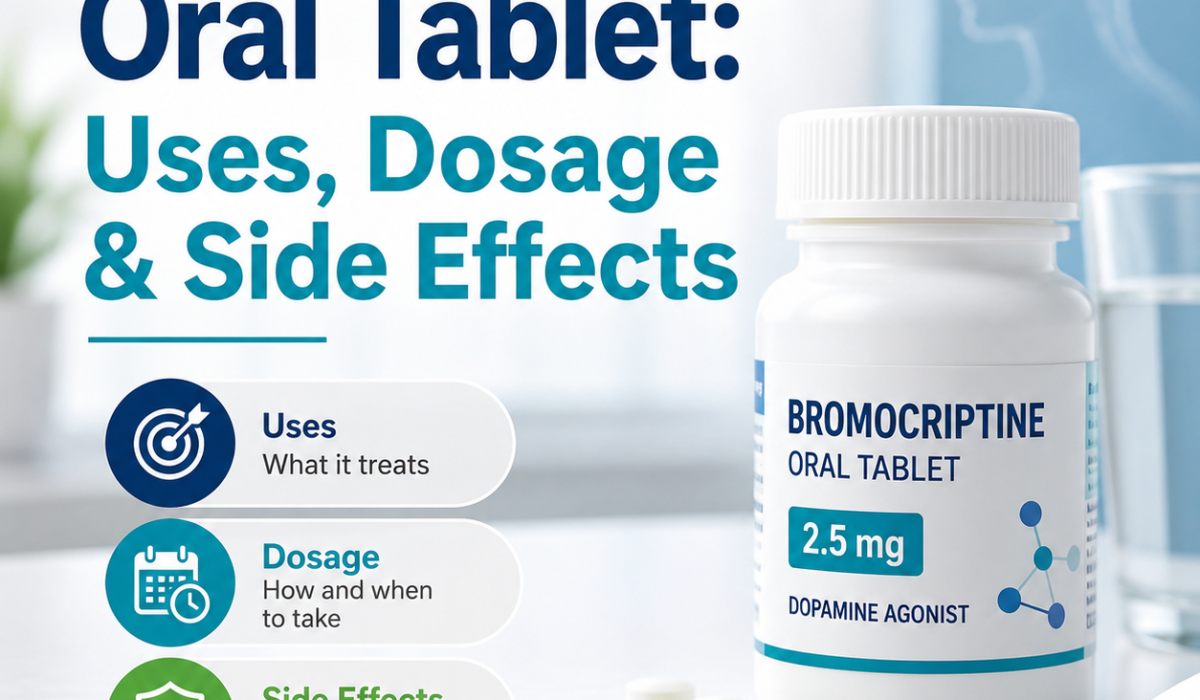
Bromocriptine Oral Tablet is a prescription medication used to treat certain hormone-related and neurological conditions. It is best known for lowering high levels of prolactin and helping manage symptoms linked to excess prolactin, but it is also used in some cases of Parkinson’s disease and type 2 diabetes.
If you have been prescribed bromocriptine oral tablet, you may want to know what it is used for, how to take it, what dose is typical, and what side effects to watch for. This article explains bromocriptine oral tablet in simple terms so you can better understand how it works and what to expect.
Table of Contents
What Is Bromocriptine Oral Tablet?
Bromocriptine is a dopamine agonist. That means it works by acting like dopamine, a natural chemical in the brain that helps control movement, mood, and hormone release.
Doctors prescribe bromocriptine oral tablet for conditions where lowering prolactin or stimulating dopamine pathways can help. It is taken by mouth and is available only with a prescription.
In many cases, bromocriptine oral tablet is started carefully and increased slowly so the body can adjust. This gradual approach helps reduce nausea, dizziness, and other common reactions that can happen early in treatment.
What Is Bromocriptine Used For?
Bromocriptine Oral Tablet is used for several medical conditions, including:
1. High Prolactin Levels
One of the most common uses is to treat hyperprolactinemia, which means too much prolactin in the blood. High prolactin can cause:
– Irregular or missed periods
– Breast milk production when not breastfeeding
– Infertility
– Low sex drive
– Sexual dysfunction
It may also be used to treat prolactin-secreting tumors, known as prolactinomas. In this setting, bromocriptine oral tablet can help lower prolactin levels and may improve related symptoms over time.
2. Parkinson’s Disease
Bromocriptine can help relieve symptoms of Parkinson’s disease, such as:
– Tremor
– Stiffness
– Slow movement
– Trouble with coordination
It is not usually the first medicine chosen today, but it may be used in some patients. For some people, bromocriptine oral tablet may be part of a broader treatment plan that includes other Parkinson’s medicines and supportive care.
3. Type 2 Diabetes
A specific quick-release form of bromocriptine is sometimes used to help improve blood sugar control in adults with type 2 diabetes. It is usually used along with diet and exercise, and sometimes with other diabetes medicines.
For readers who want background on related dopamine-based treatment options, it may also help to review Briviact uses: Dosage, Side Effects & More as an example of how prescription medicines can have specific dosing and safety considerations depending on the condition being treated.
4. Other Uses
In some cases, bromocriptine may also be used for other hormone-related conditions as determined by a doctor. These uses depend on the patient’s medical history and the doctor’s judgment.
Because bromocriptine oral tablet affects hormone signaling, doctors may also consider whether symptoms are related to a pituitary disorder, fertility concerns, or another condition that needs different treatment.
How Does Bromocriptine Work?
Bromocriptine works by stimulating dopamine receptors in the body. This has different effects depending on the condition being treated:
– In high prolactin, it lowers prolactin production from the pituitary gland.
– In Parkinson’s disease, it helps improve dopamine activity in the brain.
– In type 2 diabetes, it may help regulate the body’s daily metabolic rhythm and improve blood sugar levels.
Because of these effects, bromocriptine oral tablet can be helpful, but it can also cause side effects related to dopamine stimulation, especially when treatment is first started. That is why the dose is usually adjusted slowly and based on response.
Bromocriptine Dosage
The correct bromocriptine dosage depends on the condition being treated, the tablet formulation, and how you respond to treatment. It is important to follow your doctor’s instructions exactly.
For High Prolactin Levels
Treatment is often started at a low dose to reduce side effects, then increased gradually.
A common approach may be:
– Start with 1.25 mg to 2.5 mg once daily
– Increase slowly, often every few days or weeks
– Maintenance doses vary based on response
Some patients may need to take it twice daily. Your doctor may adjust the dose based on prolactin levels, symptoms, and tolerance. In many cases, bromocriptine oral tablet is easier to continue when the increase happens step by step rather than all at once.
For Parkinson’s Disease
Dosing usually begins low and is increased slowly. The total daily dose may be divided into multiple doses with meals to reduce nausea.
Because Parkinson’s treatment can be highly individualized, the exact dose should always be based on the prescribing doctor’s plan. This is one reason bromocriptine oral tablet should not be compared directly with a friend’s or family member’s regimen.
For Type 2 Diabetes
The quick-release bromocriptine formulation is usually taken once daily in the morning within a short time after waking, as directed by the prescription.
This form is not interchangeable with bromocriptine used for prolactin disorders or Parkinson’s disease, so it is important to use the exact product prescribed. If you are unsure which version you received, ask your pharmacist before taking the medicine.
How to Take Bromocriptine Oral Tablet
To help bromocriptine work safely and effectively:
– Take it exactly as prescribed
– Take it with food to reduce nausea
– Start low and increase only if your doctor tells you to
– Do not stop taking it suddenly without medical advice
– Try to take it at the same time each day
If you are using bromocriptine for diabetes, the timing of the dose matters, so follow your prescription carefully.
It can also help to keep a simple medication log during the first few weeks. Many people find that tracking dose timing, nausea, dizziness, and blood pressure symptoms makes it easier to discuss treatment with their clinician.
What Happens If You Miss a Dose?
If you miss a dose, take it as soon as you remember unless it is almost time for your next dose. If it is close to the next dose, skip the missed dose and continue your regular schedule.
Do not take two doses at once unless your doctor tells you to. Taking too much at one time can increase the risk of side effects such as nausea, dizziness, or low blood pressure.
Common Side Effects of Bromocriptine
Like many prescription medicines, bromocriptine can cause side effects. Some are more common than others, especially when starting treatment.
Common side effects include:
– Nausea
– Vomiting
– Dizziness
– Headache
– Lightheadedness
– Fatigue
– Constipation
– Stomach upset
– Nasal congestion
These effects are often worse at the beginning of treatment and may improve as your body adjusts. Taking bromocriptine oral tablet with food and moving slowly when standing can make early treatment more tolerable.
Serious Side Effects of Bromocriptine
Although less common, bromocriptine can cause serious side effects that need medical attention. Contact your doctor right away if you experience:
– Fainting
– Chest pain
– Severe dizziness
– Shortness of breath
– Confusion
– Hallucinations
– Severe headache
– Vision changes
– Signs of low blood pressure, such as weakness or feeling like you may pass out
– Unusual behavior or compulsive actions
In rare cases, bromocriptine may affect heart, lung, or stomach function, especially in certain long-term uses. Any unusual symptoms should be reported promptly.
For additional safety information about prescription treatments and avoiding medication problems, the MedlinePlus drug information resource is a useful patient-friendly reference from the U.S. National Library of Medicine.
Bromocriptine and Low Blood Pressure
One important concern with bromocriptine is low blood pressure, especially when standing up. This can cause dizziness, blurred vision, or fainting.
To lower this risk:
– Stand up slowly from sitting or lying down
– Avoid sudden changes in posture
– Be careful when driving or using machinery until you know how the medicine affects you
This side effect is one reason doctors often start with a low dose. It is also why bromocriptine oral tablet is usually introduced carefully rather than at a full dose right away.
Who Should Not Take Bromocriptine?
Bromocriptine may not be safe for everyone. It may not be appropriate if you have certain medical conditions, such as:
– Uncontrolled high blood pressure
– Severe heart disease
– A history of psychosis
– Pregnancy-related high blood pressure disorders, unless specifically prescribed for that situation
– Certain circulation problems
Your doctor will review your health history before prescribing it. If you already take medicines for blood pressure, mood, or blood sugar control, that information is especially important when bromocriptine oral tablet is being considered.
Drug Interactions
Bromocriptine can interact with other medications. Be sure to tell your doctor about all prescription drugs, over-the-counter medicines, vitamins, and herbal supplements you take.
Possible interactions may involve:
– Blood pressure medications
– Other dopamine-related medicines
– Antipsychotic drugs
– Some antibiotics or antifungal medications
– Diabetes medicines
Because interactions can change how bromocriptine works or increase side effects, a full medication review is important. If you are also learning about other prescription medicine safety concerns, you may want to read about Briviact Interactions: What to Avoid and Why for another example of why medication reviews matter.
Always ask your pharmacist or prescriber before starting a new supplement, especially if it may affect blood pressure, sleepiness, or dopamine activity.
Bromocriptine and Pregnancy
Bromocriptine is sometimes used to treat prolactin-related fertility problems, which means pregnancy may occur after hormone levels return to normal. If you become pregnant while taking bromocriptine, contact your doctor for advice.
Whether bromocriptine should be continued during pregnancy depends on the reason it was prescribed and your individual situation. Do not make changes without medical guidance.
Some patients may need to stop treatment once pregnancy is confirmed, while others may continue it under close supervision. The decision should always be individualized.
Bromocriptine and Breastfeeding
Bromocriptine lowers prolactin and can reduce milk production. Because of this, it is generally not used if breastfeeding is desired. If you are pregnant, recently gave birth, or planning to breastfeed, discuss this with your doctor before starting treatment.
If milk production is important to you, make sure your prescriber understands your goals before bromocriptine oral tablet is started.
Tips for Safe Use
To use bromocriptine more safely:
– Take it with meals to reduce nausea
– Avoid alcohol if it worsens dizziness
– Get up slowly from bed or a chair
– Keep regular follow-up appointments
– Tell your doctor if side effects are severe or persistent
– Do not change your dose on your own
If you are being treated for high prolactin, your doctor may order blood tests to monitor prolactin levels and adjust your dose as needed.
It is also wise to keep an eye on symptoms that may improve slowly rather than overnight. With bromocriptine oral tablet, the best results often come from patience, consistent use, and follow-up testing.
Practical Questions to Discuss With Your Doctor
Before or during treatment, you may want to ask:
– Why was bromocriptine chosen for my condition?
– How long should I expect to take it?
– What side effects are most likely for me?
– Should I take the medicine with breakfast or another meal?
– What should I do if I feel dizzy after a dose?
– Which medicines or supplements should I avoid?
These questions can help you use bromocriptine oral tablet more confidently and help your clinician tailor the treatment to your needs.
When to Call a Doctor
Contact your doctor if:
– Side effects are making it hard to continue treatment
– Your symptoms are not improving
– You feel faint or weak
– You develop chest pain, hallucinations, or severe headache
– You think the dose may be too strong or too weak
– You have signs of an allergic reaction, such as rash, swelling, or trouble breathing
Seek emergency help immediately if you have severe chest pain, trouble breathing, sudden confusion, or loss of consciousness.
Frequently Asked Questions
Is bromocriptine the same as cabergoline?
No. Both are dopamine agonists used to lower prolactin, but they are different medicines with different dosing schedules and side effect profiles.
How long does bromocriptine take to work?
This depends on the condition being treated. Some symptoms may improve within days to weeks, while hormone levels or other long-term changes may take longer.
Can bromocriptine cause sleepiness?
Yes. Some people feel drowsy or tired. Until you know how it affects you, avoid driving or operating machinery if you feel sleepy or dizzy.
Should bromocriptine be taken with food?
Yes, taking it with food is commonly recommended because it can help reduce nausea and stomach upset.
Can I stop bromocriptine suddenly?
Do not stop it suddenly unless your doctor tells you to. Stopping without guidance may cause your symptoms to return or worsen.
Summary
Bromocriptine Oral Tablet is a prescription dopamine agonist used mainly for high prolactin levels, Parkinson’s disease, and in some cases type 2 diabetes. It works by acting on dopamine receptors and lowering prolactin or improving dopamine activity in the body.
The dosage varies depending on the condition, and doctors usually start with a low dose to reduce side effects. Common side effects include nausea, dizziness, headache, and fatigue, while serious side effects can include fainting, chest pain, hallucinations, and severe low blood pressure.
If you are taking bromocriptine oral tablet, follow your doctor’s instructions closely, take it with food, and report any concerning symptoms promptly. Regular monitoring and careful dose adjustments can make treatment safer and more effective.