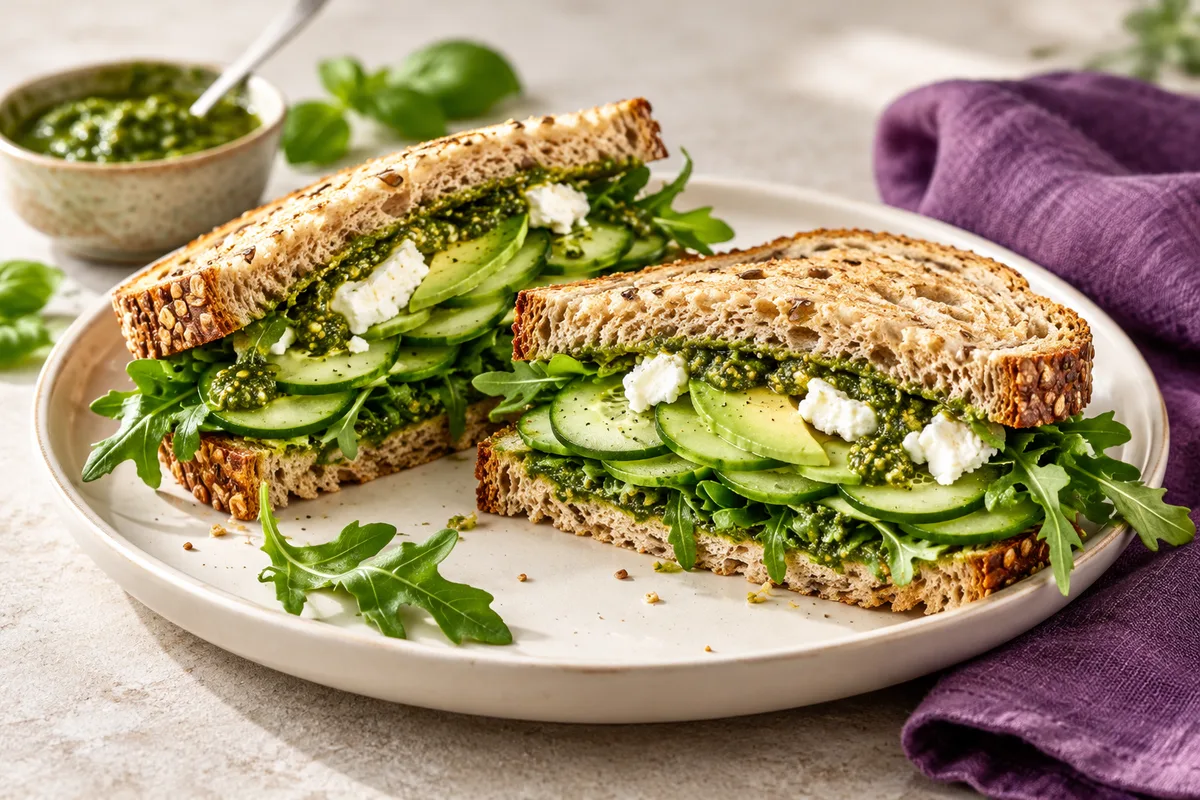
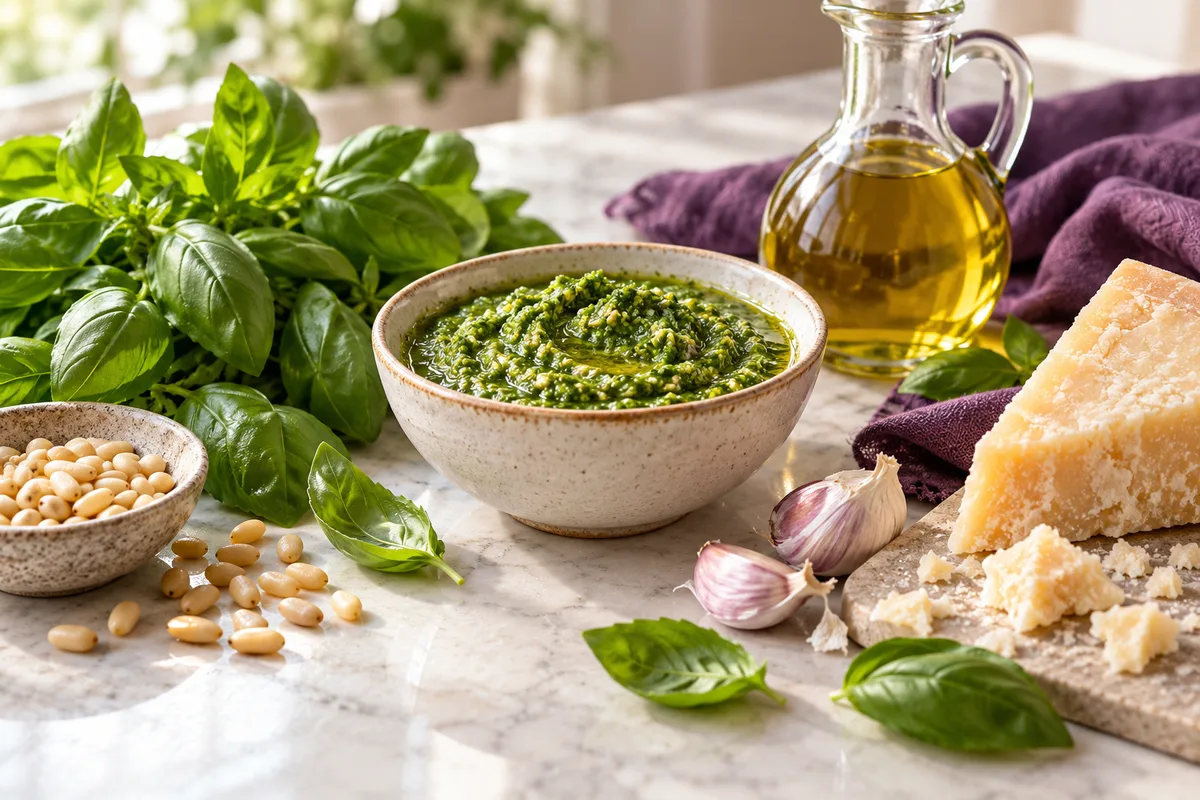
This basil pesto combines fresh leaves, pine nuts, garlic, olive oil and Parmesan into a thick sauce you can loosen for pasta or spread thinly in a sandwich. It is a smaller adaptation of the Monir Chef archive recipe, with the salt added gradually instead of treating the original large-batch seasoning as a fixed requirement.
Yield: a small bowl, enough for several servings depending on use. Equipment: a food processor or mortar and pestle. The final yield and preparation time vary with how tightly the leaves are packed and how finely you blend the sauce.
Ingredients
- 55 g fresh basil leaves, washed and thoroughly dried
- 28 g pine nuts, lightly toasted and cooled
- 1 small garlic clove, peeled; add more only if you want a stronger flavor
- 90 ml extra-virgin olive oil, plus a little more if needed
- 55 g finely grated Parmesan
- Salt, added a small pinch at a time after tasting
Allergens: milk and pine nuts. Check the cheese label if serving vegetarians, because some Parmesan is made with animal rennet. Use a suitable vegetarian hard cheese if necessary and expect a slightly different flavor.
Method
- Dry the basil well. Shake off excess water, then pat the leaves dry gently. A large amount of surface water dilutes the sauce.
- Break down the nuts and garlic. Pulse the cooled pine nuts and garlic in the processor. Add the basil and pulse briefly, scraping down the sides as needed. In a mortar, crush the garlic and nuts before working in the leaves in batches.
- Add the oil gradually. Pour it in a little at a time while pulsing or stirring until the mixture becomes a coarse paste. Stop before the machine heats the sauce.
- Fold in the cheese. Stir the Parmesan through rather than continuing to blend aggressively. Taste before adding salt: the cheese already contributes saltiness.
- Adjust for the dish. Leave the pesto fairly thick for a spread. For pasta, stir a spoonful of warm pasta water into the portion you are about to use, adding a little more until it coats the pasta.
Keep the flavor balanced
Raw garlic becomes prominent in a small batch. Start with less and add more after tasting. If the pesto is too thick, loosen it gradually; do not pour in a large amount of oil at once. Over-toasted pine nuts add bitterness, so let color and aroma guide you when to take them off the heat.
Some versions blanch the basil to preserve a brighter color, but blanching changes the flavor and adds a drying step. It is optional, not a requirement for making pesto. This version keeps the method simple with raw, clean leaves.
Serve and store thoughtfully
Use pesto with pasta, in a sandwich, or as a finish for cooked vegetables. Try it with the florets and peeled stems in our broccoli guide. Add it off the heat when you want to preserve its fresh aroma.
Refrigerate promptly in a clean, covered container. A layer of oil can reduce surface darkening, but it does not make pesto safe for room-temperature storage or canning. Use refrigerated pesto within three days or freeze individual portions, following the National Center for Home Food Preservation guidance. Keep track of when it was prepared, use clean utensils and follow applicable food-safety guidance.
Adaptation note: quantities were scaled down and the garlic and salt made adjustable for home use. This is an editorial adaptation, not a claim of a ShamsMag kitchen-tested recipe. The cover is AI-generated.