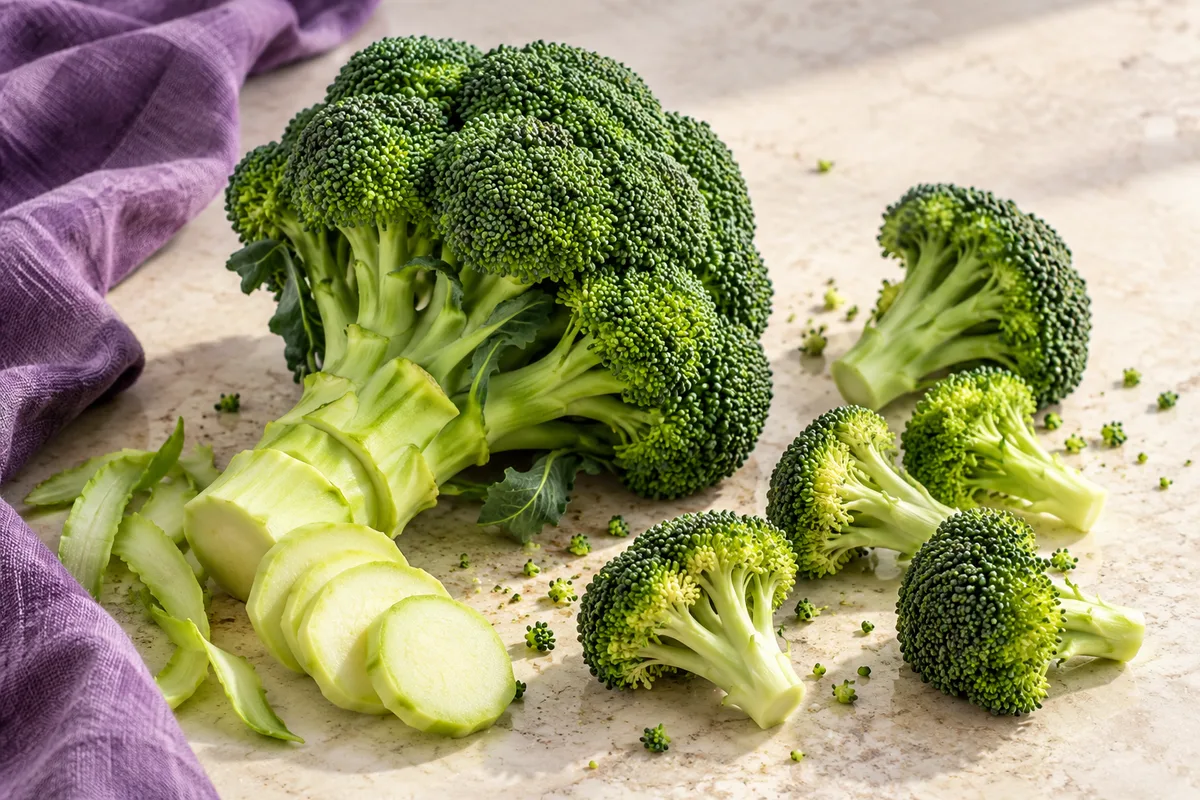
Broccoli is easier to cook well when you treat the florets and stalk as two useful ingredients. The tender buds need relatively little cooking, while the thicker stem benefits from peeling and smaller cuts. Preparing each part deliberately gives you more usable food and a more even result.
This guide adapts the Monir Chef ingredient lesson for everyday English-language cooking. It focuses on choosing, preparing and using broccoli rather than promising a single cooking time for every head and pan.
Choose a head with firm stems and compact florets
Look for tightly clustered green buds, crisp-looking leaves if attached, and a firm stalk. A freshly cut stem should not look deeply dried or split. Widespread yellowing and limp stems suggest declining quality. Yellow flowers alone do not prove that broccoli is unsafe, but they are a useful warning that its texture and flavor may be past their best. Discard produce with mold or signs of decay.
Standard green broccoli and slender sprouting broccoli can both work well, but they do not need identical preparation. Broccoli rabe is a different, leafier brassica with a more bitter flavor; do not assume it will behave like a direct substitute in every recipe.
Prepare the stalk before throwing it away
- Rinse the broccoli under running water and check between the branches for dirt.
- Cut off the dry end of the stalk and separate the florets where their small stems meet the main stem.
- Peel away the tough outer layer of the main stalk. Slice the paler inner core into thin coins or small batons.
- Cut very large florets in half through the stem so the pieces are reasonably similar in size.
For a stir-fry, slice the stalk more thinly than the florets. For a tray roast, dry the washed broccoli well; excess surface water encourages steaming instead of browning.
Match the cooking method to the result
Steam for a clean, tender result. Place the broccoli above simmering water and cover. Check frequently with a small knife or fork. Stop when the thickest stems are as tender as you want them. A bright color is helpful, but tenderness is the more useful final test.
Roast for browned edges. Toss dry pieces lightly with oil, spread them in one layer and leave space around them. Turn when needed and check the stems as well as the tops. Small buds can scorch before an oversized stalk piece softens.
Stir-fry for a quick side or main-dish component. Start with thinly cut stalk pieces, then add the florets. If the pan is getting dry before the stems are tender, a small splash of water and a brief cover can help finish them.
Build flavor after you choose the method
Lemon, garlic and olive oil suit steamed broccoli. Parmesan or toasted nuts add richness to roasted pieces. A little anchovy can bring savory depth, but disclose it when cooking for someone avoiding fish. For a simple pasta supper, combine broccoli with basil pesto, loosening the sauce as needed rather than adding a heavy coating.
Plan around freshness
Keep raw broccoli refrigerated and use it while the stems are firm. Buy an amount you can realistically use in the next few days instead of relying on a long storage promise. Keep washed produce away from raw meat and its utensils. For more shopping and preparation ideas, browse ShamsMag cooking guides.
Editorial note: rewritten and adapted from the owner's Monir Chef archive. The cover is an AI-generated illustration; this article does not claim an independently tested recipe.