At 18 weeks pregnant, you are well into the second trimester and may be starting to feel more comfortable than you did in the first few months. For many people, this week brings a mix of physical changes, new baby milestones, and a growing sense that pregnancy is becoming more real.
If you are wondering what is happening in your body, how your baby is developing, and which symptoms are normal at 18 weeks pregnant, this guide covers the most important things to expect this week. It also helps you understand how 18 weeks pregnant fits into the bigger pregnancy timeline.
- How Many Months Is 18 Weeks Pregnant?
- Baby Development at 18 Weeks
- Your Body at 18 Weeks Pregnant
- Common Symptoms at 18 Weeks Pregnant
- Feeling the Baby Move at 18 Weeks
- Medical Appointments and Tests Around 18 Weeks
- What to Eat at 18 Weeks Pregnant
- How to Feel Better at 18 Weeks Pregnant
- Exercise at 18 Weeks Pregnant
- Emotional Changes at 18 Weeks
- Preparing for the Weeks Ahead
- When to Call Your Healthcare Provider
- Frequently Asked Questions About 18 Weeks Pregnant
How Many Months Is 18 Weeks Pregnant?
At 18 weeks pregnant, you are about 4 and a half months pregnant. Pregnancy is often divided into three trimesters:
- First trimester: Weeks 1 to 13
- Second trimester: Weeks 14 to 27
- Third trimester: Weeks 28 to 40
So at 18 weeks, you are in the middle of the second trimester. Many people find this part of pregnancy easier than the first trimester because nausea and exhaustion may begin to improve, although new symptoms can still show up.
If you want to compare this week with the week before, our guide to 17 Weeks Pregnant: What to Expect Now can help you see what changed most recently.
Baby Development at 18 Weeks
Your baby is growing quickly and becoming more active every week. At 18 weeks, your baby is usually about 5.5 to 6 inches long and weighs around 6 to 7 ounces, roughly the size of a bell pepper or sweet potato.
What your baby is doing this week
By 18 weeks, your baby may be:
- Moving more often
- Developing stronger muscles
- Practicing swallowing
- Growing tiny fingerprints and toeprints
- Building fat under the skin
- Developing the ears and nervous system
- Starting to hear some sounds
The baby’s organs are continuing to mature, and the skeleton is hardening from soft cartilage into bone. Even though the baby is still small, many major structures are now in place and continuing to refine.
Can the baby hear you at 18 weeks?
The baby’s hearing is developing around this time, although sound is still muffled. Your baby may begin to respond to loud noises or the sound of your voice over the next several weeks. Talking, singing, or reading aloud can be a comforting routine, even if your baby cannot clearly recognize every sound yet.
Your Body at 18 Weeks Pregnant
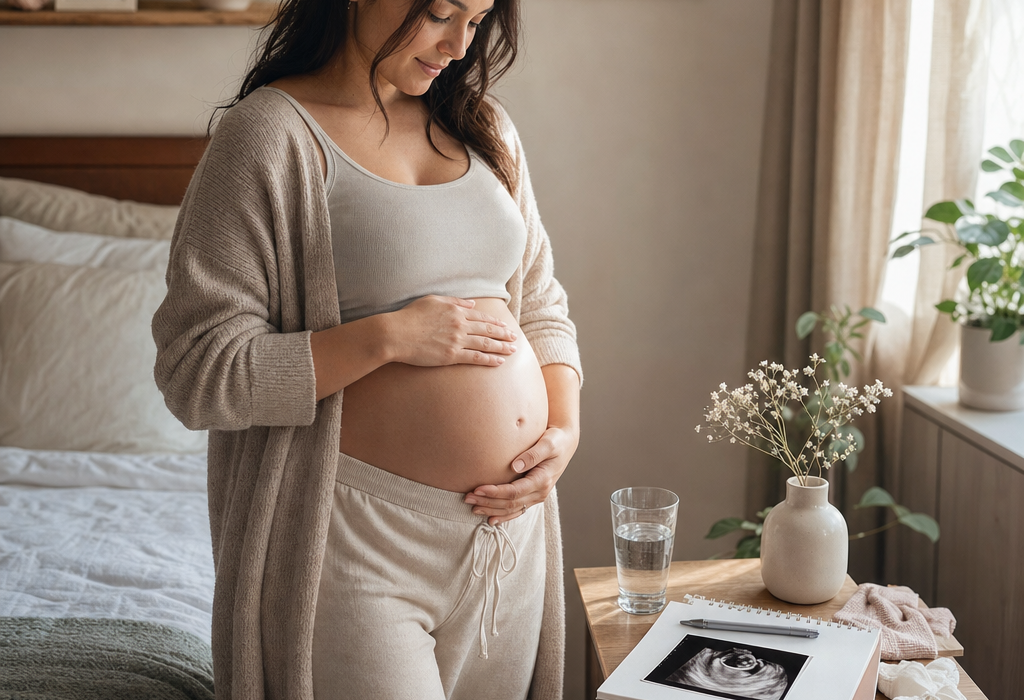
As your baby grows, your body continues to adapt. Many people feel a noticeable baby bump around this stage, though every pregnancy is different.
Common body changes at 18 weeks
You may notice:
- A rounder belly
- Weight gain
- A growing appetite
- Stretching or pulling sensations in the lower abdomen
- A wider waistline
- Changes in posture
- Mild back discomfort
Your uterus is expanding upward and outward, which can create pressure and a feeling of fullness in your abdomen. You may also notice that your center of gravity is changing, which can affect balance and how you move through the day.
Some people like to keep track of belly growth and symptoms from one week to the next. If that sounds like you, you may also find it useful to read about 16 Week Ultrasound: What to Expect & See as you prepare for upcoming scans and prenatal visits.
Common Symptoms at 18 Weeks Pregnant
Second trimester symptoms are often easier to manage than early pregnancy symptoms, but you may still have some discomforts. For some people, this is a calmer stretch of pregnancy; for others, new aches and changes begin to show up as the uterus grows.
1. Round ligament pain
As your uterus grows, the ligaments that support it stretch. This can cause sharp, pulling, or aching pain on one or both sides of your lower belly or groin. It is usually brief and triggered by movement, standing up quickly, or changing positions.
2. Back pain
A growing belly shifts your center of gravity, which can put extra strain on your back. Hormonal changes also loosen joints and ligaments, which may contribute to soreness.
3. Increased appetite
Many people feel hungrier during the second trimester as nausea fades and the baby’s growth speeds up. Eating balanced meals and snacks can help keep your energy steady.
4. Mild swelling
Some swelling in the feet, ankles, or hands can happen as pregnancy progresses, especially after long periods of standing or in warm weather.
5. Nasal congestion
Pregnancy hormones can cause swelling in the nasal passages, leading to a stuffy nose or nosebleeds.
6. Skin changes
You may notice:
- A pregnancy glow
- Darkening of the skin
- A dark line down the belly called the linea nigra
- Acne or oily skin
- Stretch marks as the belly grows
7. Increased vaginal discharge
A thin, milky white discharge called leukorrhea is common in pregnancy. It helps protect the vaginal area from infection.
Many of these changes are normal, but it is still smart to pay attention to patterns. If symptoms become intense, persistent, or painful, mention them at your next prenatal visit.
Feeling the Baby Move at 18 Weeks
One of the most exciting milestones around 18 weeks is the possibility of feeling your baby move for the first time. This is often one of the moments that makes pregnancy feel especially real.
What baby movement feels like
Early movement is often described as:
- Fluttering
- Bubbling
- Tiny taps
- Gentle rolling sensations
If this is your first pregnancy, you may not recognize movement right away. People who have been pregnant before may notice movement sooner because they are more familiar with the sensation.
What if you do not feel movement yet?
Not feeling the baby move at 18 weeks is very common and usually not a concern. Many people do not feel regular movement until 20 to 24 weeks or later.
Some babies are also naturally quieter at certain times of day, so there can be long stretches with no clear movement even when everything is progressing normally. If you are ever unsure, mention it to your provider during a visit.
Medical Appointments and Tests Around 18 Weeks
Many people have an important prenatal appointment during this part of pregnancy, often between 18 and 22 weeks.
Anatomy scan ultrasound
A common test around this time is the mid-pregnancy anatomy scan, also called the 20-week ultrasound, even though it may happen a little earlier or later.
This ultrasound checks:
- Baby’s growth and size
- Brain, heart, spine, kidneys, and other organs
- Placenta position
- Amniotic fluid levels
- Baby’s estimated sex, if you want to know and the baby is positioned well
This scan can also help your healthcare provider look for certain structural concerns. For general medical information about prenatal ultrasounds, the March of Dimes prenatal ultrasound overview is a helpful educational resource.
What else may happen at your visit
Your provider may:
- Check your blood pressure
- Measure your uterus
- Listen for the baby’s heartbeat
- Ask about symptoms
- Review test results
- Talk about movement, nutrition, and upcoming prenatal care
This is also a good time to bring a list of questions. If you are unsure about a symptom, medication, or supplement, write it down before your visit so you do not forget to ask.
What to Eat at 18 Weeks Pregnant
Nutrition continues to matter for your health and your baby’s growth. You do not need a perfect diet, but balanced meals can support steady energy and development.
Helpful nutrients during pregnancy
Focus on foods that provide:
- Protein for growth and tissue repair
- Iron to support blood volume
- Calcium for bones and teeth
- Folate for healthy development
- Omega-3 fats for brain development
- Fiber to help prevent constipation
Good food choices include
- Lean meats, eggs, tofu, and beans
- Dairy products or fortified alternatives
- Whole grains
- Fruits and vegetables
- Nuts and seeds
- Salmon and other low-mercury fish
- Iron-rich foods like spinach, lentils, and fortified cereals
Foods to avoid or limit
During pregnancy, it is important to avoid foods that can increase the risk of infection or harm to the baby, such as:
- Raw or undercooked meat and eggs
- Unpasteurized dairy products
- High-mercury fish
- Deli meats unless heated until steaming
- Raw sprouts
- Alcohol
If you have questions about caffeine, supplements, or food safety, ask your healthcare provider. For additional evidence-based pregnancy nutrition guidance, you can review the CDC pregnancy nutrition guidance.
How to Feel Better at 18 Weeks Pregnant
Although this stage is often easier than the first trimester, you may still need small adjustments to stay comfortable.
Tips for easing common symptoms
For back pain
- Practice good posture
- Use supportive shoes
- Try gentle stretching
- Sleep with a pillow between your knees
- Avoid standing for long periods
For round ligament pain
- Move slowly when changing positions
- Rest when needed
- Use gentle side stretches
- Support your belly when coughing or sneezing
For constipation
- Drink more water
- Eat fiber-rich foods
- Stay active
- Ask your provider before taking any laxatives or supplements
For heartburn
- Eat smaller meals
- Avoid spicy or greasy foods if they trigger symptoms
- Do not lie down right after eating
- Sleep with your head slightly elevated
For swelling
- Elevate your feet when resting
- Drink enough fluids
- Avoid sitting or standing too long
- Wear comfortable shoes
Small routine changes can make a noticeable difference. Many people find that improving hydration, stretching gently, and taking short walking breaks helps them feel more comfortable through the day.
Exercise at 18 Weeks Pregnant
If your healthcare provider says it is safe, regular movement can help with energy, mood, circulation, and back pain.
Safe pregnancy exercise options
- Walking
- Swimming
- Prenatal yoga
- Stationary cycling
- Low-impact strength training
- Gentle stretching
Try to avoid activities with a high risk of falling, contact sports, or exercises that involve lying flat on your back for long periods if they make you uncomfortable.
A good rule of thumb is to choose activities that let you talk while moving. Stop if you feel dizzy, short of breath, or painful discomfort.
If you are building a simple weekly routine, consistency matters more than intensity. Even short walks after meals can help support circulation and may ease stiffness.
Emotional Changes at 18 Weeks
Pregnancy is not only physical. You may also feel a mix of emotions this week.
Some people feel:
- More excited now that the pregnancy is more visible
- Nervous about upcoming tests
- Curious about the baby’s sex or features
- More connected to the pregnancy
- Still adjusting emotionally
It is also normal to have moments of worry, especially if this is your first pregnancy or if you have had pregnancy loss or complications before. Sharing your concerns with your provider or a trusted support person can help.
Pregnancy can bring mixed feelings in the same day, and that does not mean anything is wrong. Feeling both happy and anxious at once is common.
Preparing for the Weeks Ahead
As 18 weeks pregnant turns into 19 weeks pregnant and beyond, it can help to think ahead without trying to plan everything at once. This is a good stage for gathering information, saving appointment dates, and making small adjustments to daily routines.
You may want to start noting:
- Any new symptoms and when they happen
- Questions for your next prenatal visit
- Changes in appetite, sleep, or comfort
- Movement patterns, once you begin feeling the baby more consistently
- Upcoming tests, scans, or paperwork
Some people also find it helpful to read ahead in the pregnancy series so they know what is coming next. For example, seeing how 15 Weeks Pregnant: Baby Growth, Symptoms & Tips, 14 Weeks Pregnant: What to Expect This Week, and 13 Weeks Pregnant: Symptoms, Baby Size & What to Expect fit into the bigger picture can make the second trimester feel easier to follow.
When to Call Your Healthcare Provider
Most changes at 18 weeks are normal, but some symptoms should be checked promptly.
Contact your healthcare provider if you have:
- Vaginal bleeding
- Severe abdominal pain
- Regular cramping
- Sudden swelling in the face or hands
- Severe headache
- Vision changes
- Fever
- Fluid leaking from the vagina
- Painful urination
- Decreased fetal movement later in pregnancy, once movement has become regular
- Any symptom that feels unusual or concerning
If you are ever unsure whether a symptom is normal, it is always best to ask.
Frequently Asked Questions About 18 Weeks Pregnant
Is 18 weeks pregnant considered 5 months?
Not exactly. At 18 weeks, you are usually about 4 and a half months pregnant, though some people round it to 5 months depending on how pregnancy is counted.
Should I be showing at 18 weeks?
Many people have a noticeable bump by 18 weeks, especially in a first pregnancy, but some show earlier or later. Body shape, muscle tone, and whether this is your first baby can all affect when a bump appears.
Is it normal to feel cramps at 18 weeks?
Mild cramping or pulling sensations can be normal as the uterus grows. However, strong pain, bleeding, or cramping that does not go away should be reported to your healthcare provider.
Can I still sleep on my back at 18 weeks?
Some people can still lie on their back comfortably at this stage, but side sleeping is often encouraged as pregnancy progresses. If lying on your back makes you dizzy or uncomfortable, switch positions and consider using pillows for support.
Is it normal not to feel the baby move yet?
Yes. Not feeling movement at 18 weeks is very common. Many people first notice movement between 18 and 24 weeks, and sometimes later.
What should I bring up at my prenatal appointment?
Ask about any symptoms that are bothering you, the timing of your anatomy scan, exercise, nutrition, and anything you are unsure about regarding medications or prenatal vitamins.
Summary: What to Expect This Week
At 18 weeks pregnant, your baby is growing fast, your body is changing, and you may be starting to feel movement for the first time. This week often brings a more settled second trimester, with more energy, a growing belly, and important prenatal care milestones like the anatomy scan.
Most symptoms at this stage are mild and manageable, but it is still important to pay attention to your body and contact your healthcare provider if anything feels wrong. With each week, you are getting closer to meeting your baby and watching their development continue.
If you are comparing where you are now with the weeks before and after, it can help to look at the full pregnancy timeline. You can also read about 15 Weeks Pregnant: Baby Growth, Symptoms & Tips, 14 Weeks Pregnant: What to Expect This Week, and 13 Weeks Pregnant: Symptoms, Baby Size & What to Expect for a wider view of early second-trimester changes.