Brisk reflexes help you move faster, respond quicker, and stay more coordinated in sports and everyday life. Whether you want to improve athletic performance, react faster on the road, or simply feel sharper and more responsive, building better reflexes can make a real difference.
The good news is that reaction time is not fixed. While genetics play a role, you can train your body and brain to react more efficiently. With the right combination of practice, strength work, coordination drills, and recovery habits, you can improve speed, response time, and agility over time.
- What Are Brisk Reflexes?
- Why Brisk Reflexes Matter
- What Affects Reflex Speed?
- How to Improve Brisk Reflexes
- Best Exercises for Brisk Reflexes
- How Often Should You Train Reflexes?
- Common Mistakes to Avoid
- Can You Improve Reflexes at Any Age?
- Signs Your Reflex Training Is Working
- Simple Beginner Routine for Brisk Reflexes
What Are Brisk Reflexes?
Brisk reflexes refer to the ability to respond quickly and effectively to a stimulus. That stimulus could be a moving ball, a sudden change in direction, a spoken command, or an unexpected obstacle.
In practical terms, brisk reflexes involve three main elements:
– Reaction time: how quickly you notice and process a signal
– Movement speed: how fast you physically respond
– Agility: how well you change direction and control your body
These qualities are closely related, but they are not exactly the same. You may react quickly but move slowly, or be fast but lose balance during direction changes. Improving all three creates the most noticeable results.
Why Brisk Reflexes Matter
Brisk reflexes are useful in many situations, not just sports. They can help with:
– Athletic performance in football, tennis, basketball, boxing, soccer, and other fast-paced sports
– Injury prevention, especially when you need to adjust quickly to avoid a fall or collision
– Driving safety, where quick judgment and response matter
– Daily movement, such as catching a falling object or stepping around a hazard
– Confidence and coordination, because faster responses often feel smoother and more controlled
For athletes, reflex training can improve game performance. For non-athletes, it can support overall physical sharpness and functional fitness. If you want to support broader performance habits, you may also find this guide on brain health strategies useful for focus and mental sharpness.
What Affects Reflex Speed?
Several factors influence how fast and effectively you respond.
1. Brain Processing Speed
Your brain must detect a signal, interpret it, and send a command to your muscles. Faster processing usually means faster reaction time.
2. Nervous System Efficiency
A well-trained nervous system communicates more quickly with muscles. This improves both response speed and movement control.
3. Muscle Power
Strong muscles can produce force more quickly, which helps turn a reaction into a fast, useful movement.
4. Coordination
Good coordination allows your body to move efficiently without wasted motion.
5. Focus and Attention
If your mind is distracted, your reaction time slows. Alertness matters just as much as physical conditioning.
6. Fatigue and Recovery
Tired muscles and an overworked nervous system respond more slowly. Poor sleep, stress, and dehydration can all reduce performance.
How to Improve Brisk Reflexes
Improving reflexes usually works best when you train multiple systems together. A balanced approach includes reaction drills, agility work, strength training, and recovery habits.
It also helps to think of reaction time as a skill you can practice, not just a trait you were born with. The more often you expose your body to quick, controlled decisions, the better your responses can become.
1. Train Reaction Time Directly
Reaction drills teach your brain and body to respond faster to visual, auditory, or physical cues.
Simple reaction drills include:
– Catching a dropped ball
– Responding to a partner’s hand signal
– Sprinting on a whistle or clap
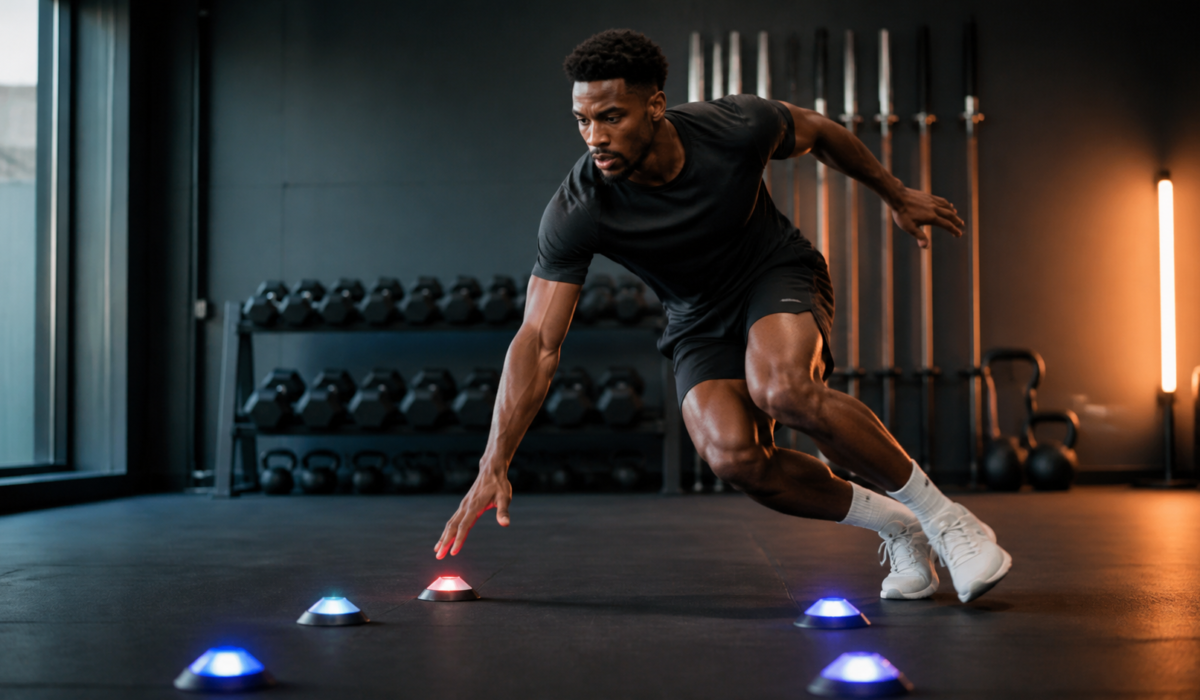
– Changing direction when a light or number appears
– Using a reaction ball that bounces unpredictably
These drills should be done with focus and precision. Start simple, then make the drills less predictable as you improve. Over time, consistent work on reaction time can make your movements feel more automatic under pressure.
Tips for reaction training:
– Keep your stance ready and balanced
– Use short bursts instead of long sessions
– Vary the stimulus so your brain cannot predict it
– Track improvements over time
2. Build Agility
Agility is the ability to change direction quickly while maintaining control. It depends on footwork, balance, strength, and body awareness.
Effective agility exercises:
– Ladder drills
– Cone drills
– Shuttle runs
– Side-to-side shuffles
– Zigzag sprinting
– Deceleration and stopping practice
Agility training should not just focus on speed. The goal is to move fast while staying stable and controlled. That is why braking, stopping, and re-accelerating matter just as much as sprinting.
Key agility principle:
You must be able to slow down well before you can change direction quickly. Strong brakes lead to faster and safer movement.
3. Improve Explosive Strength
Fast reflexes are easier to express when your muscles can produce force quickly. This is called explosive power.
Good exercises for explosive strength:
– Jump squats
– Box jumps
– Medicine ball throws
– Kettlebell swings
– Sprint starts
– Plyometric push-ups
These movements help the body convert a quick signal into a quick action. When your power output rises, your reaction time can translate into movement more efficiently.
Important note:
Explosive training should be done with proper form. Quality matters more than quantity. If your technique breaks down, reduce the intensity.
4. Strengthen the Core and Lower Body
A strong core and stable lower body support fast movement. Without that foundation, your reactions may be quick but inefficient.
Useful strength exercises:
– Squats
– Lunges
– Deadlifts
– Planks
– Single-leg balance work
– Step-ups
These exercises improve stability, balance, and force transfer from the ground through the rest of the body. Better stability often makes reaction time look faster because your body wastes less motion.
5. Train Hand-Eye Coordination
Hand-eye coordination helps you react accurately to what you see. It is especially important in ball sports, racquet sports, and fast decision-making tasks.
Examples of coordination drills:
– Tossing and catching a tennis ball with one hand
– Tracking and catching a ball after one bounce
– Juggling
– Hitting a moving target
– Partner passing drills with unpredictable timing
Coordination practice trains the brain to match visual information with quick physical output. If you want more ideas for sharpening mental processing, see these brain health questions that help you think about focus, memory, and performance.
6. Use Sprints and Short Bursts
Short, intense sprints can improve acceleration and response speed. They also help train the nervous system to fire more quickly.
Sprint ideas:
– 10 to 20 meter accelerations
– Resistance sprints
– Hill sprints
– Start-and-stop running
– Reactive sprint starts
Keep rest periods long enough to maintain quality. If you are too tired, the training effect changes from speed to endurance. Sprint work is most useful when every rep is crisp and intentional.
7. Prioritize Balance and Stability
Fast reflexes are less useful if you lose control of your body. Balance training helps you stay centered during sudden moves.
Helpful balance drills:
– Standing on one leg
– Single-leg reaches
– Stability ball exercises
– Lateral hopping and landing
– Controlled direction changes
Balance supports agility by making your movements more efficient and reducing unnecessary wobble. This is especially important when reacting on uneven ground, during contact sports, or after quick turns.
8. Practice Sport-Specific Drills
If you want reflexes that transfer to a particular sport, train movements and decisions that match that sport.
Examples:
– Basketball: defensive slides, closeout drills, passing reactions
– Soccer: first-step reaction drills, ball control under pressure, change-of-direction runs
– Tennis: split-step timing, ball tracking, rapid lateral movement
– Boxing: slip drills, punch reaction drills, defensive counters
– Football: reaction starts, footwork patterns, sudden change drills
The more specific the drill, the more likely it is to improve real performance. For athletes who need quick upper-body responses, this can be especially true in boxing. In fact, boxing benefits often include better coordination, sharper movement, and faster decision-making.
9. Improve Mental Sharpness
Reaction speed is not only physical. Mental readiness affects how quickly you recognize a signal and decide what to do.
Ways to improve mental sharpness:
– Sleep well
– Reduce distraction during training
– Practice focus drills
– Use visualization
– Manage stress
Visualization can be especially useful. Mentally rehearsing movements helps your brain prepare for real action. It can also make reaction time feel more automatic when the moment comes.
10. Recover Properly
You cannot build brisk reflexes if your body is constantly fatigued. Recovery is part of the training process.
Recovery essentials:
– Sleep 7 to 9 hours per night
– Stay hydrated
– Eat enough protein and carbohydrates
– Allow rest between high-intensity sessions
– Avoid overtraining
Poor recovery slows nervous system function, which directly affects response speed and coordination. Nutrition matters too, and if energy is an issue, these brain foods may support focus and help reduce mental fatigue.
Best Exercises for Brisk Reflexes
Here are some of the most effective exercises to combine into a training routine.
1. Reaction Ball Catch
Use a reaction ball or rubber ball that bounces unpredictably. Catching it challenges your response speed and hand-eye coordination.
2. Cone Shuffle and Sprint
Set up cones in random positions. Shuffle laterally, then sprint on command.
3. Ladder Footwork Drills
Use a speed ladder to improve foot speed, rhythm, and coordination.
4. Medicine Ball Toss
Throw a medicine ball against a wall or to a partner. This develops explosive power and quick response.
5. Drop and Sprint
Have a partner drop a visual cue, and sprint as soon as you see it.
6. Mirror Drill
Face a partner and copy their movements. This builds response speed, agility, and anticipation.
7. Lateral Bounds
Jump side to side, landing with control. This helps with agility and balance.
8. Quick Feet Drills
Fast in-place steps improve leg speed and neuromuscular response.
For readers who want a broader explanation of physical performance, this recognized medical overview of exercise and physical fitness is a helpful reference for understanding how regular training supports health and conditioning.
How Often Should You Train Reflexes?
Most people benefit from training reaction and agility 2 to 4 times per week. The exact frequency depends on your goals and current fitness level.
A simple weekly structure might include:
– 2 days of reaction and agility drills
– 2 days of strength and power training
– 1 to 2 days of light coordination or sport-specific work
– Rest or recovery days between intense sessions
Short, focused sessions often work better than long, exhausting workouts. Reflex training is about quality, not volume. Even 15 to 30 minutes of smart work can move reaction time in the right direction when practiced consistently.
Common Mistakes to Avoid
If you want better reflexes, avoid these common errors.
1. Training too tired
Fatigue reduces speed and technique. Reflex work should be done when you are fresh.
2. Ignoring form
Poor mechanics can limit progress and increase injury risk.
3. Only doing one type of drill
Reaction, agility, strength, and coordination all matter. A narrow routine creates limited results.
4. Doing predictable drills only
If every drill is the same, your brain adapts to the pattern instead of improving true reaction time.
5. Skipping recovery
Without rest, sleep, and proper nutrition, reflex speed may actually get worse.
Can You Improve Reflexes at Any Age?
Yes. Reflexes can improve at almost any age with consistent training. Younger athletes may adapt quickly, but adults can absolutely become faster, more coordinated, and more agile with the right approach.
The key is to start at your current level and progress gradually. Even small improvements in reaction time and control can make movement feel much easier.
Signs Your Reflex Training Is Working
You may notice progress when you:
– React faster to visual or verbal cues
– Change direction more smoothly
– Feel more balanced during movement
– Make fewer mistakes in fast-paced situations
– Recover quicker after sudden actions
– Feel more confident in sports or daily movement
Results may show up gradually, especially if you track your training over time. Logging your drills, reps, and response speed can make it easier to notice small improvements in reaction time.
Simple Beginner Routine for Brisk Reflexes
If you are just starting, try this easy routine 2 to 3 times per week:
1. Warm up for 5 to 10 minutes
Include light jogging, dynamic stretches, and joint mobility.
2. Reaction drill for 5 minutes
Catch a dropped ball or respond to a clap or signal.
3. Agility drill for 5 to 10 minutes
Use cone shuffles, ladder work, or shuttle runs.
4. Explosive exercise for 5 minutes
Do jump squats, short sprints, or medicine ball throws.
5. Balance or coordination drill for 5 minutes
Try single-leg stands, mirror drills, or quick passing work.
6. Cool down with light movement and breathing
This kind of session is short, effective, and easy to repeat. As your body adapts, you can increase the challenge by making the cues faster, the patterns less predictable, and the movement more sport-specific.
Practical Ways to Keep Improving
Once your basics are in place, progress comes from small, consistent upgrades. Add a new cue, shorten the rest between easy drills, or increase the complexity of the movement pattern. You can also pair mental and physical training to challenge reaction time more fully.
For example, instead of always knowing where the next cone will be, have a partner call the direction at the last second. Instead of always catching a ball the same way, vary the height, speed, and angle. These changes force your brain to stay alert, which is exactly what makes reaction time improve.
Another helpful strategy is to train when your mind is fresh. Reaction work done at the start of a session usually produces better results than the same drills performed after heavy fatigue. That is because the nervous system is more responsive when you are rested.
How Brisk Reflexes Support Everyday Life
Fast responses are not only for athletes. They can help you avoid slipping on stairs, steady yourself on a curb, catch a falling object, or respond more calmly in busy environments. Good reflexes can also make simple activities feel easier because your body does not have to work as hard to stay coordinated.
Over time, that can lead to better confidence in movement. Many people notice that they feel lighter on their feet and more aware of what is happening around them. That practical benefit is one reason reaction training is worth doing even if you are not competing in sports.
Final Thoughts
Brisk reflexes come from more than just fast muscles. They depend on how well your brain, nervous system, balance, strength, and focus work together. By training reaction time, agility, explosive power, and coordination, you can become faster and more responsive in both sports and daily life.
The best results come from consistent, purposeful practice. Keep drills simple at first, build quality movement habits, and recover well. Over time, your speed, reaction time, and agility can improve in a way that feels natural and lasting.
Whether your goal is sport performance, safer everyday movement, or better all-around athleticism, improving reaction time is a smart place to start. Small gains add up, and those gains can show up when they matter most.