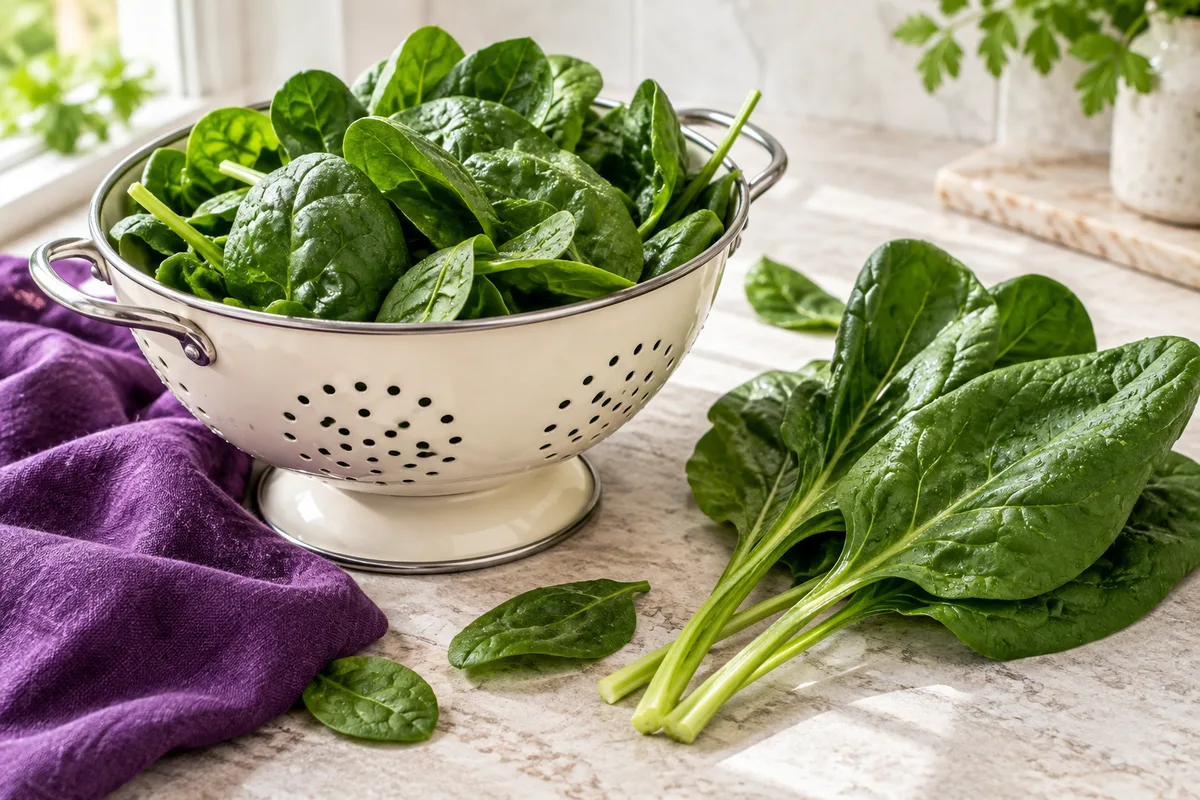
A large pile of fresh spinach becomes a much smaller amount when it wilts. That change is useful in a pan, but the released moisture can make a filling or sauce looser than you intended. Decide whether you need crisp raw leaves, softly wilted greens or well-drained cooked spinach before you start.
Choose leaves for the dish
Look for fresh-looking leaves and avoid slimy or badly deteriorated ones. Small, tender leaves are convenient for a raw salad. Larger leaves can also be useful for cooking, especially when you remove tough stems and cut them into manageable pieces. Leaf size is more useful here than making assumptions about a plant's geographic origin.
Keep spinach refrigerated and buy it close to the meal you have planned. Follow storage instructions and dates on packaged products. A bag that looked good at purchase still needs checking before you use it.
Read the washing label first
FDA guidance says produce labeled pre-washed or ready-to-eat can be used without further washing. If you choose to wash it again, avoid introducing contamination from dirty tools or surfaces. For spinach that is not ready-to-eat, wash under running water before preparation. Do not use soap or detergent on the leaves.
Use clean hands, a clean colander and a clean work surface. Drain the leaves well. A salad spinner or clean towel can remove surface water; handle delicate leaves gently rather than crushing them into a wet bundle.
Trim for an even result
- Spread out a small handful so you can inspect it.
- Remove damaged leaves and any remaining grit after washing.
- Pinch or cut away thick, tough stems from larger leaves. Tender stems do not need the same treatment.
- Leave small salad leaves whole, or cut larger cooking leaves so they are easier to stir and serve.
For a salad, keep the leaves dry
Wet leaves dilute a dressing. Drain or dry them before combining with other ingredients, then dress near serving time. Strong additions such as cheese, lemon, avocado or mushrooms can work, but choose a few that belong together rather than adding every possible pairing.
For cooking, pay attention to the water
Add spinach to a pan in manageable amounts and turn it so the leaves wilt evenly. Stop when the texture suits the dish. There is no single cooking time for every quantity, pan and leaf size.
If you will use the spinach in a filling, let it cool enough to handle safely and remove excess liquid before mixing. If it is going into a sauce, decide whether the released liquid belongs in that sauce or should be drained first. Taste and adjust the final dish after combining, rather than seasoning each component heavily in isolation.
Find more ingredient preparation guides in ShamsMag Cooking.
Editorial sources
Adapted and merged from the owner's Monir Chef posts 4850 and 4851. The short second entry is incorporated here rather than published as a separate thin page. Produce handling: FDA: Selecting and Serving Produce Safely. No independent kitchen test is claimed. Cover: AI-generated illustration.