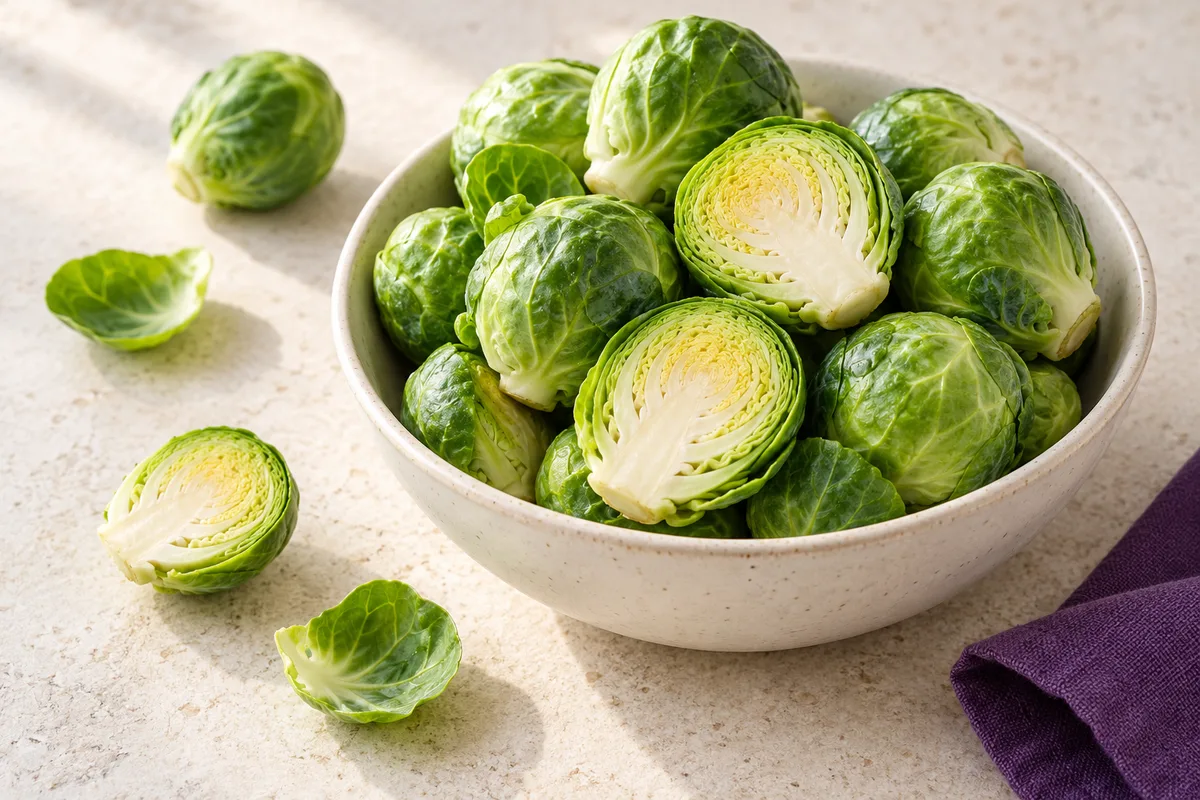
Brussels sprouts do not have to be cooked whole or boiled until soft. The way you cut them matters as much as the cooking method: a halved sprout has a flat surface for browning, while fine shreds cook quickly and work well in a salad.
This guide adapts a Monir Chef ingredient lesson into a practical preparation routine. It is a method guide, not a claim that one temperature or cooking time works for every sprout and oven.
Choose firm sprouts of a similar size
Look for compact heads with tightly attached leaves and a fresh appearance. Avoid sprouts that are slimy, moldy or decaying. A few loose outer leaves can simply be removed, but widespread yellowing, soft spots and an unpleasant smell are reasons to choose a different batch.
Size is useful for planning the cut, not a guarantee of flavor. Small and large sprouts can both cook well. If a bag contains mixed sizes, halve the larger ones and leave very small ones whole, or cut them all into pieces of roughly comparable thickness.
Trim the base without dismantling the sprout
- Rinse the sprouts under running water and check between loose outer leaves for dirt.
- Cut a thin slice from the dry stem end. Keep enough of the base intact to hold the leaves together.
- Remove damaged or discolored outer leaves. Do not keep peeling away sound leaves just to create a perfectly smooth head.
- Choose the final cut for the dish: halves for roasting, small even pieces for a quick sauté, or fine shreds for a salad.
Dry the sprouts before roasting. Water clinging to the leaves makes it harder for their surfaces to brown. Keep loose sound leaves if you want to cook them too, but watch them carefully: they can darken much faster than the dense centers.
Roast when you want browned edges
Toss the dry pieces with a light coating of oil and spread them in one layer. Place cut sides against the tray when you want a larger browned surface. Leave some space rather than filling the tray with a deep pile. Check both the color and the center with the tip of a small knife.
If the edges are dark but the center remains too firm, adjust the heat or cut the next batch smaller. Browning is desirable; a blackened exterior is not the same as a tender center.
Steam when you want a gentler result
Steam over simmering water and check frequently. Remove the sprouts when the center has the tenderness you prefer. Prolonged cooking can lead to a strong cabbage-like smell and a very soft texture. Dress steamed sprouts after cooking so their flavor stays clear.
Slice finely for a different use
For a raw salad, remove the tough base and slice the sprouts very thinly with a sharp knife on a stable board. Toss with a dressing and ingredients that offer contrast, such as apple, lemon or toasted nuts. Fine slicing changes the eating experience; thick raw halves will remain much firmer.
Finish with a deliberate flavor pairing
Lemon and olive oil add brightness; thyme and chestnuts create a more earthy combination. Bacon, pancetta, cream or cheese add richness, but they change the dish's dietary suitability. Ask about allergies before adding nuts or dairy.
Keep raw sprouts refrigerated and use them while firm and fresh. For broader shopping and preparation habits, see our cooking guides.
Editorial adaptation from the owner's Monir Chef archive. The cover is AI-generated; this guide does not claim an independently tested recipe.