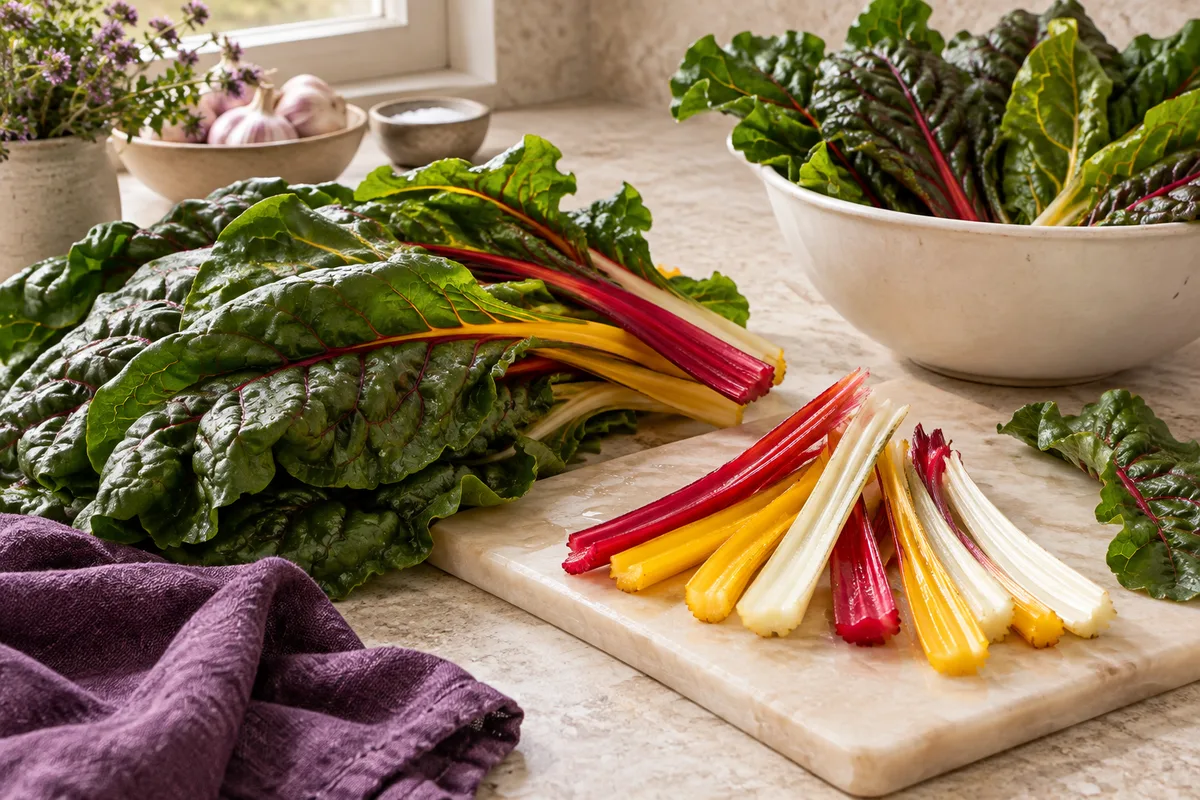
Swiss chard gives you broad green leaves and substantial edible stems in the same bunch. Treating the whole plant as a handful of delicate salad leaves can leave the stems too firm. Cooking everything until the stems soften can make the leaves more tender than you wanted. Separating the parts gives you more control.
Look at both the leaves and the stems
Choose a bunch with fresh-looking leaves and firm stems. Avoid wet breakdown or badly damaged parts. Chard may have white, red, pink, yellow or orange stems; these colors are not, by themselves, signs of a problem.
Keep the bunch refrigerated and use it while the leaves are still in good condition. Protect it from drying out without leaving it sitting in pooled water. Check the bunch before cooking rather than relying on a fixed number of days for every purchase.
Wash before dividing the bunch
Clean the leaves and stems under running water, paying attention to folds where grit can collect. Drain them on clean equipment. If using packaged ready-to-eat leaves, follow the package handling instructions. Keep the greens away from utensils or boards contaminated by raw meat or seafood.
Separate the two textures
- Lay a larger leaf flat on a board.
- Cut along each side of its thick central stem to release the leaf.
- Trim any damaged stem ends and slice the stems into even pieces.
- Cut the leaves into strips or manageable pieces, keeping them separate from the stems.
- For very young, tender chard, assess whether separation is needed for the dish rather than automatically removing every small stem.
Give thick stems a head start
The source describes steaming, boiling and sautéing as options for chard. Whichever method you choose, start the thicker stems first or cook them separately. Check a stem piece for tenderness before adding leaves to the same preparation.
Add the leaves when the stems are close to the texture you want, then turn them as they wilt. The amount of chard, cut size and pan all affect the time. There is no universal number of minutes in this guide.
Decide where the moisture belongs
Drained chard works differently from chard added with its cooking liquid. For a filling or a dish that should remain fairly dry, remove excess liquid before combining. In a soup or another preparation that includes liquid, the recipe may use it as part of the dish. Make that choice deliberately instead of letting a wet pan decide for you.
Keep the seasoning simple
Garlic, onion, olive oil and a little chilli are useful starting points from the archive's flavor suggestions. Taste before adding stronger seasonings so the earthy leaves remain part of the dish. Young tender leaves can also be used raw when appropriately prepared; this guide does not assume that every large, tough leaf makes an appealing salad.
Find more preparation lessons in ShamsMag Cooking.
Editorial sources
Adapted and merged from the owner's Monir Chef posts 4853 and 4854. General produce handling was checked against FDA produce guidance. No independent kitchen test is claimed. Cover: AI-generated illustration.