Cauliflower can be crisp and mild in a salad, soft enough for a smooth sauce or browned around the edges in a roasting pan. The difference starts with how you cut it and how much moisture you leave on the surface. Choose the finished texture first, then prepare the pieces to match.
Choose firmness before color
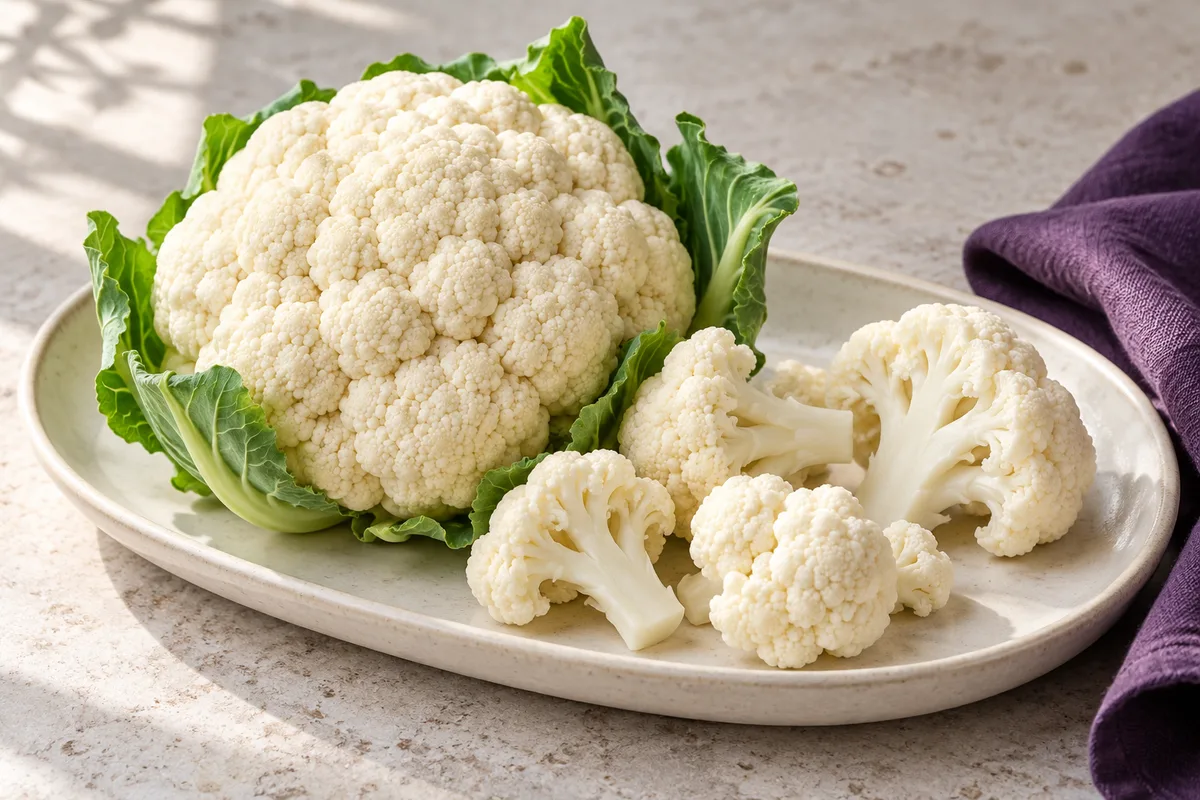
Look for a compact head with closely packed florets, fresh-looking leaves and a stem that is not dried out. Avoid heads with mold, wet breakdown or an unpleasant smell. A white cauliflower may be white to cream; color alone is not a reason to reject it. Orange, green and purple varieties are also grown deliberately. Judge the condition of the head rather than expecting every variety to be snowy white.
Buy an amount you can use within the next few days. Keeping a large head for a distant meal usually means more trimming and less appealing texture when you finally cook it.
Store it dry and prepare it near cooking time
Refrigerate the unwashed head with a loose wrapping that protects it without trapping excessive moisture. Check it before use and remove any damaged outer leaves. Wash under running water when you are ready to prepare it, then drain well. For roasting, dry the florets carefully so surface water does not keep them steaming in the pan.
Cut from the stem side
- Remove the outer leaves and trim the dry end of the stem.
- Set the head securely on a cutting board and divide it into manageable sections.
- Cut through the branching stems to separate the florets. This makes less loose crumble than repeatedly chopping through their tops.
- Split large florets so the pieces in one batch are similar in size.
- Trim the tough outside of the central stem, if necessary, and slice the tender part. Cook thicker stem pieces separately or cut them smaller than the florets.
Match the method to the meal
Raw: Small florets give a useful crunch to salads or a platter of vegetables. Slice the stem thinly if you want to include it. Large chunks can be awkward to eat and make a salad feel uneven.
Steamed: Keep pieces even and check them during cooking. Stop when they reach the texture you need: firmer for a dressed side dish, softer if you will mash or blend them. A knife should meet the amount of resistance you want in the finished dish.
Roasted: Dry the florets, coat them lightly with oil and leave space between them. Put a cut surface against the pan where possible. Turn as needed and judge both browning and tenderness; a dark edge does not necessarily mean a thick stem is cooked through.
Add flavor with a clear direction
Lemon and parsley give a fresh finish, while browned butter or a cheese sauce makes a richer side. Garlic and olive oil work with either roasted or steamed cauliflower. Add a little at a time and taste before combining every strong flavor in one dish.
For more preparation guides, visit ShamsMag Cooking.
Editorial sources
Adapted and reorganized from the owner's Monir Chef archive, source post 4772. Variety and selection details were checked against University of Minnesota cauliflower guidance. The cover is an AI-generated illustration, not a photograph of a tested dish.