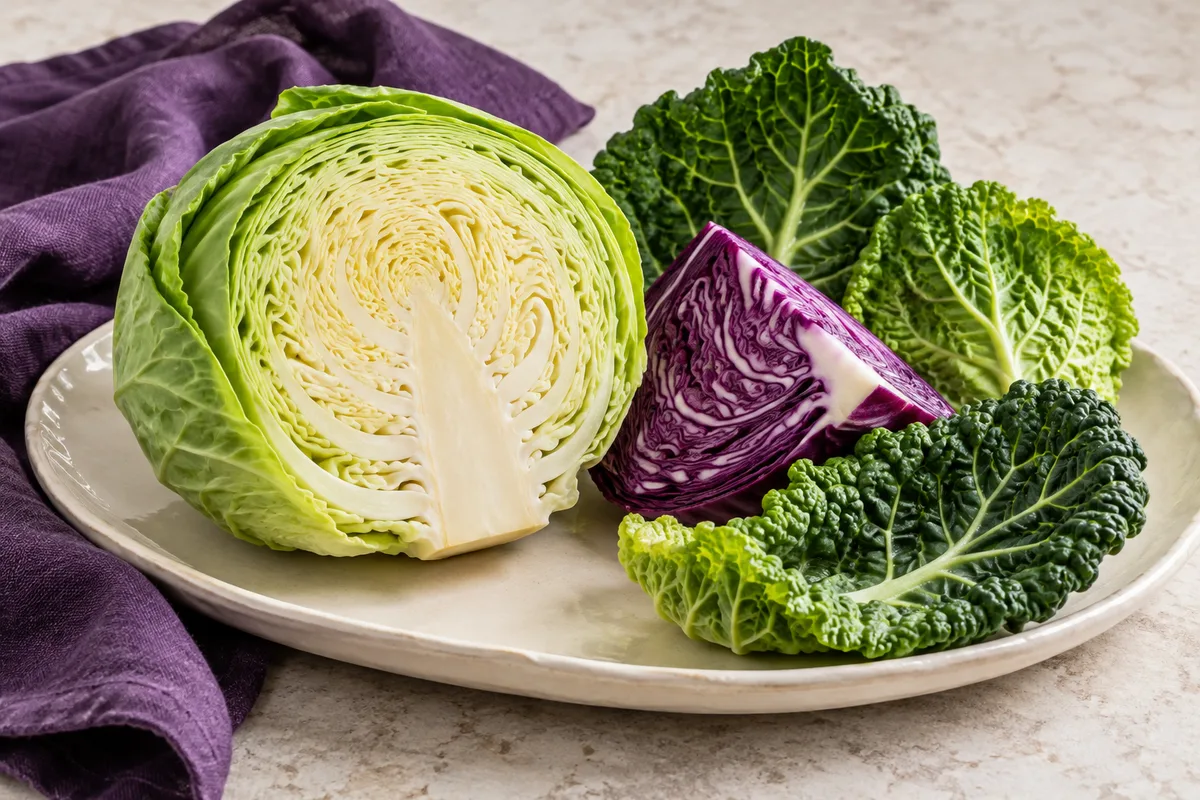
A cabbage is not just one texture. Its outer leaves, compact inner layers and firm central core behave differently in the pan. Before cutting the head, decide whether you want fine raw shreds, quickly cooked pieces or larger wedges that hold together during a braise.
Choose a head that suits the job
For a compact green or white cabbage, look for a firm head with fresh-looking outer leaves and no wet breakdown or unpleasant smell. Savoy has more loosely arranged, crinkled leaves, so it should not be judged by exactly the same tightness as a dense white cabbage.
- Green or white cabbage: A useful option for raw shreds and many cooked preparations. The core can be much firmer than the leaves.
- Pointed cabbage: Its elongated head has relatively tender leaves. Check the texture during cooking rather than assuming it needs as long as a denser head.
- Red cabbage: Adds strong color to a salad or braise. Cut pieces evenly so thick strips do not remain tough while thin ones soften.
- Savoy: The crinkled leaves suit preparations where their texture is welcome. Check and clean between the leaves as you prepare them.
The archive also describes round and flat-headed forms. Shape can help you recognize a cabbage, but freshness and the texture of the actual leaves matter more than treating the label as a cooking timer.
Keep the unused part protected
Refrigerate cabbage and protect a cut surface so it does not dry out. Buy close to your intended use and inspect before preparation. The source's broad claim that every whole cabbage will keep for one to two months is not used here as a guaranteed home-storage period.
Make the cut match the method
- Remove damaged outer leaves and clean the cabbage before cutting.
- Set it securely on a board and divide it into manageable sections.
- For slaw, remove the tough core and slice the leaves into fine, even shreds.
- For a sauté, cut pieces to a similar size so they soften together.
- For a wedge preparation, follow the final recipe's instructions on how much core to retain to hold the leaves together.
Cook toward a texture, not an arbitrary time
For a quick sauté, turn the pieces so they contact the pan evenly and stop when they have the bite you want. For a braise, allow the larger pieces to soften in the recipe's liquid, checking the firmest part before serving. Overcooking can produce a stronger cabbage smell and a softer result than intended.
Garlic, mustard, caraway, potatoes or a little butter are possible directions for seasoning. Choose a combination that fits the meal and taste the finished dish before adding more. This is a preparation guide, not a tested slaw, fermented cabbage or braised-cabbage recipe.
Explore more ingredient guides in ShamsMag Cooking.
Editorial source
Adapted and consolidated from the owner's Monir Chef posts 4764–4770. Six short variety entries are incorporated here instead of becoming separate thin pages. No fixed cooking time, tested storage duration or independent kitchen test is claimed. Cover: AI-generated illustration.