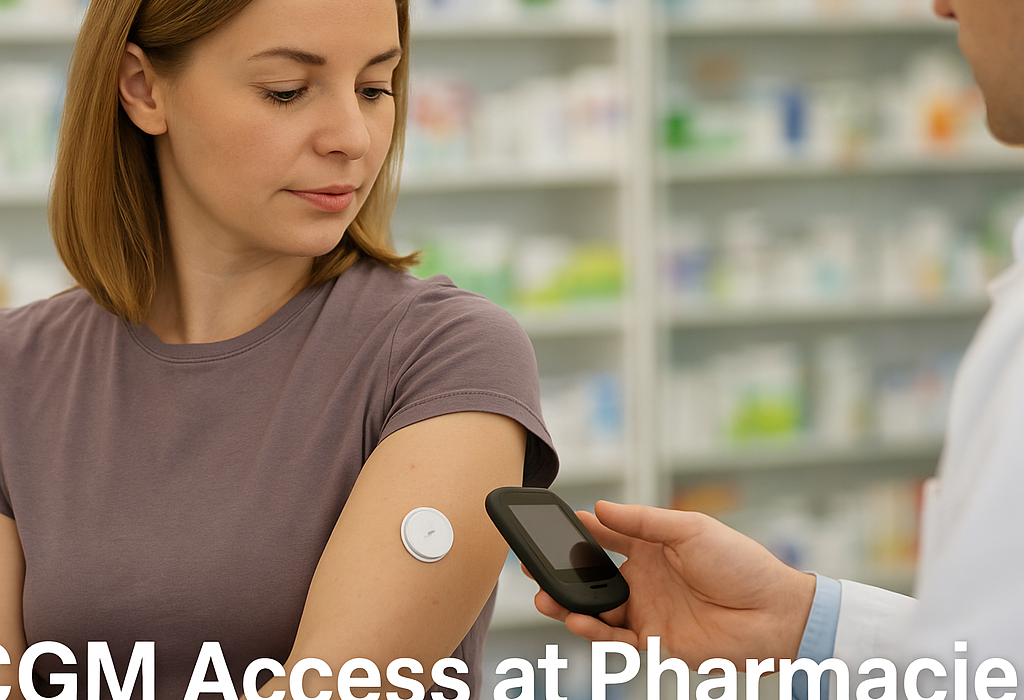
Continuous glucose monitors, or CGMs, have become an important tool for people managing diabetes. They help track glucose levels in real time, reduce the need for frequent fingersticks, and make it easier to spot trends, highs, and lows throughout the day and night. If you are trying to get a CGM, one of the first questions you may have is whether you can buy it at a pharmacy.
The short answer is yes, many CGMs are available at pharmacies. However, access depends on the brand, your prescription, your insurance coverage, and your location. Understanding how CGM access at pharmacies works can save you time, reduce confusion, and help you get the right device faster.
In this guide, we will walk through what CGMs are, how pharmacy dispensing works, what insurance companies usually require, and how to avoid the most common delays. If you are comparing coverage options, you may also find it helpful to read about Tandem Control-IQ Diabetes Management System Explained for another example of how diabetes technology fits into everyday care.
Table of Contents
- What Is a CGM?
- Can You Get a CGM at a Pharmacy?
- Why Pharmacy Access Matters
- Which CGMs Are Available at Pharmacies?
- Do You Need a Prescription?
- How CGM Pharmacy Coverage Works
- How to Get a CGM at a Pharmacy
- What to Ask the Pharmacy
- Common Problems With CGM Access at Pharmacies
- Tips for a Smoother Pharmacy Experience
- Pharmacy vs. Mail Order: Which Is Better?
- Can a Pharmacist Help With CGM Questions?
- Are CGMs Over the Counter?
- Who Qualifies for a CGM?
- The Bottom Line
What Is a CGM?
A continuous glucose monitor is a small medical device that measures glucose levels in the body throughout the day and night. Most CGMs include:
- A small sensor placed under the skin
- A transmitter or built-in sensor component
- A receiver, smartphone app, or compatible device to view readings
CGMs are commonly used by people with type 1 diabetes, many people with type 2 diabetes, and sometimes people with other glucose management needs. They can help users identify patterns in glucose levels and make better-informed treatment decisions.
For many families, the appeal is not just convenience. CGMs can make diabetes management feel more predictable and less reactive, especially when daily routines, meals, exercise, and insulin dosing all affect glucose levels in different ways.
To understand how CGM access at pharmacies fits into the larger care picture, it helps to know that these devices are considered prescription medical supplies in many places. That means the supply chain often looks a little different from picking up a typical over-the-counter product.
Can You Get a CGM at a Pharmacy?
Yes, in many cases you can get a CGM at a retail pharmacy or specialty pharmacy. Some CGM brands are stocked directly at local pharmacies, while others may need to be ordered through a pharmacy network or specialty supplier.
Pharmacy access is often more convenient than going through a durable medical equipment supplier because it can be faster, easier to refill, and more familiar for patients who already use their local pharmacy for other prescriptions.
That said, not every pharmacy carries every CGM brand. Availability can vary by:
- Pharmacy chain
- Location
- Insurance plans
- Prescriber requirements
- Manufacturer distribution channels
In practical terms, CGM access at pharmacies usually works best when the pharmacy, prescriber, and insurance plan are all aligned. If one part of that process is off, the prescription may stall until the missing detail is fixed.
Why Pharmacy Access Matters
Getting a CGM through a pharmacy can make the process simpler in several ways:
Faster access
Pharmacies often process CGM prescriptions more quickly than equipment suppliers, especially when the device is in stock.
Easier refills
Because many patients already use pharmacies for medication refills, it can be easier to manage supplies in one place.
Better insurance coordination
Pharmacies are often familiar with prescription billing and can help determine whether your CGM is covered.
More convenient pickup
A local pharmacy may be easier to access than waiting for a mail-order shipment or coordinating with an equipment provider.
Another reason people prefer pharmacy dispensing is speed during the first fill. If you are newly prescribed a CGM, a pharmacy can sometimes reduce the lag between the prescription being written and the device being in your hands.
For some users, CGM access at pharmacies also means better follow-through. When supplies are easy to pick up, it can be simpler to stay on schedule with replacements and avoid gaps in monitoring.
Which CGMs Are Available at Pharmacies?
Availability varies, but some commonly prescribed CGMs are often dispensed through pharmacies, including:
- Dexcom systems
- Abbott FreeStyle Libre systems
- Other CGM brands depending on region and insurance
Not every model or accessory is always pharmacy-dispensed. Some products may require a separate prescription for sensors, transmitters, or reader devices. In some cases, the starter kit and replacement sensors may be filled differently.
It is a good idea to verify the exact model name before you leave the doctor’s office. A prescription written for one system may not automatically work for a different version, even if the brand family is the same.
If you are unsure whether a specific brand is commonly stocked locally, call the pharmacy and ask them to check their ordering system. That simple step can prevent a lot of back-and-forth later.
Do You Need a Prescription?
In most cases, yes, you need a prescription for a CGM. A healthcare provider such as a doctor, endocrinologist, or qualified diabetes care clinician will need to write the prescription before the pharmacy can dispense the device.
Your prescription may need to specify:
- The CGM brand
- Sensor quantity
- Replacement frequency
- Reader or transmitter, if needed
- Diagnosis or medical justification, depending on insurance
If you are not sure whether you qualify, your healthcare provider or pharmacist can often help determine the next steps.
Prescription details matter because pharmacies often need enough information to bill the claim correctly. Even small omissions, such as missing quantity or unclear replacement timing, can slow down CGM access at pharmacies.
How CGM Pharmacy Coverage Works
Insurance coverage is one of the biggest factors affecting CGM access at pharmacies. Even if a CGM is available, your plan may have specific rules about where you must fill it and how much you will pay.
Common coverage factors include:
- Whether the CGM is covered under pharmacy benefits or durable medical equipment benefits
- Prior authorization requirements
- Deductibles and copays
- Preferred brands on your insurance formulary
- Quantity limits for sensors or transmitters
Some insurance plans strongly prefer pharmacy dispensing, while others require you to use a specialty supplier. Medicare and Medicaid coverage rules can also differ by plan and state.
Because of this, it is a good idea to check with both your insurance provider and pharmacy before filling your prescription. If you want a reliable reference point for billing and coverage terminology, the Centers for Medicare & Medicaid Services provides official information on Medicare and Medicaid programs.
Coverage can change over time too. A CGM that was billed one way last year may be processed differently after a formulary update, a policy change, or a switch in pharmacy benefit managers. This is one more reason to recheck benefits whenever you refill or switch plans.
How to Get a CGM at a Pharmacy
If you are trying to fill a CGM prescription at a pharmacy, the process usually looks like this:
1. Get a prescription from your healthcare provider
Your provider will decide which CGM is appropriate and send the prescription to your pharmacy or give it to you directly.
2. Confirm the pharmacy can fill it
Call the pharmacy ahead of time and ask whether they stock the specific CGM brand and model you were prescribed.
3. Check insurance coverage
The pharmacy can usually run a benefits check to see whether your plan covers the CGM and what your out-of-pocket cost will be.
4. Complete any prior authorization
Some plans require paperwork from your prescriber before approval. This step may delay filling the prescription, so it helps to start early.
5. Pick up the device and supplies
Once approved, you can pick up the CGM sensor, transmitter, reader, or any other needed supplies.
If the pharmacy says the item is not in stock, ask whether they can order it and how long delivery usually takes. In many cases, the answer is yes, and the wait may only be a day or two.
For best results, keep your prescription information consistent across the doctor’s office, the pharmacy, and your insurance account. That consistency helps reduce claim denials and makes CGM access at pharmacies much smoother.
What to Ask the Pharmacy
When you call or visit the pharmacy, these questions can help you avoid delays:
- Do you carry this CGM brand and model?
- Is it covered under my pharmacy benefit?
- Do you need a special prescription format?
- Is prior authorization required?
- How much will my copay be?
- Do you keep sensors in stock regularly?
- Can you order it if it is not currently available?
- Do I need a separate prescription for the reader or transmitter?
These questions can help you understand whether you can get the CGM quickly or whether additional steps are needed.
You may also want to ask whether the pharmacy has a diabetes care team or technician familiar with CGM billing. At larger chains, one staff member may be better able than another to answer detailed benefits questions.
Common Problems With CGM Access at Pharmacies
Although pharmacy access is convenient, some users run into a few common issues.
The pharmacy does not carry the device
Not all pharmacies stock all CGMs. If your local pharmacy cannot fill the prescription, they may be able to order it or direct you to a nearby pharmacy that can.
Insurance denies coverage
Coverage denials may happen if the CGM is not on your plan’s preferred list or if documentation is missing.
Prior authorization takes time
Your provider may need to submit additional information before insurance approves the device.
Prescription details are incomplete
A pharmacy may not be able to process the order if the prescription lacks quantity, sensor duration, or device-specific details.
Supply shortages
At times, CGM sensors or components may be temporarily out of stock, affecting refill timing.
These problems are frustrating, but they are usually solvable. A quick call to the pharmacy, a corrected prescription, or a paperwork update from the provider can often move things forward.
If you experience repeated denials, ask for the exact reason in writing. That information can help your prescriber submit the right supporting documents the next time.
Tips for a Smoother Pharmacy Experience
If you want to make CGM access easier, these tips can help:
- Ask your provider to send the prescription to a pharmacy that regularly fills CGMs
- Call the pharmacy before going in to confirm stock
- Verify insurance coverage in advance
- Keep your prescription details up to date
- Start refill requests early so you do not run out of sensors
- Save the manufacturer model name so you can specify exactly what you need
Planning ahead is especially important because many CGMs require ongoing replacement sensors and sometimes periodic transmitter updates.
It also helps to store the pharmacy phone number, your insurer’s member services number, and your prescriber’s office contact in one place. If something goes wrong, you will be able to respond quickly instead of searching for information at the last minute.
People who rely on CGM access at pharmacies often benefit from setting refill reminders a few days before supplies run out. That small habit can prevent gaps in data and make diabetes management less stressful.
Pharmacy vs. Mail Order: Which Is Better?
Both pharmacy pickup and mail-order delivery have advantages.
Pharmacy pickup may be better if:
- You want faster access
- You need the device urgently
- You prefer face-to-face help
- You want to manage all prescriptions in one place
Mail order may be better if:
- Your insurance requires it
- You want automatic delivery
- You have limited access to a nearby pharmacy
- You prefer home delivery
The best option depends on your insurance plan, the specific CGM, and your personal preference.
Some people start with a local pharmacy for convenience and later switch to mail order if it becomes cheaper or more predictable. Others stay with one pharmacy because they like having a familiar staff member who knows their history.
Can a Pharmacist Help With CGM Questions?
Yes. Pharmacists can often help with many practical questions about CGM access, including:
- How to fill the prescription
- Whether the device is covered
- When to reorder supplies
- Whether the CGM is in stock
- What paperwork may be needed
However, pharmacists cannot replace your healthcare provider’s medical guidance. If you have questions about whether a CGM is right for you or how to interpret readings, you should speak with your diabetes care team.
Pharmacists can still be valuable partners. They often know how to troubleshoot rejected claims, identify missing prescription details, and explain whether a refill request is too early or too late under your plan rules.
Are CGMs Over the Counter?
Most CGMs are not fully over the counter. In many places, they still require a prescription, even when they are sold through a pharmacy. Rules can vary by brand, country, and local regulations, so it is important to check the requirements where you live.
Because regulations differ, what counts as normal CGM access at pharmacies in one region may not be the same in another. Some markets have broader access, while others still require tighter documentation or prescriber oversight.
Who Qualifies for a CGM?
Eligibility depends on the device, insurer, and clinical need. Common factors include:
- Type of diabetes
- Use of insulin
- History of blood sugar fluctuations
- Need for frequent monitoring
- Age and treatment plan
- Provider recommendation
Some plans now cover CGMs more broadly than in the past, especially for people using insulin. If you are unsure whether you qualify, your healthcare provider can help document medical necessity.
It may also help to bring a list of your current medications, recent glucose data, and any hypoglycemia episodes to your appointment. That information can support a stronger case for coverage and may reduce the number of back-and-forth calls later.
If you are managing complex diabetes care, your clinician may also compare the device with other management tools. In some cases, articles such as Diabetes management: Artificial Intelligence in Daily Life for can offer helpful context about newer technology in diabetes care.
The Bottom Line
CGM Access at Pharmacies is now a common and convenient option for many people managing diabetes. In many cases, you can get your CGM prescription filled at a retail or specialty pharmacy, making it easier to start and maintain continuous glucose monitoring.
The key steps are to have a valid prescription, confirm that the pharmacy stocks your device, and check insurance coverage in advance. Because coverage rules and product availability can vary, a quick call to your pharmacy and healthcare provider can help you avoid delays.
If you are trying to get a CGM through a pharmacy, the best approach is simple: verify the brand, confirm your insurance benefits, and make sure your prescription includes all required details. With the right preparation, getting CGM supplies at a pharmacy can be a smooth and efficient process.
For most people, the best outcome comes from planning ahead. When the prescription is accurate, the pharmacy is prepared, and the insurance rules are clear, CGM access at pharmacies can feel far less complicated—and much more manageable—than it first appears.