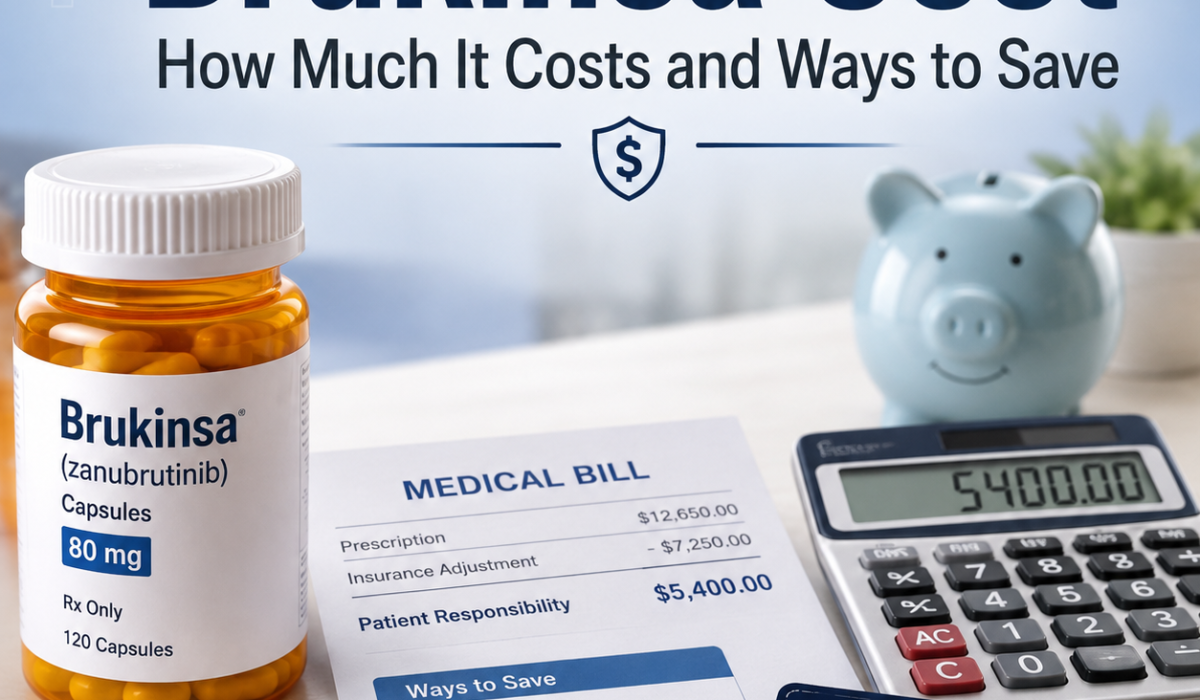
Brukinsa is a prescription cancer medicine used to treat certain blood cancers, including mantle cell lymphoma, Waldenström macroglobulinemia, and other conditions depending on your doctor’s recommendation. If you are searching for Brukinsa cost, you probably want one clear answer: how much it costs, why the price varies, and what you can do to lower your out-of-pocket expense.
The short answer is that Brukinsa can be expensive without insurance, but the exact price depends on your pharmacy, dosage, insurance plan, and whether you qualify for savings programs. In many cases, the cash price can be several thousand dollars per month, while insured patients may pay much less depending on their coverage.
Below, we break down the pricing in simple terms and explain the most common ways to save.
Table of Contents
- What Is Brukinsa?
- How Much Does Brukinsa Cost?
- Why Brukinsa Is So Expensive
- Brukinsa Cost With Insurance
- Brukinsa Cost Without Insurance
- Ways to Save on Brukinsa
- What Affects Your Final Out-of-Pocket Cost?
- Is There a Generic for Brukinsa?
- How to Find the Exact Price of Brukinsa
- Frequently Asked Questions About Brukinsa Cost
- Bottom Line
What Is Brukinsa?
Brukinsa is the brand name for zanubrutinib, a targeted cancer drug in the BTK inhibitor class. It works by blocking signals that help certain cancer cells grow and survive.
Because Brukinsa is a specialty medication, it is usually more expensive than common prescription drugs. It may be filled through a specialty pharmacy rather than a regular retail pharmacy, which can also affect the final price.
Many people first hear about the medicine while researching treatment options and then quickly discover that Brukinsa cost can be difficult to predict. That is normal with specialty oncology drugs, because pricing depends on many moving parts rather than one standard retail price.
If you want to understand why the bill looks the way it does, it helps to look at the treatment itself, the insurance rules around specialty drugs, and the support programs that may be available. For general information about this medicine, the National Cancer Institute’s drug dictionary entry for zanubrutinib is a helpful reference.
How Much Does Brukinsa Cost?
There is no single fixed price for Brukinsa. The amount you pay may range from:
- $0 to a small copay if your insurance covers it well and you qualify for assistance
- Hundreds or thousands of dollars per month with insurance but a high deductible or coinsurance
- Several thousand dollars per month without insurance
The cost can change based on:
- Your insurance plan
- Your pharmacy benefit
- Whether you have met your deductible
- Your prescribed dose
- The number of capsules or tablets dispensed
- Manufacturer and third-party savings programs
- Pharmacy dispensing fees
Because Brukinsa cost is tied to specialty drug pricing, two people taking the same medicine can still receive very different bills. One patient may have a low copay through a commercial plan, while another may face high coinsurance before the insurance company begins paying a larger share.
In practice, the only reliable way to know your price is to ask your insurer or specialty pharmacy for a benefits check. That estimate can show whether the medication is covered, what tier it falls under, and whether prior authorization is required before treatment starts.
Why Brukinsa Is So Expensive
Many patients are surprised by the price of specialty cancer medications. Brukinsa costs more because:
1. It is a targeted specialty drug
These medicines are developed for specific cancers and often require complex research and manufacturing.
2. It may not have a lower-cost generic version
Generic versions are usually much cheaper, but Brukinsa is a brand-name medication, so the cost remains high.
3. It is dispensed through specialty channels
Specialty pharmacies often handle storage, monitoring, and prior authorization support, which can influence pricing.
4. Insurance coverage varies
Two people taking the same medication may pay very different amounts depending on their health plan.
5. Oncology drugs often require extra support
Specialty therapies may involve benefit coordination, refill management, and clinical oversight, all of which can affect how the medication is distributed and billed.
These factors do not mean the medicine is overpriced in every case, but they do explain why Brukinsa cost is often far above what patients expect when they compare it to routine prescription drugs. Specialty medications are priced differently because they serve a narrow group of patients and are usually part of a broader cancer treatment plan.
Brukinsa Cost With Insurance
If you have insurance, your cost may be far lower than the retail price. However, many patients still face high out-of-pocket costs because specialty drugs are often placed in higher cost-sharing tiers.
Your final cost may depend on:
- Copay: a fixed amount you pay
- Coinsurance: a percentage of the drug’s cost
- Deductible: the amount you must pay before coverage begins
- Out-of-pocket maximum: once reached, your plan may cover more or all of the cost
For example, one patient may pay a modest monthly copay, while another may pay a percentage that adds up to a large bill each month. In other words, the same Brukinsa cost can look manageable for one family and overwhelming for another.
If you are checking your benefits, ask whether Brukinsa is covered under your pharmacy benefit or medical benefit. That detail matters because the billing pathway can change what you owe. You should also ask whether your plan uses prior authorization, step therapy, or a preferred specialty pharmacy network.
It is also worth confirming whether your insurance count toward the out-of-pocket maximum applies to this medication. If it does, you may reach your annual cap faster than expected, which can reduce what you pay later in the year.
Brukinsa Cost Without Insurance
Without insurance, Brukinsa is generally very expensive. Patients paying cash may face a retail price that can be financially overwhelming.
If you do not have insurance, it is especially important to look into:
- Manufacturer savings programs
- Patient assistance programs
- Prescription discount support
- Clinical trial options, if appropriate
- Help from your oncology team or specialty pharmacy
When people search for Brukinsa cost without coverage, they usually need practical help right away. The best first step is to ask the dispensing pharmacy whether there is an assistance pathway available before the first fill. Some programs can temporarily reduce the amount due while longer-term coverage questions are being sorted out.
If you are uninsured, your care team may also be able to connect you with a social worker or financial counselor who knows where to look for grants or temporary support. In some cases, a patient assistance program can make the medicine far more affordable if you meet income and residency requirements.
Be careful with online discount offers that sound too good to be true. For specialty oncology medications, the actual negotiated price through an official program is often more useful than a random coupon.
Ways to Save on Brukinsa
If the cost of Brukinsa is a concern, there are several ways to reduce what you pay.
1. Check Manufacturer Savings Programs
The manufacturer may offer support for eligible patients. These programs can help reduce copays or provide medication at reduced cost for qualifying individuals.
Savings programs often depend on:
- Commercial insurance status
- Income eligibility
- Prescription status
- Residency requirements
Important note: Many manufacturer copay cards do not apply to government insurance plans like Medicare or Medicaid, but patient assistance programs may still be available in some cases.
If you want to explore official patient support options, start with the manufacturer’s own assistance information rather than relying on third-party summaries. That is often the fastest way to verify eligibility and submit the right forms the first time.
2. Ask About Patient Assistance Programs
If your income is limited or you are uninsured, patient assistance programs may help cover part or all of the cost of Brukinsa.
These programs typically require:
- Proof of income
- Proof of residency
- A valid prescription
- Insurance information, if any
Your cancer care team, oncology social worker, or specialty pharmacy may be able to help you apply.
For many families, this is one of the most important parts of managing Brukinsa cost. A strong application can make a major difference, especially when treatment is expected to continue for months or longer.
3. Use Your Specialty Pharmacy’s Support Services
Specialty pharmacies often help patients navigate:
- Prior authorization
- Insurance appeals
- Financial assistance applications
- Refill coordination
- Delivery options
These services can save time and may help lower costs if coverage is initially denied or incomplete.
Specialty pharmacy staff can also tell you whether the prescription should be split into a 30-day or 90-day supply, if that is allowed by your plan. In some cases, the way the medication is billed and shipped can influence the immediate amount you owe.
4. Compare Pharmacy Pricing
If your plan allows it, pharmacy prices may differ between providers. Some patients find a lower out-of-pocket cost by using:
- In-network specialty pharmacies
- Mail-order pharmacies
- Pharmacies recommended by their insurer
Always confirm that the pharmacy is covered by your plan before switching.
It can also help to ask whether the pharmacy can provide a cost estimate before the prescription is processed. That way, you are not surprised by a higher-than-expected Brukinsa cost after the medication has already been shipped.
5. Review Your Insurance Plan
If you are starting treatment, check whether Brukinsa is covered and what tier it falls under.
Look for:
- Prior authorization requirements
- Specialty drug tier
- Coinsurance percentage
- Maximum monthly copay
- Annual out-of-pocket cap
If your plan has a very high coinsurance amount, contacting your insurer for clarification may help you avoid surprise bills.
Some plans also place specific limitations on refill timing or require the medication to come from a designated pharmacy. Knowing those rules early can prevent delays and additional charges.
6. Ask Your Doctor About Lower-Cost Alternatives
Do not stop or change treatment on your own, but it is reasonable to ask your oncologist whether:
- Another BTK inhibitor is covered more favorably
- A different treatment option may be appropriate
- A dose change is medically appropriate
- A sample supply or bridging option exists
Your doctor can help determine whether an alternative is safe and effective for your condition.
If the prescribed therapy is still the best medical choice, your doctor may be able to document why Brukinsa is necessary. That can help with coverage appeals when the insurer questions the claim.
7. Look for Foundation Grants
Some nonprofit foundations offer financial assistance for patients with blood cancer. These grants may help cover:
- Copays
- Coinsurance
- Travel expenses
- Related treatment costs
Funding is often limited and may open and close quickly, so it helps to check regularly.
Foundation assistance can be especially useful when Brukinsa cost remains high even after insurance. The grant may not cover the entire bill, but it can reduce the financial strain enough to make treatment more manageable.
8. Appeal a Coverage Denial
If your insurance denies coverage for Brukinsa, you may be able to appeal. A successful appeal can sometimes dramatically reduce your cost.
Helpful steps include:
- Ask for the reason for denial
- Request your doctor submit medical necessity documentation
- File an internal appeal
- Consider an external review if available under your plan
When appealing, keep copies of every letter, fax, and email. Organized records make it easier to follow up and to show exactly when the request was submitted.
9. Use a Prescription Discount Program Carefully
Discount cards or prescription savings programs may sometimes help reduce the retail price for people paying cash. However, these programs are not always ideal for specialty medications like Brukinsa, and they may not work with insurance.
Compare the discounted price against your insurance copay before choosing this option.
Because some discount programs exclude specialty oncology drugs or only apply to certain pharmacies, it is smart to ask for the final cash quote before you decide. The cheapest-looking option is not always the one that actually lowers Brukinsa cost the most.
10. Ask About Treatment Planning and Refill Timing
In some cases, your clinician or pharmacy may be able to help you avoid unnecessary extra fills or billing confusion. A clear refill plan can prevent duplicate claims, rushed shipments, and avoidable charges.
That does not change the drug price itself, but it can help you stay organized and make sure each month’s supply is billed correctly. For a high-cost medication, accuracy matters.
What Affects Your Final Out-of-Pocket Cost?
Even if the list price is high, your actual cost may be much lower. Several factors influence what you pay:
- Insurance status
- Plan deductible
- Coinsurance rate
- Formulary placement
- Specialty pharmacy requirements
- Manufacturer assistance eligibility
- Income level
- Prescription dosage and quantity
- Whether prior authorization is approved quickly
Because these factors vary so much, two patients using the same medication can have very different bills.
Other practical factors can matter too. For instance, if your plan requires a new authorization each year, a delay in renewal could temporarily increase your Brukinsa cost or interrupt your supply. Likewise, if you change jobs or insurance plans, your benefit details may change mid-treatment.
That is why it helps to review every explanation of benefits statement and keep track of refill dates. Small administrative issues can turn into large expenses if no one notices them early.
Is There a Generic for Brukinsa?
As of now, Brukinsa is a brand-name medication and does not have a widely available generic equivalent. This is one reason the price remains high.
When a medicine has no generic competition, patients usually have fewer low-cost alternatives. That does not mean there is no help available, but it does mean the savings often come from insurance rules, assistance programs, or foundation support rather than from a generic substitute.
How to Find the Exact Price of Brukinsa
The most reliable way to find your real cost is to check with:
- Your insurance company
- Your specialty pharmacy
- Your oncology clinic
- The manufacturer’s patient support program
When you call, ask for:
- Your expected monthly copay or coinsurance
- Whether prior authorization is needed
- Whether the medication is covered under your pharmacy benefit
- Whether assistance programs are available
- Whether the pharmacy can estimate your out-of-pocket cost before filling
It can also help to ask whether the estimate reflects the first fill only or ongoing monthly refills. The answer matters because some patients see a different Brukinsa cost after the deductible is met or after a copay program is applied.
Frequently Asked Questions About Brukinsa Cost
How much does Brukinsa cost per month?
The monthly cost can range from a small copay to several thousand dollars, depending on insurance and assistance eligibility.
Can I get Brukinsa for free?
Some uninsured or underinsured patients may qualify for patient assistance programs that provide Brukinsa at little or no cost. Eligibility usually depends on income and other program rules.
Why is my Brukinsa copay so high?
Specialty cancer medications are often placed in higher formulary tiers, and your plan may require coinsurance or a high deductible before coverage improves.
Does Medicare cover Brukinsa?
Some Medicare plans may cover Brukinsa, but out-of-pocket costs can still be significant. Copay assistance cards usually do not apply to Medicare, so other assistance options may be needed.
Can I use a discount card for Brukinsa?
Sometimes, but discount cards may not be accepted for specialty medications or may not beat your insurance price. Always compare options first.
What should I do if I cannot afford the first refill?
Call your oncology clinic and specialty pharmacy right away. They may be able to help with a temporary supply, an assistance application, or an appeal if coverage is still being processed.
Bottom Line
Brukinsa Cost can vary widely, but it is often expensive because it is a specialty cancer medication. If you have insurance, your actual cost depends on your plan’s copay, coinsurance, deductible, and formulary rules. If you do not have insurance, the price can be very high.
The good news is that there are several ways to save, including:
- Manufacturer savings programs
- Patient assistance programs
- Foundation grants
- Insurance appeals
- Specialty pharmacy support
- Plan comparisons and pharmacy price checks
If Brukinsa has been prescribed for you, the best next step is to ask your oncology team and specialty pharmacy to help you find the lowest possible out-of-pocket cost before you fill the prescription. With the right support, Brukinsa cost may be easier to manage than it first appears.