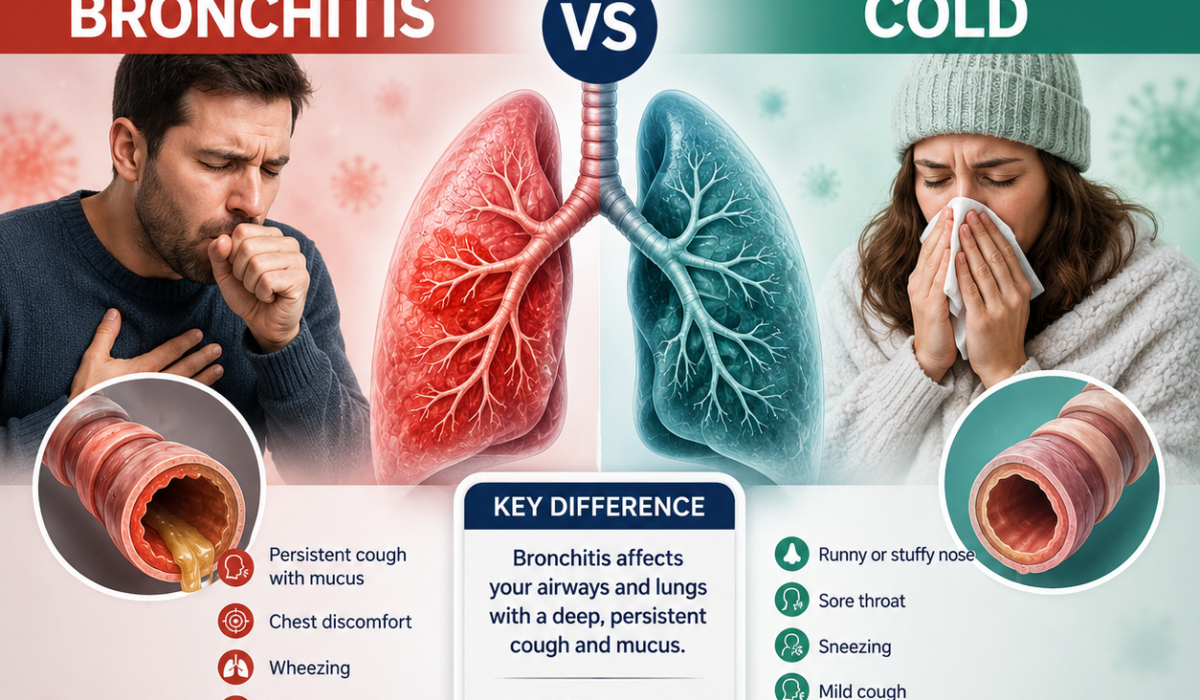
If you have a cough, congestion, fatigue, or a sore throat, it can be hard to know whether you’re dealing with a common cold or bronchitis. Both can start with similar symptoms, but they affect the body differently and may need different care.
The fastest way to tell the difference is this: a cold usually stays in the nose and throat, while bronchitis involves the airways and often causes a deeper, lingering cough. Understanding the key signs can help you decide whether home care is enough or whether you should contact a doctor. For related airway symptoms, you may also want to read about bronchitis symptoms, causes, and fast relief.
- What Is a Cold?
- What Is Bronchitis?
- Bronchitis vs Cold: The Fastest Way to Tell
- How the Symptoms Feel Different
- How Long Do Symptoms Last?
- Is Bronchitis More Serious Than a Cold?
- What Causes Each One?
- Can a Cold Turn Into Bronchitis?
- When to See a Doctor
- Home Care for Cold and Bronchitis
- Do You Need Antibiotics?
- How to Tell Fast: A Simple Rule
- Common Questions About Bronchitis vs Cold
- Bottom Line
What Is a Cold?
A cold is a mild viral infection of the upper respiratory tract. It usually affects the nose, sinuses, and throat.
Common cold symptoms include:
- Runny or stuffy nose
- Sneezing
- Sore throat
- Mild cough
- Mild fatigue
- Watery eyes
- Low-grade fever, especially in children
Colds usually improve within 7 to 10 days, though a cough or mild congestion can last a little longer.
Because a cold is usually limited to the upper airway, the symptoms tend to feel more irritating than severe. Many people can still manage daily activities, even if they feel run down. In a typical case of bronchitis vs cold, the cold side of the comparison is the one that stays above the chest and mainly affects the nose and throat.
Colds are common in both adults and children, and they often spread easily in homes, classrooms, offices, and other close-contact settings. Frequent handwashing, avoiding close contact with sick people, and covering coughs and sneezes can help reduce the spread.
What Is Bronchitis?
Bronchitis is inflammation of the bronchial tubes, which carry air to and from your lungs. It often develops after a cold or another respiratory infection.
The main symptom of bronchitis is a persistent cough. This cough may be dry at first, then produce mucus.
Common bronchitis symptoms include:
- Deep or hacking cough
- Mucus production
- Chest discomfort or tightness
- Wheezing
- Shortness of breath
- Fatigue
- Mild fever or chills
Acute bronchitis often lasts 1 to 3 weeks, but the cough can linger longer.
If you want a fuller breakdown of symptoms and recovery, see this guide on acute bronchitis symptoms and fast relief.
Because the inflammation is in the lower airways, bronchitis often feels more “chesty” than a regular cold. That deeper involvement is one reason bronchitis vs cold matters when you are trying to understand whether the illness is settling down or moving into the lungs.
Acute bronchitis can happen after a viral infection, but airway irritation from smoke, pollution, dust, or chemical fumes can also make symptoms worse. Even if the cause starts as an infection, the cough may continue after the virus itself is gone because the bronchial tubes remain irritated.
Bronchitis vs Cold: The Fastest Way to Tell
Here’s the simplest way to compare them:
| Symptom | Cold | Bronchitis |
|---|---|---|
| Runny nose | Common | Less common |
| Sneezing | Common | Less common |
| Sore throat | Common | Sometimes |
| Cough | Mild to moderate | Usually stronger and longer-lasting |
| Mucus | Sometimes | Common |
| Chest tightness | Uncommon | Common |
| Wheezing | Uncommon | Common |
| Shortness of breath | Rare | More likely |
Quick clue:
- Mostly nose and throat symptoms = likely a cold
- Deep cough, chest symptoms, or wheezing = more likely bronchitis
In the classic case of bronchitis vs cold, the cough is the biggest clue. A cold may bring on a light cough from throat irritation or post-nasal drip, but bronchitis usually brings a heavier cough that feels like it comes from deeper in the chest.
Another practical way to think about it is location: if the problem feels like it sits in the nose, throat, and sinuses, a cold is more likely. If the irritation is centered lower down, with coughing that feels hard to shake and comes from the chest, bronchitis moves higher on the list.
It can also help to pay attention to the sound of the cough. A dry, scratchy cough may happen with a cold, while a rough, barking, or mucus-producing cough often points more toward bronchitis. If you want more on cough patterns, you can also explore what a bronchitis cough sound means.
How the Symptoms Feel Different
Cold symptoms
A cold often starts with a scratchy throat, sneezing, and a runny nose. You may feel tired, but symptoms are usually mild and manageable. The cough, if present, is often from post-nasal drip and is not usually severe.
Many people describe a cold as irritating but not especially limiting. The pressure is more in the head, nose, and throat than in the chest.
With a cold, you may still be able to work, study, or handle normal tasks, even if you need extra rest. Symptoms often peak early, then gradually improve day by day. When the illness follows that pattern, it usually fits the cold side of bronchitis vs cold more than a chest infection.
Bronchitis symptoms
Bronchitis tends to feel more chest-centered. The cough may be harsh, frequent, and exhausting. You may feel like mucus is stuck in your chest, and breathing may feel a little harder than usual, especially during activity.
In daily life, bronchitis can make talking, sleeping, and physical activity more uncomfortable than a typical cold. That deeper chest involvement is one reason bronchitis vs cold can matter when deciding whether to rest at home or call a clinician.
Some people also notice mild wheezing, a burning feeling in the chest when coughing, or soreness in the chest muscles from repeated coughing. These symptoms do not automatically mean something is severe, but they do suggest the lower airways are irritated.
Bronchitis may also feel worse when you take a deep breath, walk up stairs, or lie down at night. If a cough keeps waking you up or makes you feel winded more easily than usual, that is another reason bronchitis becomes more likely than a simple cold.
How Long Do Symptoms Last?
The duration can help tell them apart.
Cold
- Usually lasts about 1 week
- Most symptoms improve within 7 to 10 days
- Cough can linger briefly after other symptoms fade
Bronchitis
- Often lasts 2 to 3 weeks
- Cough may continue even after you start feeling better
- Mucus and chest irritation can linger
If your cough is not improving after a few weeks, bronchitis may be more likely than a cold.
Some people also notice that the cough is worse at night or after activity. That pattern can happen with bronchitis because the airways remain irritated even after the initial infection starts to fade.
A cold that follows its usual timeline often begins to loosen its grip after several days. In contrast, bronchitis can drag on, with the worst symptom being the cough rather than the stuffiness. That longer course is a major reason people search for bronchitis vs cold in the first place.
Is Bronchitis More Serious Than a Cold?
Usually, yes. A cold is generally mild and self-limited. Bronchitis can be more disruptive, especially if it causes shortness of breath, wheezing, or a long-lasting cough.
That said, acute bronchitis often gets better on its own, especially when caused by a virus. The main concern is making sure it is not something more serious, such as pneumonia, asthma, or chronic bronchitis.
It is also important to pay attention to your overall pattern. If the illness is steadily improving, home care may be enough. If your breathing gets worse, or the cough becomes more intense instead of easing, you should get medical advice.
A cold is usually uncomfortable but not dangerous for most healthy adults. Bronchitis is still often treatable at home, but it deserves more attention if you have wheezing, chest tightness, or trouble catching your breath. That is why many people compare bronchitis vs cold when deciding whether the symptoms are still in the “wait and see” category.
What Causes Each One?
Causes of a cold
Colds are caused by viruses, most commonly rhinoviruses. They spread through:
- Coughs and sneezes
- Touching contaminated surfaces
- Hand-to-face contact
Causes of bronchitis
Acute bronchitis is also usually caused by a virus, often the same kinds that cause colds or flu. Less commonly, it can be caused by bacteria or irritants.
Common triggers include:
- Viral infections
- Smoke exposure
- Air pollution
- Dust or chemical fumes
According to the CDC overview of bronchitis, viral infections are the most common cause, which is why antibiotics are not usually needed.
In everyday life, the same germs that cause a cold can sometimes set off bronchial inflammation. That is why a person may start with a mild upper-respiratory illness and then end up with a chesty cough. This progression is one of the most common reasons for confusion in bronchitis vs cold.
Environmental irritants can also make both conditions feel worse. Smoke, poor air quality, and strong chemical fumes may inflame the airways and prolong coughing, especially in people who already have sensitive lungs.
Can a Cold Turn Into Bronchitis?
Yes. A cold can sometimes lead to bronchitis if the infection spreads from the upper airways into the bronchial tubes. This is why a cold that seems to “move into the chest” may start to cause a deeper cough or chest congestion.
When that happens, the first illness may look mild at the start, but the cough becomes more persistent. That shift is one of the clearest signs in the broader bronchitis vs cold comparison.
Not every lingering cough means bronchitis, though. Sometimes the cough remains because the throat and airways are still sensitive after the virus has passed. Even so, if the cough feels deeper, is producing mucus, or is making breathing harder, bronchitis becomes more plausible.
People with asthma, allergies, or a history of frequent respiratory infections may be more likely to notice this progression. If you have repeated episodes, it is a good idea to discuss the pattern with a healthcare professional.
When to See a Doctor
You should contact a doctor if you have any of the following:
- Shortness of breath
- Wheezing
- Chest pain
- Fever that lasts more than a few days
- Cough lasting more than 3 weeks
- Coughing up blood
- Symptoms that keep getting worse
- A condition such as asthma, COPD, or heart disease
Seek urgent care right away if you have severe trouble breathing, blue lips, confusion, or severe chest pain.
It is especially important to get checked if you have recurring episodes of chest cough or if you already live with a lung condition. In those situations, what seems like a routine respiratory infection may need closer evaluation.
If your symptoms are clearly improving but the cough is hanging on, that can still happen with bronchitis. Still, a cough that is not easing after several weeks, or a sudden change from mild to severe symptoms, should not be ignored.
Home Care for Cold and Bronchitis
Many mild cases of both conditions improve with rest and supportive care.
Helpful steps include:
- Drink plenty of fluids
- Rest as much as possible
- Use a humidifier
- Try honey for cough if you are over age 1
- Use over-the-counter cold medicine as directed
- Avoid smoke and other irritants
- Use acetaminophen or ibuprofen for fever or discomfort if appropriate
Because bronchitis affects the airways, avoiding smoke and staying hydrated can be especially helpful.
Warm drinks, steam from a shower, and throat lozenges may also ease discomfort if your symptoms are centered in the throat. For a chestier cough, rest and fluid intake are still the main supports while your body clears the irritation.
Sleep can also make a difference. If coughing is worse at night, try propping your head up slightly and keeping the room air comfortably humid. These small adjustments may reduce irritation and help you sleep more comfortably while recovering from either condition.
If a cold is the main issue, symptom relief may come fairly quickly. If bronchitis is the cause, the goal is often to make the cough more manageable while the airways heal. Either way, taking it easy and staying away from irritants can support recovery.
Do You Need Antibiotics?
Usually not. Since both colds and acute bronchitis are typically caused by viruses, antibiotics do not help in most cases. A doctor may consider them only if there is evidence of a bacterial infection or another medical issue.
Using antibiotics when they are not needed can cause side effects and does not speed recovery from a virus. That is why the distinction in bronchitis vs cold matters: the right treatment depends on the cause, not just the cough.
If a healthcare professional suspects something other than a routine viral illness, they may recommend a different treatment plan. But for the average cold or acute bronchitis case, supportive care is the main approach.
How to Tell Fast: A Simple Rule
Ask yourself these questions:
- Do I mostly have a runny nose, sneezing, and sore throat?
That points more toward a cold. - Do I have a deep cough, chest tightness, wheezing, or mucus?
That points more toward bronchitis. - Has it been more than a week or two and the cough is still strong?
Bronchitis becomes more likely. - Am I short of breath or feeling worse instead of better?
You should get medical advice.
If you are still unsure, comparing the symptom location can help: nose and throat symptoms suggest a cold, while chest-centered symptoms suggest bronchitis.
Another easy shortcut is to think about your day. If the illness mostly makes you sniffle, sneeze, and reach for tissues, a cold is more likely. If it makes you cough from deep in the chest and leaves you feeling winded, bronchitis is more likely. That practical difference is the heart of bronchitis vs cold.
For parents trying to sort out a child’s cough, the pattern can be especially helpful. A child with a simple cold may seem congested and tired but still breathe normally. A child with bronchitis may cough more persistently, seem more uncomfortable at night, or get short of breath during play.
Common Questions About Bronchitis vs Cold
Can bronchitis start like a cold?
Yes. Many cases begin with cold-like symptoms and later develop into a chest cough.
Is bronchitis contagious?
If it is caused by a virus, yes, it can be contagious, especially early on.
Can you have a cold and bronchitis at the same time?
Yes. A cold can occur first and bronchitis can follow, or symptoms can overlap.
Does bronchitis always cause mucus?
Not always, but mucus is common, especially as the condition progresses.
How do I know if it’s pneumonia instead?
Pneumonia is usually more serious and may cause high fever, significant shortness of breath, chest pain, and worsening illness. If you suspect pneumonia, seek medical care promptly.
For children with breathing-related illnesses, this overview of bronchitis in kids can also be helpful when symptoms seem more intense than a routine cold.
Can weather make a difference? Yes. Cold, dry air can sometimes make coughing feel worse, and winter illnesses may seem more frequent because people spend more time indoors together. If that sounds familiar, you may also find this guide on bronchitis in winter symptoms, causes, and relief tips useful.
Bottom Line
The easiest way to tell bronchitis vs cold is to look at where the symptoms are centered:
- Cold: runny nose, sneezing, sore throat, mild cough
- Bronchitis: deep persistent cough, mucus, chest tightness, wheezing, shortness of breath
If your symptoms are mostly in your nose and throat, it’s probably a cold. If the cough feels deeper, lasts longer, or comes with chest symptoms, bronchitis is more likely.
When in doubt, especially if breathing is affected or symptoms are worsening, it’s best to check with a healthcare professional. Paying attention to the pattern early can help you handle bronchitis vs cold more confidently and know when it is time to get help.
As a final reminder, both illnesses can overlap at the start, but the course of the illness often tells the story. A cold usually fades within days, while bronchitis tends to keep the cough going longer and may involve the chest more noticeably. If you are watching your symptoms closely, that difference can help you make a better decision about rest, home care, and when to seek medical advice.