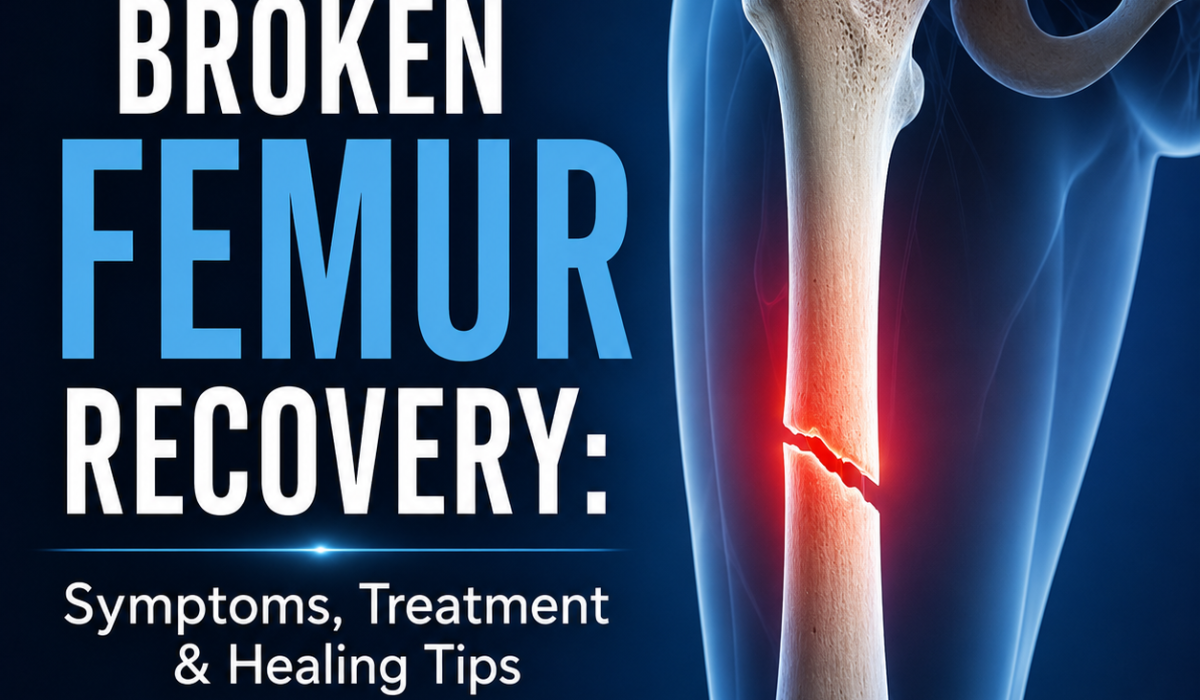
A broken femur is one of the most serious bone injuries a person can experience. The femur, or thigh bone, is the longest and strongest bone in the body, so it usually takes a major force to break it. Because of that, recovery often involves surgery, a long healing period, and careful rehabilitation.
If you are searching for broken femur recovery symptoms, treatment, and healing tips, the most important thing to know is this: recovery is possible, but it takes time, medical follow-up, and patience. This guide explains what to expect, how a broken femur is treated, common symptoms during recovery, and practical ways to support healing.
Table of Contents
- What Is a Broken Femur?
- Broken Femur Symptoms
- When to Seek Emergency Care
- How Is a Broken Femur Diagnosed?
- Broken Femur Treatment
- Broken Femur Recovery Time
- What to Expect During Broken Femur Recovery
- Common Problems During Recovery
- Healing Tips for Broken Femur Recovery
- Can You Walk After a Broken Femur?
- Can a Broken Femur Heal on Its Own?
- When Can You Return to Normal Activities?
- Long-Term Outlook
- Summary
What Is a Broken Femur?
A broken femur is a fracture of the thigh bone. It can happen near the hip, in the shaft of the bone, or near the knee. These injuries are often caused by:
- Car accidents
- Severe falls
- Sports injuries
- Direct trauma
- High-impact accidents
Because the femur is surrounded by strong muscles and major blood vessels, a fracture can lead to significant pain, bleeding, and difficulty moving the leg. A person with broken femur recovery needs usually has to manage both the bone injury and the soft-tissue damage around it.
Broken Femur Symptoms
A broken femur usually causes very obvious symptoms. In some cases, the leg may look deformed or shorter than the other leg.
Common broken femur symptoms include:
- Severe pain in the thigh or hip
- Inability to stand or walk
- Swelling and bruising
- Visible deformity or abnormal angle of the leg
- A shortened leg
- Numbness or tingling if nerves are affected
- Bleeding if the fracture is open
- Muscle spasms around the injury
If the fracture is severe, the person may also feel dizzy, weak, or lightheaded due to blood loss or shock. These symptoms can make broken femur recovery more complicated if treatment is delayed.
When to Seek Emergency Care
A broken femur is a medical emergency. Call emergency services right away if someone has:
- A suspected femur fracture after trauma
- A leg that looks twisted, shortened, or deformed
- Heavy bleeding
- Severe swelling
- Loss of feeling or movement in the foot or leg
- Signs of shock such as pale skin, rapid heartbeat, confusion, or fainting
Do not try to move the leg unless necessary for safety. Keep the person still and wait for emergency help.
How Is a Broken Femur Diagnosed?
Doctors usually diagnose a broken femur with:
- A physical exam
- X-rays
- CT scans if the fracture is complex
- Blood tests if surgery is needed or blood loss is a concern
The doctor will also check circulation, nerve function, and any other injuries, since femur fractures often happen in high-impact accidents. If you want to understand how the bone itself responds to injury, this overview of fracture care and recovery can also help explain how doctors monitor healing after trauma.
Broken Femur Treatment
Treatment depends on the location and type of fracture, the person’s age, and whether the bone broke into several pieces. In most cases, surgery is needed.
1. Initial Stabilization
Before surgery, the leg may be immobilized with:
- A splint
- Traction
- Pain medication
- Fluids if there is blood loss
This helps reduce pain and prevent further damage.
2. Surgery
Most broken femurs are treated with surgery to realign and stabilize the bone. Common surgical methods include:
- Intramedullary nailing: A metal rod is placed inside the bone to hold it in place
- Plates and screws: Metal hardware is attached to the outside of the bone
- External fixation: A frame outside the leg holds the bone steady, often used for severe or temporary stabilization
The goal of surgery is to keep the bone aligned so it can heal correctly.
3. Pain Management
Pain control is an important part of treatment. Doctors may prescribe:
- Prescription pain medication
- Anti-inflammatory medicine
- Ice and elevation in the early stages
- Nerve-related pain treatments if needed
4. Physical Therapy
Rehabilitation is a major part of broken femur recovery. A physical therapist helps restore:
- Strength
- Range of motion
- Balance
- Walking ability
- Flexibility
Therapy usually starts slowly and increases as the bone heals.
Broken Femur Recovery Time
Recovery time for a broken femur varies widely. In general, bone healing can take about 3 to 6 months, but full recovery may take longer, especially after severe fractures or major surgery.
Factors that affect healing time include:
- The severity of the fracture
- The type of surgery used
- Age and overall health
- Smoking
- Nutrition
- Whether there were other injuries
- How well the person follows rehab instructions
Some people return to normal activities sooner, while others need many months before walking comfortably without support.
What to Expect During Broken Femur Recovery
Recovery often happens in stages.
Early Recovery
In the first days or weeks, the focus is on:
- Pain control
- Swelling reduction
- Wound care if surgery was performed
- Preventing complications
- Limited movement or weight-bearing
Middle Recovery
As healing progresses, the focus shifts to:
- Gradually bearing weight
- Regaining knee and hip motion
- Strengthening the leg muscles
- Improving walking with crutches, a walker, or a cane
Later Recovery
Later stages often include:
- More advanced physical therapy
- Return to daily activities
- Reduced pain and stiffness
- Improved mobility and endurance
It is normal to feel weak, stiff, and tired during recovery. These symptoms usually improve gradually as broken femur recovery continues.
Common Problems During Recovery
Even with proper treatment, some complications can happen. These may include:
- Infection after surgery
- Blood clots
- Delayed bone healing
- Nonunion, where the bone does not heal properly
- Leg length differences
- Stiffness in the knee or hip
- Muscle weakness
- Ongoing pain
Contact a doctor if pain suddenly worsens, swelling increases, the incision becomes red or warm, or there is fever or drainage from the wound.
Healing Tips for Broken Femur Recovery
Supporting healing is just as important as the medical treatment itself. These tips can help recovery go more smoothly.
Follow Weight-Bearing Instructions
Do not put weight on the leg unless your doctor says it is safe. Too much pressure too early can slow healing or damage the repair.
Attend Physical Therapy
Physical therapy is one of the best ways to regain function. Even when exercises feel difficult, they help restore strength and movement.
Eat a Bone-Healing Diet
Nutrition plays a big role in recovery. Focus on:
- Protein for tissue repair
- Calcium for bone strength
- Vitamin D for calcium absorption
- Vitamin C for healing
- Zinc and magnesium for recovery support
Good food choices include dairy products, leafy greens, eggs, fish, beans, nuts, lean meat, and fortified foods.
Avoid Smoking and Limit Alcohol
Smoking can slow bone healing and increase the risk of complications. Alcohol can also interfere with recovery and balance. Avoiding both can improve healing outcomes.
Use Mobility Aids Safely
Crutches, a walker, or a cane may be necessary for weeks or months. Use them exactly as instructed to avoid falls and extra strain.
Elevate and Ice Early on
In the early stages, elevation and ice may help reduce swelling and pain. Follow your doctor’s guidance on how often and how long to use ice.
Keep Follow-Up Appointments
X-rays and checkups help doctors confirm that the bone is healing correctly. These visits are important even if you feel better.
Protect Against Falls
Make your home safer by:
- Removing loose rugs
- Keeping walkways clear
- Using good lighting
- Installing grab bars if needed
- Wearing supportive shoes
A second fall could seriously disrupt recovery. Many patients also find it useful to learn general fracture precautions from trusted sources such as the AAOS OrthoInfo education library.
Can You Walk After a Broken Femur?
Yes, but not right away in many cases. Walking usually begins gradually with support devices and guided therapy. The timing depends on the type of fracture and how stable the surgical repair is.
Some people may start limited weight-bearing sooner, while others need more time before they can walk safely. Never rush this step without medical approval during broken femur recovery.
Can a Broken Femur Heal on Its Own?
A broken femur almost always needs medical treatment and often surgery. Because the bone is large and the fracture is usually caused by major trauma, it generally cannot heal properly without stabilization.
When Can You Return to Normal Activities?
Returning to normal activities depends on how well the bone heals and how strong the leg becomes. Light activities may resume before sports, heavy lifting, or physically demanding work. Driving, exercise, and work should only resume when a doctor says it is safe.
A person may feel healed before the bone is fully strong. This is why follow-up imaging and medical clearance matter. For some people, broken femur recovery is measured in months, not weeks.
Long-Term Outlook
Most people with a broken femur recover well with proper treatment and rehabilitation. However, recovery may be slow and challenging. The best outcomes usually come from:
- Early medical care
- Proper surgery if needed
- Good pain management
- Physical therapy
- Healthy nutrition
- Patience with the healing process
Some people regain full function, while others may have lingering stiffness, discomfort, or changes in strength. Ongoing therapy and follow-up can make a big difference.
Summary
Broken Femur Recovery takes time, but with the right treatment and care, healing is very possible. The most common broken femur symptoms include severe thigh pain, swelling, deformity, and inability to walk. Treatment usually involves emergency care, surgery, pain management, and physical therapy. Healing tips such as following weight-bearing limits, eating a nutrient-rich diet, attending rehab, and avoiding smoking can support a smoother recovery.
If you or someone you know has a suspected broken femur, seek emergency medical attention immediately. Early treatment is the best way to reduce complications and improve long-term recovery.