The Asante Snap insulin pump was once seen as a promising option for people with diabetes who wanted a simpler, more user-friendly insulin delivery system. Its sudden disappearance left many patients asking the same question: What happened to the Asante Snap insulin pump?
The short answer is that Asante Solutions, the company behind the Snap pump, shut down after financial difficulties and could not continue operating. Although the pump had innovative features and a loyal user base, the company was unable to secure enough funding to stay in business. As a result, the Asante Snap insulin pump was discontinued, and the technology was removed from the market.
This article explains why the Asante Snap insulin pump failed, what made it different, and what patients needed to know when the company closed.
Table of Contents
- What Was the Asante Snap Insulin Pump?
- Why Was the Asante Snap Pump Popular?
- So, What Happened to the Asante Snap Insulin Pump?
- Why Did Asante Solutions Shut Down?
- Was the Asante Snap Discontinued Because of Safety Problems?
- What Happened to Current Users When the Company Closed?
- How Did the Closure Affect the Diabetes Community?
- Could the Asante Snap Have Survived?
- What Made the Asante Snap Different from Other Insulin Pumps?
- What Can We Learn from the Asante Snap Insulin Pump Demise?
- Common Questions About the Asante Snap Insulin Pump
- The Bottom Line
What Was the Asante Snap Insulin Pump?
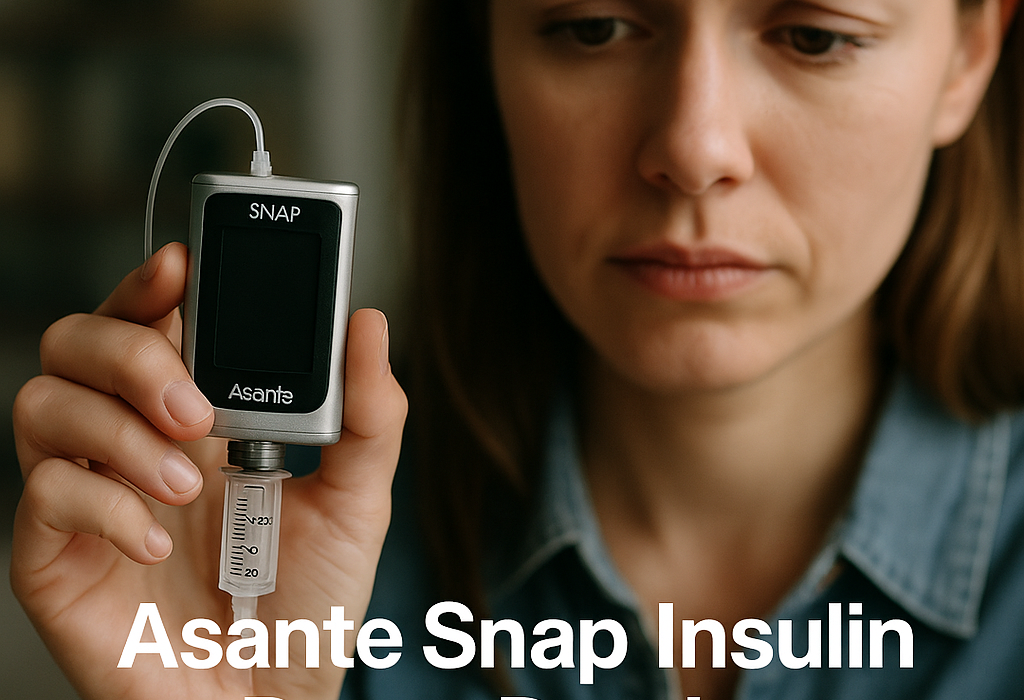
The Asante Snap insulin pump was an insulin pump designed for people with diabetes who needed continuous insulin delivery. Like other pumps, it delivered rapid-acting insulin throughout the day and allowed users to program doses for meals and corrections.
What made the Snap pump stand out was its design. It was marketed as a pump that was:
- Simple to use
- Fast to set up
- More intuitive than many older pumps
- Built with disposable cartridge components
The name “Snap” came from one of its key features: users could quickly snap in a prefilled insulin cartridge, which was meant to make pump management easier and less stressful.
For readers who want a broader overview of how insulin is used in daily diabetes care, the CDC’s insulin basics page is a helpful educational reference.
Like many medical devices, the Snap pump was not just about technology. It was also about workflow, comfort, and the daily experience of living with diabetes. That is one reason the device drew attention from people who wanted something that felt less complicated than traditional systems. A pump that is easier to learn can reduce anxiety for new users, and a simpler setup can make diabetes management feel more manageable over time.
Why Was the Asante Snap Pump Popular?
The Asante Snap insulin pump gained attention because it tried to solve some common frustrations people had with insulin pumps.
Easier cartridge loading
Traditional pumps often required users to manually fill reservoirs with insulin. The Snap aimed to simplify this by using prefilled cartridges that reduced setup time and potential errors.
User-friendly interface
Many users found the pump’s interface more straightforward than some competing devices. It was designed to be accessible for people who wanted a less complicated experience.
Less waste during changes
Because only certain parts of the system were disposable, the Snap was marketed as more efficient than some fully reusable or fully disposable systems.
A modern alternative
At the time, the pump appealed to users looking for a fresh option in a market dominated by a few major manufacturers.
Why convenience mattered
For someone using an insulin pump every day, convenience is not a luxury. It affects whether the device gets used correctly, whether supplies are changed on time, and whether the person feels confident in the process. A design that reduces steps can make a meaningful difference in everyday diabetes management.
People with diabetes often have to balance meals, exercise, medication timing, glucose monitoring, and supply changes all at once. A pump that reduces mental load can be a major benefit. That is why the Snap’s simple cartridge concept resonated with some patients and clinicians.
So, What Happened to the Asante Snap Insulin Pump?
The Asante Snap insulin pump was discontinued because Asante Solutions went out of business. The company was unable to raise enough money to keep operating, which meant it could not continue manufacturing, distributing, or supporting the pump.
In 2015, Asante Solutions announced that it would cease operations. This led to the end of the Snap pump product line. The company’s shutdown was not caused by a problem with insulin pump mechanics alone, but by a broader business failure.
That distinction matters. When people hear that a medical device disappeared, they often assume there was a defect, recall, or safety failure. In this case, the main issue was financial. The company could not sustain the business long enough to keep the product on the market.
Once operations stopped, the pump no longer had the ecosystem it needed to survive. A pump is not just a device on a shelf. It depends on software support, compatible cartridges, customer service, training, supply distribution, and the ability to replace parts when needed. Without that infrastructure, even a well-liked product can become unusable.
The case of the Snap pump is a reminder that product quality and business stability are not the same thing. A device can be admired for its design and still disappear if the company behind it cannot remain financially viable.
Why Did Asante Solutions Shut Down?
There were several reasons the company struggled.
1. Funding problems
Asante Solutions depended on investor support to stay afloat. When the company could not secure additional funding, it could not continue development or production.
2. Competitive market
The insulin pump market is highly competitive. Large, established companies already had strong market share, brand recognition, and distribution networks. That made it difficult for a smaller company like Asante to grow fast enough.
3. High business costs
Medical device companies often face high costs for:
- Product development
- Regulatory approval
- Manufacturing
- Sales and support
- Insurance and distribution systems
If sales do not grow quickly enough, these costs can become difficult to manage.
4. Limited time to scale
Even though the Snap pump had innovative features, the company may not have had enough time or resources to reach the level of adoption needed for long-term success.
5. Dependence on a narrow product strategy
Startups in the medical device space often face extra pressure when a single product carries most of the company’s future. If that one product does not scale quickly enough, the business can struggle to diversify its revenue or survive delays in market adoption. In practical terms, that means every setback matters more.
The rise and fall of a medical device company can happen quickly when expenses outpace sales. Even if customers like the product, a company still needs manufacturing capacity, service infrastructure, and capital to keep improving the device. Without those supports, market traction alone may not be enough.
Was the Asante Snap Discontinued Because of Safety Problems?
For many users searching this topic, one important question is whether the pump was pulled because it was dangerous.
The answer is no, the Asante Snap insulin pump was not primarily discontinued because of a major safety recall. Its demise was mainly a business closure, not a product safety scandal.
That said, when any insulin pump is discontinued, it can still create concerns for users who depend on it daily. Patients needed guidance on transitioning to another pump or insulin delivery method.
This is one reason discontinuation announcements can feel alarming even when the device itself is not the problem. A pump user is often tied to specific cartridges, training routines, and settings that are not easily replaced overnight. If a device disappears, the person using it may have to make a quick and stressful change, even if the pump had been working well.
For that reason, the closure affected confidence as much as convenience. Patients and clinicians had to think not only about the pump’s performance, but about continuity of care and how to avoid interruptions in insulin delivery.
What Happened to Current Users When the Company Closed?
When Asante Solutions shut down, people using the Snap pump had to switch to another insulin delivery system. This created a difficult transition for many patients.
Users were typically advised to work closely with their healthcare providers to move to:
- Another insulin pump
- Multiple daily injections
- A different diabetes management device
The company’s closure also meant that replacement parts, cartridges, and support became unavailable or limited, which made continued use impossible over time.
In real life, this kind of change can involve multiple steps. Users may need new prescriptions, training on a different interface, updates to insulin dosing routines, and follow-up visits to make sure the replacement plan is working. Even when a patient has used pumps before, a new device can take time to learn.
There can also be emotional effects. Some users may feel frustrated because they trusted the product and invested time in learning it. Others may worry about losing a feature they found especially helpful, such as the Snap’s simplified cartridge system. Those concerns are normal and understandable.
As with any device transition, the most important issue is safety. Changes in insulin delivery should be planned carefully so the patient does not go without the insulin support they need. That is why communication with medical professionals is so important when a device is no longer available.
How Did the Closure Affect the Diabetes Community?
The end of the Asante Snap insulin pump was disappointing for many people because it represented the loss of a device that offered a simpler experience. Some users appreciated its ease of use and felt frustrated that a well-liked product disappeared.
The closure also showed how unstable the medical device market can be, especially for smaller companies trying to compete with major brands.
For patients, the biggest impact was practical:
- Disruption in care
- Need to transition quickly
- Concerns about compatibility and support
- Stress related to changing a familiar device
It also sparked a broader discussion about innovation in diabetes technology. Many people in the diabetes community want more options, more competition, and more device designs that feel humane and easy to use. The Snap pump represented that kind of innovation. Its disappearance was a setback because it reduced choice in a field where patients already have to make many daily decisions.
From a consumer perspective, the story reinforces an important lesson: in medical technology, the best user experience is only part of the equation. A product must also be backed by a company that can survive long enough to support users for years, not just months.
Could the Asante Snap Have Survived?
In hindsight, many people wonder whether the Asante Snap insulin pump could have lasted longer if conditions had been different.
Possibly, but success would have depended on several factors:
- More investor backing
- Stronger sales growth
- Broader insurance coverage
- Greater market penetration
- Continued product development
Even with a good product, a company can fail if it cannot sustain operations financially. In the case of Asante, business realities outweighed product appeal.
To understand this more clearly, it helps to think about the medical device market as a long-term trust relationship. Users need to believe that the company will still be there next year for supplies, service, and updates. If that trust breaks, adoption slows, investors become cautious, and growth becomes harder. For smaller companies, that cycle can be difficult to reverse.
The Snap pump may have had a chance if it had achieved faster commercial success or attracted stronger backing early on. But once funding dried up, the path forward became much narrower. A useful product cannot continue to help patients if the organization behind it cannot keep the lights on.
What Made the Asante Snap Different from Other Insulin Pumps?
The Snap pump was often remembered for its unique approach to pump design.
Prefilled cartridge system
This was one of its best-known features and a major selling point.
Easy-to-learn design
The system was meant to be less intimidating for new users.
Focus on convenience
The pump was built to reduce hassle in daily diabetes care.
While these features were attractive, they were not enough to guarantee the company’s survival in a competitive and expensive industry.
Compared with more traditional pumps, the Snap focused on reducing the burden of setup. That made it appealing to people who wanted fewer steps and less handling during cartridge changes. For some patients, that kind of simplification can make a device feel less clinical and more manageable in everyday life.
The other side of that convenience is dependence on a proprietary system. When a device relies on its own special cartridges or support process, the user becomes dependent on the company continuing to manufacture and supply those components. If the company fails, that dependence becomes a vulnerability.
This is one of the most important lessons from the Asante story: innovation can improve the patient experience, but it also needs a durable supply chain and a stable business model.
What Can We Learn from the Asante Snap Insulin Pump Demise?
The story of the Asante Snap insulin pump is more than just a product ending. It highlights several important lessons about diabetes technology.
Innovation alone is not enough
A clever design does not guarantee long-term success if a company lacks financial stability.
Market competition matters
Even strong products can fail when competing against large, established companies.
Support is essential
For medical devices, ongoing customer support, supplies, and training are just as important as the device itself.
Patients need continuity
When a device is discontinued, patients can be significantly affected. That is why stability matters so much in diabetes care.
Better user experience can still have value
Even though the company closed, the Snap pump left behind an important idea: diabetes devices should be easier to use. That design philosophy continues to influence how people think about pumps today. The market has moved toward devices that try to reduce friction, simplify onboarding, and improve comfort for users who have to interact with their technology every day.
The demise of the Asante Snap insulin pump also shows why patients, clinicians, and investors all care about more than feature lists. A device can look impressive on paper, but long-term support, service continuity, and financial resilience are what keep patients safe and confident.
What Patients Should Know About Discontinued Pumps
Whenever an insulin pump is discontinued, the next steps matter. Patients should understand how to protect themselves during the transition and how to avoid gaps in insulin delivery.
Plan ahead whenever possible
If a device you use is announced as discontinued, do not wait until supplies run out. Contact your healthcare team early so you have time to review alternatives.
Review backup options
It is smart to know your backup insulin plan before a problem occurs. Some people may need a different pump, while others may temporarily or permanently move to injections.
Ask about insurance and supply changes
Switching devices can affect coverage, co-pays, and supplier relationships. Your clinic or diabetes educator may help you understand what is covered and what paperwork is needed.
Learn the replacement device thoroughly
Every pump has its own menus, alarms, cartridges, and training requirements. Taking time to learn the new system can reduce errors and stress.
Keep emergency supplies available
Backups matter, especially during transitions. Patients should speak with their care team about what supplies they should keep on hand.
These steps are not unique to the Asante Snap, but they are especially relevant to any patient affected by a discontinued device. A smooth transition depends on preparation, good information, and medical guidance.
Common Questions About the Asante Snap Insulin Pump
Is the Asante Snap insulin pump still available?
No. The Asante Snap insulin pump was discontinued when Asante Solutions shut down.
Why did the Asante Snap insulin pump fail?
The company failed mainly because of financial problems and inability to secure more funding, not because of a major safety issue with the pump itself.
Was the Asante Snap a good insulin pump?
Many users liked its simplicity and convenience. It was considered innovative, but it did not survive as a business product.
Can I still get parts or cartridges for the Snap pump?
No, not through normal channels. Since the company closed, ongoing support and supplies ended.
What should former Snap users do?
Former users needed to transition to another insulin pump or an alternative insulin regimen under the guidance of a healthcare professional.
If you are researching discontinued diabetes technology more broadly, it can also help to look at how other devices are supported and what happens when companies exit the market. That context makes it easier to understand why the Snap pump story mattered beyond one product.
The Bottom Line
The Asante Snap insulin pump demise happened because Asante Solutions went out of business after running into financial and funding problems. The pump itself was known for its convenience, simplicity, and innovative cartridge system, but those strengths were not enough to keep the company alive in a competitive market.
For anyone searching what happened to the Asante Snap insulin pump, the clearest answer is this: the product was discontinued because the company shut down, not because of a major safety failure. Its story remains a notable example of how even promising diabetes technology can disappear when business support falls short.
It also serves as a reminder that the best medical devices need more than good engineering. They need long-term support, dependable manufacturing, user training, and a stable business foundation. Without those pieces, even a well-liked product can vanish, leaving patients and clinicians to adjust quickly and carefully.
In that sense, the Asante Snap remains memorable not only for what it offered, but for what it teaches about the future of diabetes care: innovation matters, but continuity matters just as much.