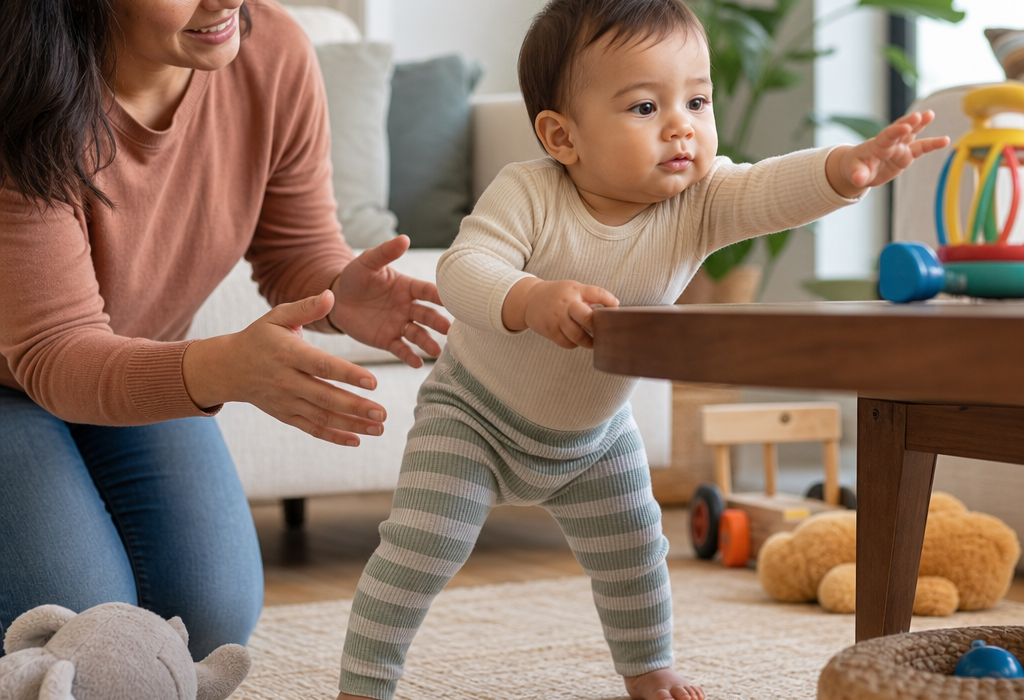
It can be worrying when your 14 month old not walking yet, especially if other babies the same age seem to be cruising around the room. The good news is that many toddlers do not walk independently until somewhere between 12 and 15 months, and some perfectly healthy children take a little longer.
A delayed walking milestone does not always mean something is wrong. In many cases, a child is simply taking more time to gain strength, confidence, and balance. Still, it is important to understand what is typical, what may be causing the delay, and when to check in with a pediatrician if your 14 month old not walking is paired with other concerns.
Table of Contents
- Is it normal for a 14 month old not to walk?
- Typical gross motor milestones before walking
- Common reasons a 14 month old is not walking yet
- Signs that your 14 month old is on track even if not walking yet
- When should you worry about delayed walking?
- Red flags that need prompt evaluation
- What a doctor may check
- How to help a 14 month old learn to walk
- What not to do
- When do babies usually start walking?
- Will a late walker catch up?
- Bottom line
Is it normal for a 14 month old not to walk?
Yes, it can be normal. A 14 month old not walking independently is often still within the typical range, especially if your toddler is making progress in other movement skills.
Most children begin walking independently sometime between 9 and 18 months, with many taking their first steps around 12 months. A toddler who is not yet walking may still be developing normally if they are pulling to stand, cruising along furniture, standing briefly without support, crawling well, and showing interest in moving and exploring.
Walking is just one milestone, and children develop motor skills at different speeds. Some focus first on balance and standing, while others spend more time crawling before taking steps. That is one reason a 14 month old not walking is not automatically a red flag.
It also helps to remember that milestone charts show ranges, not a strict deadline. A child who is active on the floor, curious about movement, and steadily gaining new skills may simply be taking the longer end of the normal timeline.
Typical gross motor milestones before walking
Before a child walks on their own, they usually pass through several gross motor milestones. These can help you gauge whether development is progressing in a healthy way.
By around 9 to 12 months, many babies:
- sit without support
- get into a hands-and-knees crawling position
- pull themselves up to stand
- move sideways while holding furniture
- bear weight on their legs
By around 12 to 14 months, many toddlers:
- cruise around furniture
- stand independently for a few seconds
- take a few steps while holding a hand or toy
- bend down and return to standing with support
- shift weight from one foot to the other
If your 14 month old not walking but is making progress in these other areas, that is often reassuring. These early skills matter because they build the strength and coordination needed for independent steps.
It can be helpful to watch the pattern of progress instead of focusing on a single date. A toddler who is mastering standing, cruising, and squatting to pick up a toy is often doing the work that eventually leads to walking.
Common reasons a 14 month old is not walking yet
There are many possible reasons a toddler may not be walking independently at 14 months. Some are harmless variations in development, while others may need medical attention. Understanding the possibilities can make a 14 month old not walking feel a little less mysterious.
1. Normal developmental variation
Some children simply walk later than others. Just as some talk early and others later, motor development can vary widely. A child may be focusing on other skills, such as language, social interaction, or fine motor development.
2. Limited opportunity to practice
Babies who spend a lot of time in seats, swings, bouncers, or strollers may have fewer chances to practice standing and moving. Floor time helps build the strength and coordination needed for walking.
Short bursts of supported standing, crawling across the room, and pulling up to furniture all add up. The more safe practice a toddler gets, the more likely those muscles and balance reactions will strengthen.
3. Temperament
Some toddlers are cautious by nature. They may prefer to wait until they feel completely stable before trying independent steps. A cautious child may crawl confidently and cruise well but hesitate to let go.
This hesitation is not always a problem. In fact, many careful children take a little longer and then walk when they feel truly ready.
4. Low muscle tone
Low muscle tone, sometimes called hypotonia, can make it harder for a child to support their body weight and balance. These children may seem floppy, tire easily, or have trouble standing for long periods.
Low tone does not always mean there is a serious issue, but it is one reason a pediatrician may want a closer look if walking is delayed.
5. Prematurity
If your child was born early, their milestone timing may need to be adjusted for corrected age. A premature baby may appear delayed by calendar age but be developing appropriately when measured against their adjusted age. For more milestone context, you may also find this related article helpful: 13 Weeks Pregnant: Symptoms, Baby Size & What to Expect.
6. Hip, foot, or leg issues
Structural or orthopedic concerns can affect walking. Examples include:
- hip dysplasia
- bowed legs or turned-in feet
- leg length differences
- pain with standing or stepping
If a child avoids weight-bearing because something hurts or feels unstable, walking may be delayed until that issue is addressed.
7. Neurological or developmental conditions
In some cases, delayed walking may be linked to a condition that affects muscle control, strength, coordination, or overall development. This may include cerebral palsy or a broader developmental delay. These causes are less common, but they are important to identify early.
That is why pediatricians look at the whole child, not just the walking milestone alone.
Signs that your 14 month old is on track even if not walking yet
If your child is not walking independently at 14 months but is doing several of the following, the situation is often less concerning:
- crawling normally
- pulling to stand
- cruising along furniture
- standing while holding on
- bearing weight through both legs
- using both sides of the body equally
- trying to move toward toys or people
- getting up from the floor with help
These are all signs that strength and coordination are developing. A 14 month old not walking can still be on a healthy path if those skills are steadily improving.
You may also notice your toddler squats to pick up objects, shifts between furniture, or takes steps when holding one hand. Those small moves are often part of the path toward independent walking.
When should you worry about delayed walking?
A 14 month old not walking is not automatically a red flag. However, it is worth bringing up with your pediatrician if you notice any of the following:
- your child is not pulling to stand by 12 months
- your child is not cruising by 12 to 14 months
- your child seems very stiff or very floppy
- your child uses one side of the body more than the other
- your child does not bear weight on their legs
- your child has lost skills they previously had
- your child seems in pain when standing or moving
- your child is not meeting other developmental milestones
- your child was born prematurely and milestone timing is unclear
It is especially important to seek medical advice if the delay is combined with concerns about speech, social interaction, vision, hearing, or overall development.
For many families, the decision to call the doctor comes down to a simple question: is the child progressing, even if slowly, or are other skills also lagging? If the answer feels uncertain, a quick conversation with the pediatrician can be reassuring.
Red flags that need prompt evaluation
Some signs suggest a more urgent need for assessment:
- strong preference for one leg or one side of the body
- inability to stand with support
- persistent toe-walking at a very young age
- very poor balance or unusual falls
- muscle stiffness or extreme looseness
- feeding problems along with motor delay
- lack of eye contact or response to sounds
- regression in any area of development
If you see these signs, do not wait for the next routine visit. Contact your pediatrician.
Prompt evaluation matters because early support can make a real difference if a medical, orthopedic, or developmental issue is present.
What a doctor may check
If you ask, “Why is my 14 month old not walking?” the pediatrician will usually look at the whole picture, not just that single milestone.
They may evaluate:
- muscle tone and strength
- balance and coordination
- hip and leg movement
- reflexes
- symmetry of movement
- posture and gait attempts
- overall developmental progress
They may also ask about:
- pregnancy and birth history
- prematurity
- family history of delayed walking
- feeding and growth
- other milestones such as speech, social skills, and hand use
In some cases, the doctor may recommend observation, physical therapy, or further testing if needed. If your pediatrician suggests an outside resource, authoritative guidance from the CDC developmental milestones page can help you compare skills by age.
Sometimes the visit may simply confirm that the child is a late walker and does not need intervention. Other times, it may identify a small issue that can be addressed early, which is another reason it is helpful to ask questions instead of waiting in silence.
How to help a 14 month old learn to walk
If your child is otherwise healthy and simply taking their time, there are several ways you can encourage walking safely. The goal is not to rush a 14 month old not walking, but to give them frequent chances to practice key skills.
Give lots of floor time
Free movement on the floor helps build strength, balance, and coordination. Let your child crawl, cruise, and stand as much as possible during play.
Try spreading toys around the room so your toddler has a reason to move between them. Reaching, shifting, and turning are all useful practice for balance.
Encourage standing and cruising
Place favorite toys slightly out of reach on stable furniture to motivate your child to pull up, shift weight, and move sideways.
Stable low surfaces like a couch, ottoman, or play table can give a cautious child the confidence to hold on while stepping.
Use barefoot time indoors
Bare feet can help toddlers feel the ground better and improve balance. Shoes are useful outdoors, but indoors barefoot time can support early walking practice.
Reduce time in containers
Limit time in car seats, swings, jumpers, and bouncers when possible. These can reduce the chance to practice standing and moving independently.
Offer stable support
You can let your child hold your hands, a sturdy toy, or furniture while practicing steps. Avoid over-supporting them so they still engage their own muscles.
When helping, it is usually better to guide than to carry. The child should still be doing the work of balancing, shifting weight, and taking small risks.
Praise effort, not just success
Encouragement can help cautious toddlers feel more confident. Celebrate standing, cruising, and stepping attempts, not just independent walking.
It can also help to make movement feel playful rather than corrective. A child who enjoys practice is more likely to keep trying, and that repetition is often what leads to progress.
Even a few extra chances each day can help. Short, cheerful practice sessions are often more effective than long sessions that frustrate the child.
What not to do
It is usually best not to:
- force your child to walk before they are ready
- use baby walkers that roll on wheels, which can be unsafe and are not recommended
- compare your child too closely with other toddlers
- assume delay always means a serious problem
Walking often happens once a child feels physically ready and emotionally confident. For some families, the waiting period can feel long, but a 14 month old not walking may simply need more time and practice.
It is also wise not to overcorrect every wobble. Toddlers learn through trial and error, and a little instability is part of the process.
When do babies usually start walking?
Many parents ask when walking should happen. The answer is broad: a child may start anywhere from about 9 to 18 months.
General timeline:
- 9 to 12 months: pulling to stand, cruising, standing briefly
- 12 to 15 months: many take first independent steps
- 15 to 18 months: some children walk later but still normally
If a child is not walking by 18 months, doctors usually want a closer evaluation, even if everything else seems fine. That does not necessarily mean there is a serious condition, but it does mean the delayed walking milestone should be reviewed carefully.
Using this broad window can help parents avoid unnecessary panic while still knowing when to seek advice. A child who is working through the earlier steps of standing and cruising may be exactly where they need to be.
Will a late walker catch up?
Often, yes.
Many toddlers who walk later than their peers catch up quickly once they begin. In fact, some late walkers seem to go from cruising to running in a short time. The key is whether the child is making steady progress in strength, balance, and mobility.
A 14 month old not walking may still be in the stage where the body is building confidence. Once that confidence clicks, the new skill often comes fast. That is why pediatricians usually look for overall progress rather than one isolated milestone.
For many children, the “late” part is brief. Once they gain enough balance to trust their body, independent walking becomes just another part of the daily routine.
Bottom line
A 14 month old not walking is often still within the range of normal development, especially if your child is crawling, cruising, standing with support, and showing steady progress. Some children simply need more time to build the strength and confidence needed for independent steps.
That said, delayed walking should be discussed with a pediatrician if your child is not pulling to stand, not cruising, seems unusually stiff or floppy, uses one side more than the other, or shows other developmental concerns. Early evaluation can provide reassurance and help identify any issue that may need support.
If your toddler is 14 months old and not walking yet, the most important question is not just “Are they walking?” but “Are they moving forward in development?” For many children, the answer is yes. If you want to read more about early child development in a related stage, see our article on newborn parenting.