If you feel overwhelmed, tense, mentally foggy, or constantly “on,” you do not need a perfect wellness routine to feel better. You need a simple plan that helps your nervous system settle quickly and consistently. That is exactly what a 14-day stress reset calendar is designed to do.
This guide gives you a practical, day-by-day plan to help you calm fast, reduce daily stress buildup, and create habits that support long-term emotional balance. It is built for real life: busy schedules, low energy, and high stress. You do not need special equipment, a big time commitment, or advanced mindfulness skills.
Table of Contents
- What Is a 14-Day Stress Reset Calendar?
- How This Stress Reset Helps You Calm Fast
- How to Use This Calendar
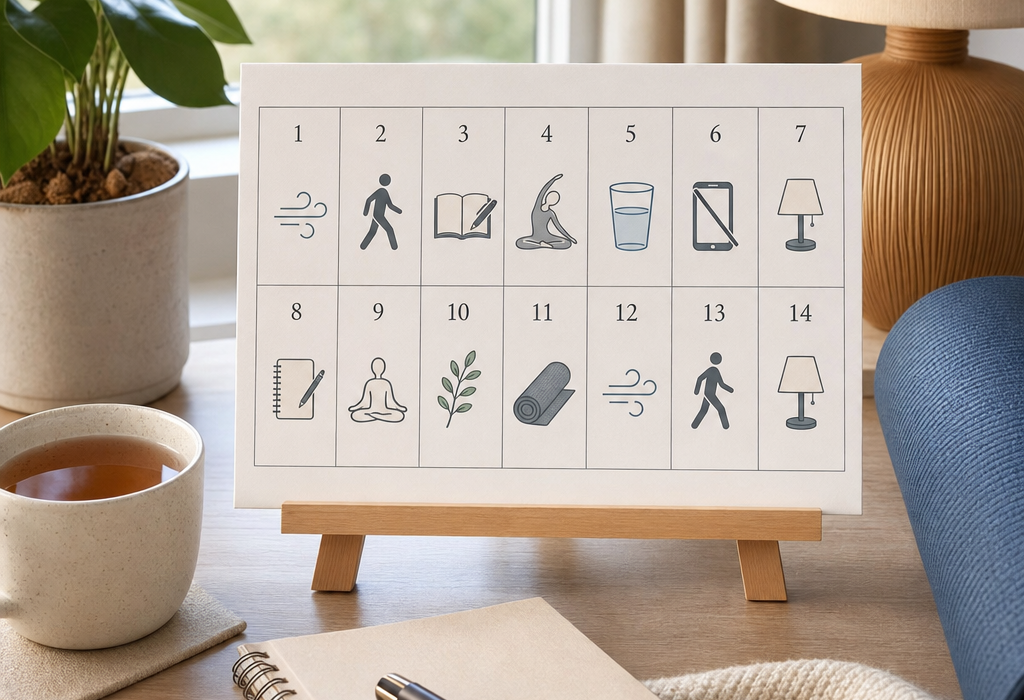
- 14-Day Stress Reset Calendar
- Fast Calm Tools You Can Use Anytime
- Common Questions About a 14-Day Stress Reset Calendar
- Tips to Make Your Reset More Effective
- When Stress May Need More Support
- Final Thoughts
What Is a 14-Day Stress Reset Calendar?
A 14-day stress reset calendar is a short, structured plan that helps you lower stress through small daily actions. Instead of trying to fix everything at once, you focus on one manageable reset at a time.
The goal is to help your body and mind move out of constant stress mode and back into a more balanced state. Over two weeks, you will practice simple habits like breathing, walking, better sleep support, screen breaks, journaling, and boundary setting.
You can think of this 14-day stress reset calendar as a practical refresh for your daily routine. It does not ask you to overhaul your life. It asks you to make one useful change at a time, then let those changes stack up.
How This Stress Reset Helps You Calm Fast
When stress builds up, your body often stays in a heightened state of alert. That can lead to trouble sleeping, muscle tension, irritability, racing thoughts, low energy, headaches, digestive discomfort, and difficulty focusing.
A 14-day reset works because it addresses stress from multiple angles:
- Nervous system regulation through breathing and rest
- Physical release through movement and stretching
- Mental clarity through journaling and planning
- Emotional relief through boundaries and recovery time
- Better daily rhythm through sleep and screen habits
The result is not instant perfection. The result is calmer days, less overwhelm, and more control over how you respond to pressure. If you are looking for a 14-day stress reset calendar that feels realistic, this one is designed to be gentle, repeatable, and useful.
For a deeper look at stress relief strategies and daily routine support, you may also find this related guide helpful: 14 Day Stress Reset: Calm Your Mind in 2 Weeks.
When you add a few calming habits at the right time, the whole day can feel easier to manage. That is why this 14-day stress reset calendar focuses on small actions that are easy to repeat.
How to Use This Calendar
Each day includes one focused action. Keep it simple. The whole point is to make stress relief feel doable.
A few rules for success:
- Do the activity at a realistic time, not a perfect time
- Keep sessions short if needed
- Skip nothing in the name of “catching up”
- Repeat the same day if a certain step helps a lot
- Treat this as a reset, not a performance challenge
If your schedule is packed, a 14-day stress reset calendar still works. You only need enough consistency to create momentum. A few minutes a day is better than waiting for the “right” moment.
—
14-Day Stress Reset Calendar
Day 1: Breathe to Signal Safety
Start with one of the fastest ways to calm the body: slow breathing.
Do this:
Try 5 minutes of breathing with a longer exhale:
Inhale for 4 counts
Exhale for 6 counts
Repeat gently
Why it helps:
Slow exhalation can help reduce physical stress activation and bring your system down from alert mode.
Extra tip:
Do this before checking your phone in the morning or after a stressful event.
On the first day of the 14-day stress reset calendar, the goal is not to do everything. The goal is to notice how your body feels when you give it a clear safety signal. Even one calm breathing session can create a small but meaningful shift.
—
Day 2: Clear One Small Space
Stress often feels worse in cluttered environments. Choose one small area and reset it.
Do this:
Clear your desk, kitchen counter, nightstand, car seat area, or bathroom sink.
Why it helps:
A cleaner space reduces visual overload and creates a sense of control.
Keep it easy:
Set a timer for 10 minutes. Stop when it ends.
Physical clutter can make mental clutter feel louder. This small step makes the 14-day stress reset calendar feel more grounded because your environment starts working with you instead of against you.
—
Day 3: Take a 20-Minute Walk
Movement helps discharge built-up tension.
Do this:
Take a 20-minute walk outside if possible. If not, walk indoors or around your home.
Why it helps:
Walking supports circulation, breaks mental loops, and often improves mood quickly.
If you are very tired:
Do 10 minutes. A little movement is still useful.
A 14-day stress reset calendar should include movement that feels accessible. You do not need to exercise hard to get benefits. Gentle movement can be enough to help your thoughts slow down and your muscles loosen a little.
—
Day 4: Reduce Screen Overload
Constant scrolling and notifications can keep your brain in a stressed state.
Do this:
Choose one:
- Turn off nonessential notifications
- Take a 1-hour screen break
- Avoid screens 30 minutes before bed
- Remove one distracting app from your home screen
Why it helps:
Less stimulation gives your mind more room to settle.
Many people use a 14-day stress reset calendar because they need relief from overstimulation. Reducing screen pressure is one of the quickest ways to make your evenings feel calmer and your attention feel less scattered.
—
Day 5: Drink Water and Eat at Regular Times
Low hydration and skipped meals can make stress feel worse.
Do this:
- Drink a full glass of water in the morning
- Eat a balanced meal
- Avoid going too long without food
Why it helps:
Stable blood sugar and hydration support steadier energy and mood.
Simple meal idea:
Protein + fiber + healthy fat, such as eggs and toast, yogurt and fruit, or rice with vegetables and chicken.
Stress can feel stronger when your body is under-fueled. This step in the 14-day stress reset calendar is simple, but it can make the rest of the week feel easier to manage.
—
Day 6: Write Down What Is Stressing You
Stress gets heavier when it stays unspoken and unorganized.
Do this:
Spend 10 minutes writing:
- What is stressing me right now?
- What is in my control?
- What can wait?
- What do I need today?
Why it helps:
Naming stress creates distance from it and makes it easier to handle.
One reason the 14-day stress reset calendar works is that it helps turn vague pressure into specific, manageable information. Once you can name the stress, you can respond to it more clearly.
—
Day 7: Set One Boundary
A reset is not only about relaxation. It is also about reducing what keeps draining you.
Do this:
Set one small boundary today:
- Say no to one request
- Delay a nonurgent reply
- Leave work at a set time
- Ask for help with one task
Why it helps:
Boundaries protect your energy and reduce ongoing stress buildup.
By the end of the first week, the 14-day stress reset calendar starts shifting from recovery to protection. That matters because less stress tomorrow often begins with one healthier choice today.
—
Day 8: Make Sleep Easier
Poor sleep and stress often feed each other. Today is about improving your bedtime setup.
Do this:
Choose two:
- Keep the room cooler
- Dim lights 1 hour before bed
- Stop caffeine earlier in the day
- Put your phone away from the bed
- Use the same bedtime routine
Why it helps:
A calmer evening helps your body shift toward rest.
If sleep has been difficult, a 14-day stress reset calendar can help by making bedtime more predictable. Small changes before bed often lead to a more settled night and a steadier morning.
—
Day 9: Do a Mind Dump Before Bed
A racing mind is one of the most common stress complaints.
Do this:
Before bed, write:
- Tasks for tomorrow
- Worries you are carrying
- One thing that went okay today
Why it helps:
Getting thoughts out of your head reduces mental clutter and bedtime rumination.
This is one of the most practical steps in the 14-day stress reset calendar because it helps separate the facts of tomorrow from the fear of tomorrow. That small separation can make sleep feel more available.
—
Day 10: Stretch Your Neck, Shoulders, and Jaw
Stress often shows up as physical tightness.
Do this:
Spend 5 to 10 minutes gently stretching your neck, shoulders, upper back, jaw, and hands.
Why it helps:
Softening tense areas can make you feel less physically wound up.
Easy reminder:
Breathe slowly while you stretch. Do not force range of motion.
Physical release matters in any 14-day stress reset calendar because tension is not only mental. Your body can hold on to stress long after the stressful moment has passed, so gentle stretching helps complete that cycle.
—
Day 11: Practice a 10-Minute Quiet Pause
Not every reset needs to be active. Sometimes your nervous system needs quiet.
Do this:
Sit somewhere calm and do nothing for 10 minutes:
- No phone
- No multitasking
- No productivity
Why it helps:
Quiet time reduces stimulation and gives your brain a chance to recover.
If sitting still is hard:
Listen to calm music or nature sounds instead.
A 14-day stress reset calendar is not only about doing more. It is also about doing less in a way that restores you. Even a short quiet pause can help you feel more present and less reactive.
—
Day 12: Simplify Tomorrow
A lot of stress comes from uncertainty and decision fatigue.
Do this:
Prepare three things for tomorrow:
- Clothes
- One meal or snack
- Your top priority task
Why it helps:
Planning ahead reduces morning stress and helps you feel more in control.
This step gives the 14-day stress reset calendar a practical payoff: less friction when the next day starts. A little preparation now can save a lot of mental energy later.
—
Day 13: Reconnect with Something Restorative
Stress can make life feel like a series of demands. Today, add something that replenishes you.
Do this:
Spend 20 to 30 minutes on one nourishing activity:
- Reading
- Gardening
- Listening to music
- Creative hobbies
- Time in nature
- A calming bath
Why it helps:
Positive experiences help restore emotional balance and support recovery.
A 14-day stress reset calendar should not be only about removing stress. It should also help you remember what feels good, quiet, and restorative. That balance matters for long-term well-being.
—
Day 14: Review What Worked and Keep It Going
The final day is about turning your reset into a repeatable routine.
Do this:
Ask yourself:
- Which days helped most?
- What reduced stress fastest?
- What felt easy to keep?
- What should I repeat weekly?
Why it helps:
The best stress reset is the one you can continue.
Create your next-step plan:
Choose 3 habits from the last 14 days to keep doing regularly.
By the time you finish the 14-day stress reset calendar, you should have a clearer sense of what actually supports your calm. That insight is valuable because it turns a short reset into a realistic lifestyle rhythm.
—
Fast Calm Tools You Can Use Anytime
If you need relief in the moment, these stress reset tools can help quickly.
1. Box Breathing
Breathe in for 4, hold for 4, exhale for 4, hold for 4. Repeat for 2 to 5 minutes.
2. Grounding Exercise
Name:
- 5 things you see
- 4 things you feel
- 3 things you hear
- 2 things you smell
- 1 thing you taste
3. Cold Water Reset
Wash your face with cool water or hold something cold for a minute or two.
4. Short Walk
Even a 5-minute walk can interrupt stress spirals.
5. One-Minute Unclench
Relax your jaw, drop your shoulders, and loosen your hands.
These are useful when you need to calm fast, especially during work pressure, family stress, or anxious moments. Keep them in mind as short-term tools that pair well with your 14-day stress reset calendar.
For the breathing and grounding techniques mentioned here, the NHS relaxation exercises for stress page is a helpful evidence-based reference.
—
Common Questions About a 14-Day Stress Reset Calendar
How fast can I feel calmer?
Some people feel better within the first few days, especially with breathing, walking, and screen reduction. For others, relief builds gradually over the full two weeks. The more consistent you are, the more likely you are to notice change.
What if I miss a day?
That is normal. Just continue with the next day. This plan works best when it feels flexible, not rigid.
Do I need to do everything exactly as written?
No. You can adjust the timing, shorten the activities, or repeat the steps that help most.
Can this help with anxiety?
It may help reduce stress and support a calmer baseline, which can also be helpful for anxiety. If anxiety feels intense, persistent, or disruptive, professional support may be important.
What if I am too overwhelmed to start?
Start with Day 1 or Day 3. Breathing and walking are two of the easiest ways to begin. You do not need to complete the whole calendar in order for it to help.
A 14-day stress reset calendar should feel supportive, not demanding. If you are struggling, choose the smallest possible step and begin there.
—
Tips to Make Your Reset More Effective
A stress reset works better when it fits your actual life. Use these tips to stay consistent:
- Keep activities short
- Pair them with existing habits
- Do them at the same time each day when possible
- Focus on progress, not perfection
- Repeat the most helpful steps after the 14 days end
Best habits to keep long-term:
- Daily breathing
- Regular walks
- Screen boundaries
- Better sleep routines
- Weekly planning
- Small clutter resets
If you want the results to last, use your 14-day stress reset calendar as a starting point, not a one-time project. The real benefit comes from keeping the most useful habits in rotation after the two weeks are over.
—
When Stress May Need More Support
A reset calendar can help with everyday stress, but it is not a replacement for professional care when needed.
Consider reaching out for support if you have:
- Persistent anxiety or low mood
- Trouble functioning at work or home
- Panic symptoms
- Sleep problems that do not improve
- Stress linked to trauma, grief, or major life changes
- Thoughts of self-harm or hopelessness
Getting help is a strong and practical step. A 14-day stress reset calendar can support you, but it should not replace care when symptoms are severe or persistent.
—
Final Thoughts
A 14-day stress reset calendar gives you a clear, simple way to lower stress without overwhelming yourself. By focusing on small daily actions, you can help your body relax, reduce mental clutter, and build habits that support steadier days.
The most important thing is not doing it perfectly. The most important thing is starting. One breath, one walk, one boundary, and one better night of sleep can begin to shift how you feel.
If you stay consistent for two weeks, you may be surprised by how much calmer life can feel. The next time pressure builds, you will already have a 14-day stress reset calendar you can return to and adapt again.