At 13 weeks pregnant, you’re entering the second trimester, often called the “honeymoon phase” of pregnancy. For many people, early symptoms like nausea and fatigue begin to ease, energy starts to return, and the baby is growing quickly. If you’ve been wondering what’s normal at 13 weeks pregnant, how big your baby is, and what changes to expect in your body, this guide covers everything you need to know.
Table of Contents
- What happens at 13 weeks pregnant?
- How big is a baby at 13 weeks pregnant?
- Common 13 weeks pregnant symptoms
- What does your belly look like at 13 weeks pregnant?
- What to expect at your 13-week prenatal visit
- Common questions about being 13 weeks pregnant
- Signs you should call a doctor
- Tips for feeling better at 13 weeks pregnant
- What’s next after 13 weeks pregnant?
What happens at 13 weeks pregnant?
Thirteen weeks pregnant marks the start of the second trimester for many pregnancies. By this point, your baby has moved well beyond the earliest developmental stage, and major organs are formed and continuing to mature. This is also a time when many pregnancy symptoms begin to shift.
You may notice:
- Less nausea or vomiting
- More appetite
- Increased energy
- A growing belly
- Mood changes
- Mild aches or stretching sensations
Every pregnancy is different, so you may still have some first-trimester symptoms, while others may feel much better already.
As your body adjusts, it can help to track your symptoms and bring any questions to your prenatal visits. If you want a general pregnancy reference from a trusted medical organization, the American College of Obstetricians and Gynecologists women’s health resource is a useful place to explore common pregnancy topics.
How big is a baby at 13 weeks pregnant?
At 13 weeks, your baby is about the size of a lemon or peach. On average, the baby measures around 2.9 to 3.6 inches long and weighs about 0.7 ounces.
Even though your baby is still small, development is moving quickly. The head is still large compared with the body, but the arms, legs, and facial features are becoming more defined.
Baby development at 13 weeks
Your baby is now:
- Developing fingerprints
- Practicing swallowing and sucking motions
- Making small movements, though you likely won’t feel them yet
- Growing fingernails and toenails
- Maturing organs, including the liver and kidneys
- Developing bones that are getting stronger
The baby’s sex organs are also developing, though it may still be too early to tell with certainty unless your provider uses specific testing or an ultrasound later on.
How this stage fits into pregnancy week by week
Many people like to compare the week 13 changes with earlier pregnancy milestones because the difference can feel significant. Symptoms that were intense in the first trimester may start to soften, and the baby’s growth can feel more real once the second trimester begins. For a broader weekly overview, you can also check MedlinePlus pregnancy information for plain-language health guidance.
Common 13 weeks pregnant symptoms
Symptoms at 13 weeks pregnant vary widely, but some of the most common include the following.
1. Reduced morning sickness
Many people find that nausea begins to improve around this time. If you’ve been dealing with morning sickness, you may start to notice fewer symptoms or shorter episodes.
2. More energy
Fatigue from the first trimester often starts to lift. You may feel more like yourself and be able to get through the day with less exhaustion.
3. Appetite changes
As nausea decreases, appetite may return. Some people feel hungrier than before and need to eat more often to stay comfortable.
4. Bloating and gas
Hormonal changes can still cause digestive discomfort, including bloating, gas, and constipation.
5. Growing belly
Your uterus is expanding, which may cause your abdomen to look fuller. You might notice that your clothes feel tighter around the waist.
6. Breast changes
Breasts may remain tender, fuller, or more sensitive as your body continues preparing for breastfeeding.
7. Mild cramping or stretching
As the uterus grows, it can cause mild pulling or stretching sensations in the lower abdomen or sides. This is often normal, especially if it feels light and brief.
8. Emotional changes
Hormonal shifts and the reality of pregnancy can still affect mood. Some people feel calmer in the second trimester, while others continue to experience emotional ups and downs.
What you may be able to do more comfortably now
As symptoms ease, simple activities like walking, preparing meals, or focusing at work may feel easier again. That doesn’t mean every day will feel perfect, but many people notice a more manageable rhythm during this stretch of pregnancy.
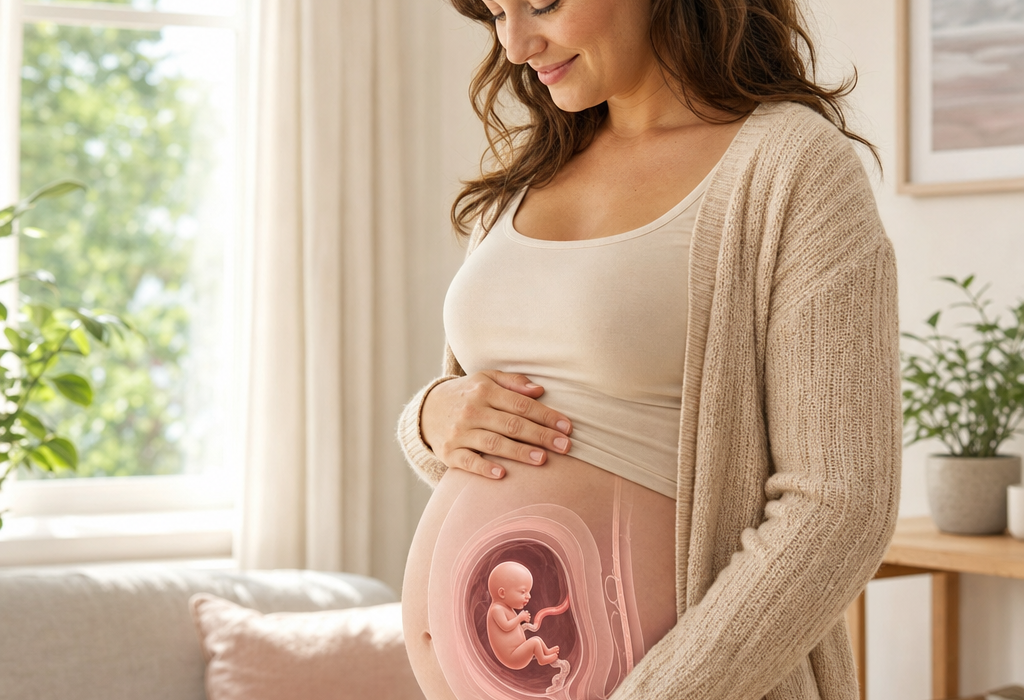
What does your belly look like at 13 weeks pregnant?
At 13 weeks pregnant, some people already have a noticeable bump, while others do not show much yet. This depends on several factors, including:
- Body type
- Whether this is your first pregnancy
- Muscle tone
- Uterus position
- Whether you are carrying one baby or more
If you don’t see a visible bump yet, that is completely normal. Many first-time pregnancies do not show prominently until later in the second trimester.
You may also notice that your lower abdomen feels firmer even if the change is subtle. Some people prefer looser clothing at this stage because bloating and a growing uterus can make waistbands feel uncomfortable.
What to expect at your 13-week prenatal visit
If you have a prenatal appointment around 13 weeks, your provider may:
- Check your weight and blood pressure
- Listen to the baby’s heartbeat
- Measure your uterus
- Review lab tests or screening results
- Discuss any symptoms or concerns
- Talk about upcoming tests, such as anatomy scans or genetic screening, if needed
This is a good time to ask questions about symptoms, activity, nutrition, and what to expect in the coming weeks. If your provider has recommended follow-up testing or an ultrasound, ask what the results mean and when you should expect them.
For trusted pregnancy health guidance, the March of Dimes week-by-week pregnancy calendar offers a helpful overview of this stage.
Questions to ask at the appointment
If you’re not sure what to bring up, consider asking about your prenatal vitamin, exercise routine, safe medications, travel plans, or any symptoms that have been bothering you. A short list of questions can make the visit more productive and less stressful.
Common questions about being 13 weeks pregnant
Can you feel the baby move at 13 weeks?
Usually, no. Most people do not feel fetal movement until 16 to 25 weeks, especially in a first pregnancy. If you think you’re feeling movement this early, it may be gas or muscle twitching.
Is 13 weeks pregnant considered safe?
The risk of miscarriage decreases significantly by 13 weeks compared with the first trimester. While no pregnancy is completely risk-free, many people feel more reassured once they reach this stage.
Can you have sex at 13 weeks pregnant?
In most uncomplicated pregnancies, sex is considered safe during pregnancy. However, your provider may advise against it if you have certain complications such as bleeding, placenta issues, or a history of preterm labor. Always follow your healthcare provider’s guidance.
Can you travel at 13 weeks pregnant?
For many people, the second trimester is one of the best times to travel because nausea and fatigue may be improving. Still, it’s wise to check with your provider before long trips, and be sure to stay hydrated, move around regularly, and avoid anything that could put you at risk.
What should you eat at 13 weeks pregnant?
A balanced pregnancy diet is important. Focus on:
- Fruits and vegetables
- Whole grains
- Lean proteins
- Dairy or calcium-rich alternatives
- Iron-rich foods
- Foods with folate, choline, and protein
Continue taking your prenatal vitamin as recommended by your provider.
If you want a reliable overview of pregnancy nutrition, see the American College of Obstetricians and Gynecologists guidance on nutrition during pregnancy.
What changes happen after the first trimester?
Once you move past the first trimester, many pregnancy symptoms begin to feel less intense, and the second trimester often becomes a more comfortable period. That said, new symptoms can still appear, so it helps to stay in touch with your provider and keep track of anything that feels unusual.
Signs you should call a doctor
Most 13-week pregnancy symptoms are normal, but contact your healthcare provider if you have:
- Heavy bleeding
- Severe abdominal pain
- Persistent vomiting and inability to keep fluids down
- Fever
- Painful cramping
- Foul-smelling vaginal discharge
- Severe dizziness or fainting
- Any symptom that feels sudden, severe, or concerning
It’s always better to check if you’re unsure whether a symptom is normal.
Tips for feeling better at 13 weeks pregnant
Here are a few practical ways to support your body during this stage:
Eat small, frequent meals
This can help with nausea, heartburn, and energy levels.
Stay hydrated
Water is especially important if you’re still dealing with nausea or constipation.
Rest when needed
Even if your energy is improving, pregnancy still places demands on your body.
Move gently
Walking, stretching, or prenatal exercise may help with digestion, circulation, and mood.
Wear comfortable clothes
As your belly grows, looser waistbands and supportive bras can make a big difference.
Keep taking prenatal vitamins
These help support your baby’s development and your own nutrient needs.
Watch for patterns in how you feel
Some symptoms may get worse if you skip meals, go too long without water, or stay sedentary. Noticing patterns can help you make small adjustments that improve day-to-day comfort.
What’s next after 13 weeks pregnant?
After 13 weeks, many people feel more stable and comfortable as they move through the second trimester. The baby will keep growing quickly, and you may start noticing more changes in your body, including a more visible bump and, eventually, fetal movement.
The next several weeks are often when many parents-to-be start feeling more excited and connected to the pregnancy because the hardest early symptoms may begin to fade.
As the pregnancy progresses, your provider may discuss routine screenings, movement habits, and what to expect at upcoming appointments. Staying informed can make each new stage feel a little easier to navigate.
Summary
At 13 weeks pregnant, you’re officially entering the second trimester, and many early pregnancy symptoms may start to improve. Your baby is about the size of a lemon and growing rapidly, with major organs continuing to develop. Common symptoms at this stage include decreased nausea, more energy, appetite changes, bloating, and a growing belly.
If you’re 13 weeks pregnant, this is a reassuring milestone. Your pregnancy is moving forward, your baby is developing well, and many people begin to feel better in the weeks ahead.
Keep following your provider’s guidance, take your prenatal vitamin, and reach out if anything feels unusual or worrying.